A whole bunch of Kanji radicals with no name

eru777

後輩
Joined
2 Jul 2012
Messages
21
Reaction score
0
I'm using the book "Let's learn Kanji : An introduction to radicals, components, and 250 very basic Kanji"
It's a pretty good introduction to radicals..until this part;
From page 48 to page 84 , it includes some nameless, meaningless kanji radicals.
Do you think I need to "learn" them? I've learned all of the other radicals that at least have a meaning in this book. (or a definition, per se)
But these don't have any. I will attach a picture here, and below I will quote the book :
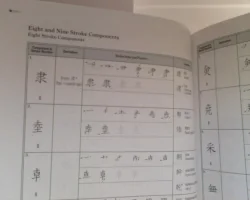
IMG00005.webp
Chapter 3: Learning other useful but non-traditional components
The radicals introduced in this section, unlike those in the previous section, either have names that are less commonly known or have no name at all. Most of them do not have clear instrinsic meanings, though if you trace their origins in dictionaries you may find obscure meanings. Instead, the components appearing in the table on the next two pages often represent sound rather than meaning. In recognizing the recurring common elements of various Kanji, learning these components is as important as learning traditional radicals because these components can form the basis of a group just as traditional radicals do.
(...)
Proceeds to show 107 (mostly) nameless radicals
(...)
Now I am not bashing the book or anything, it's a fine book . But this part here confuses me. If they don't have any meaning, what am I supposed to learn ?
My question to the forum is ; Do I need to learn them or not ?
 
You'll need to learn the shapes, because like the book says, they show up in a lot of characters. 采 is an older form of 採 and has the same reading and meaning. 尭〔堯〕is used in names, and is the name of an old legendary Chinese Emperor:

[人名用漢字] [音]ギョウ(ゲウ)(呉)(漢)
中国古代の伝説上の聖天子の名。

As such, it probably wouldn't be too much use to dig up the meanings, as they're mostly obscure, like the book says.
 
This is the important bit, really:
Instead, the components appearing in the table on the next two pages often represent sound rather than meaning

The one on the top right is the bit of 験、剣、険、鹸 which gives them the on-reading ケン, 彩 採 菜 are all サイ, etc.

I don't think you necessarily need to learn every radical/component as a separate thing, just be aware that these exist. If you do want to study them, I'd say don't bother until you at least know one of the kanji that contains them, and then remember them as "left hand part of 朝" or something.
 
There is a free app called Kanji Pivot that makes good use of those nameless radicals.
They call them pivot radicals and have even used some actual kanji as pivot radicals.
For example all kanji with the pivot radical 窶「テッ will have an onyomi pronounciation of hō (ニ築ニ脱)
窶「テッ's ナ単窶愿??堙 is 窶堙や?堙や?堙 which means to wrap.
In addition to memorizing their onyomi, the pivot radical helps you learn the meaning too
1. hug, embrace ( wrap with hands) 窶「テク窶堋ュ
2. placenta (body part that wraps) 窶摘
3. bubbles (water wraps air) 窶鄭窶堋「
4. cannon (wraps a stone) 窶鼎
5. tired of, had enough (as when your full stomach wrapped plenty of food) 窶徹窶堋ォ窶堙遺?堋「

https://itunes.apple.com/us/app/kanji-pivot/id590376195?mt=8

Log in or sign up to view
 
Learning single characters can be dicey. I'm pretty sure when in hospital you will want to use 胎盤 for placenta.

There is also no such thing as nameless radical. Only non sense such as 僉 which is not a radical 部首 at all. I really don't think it's that important to be honest. Radicals were important for using kanji dictionaries and giving you meaning hints but it's not THAT important to study explicitly. You'll pick it up normally anyway.

The sound component is certainly helpful if you need to figure out the Onyomi of a character though. A little too helpful to the point the Japanese started reading characters wrong and accepted it 百姓読み. 輸入 しゅにゅう 消耗 しょうこう 洗滌 せんでき. As you can see 兪 毛 条 can help you figure the sound regardless of what the original sound of the character :).
 
官 official カン
棺 coffin カン
館 building カン、やかた
管 pipe カン、くだ
帥 commander スイ
師 expert シ
追 follow ツイ、お-う
阜 mound (フ)
呂 spine ロ
宮 shrine キュウ、グウ、(ク)、みや
侶 companion リョ
中 middle チュウ、(ジュウ)、なか
仲 relationship チュウ、なか
沖 open sea チュウ、おき
忠 loyalty チュウ
虫 insect チュウ、むし
独 alone ドク、ひと-り
遣 dispatch ケン、つか-う、つか-わす
串 skewer くし
患 afflicted カン、わずら-う
 
Back
Top Bottom