History Japanese history and archaeology: articles, news, and comments

An advisory panel released more details on the Asuka Beauties (see post above) to the Agency for Cultural Affairs on 25 February: lac, a dark red colourant from South or Southeast Asia, was likely used for the outer garment worn by one of the beauties.
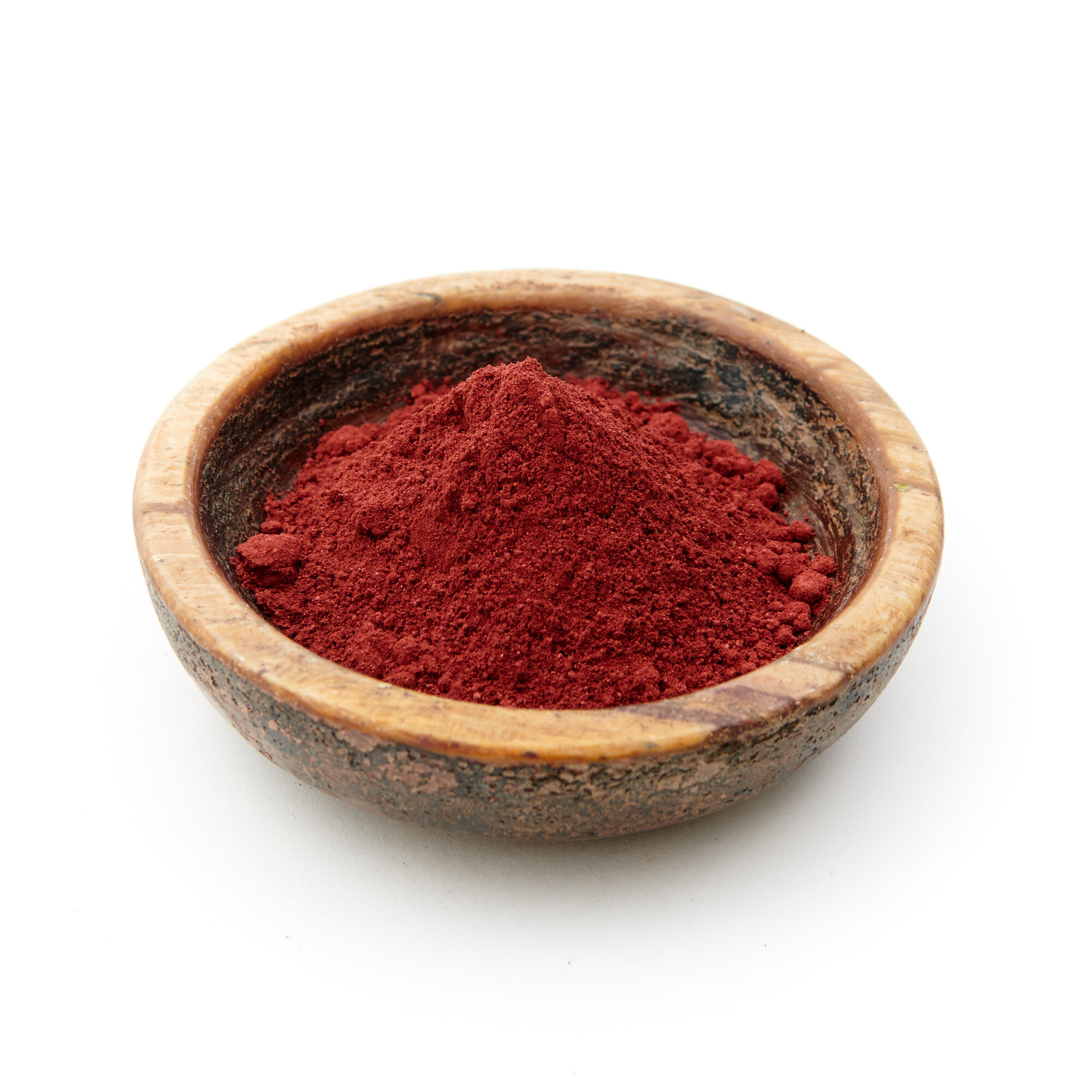
Lac

Lac is a natural, dark red colourant derived from the resinous secretions of parasitic scale insects, primarily Kerria lacca (formerly Laccifer lacca), which are native to the tropical and subtropical regions of South and Southeast Asia. It has been used for thousands of years as a dye for textiles (wool, silk), a cosmetic for skin, a medicinal component, and a pigment in painting.

Lac may have also been used for the "mo" skirt worn by another figure in the mural. This usage indicates Japan's international interactions at the time. "It is possibly the country's oldest case in which lac was used for the coloring of drawings," said Masakazu Naruse, former head of the preservation section at the Imperial Household Agency's Office of the Shosoin Treasure House. "It is thought to have been delivered to Japan via the Tang Dynasty and other countries, revealing anew the internationality of the Takamatsuzuka Tomb murals and how they were meticulously drawn." Lac is obtained from sticklac, a resinous material secreted by scale insects inhabiting Southeast Asia and South Asia.
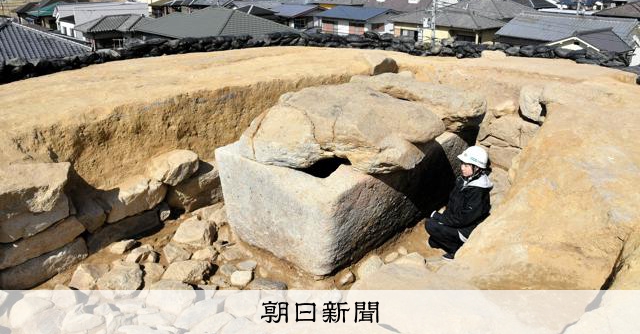
 
The city of Yamato-Kōriyama (大和郡山市) in Nara Prefecture has reported new findings from excavations at the Wari-zuka Kofun (割塚古墳), a round burial mound (円墳 enpun) dating to the early sixth century in Sennichi-chō (千日町). Archaeologists confirmed that the horizontal stone burial chamber (横穴式石室 yokōana-shiki sekishitsu) and its stone coffin remain in good condition.


Warizuka Kofun (割塚古墳)

Warizuka Kofun (割塚古墳) is a Japanese burial mound located in Yamatokoriyama, Nara Prefecture.
  • Time Period: The tomb dates to the early 6th century (Late Kofun period).
  • Structure: It is a circular mound (enpun) approximately 49 meters in diameter.
  • The Stone Coffin: The coffin seen in the image is a house-shaped stone coffin (kurinuki-shiki type) carved from tuff stone from Mt. Nijo.
  • History: The tomb was first excavated in 1968 due to residential development, after which it was reburied for preservation. It has recently undergone re-excavation to investigate its structure.

The mound was first excavated in 1968 by the Nara Prefecture Kashihara Archaeological Institute (奈良県立橿原考古学研究所) during residential development. It measures about 49 metres in diameter and roughly 4.5 metres in height. The excavation produced numerous grave goods (副葬品), including earrings thought to have come from the Korean Peninsula, bronze mirrors, beads and horse fittings.

The site was designated a municipal historic monument in 1978 and later incorporated into a park. Parts of the mound have collapsed in recent years. The city began a new investigation in fiscal 2021 as part of plans to stabilise the site.

Work first reopened the approach corridor, or sendō (羨道), which leads to the burial chamber. This year, archaeologists examined the chamber itself. It measures about 6.6 metres in length and three metres in width. The upper portion, including the ceiling, has disappeared. Walls remain to a height of about 1.4 metres.

The chamber rests on a base of tightly packed stones, roughly the size of a human head. Ono Daisuke, a curator involved in the project, believes the layer served as ground reinforcement to support the weight of the chamber and coffin.

A stone coffin carved from tuff quarried at Mount Nijō (二上山) stands in the centre. It measures about 2.7 metres in length. The coffin and the surrounding chamber appear little changed from their condition when archaeologists first recorded them nearly sixty years ago.

Researchers also identified a structure behind the rear wall of the burial chamber (玄室 genshitsu). The discovery came during excavations that began in February. A narrow passage about 3.5 metres long and one metre wide runs behind the wall. The corridor is lined with stonework.

Examples of such rare passages are rare. According to the city, only one comparable case has been documented locally, at the Ichio-Hakayama Kofun (市尾墓山古墳) in Takatori (高取町), built in the early sixth century. That corridor is thought to have been used to bring in the stone coffin's lid during construction.

The Wari-zuka corridor is narrower than the coffin, which measures about 1.4 metres across. Its function remains uncertain. City officials believe it may have been used during the construction of the chamber, during burial rites, or possibly both. Once the chamber was completed, the passage would have been sealed and hidden from view.

Part of the rear structure became visible because later park construction damaged the mound. Archaeologists say the exposure offers an unusual chance to study the hidden structure behind the chamber.

Earlier work in fiscal 2024 confirmed that the stone coffin at the summit of the mound remained well preserved. The reconstructed mound rises about 10 metres above the surrounding residential area. The exposed coffin attracted attention for its striking position above the neighbourhood and was sometimes described as resembling a "stone coffin in the sky".

The city plans to complete the series of investigations begun in fiscal 2020 and prepare a full excavation report in fiscal 2026. Attention will then turn to how the coffin and the site's unusual location can be preserved and used in the future.

Translated from here:


Armour unearthed at the former site of Asukadera temple in Nara Prefecture shows several features in common with protective gear from the Baekje Kingdom on the Korean Peninsula, a joint research team said. The find comes from Asukadera, regarded as Japan's first full-scale Buddhist temple. The site lies in what is now Asuka village and is designated as a historic site by the state.

Asukadera

Baekje, which existed from the mid-fourth century until 660, was one of the three ancient kingdoms on the Korean Peninsula. Its centre was in what is now Gongju, South Chungcheong Province, South Korea. According to the researchers, the armour's structure matches that of pieces previously uncovered at the Baekje royal palace ruins. Kanekatsu Inokuma, a professor emeritus of archaeology at Kyoto Tachibana University, said this correspondence was consistent with accounts in the Nihon Shoki , or Chronicles of Japan. The Nihon Shoki, one of Japan's oldest historical texts, records that construction of Asukadera began in 588. It also notes that monks and technicians were sent from Baekje at the time, which, he said, aligns with the similarities observed in the armour.

The iron armour and serpentine part were found atop the central pillar foundation stone for a pagoda in Asuka village. The ground stone was unearthed in 1957 from a depth of 2.7 meters by what is currently called the Nara National Research Institute for Cultural Properties. In 2015, Shigeto Ishibashi, head of the curator unit of the institute's Asuka Historical Museum, and his colleagues started a more detailed examination of the discovered objects. Working with Takehiro Hatsumura, a researcher at the Gangoji Institute for Research of Cultural Property, Ishibashi conducted a range of surveys and analyses, including X-ray imaging and three-dimensional measurements. In South Korea, iron and leather armour pieces and other artefacts were uncovered at the ruins of Gongsanseong Fortress in Gongju in 2011 and 2014. The leather armour bore the inscription "19th year of the Zhenguan era" of the Tang Dynasty, corresponding to 645. In early 2024, Hatsumura examined the Baekje armour during a visit to the Kongju National University History Museum.

 
Decorative belt fittings believed to have originated on the Korean Peninsula during the sixth to seventh century have been excavated for the first time in Japan, a discovery researchers describe as important for the study of ancient East Asian exchange. The items were found at the Sudosenninzuka kofun (須藤千人塚古墳), a burial mound where archaeologists uncovered three ornate belt fittings. The city government announced the discovery on 7 May.

Sudosenninzuka kofun (須藤千人塚古墳)

Photo credit: Tomura Noboru via Asahi


Experts believe the pieces once formed part of a gold belt used to signify official rank between 538 and 660. The period overlaps with the final phase of the ancient Korean kingdom of Baekje, which had its last capital at Sabi, now Buyeo in present-day South Korea. All three fittings are made of gilt bronze, copper coated with gold. One was attached to the end of a belt, while the other two appear to have been mounted along the belt itself and include attached rings.

The largest piece, measuring about 11 centimetres long, is especially elaborate. It depicts the three sacred mountains of ancient Chinese tradition, believed to be the dwelling places of immortals, together with two Chinese phoenixes and a demon god shown with its mouth open. Fine engraving techniques, including kebori (毛彫り) and keribori (毛彫り), were used in metalwork. Researchers say objects of this type, and of this apparent origin, have never before been excavated in Japan.

Designs similar to those seen on the excavated belt fittings can also be found among the treasures preserved at Horyuji temple in Nara Prefecture. According to Takizawa, the foothills of Mount Ashitaka, where the Sudosenninzuka kofun is located, are one of the areas in the Tokai region with the highest concentration of burial mounds, with more than 1,000 kofun. "Among them, the Sudosenninzuka kofun, built in the mid-seventh century, is clearly larger than others, and its horizontal stone chamber is the largest in the eastern Suruga area," Takizawa said. From these factors, it is highly likely that the individual first interred in the mound was one of the most powerful figures in the region during the seventh century. The area around the city of Fuji is believed to have been designated as a directly administered district of the royal (later imperial) family. It is also thought that groups such as the Mibube, who had ties to the Jogu royal lineage associated with Prince Shotoku, resided there.

 
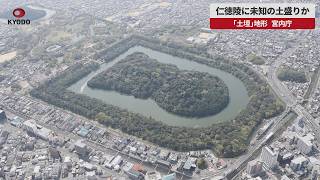
A previously unknown landform believed to be a square earthen platform has been identified in the front section of the Daisen Kofun (大仙古墳) in Sakai, Osaka Prefecture, the Imperial Household Agency announced on 17 May. The agency said the structure may have been used as a burial facility.


The Daisen Kofun, managed by the agency as the mausoleum of Emperor Nintoku (仁徳天皇), is Japan's largest keyhole-shaped burial mound. The massive tumulus was built in the 5th century and measures roughly 486 metres in length. According to the agency, the newly confirmed feature was discovered during analysis using a "red relief image map", a visualisation method that makes subtle changes in terrain easier to detect. The structure appears to be a square earthen platform formed by piling soil in front of the mound.

The discovery could provide new clues about the construction and burial practices associated with the massive kofun-era tomb, although the Imperial Household Agency has not yet determined the exact nature or purpose of the landform. Emperor Nintoku is traditionally regarded as the 16th emperor of Japan and is believed to have ruled during the 4th and early 5th centuries, although the exact dates of his reign remain uncertain due to the semi-legendary nature of Japan's early imperial history. Known in Japanese as Nintoku Tenno, he is remembered in historical chronicles such as the Nihon Shoki and Kojiki as a benevolent ruler who cared deeply for the welfare of his people. One of the most famous legends associated with Nintoku tells of the emperor climbing a hill and noticing very little smoke rising from homes, leading him to conclude that the people were suffering from poverty. According to the story, he suspended taxation and labor duties for several years to help the population recover.

 
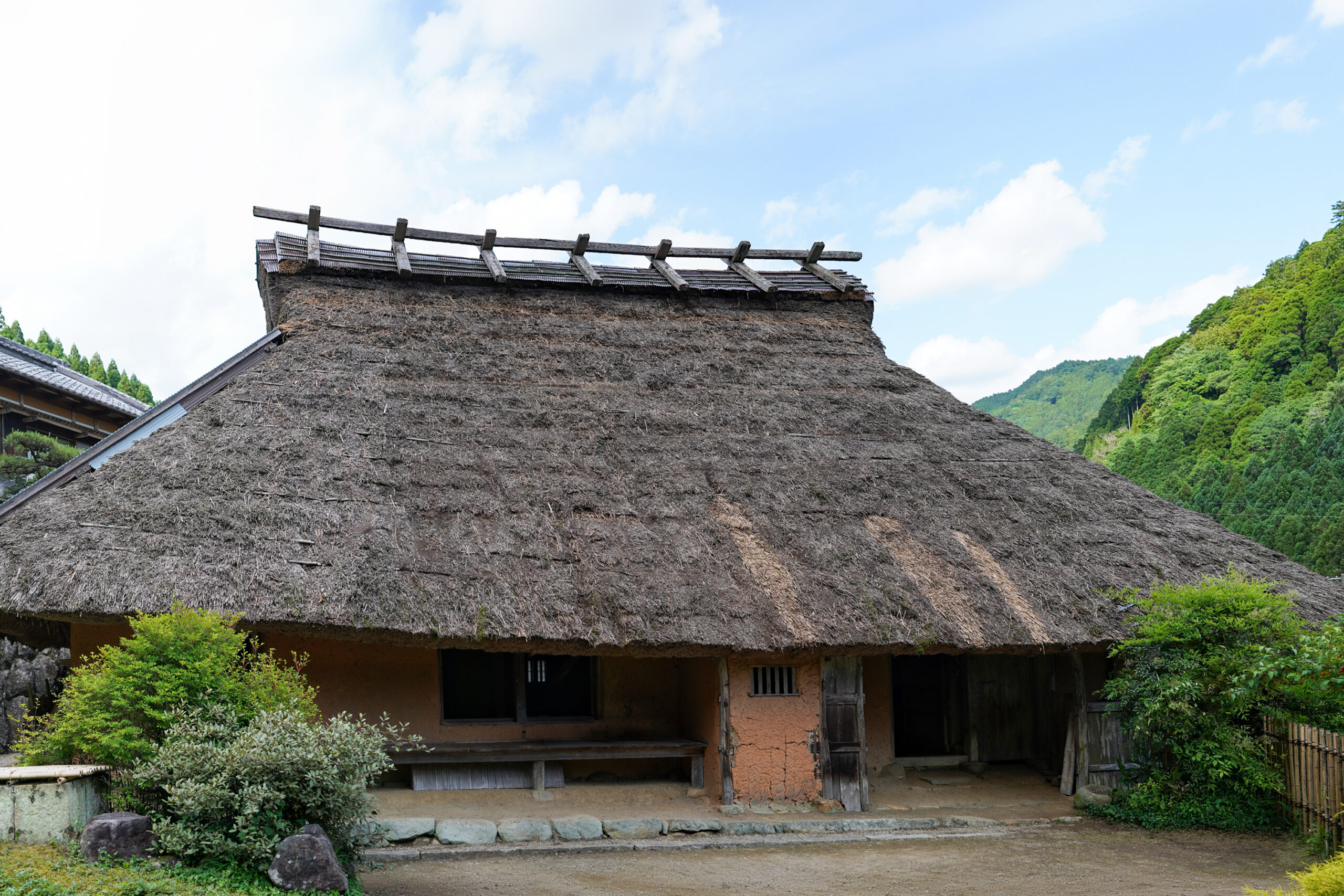
Two private residences in Hyogo Prefecture dating back to the Muromachi period are expected to be designated as National Treasures, marking the first such designation for folk houses in Japan. One of the buildings is the Hakogi Family Residence in Kobe's Kita Ward. The house is believed to date from around the 14th century and is regarded as the oldest surviving private residence in the country.

Former Furui Family Residence

The residence is considered an important example of medieval domestic architecture and is thought to show how powerful local families lived during the period. Officials reportedly viewed the building as particularly valuable because so few medieval-era private homes remain intact today.

Makoto Hakogi, the 51st head of the family and now 94 years old, said he had lived in the house until 1977. "Protecting a National Treasure is not easy," Hakogi said. The Former Furui Family Residence in Yasutomi, Himeji, is also slated for designation as a National Treasure. Built in the 15th century, the structure preserves the appearance and atmosphere of earlier rural landscapes. An official from Himeji City's cultural properties division welcomed the decision, saying, "People often think only of Himeji Castle, but it is wonderful that there is also a cultural building here worthy of National Treasure status."


An iron object excavated in Fukui Prefecture may be part of the oldest known saw discovered in Japan, dating back to the late Yayoi period (弥生時代), around the second to third centuries, researchers said. The artefact was uncovered at the Hayashi-Fujishima archaeological site in Fukui. It measures 4.1 centimetres in length, up to 2.1 centimetres wide, and about 1 millimetre thick.

yayoi-saw.webp

Researchers said the object has triangular teeth measuring roughly 1 to 3 millimetres deep, leading them to believe it may have been used as a saw. The discovery was detailed in an academic bulletin published by the Fukui Prefectural Archaeological Research Centre, which carried out the investigation.

In China, saws with similar shapes from the second to third centuries have also been unearthed. Researchers said iron processing techniques from the Chinese mainland likely crossed over to northern Kyushu through the Korean Peninsula and reached Fukui Prefecture following a route along the Sea of Japan. The Hayashi-Fujishima site, which spans about 1.5 kilometers east to west and about 2 km north to south, yielded pottery, stone tools, iron implements and other items during excavations from 1996 to 2003. Also uncovered were remains of a late Yayoi period settlement that featured a workshop for crafting ornamental beads, such as "magatama" comma-shaped beads and "kudatama" tubular beads.

 
In addition to the Hakogi Family Residence (see above, 25 May 2026), another former family residence is in the news for being restored:

The Former Ōguni Family Residence (旧大國家住宅 Kyū Ōguni-ke Jūtaku) in Wake Town, Okayama Prefecture, is a nationally designated Important Cultural Property currently undergoing large-scale restoration. The Ōguni family moved to the area from what is now Kita Ward in Okayama City around the end of the Sengoku period (戦国時代) and became wealthy through sake brewing and transport businesses.

The Former Ōguni Family Residence

The Former Ōguni Family Residence (旧大國家住宅 in Okayama (photo credit: Yomiuri).


The main residence, built in 1760, is a two-storey wooden structure featuring hiyoku irimoya-zukuri (比翼入母屋造), in which two thatched roofs are joined beneath a tiled roof. The exterior is said to have been modelled after Kibitsu Shrine (吉備津神社 Kibitsu Jinja) in Okayama City, one of the Sanbi Ichinomiya (三備一宮), the principal shrines of the former provinces of Bizen, Bicchū, and Bingo.

The estate covers approximately 2,859 square metres. It was donated to the town by descendants in 2002, and six structures, including the main residence, were designated Important Cultural Properties in 2004. In 2015, the property was reacquired by the General Incorporated Foundation Ōguni-ke (一般財団法人大国家). Around 60,000 historical documents preserved on the estate are managed by the town.

Restoration work began in fiscal 2018 and is scheduled for completion in fiscal 2027. The national government covers 50% of the costs, Okayama Prefecture 25%, with the remainder shared by the town and the foundation. About 40% of the work has been completed. The main residence has been raised by about 1.5 metres while its foundations are being rebuilt. Roof restoration is also underway on the kura-zashiki (蔵座敷), Tori-gura (酉蔵), and Naka-gura (中蔵), which are also designated Important Cultural Properties.

A public opening held on 23 and 24 May attracted around 350 visitors. Twenty-one students from the Department of Architectural Engineering at the Okayama Institute of Science and Technology served as guides. Ari Masa Noriyuki (有正典之), a 51-year-old lecturer and construction professional, said that traditional restoration work reused original structural materials wherever possible and noted that such methods could not be easily learned from textbooks alone.

Students from the Japanese History Laboratory at Okayama University also visited the site while working to decipher the estate's historical documents. The residence complex was expanded in stages until 1858, and researchers used the surviving buildings to help interpret the records. The project has been delayed because of more extensive structural damage than initially expected and rising material costs.

Machine-translated and edited from here:
 
Back
Top Bottom