


- 14 Mar 2002
- 21,053
- 18,908
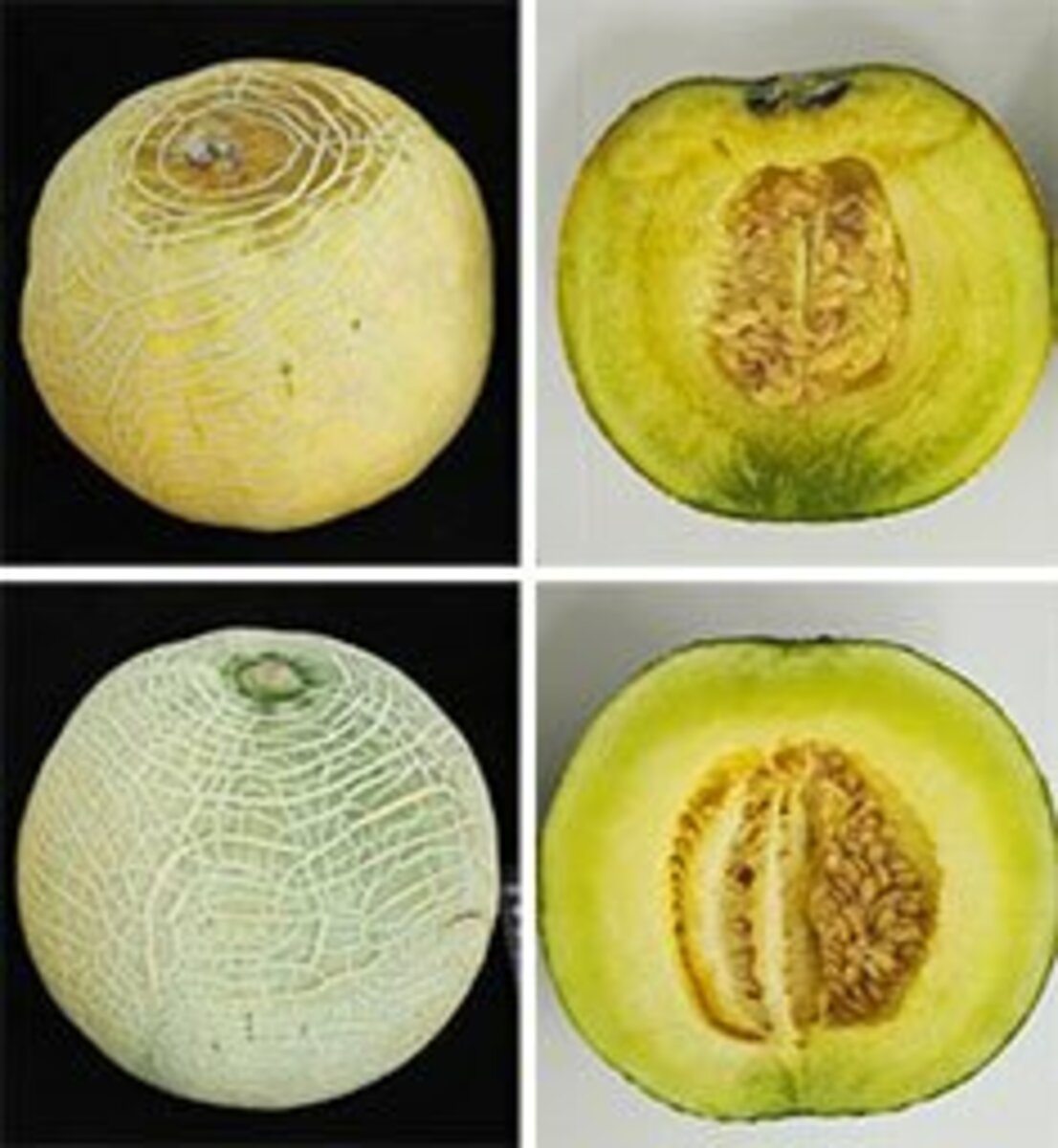
A decaying melon 40 days after harvest (top) and a gene-edited melon in which ripening has been suppressed (photo credit: National Agriculture and Food Research Organisation).
The researchers said they plan to seek government registration for the variety and aim for commercial use within three years. Muskmelons are normally harvested between spring and midsummer. After picking, ethylene release causes the fruit to ripen quickly, limiting storage time and often leading to spoilage during overseas sea shipment. Under the new method, producers could transport melons. At the same time, ripening is suppressed, and then they are exposed to ethylene near the destination market to trigger maturation, a process already used in banana distribution.
Japanese melons have seen strong overseas demand. Exports totalled 1,089 tons in 2025 on a preliminary basis, more than triple the 309 tons shipped in 2015, according to the Ministry of Agriculture, Forestry and Fisheries. Hong Kong and Singapore are among the major destinations for Japanese melons, and the United States and Australia have also begun importing them. The longer shelf life could also make inventory management easier and reduce food waste. The team called the latest development "a major step" toward expanding domestic demand and promoting exports.
Japan research institute, university develop melons that ripen on demand
A national agricultural research institute and the University of Tsukuba have developed a muskmelon that can be ripened on demand, aiming to overcome the fruit's relatively short shelf life and boost exports.
Links:

National Agriculture and Food Research Organization
The National Agriculture and Food Research Organization or NARO is the core institute in Japan for conducting research and development on agriculture and food.
- JREF
- Views: 694
- Category: Science and Environment
University of Tsukuba
The University of Tsukuba (筑波大学, Tsukuba daigaku), located in Tsukuba, Ibaraki, is one of the top nine Designated National University and selected as a Top Type university of Top Global University Project by the Japanese government The university has 28 c


