

Navigation
Install the app
How to install the app on iOS
Follow along with the video below to see how to install our site as a web app on your home screen.
Note: This feature may not be available in some browsers.
More options
Style variation
System
Light
Dark
You are using an out of date browser. It may not display this or other websites correctly.
You should upgrade or use an alternative browser.
You should upgrade or use an alternative browser.
Art Ukiyo-e: Japanese woodblock prints and paintings
- Thread starter JREF
- Start date
Topics, threadsm and news related to Japanese art and artists

- 14 Mar 2002
- 21,050
- 18,903
Utagawa Hiroshige (歌川広重, 1797-1858), Kiyomizu Hall and Shinobazu Pond at Ueno, No. 11 in One Hundred Famous Views of Edo, 名所江戸百景 上野清水堂不忍ノ池 (Meisho Edo Hyakkei – Ueno Kiyomizu-dō Shinobazu no Ike).
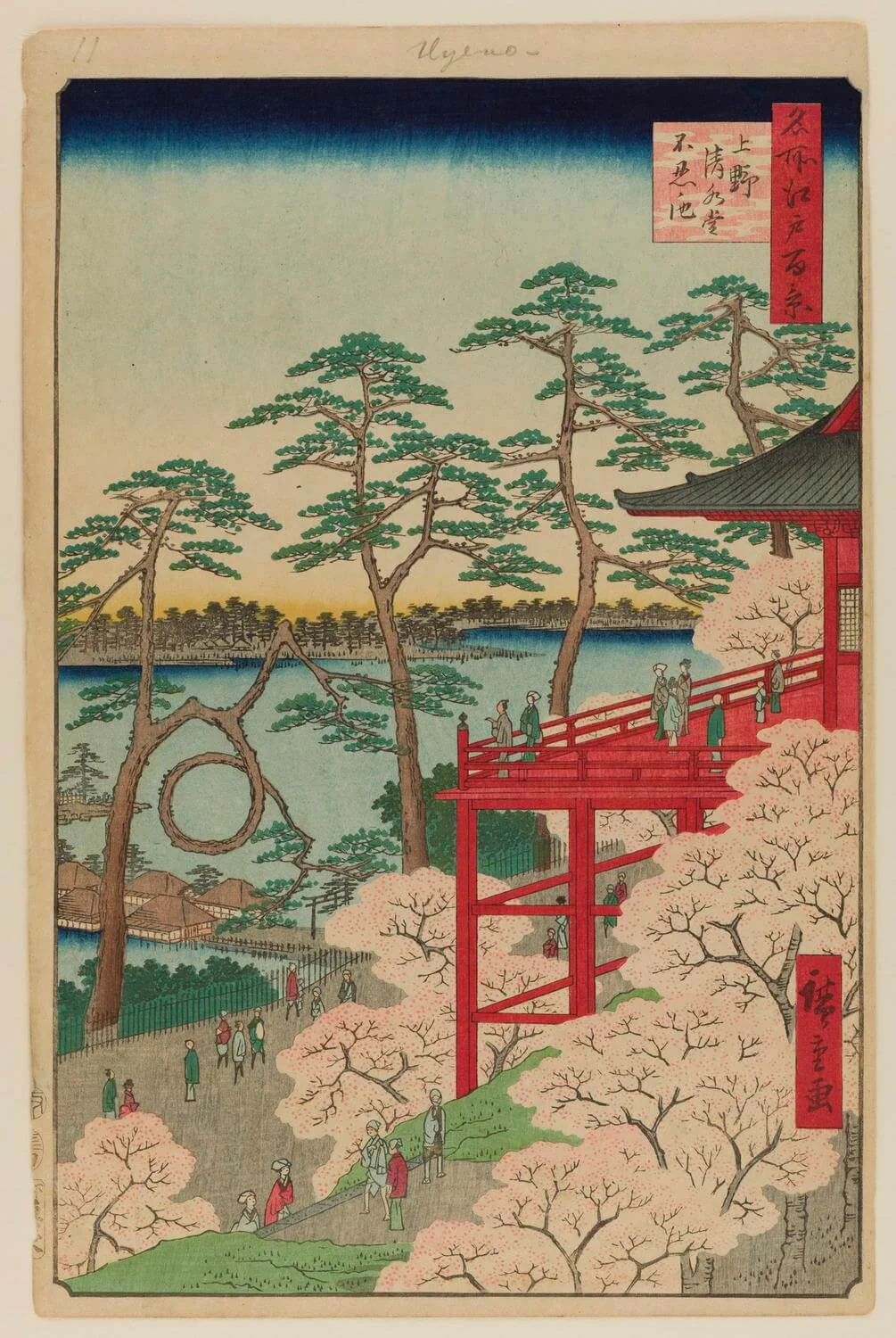
Kiyomizu Hall in Ueno Park was established in 1631 as part of a grand vision to create a major Buddhist temple complex in Edo, intended also to serve as spiritual protection from the northeast, a direction traditionally associated with misfortune. The hall became known both for the cherry blossoms that surround it and for the view from its veranda. Yet, even in Hiroshige's time, the scenery was less dramatic than the print suggests: the veranda is shown as larger than it really was, and the pine trees are rendered as far more imposing than in reality.
- 14 Mar 2002
- 21,050
- 18,903
Utagawa Kuniyoshi (歌川国芳, 1798-1861), No. 2 Takeda Sama-no-suke Nobushige 武田左馬之助信繁, Kōetsu yūshō-den Takeda-ke nijūshi-shō 甲越勇將傳武田家廾四將 (Biographies of Heroic Generals of Kai and Echigo Provinces, Twenty-four Generals of the Takeda Clan).
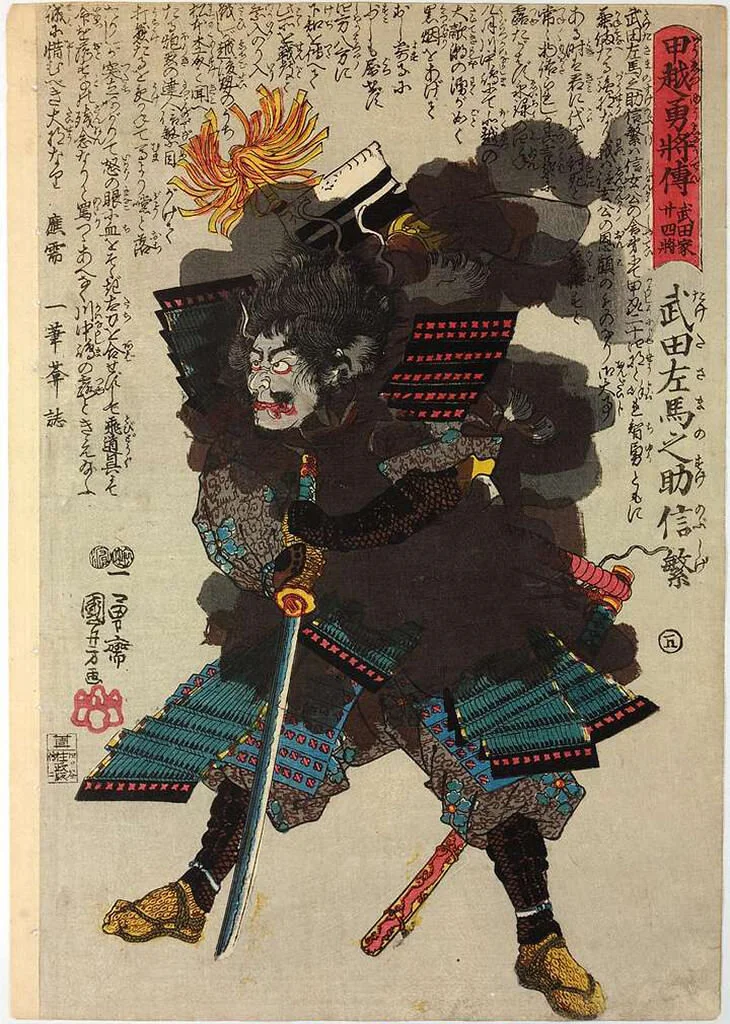
A woodblock print in ōban tate-e (大判縦絵) format depicting Takeda Nobushige (武田信繁, 1525-1561). He is shown without his helmet, surrounded by a billowing cloud of smoke, with blood seeping from the corners of his mouth—a poignant image alluding to his death at the Battle of Kawanakajima.
- 14 Mar 2002
- 21,050
- 18,903
Today's ukiyo-e topic: Minamoto no Yorimasa.
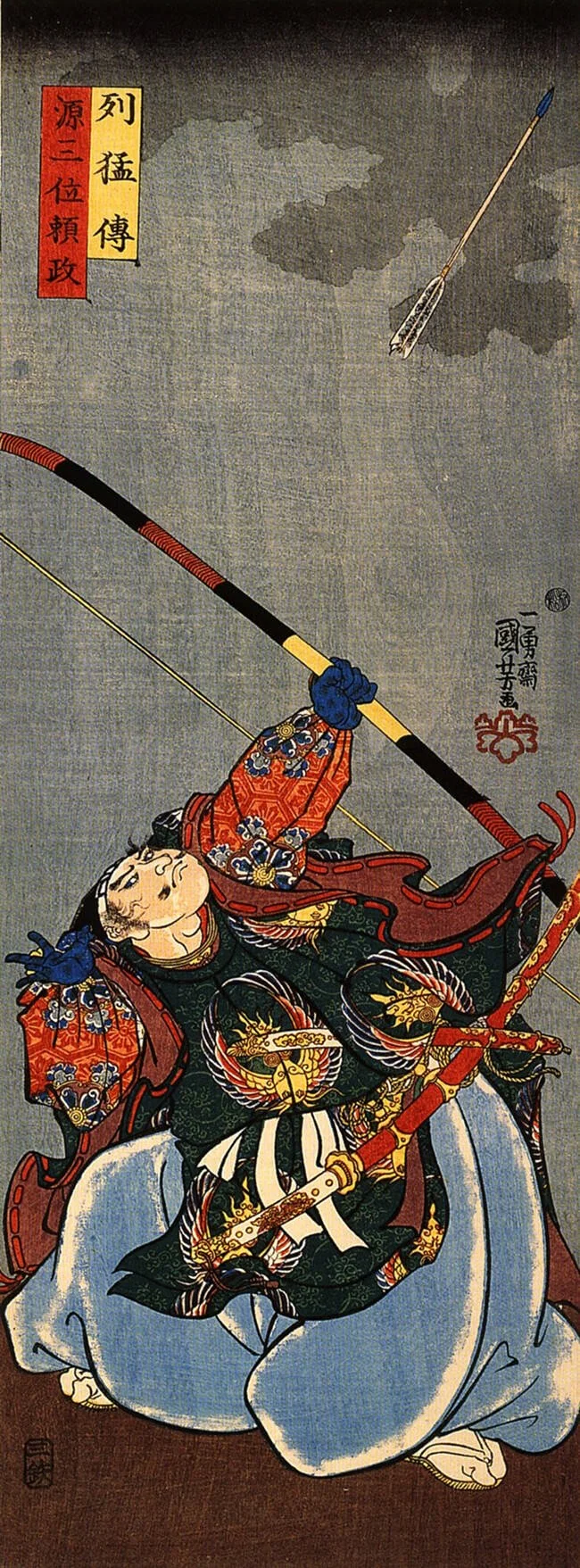

Genzanmi Yorimasa
Utagawa Kuniyoshi (歌川国芳), Genzanmi Yorimasa (minamoto no Yorimasa), from "Retsumoden" (列猛伝), c...
Minamoto no Yorimasa
Utagawa Kuniyoshi (歌川国芳), The general Minamoto no Yorimasa standing holding his bow (right), his...

- 14 Mar 2002
- 21,050
- 18,903
I would assume it's worth it.
I'm not sure why so many Japanese museums, shrines, and temples are so restrictive regarding photography, even disallowing no-flash shots. Last Friday, we visited Daizen-ji Temple in Yamanashi, also known as the "Grape Temple," which features some magnificent Buddhist statuary. Of course, no photography!
I'm not sure why so many Japanese museums, shrines, and temples are so restrictive regarding photography, even disallowing no-flash shots. Last Friday, we visited Daizen-ji Temple in Yamanashi, also known as the "Grape Temple," which features some magnificent Buddhist statuary. Of course, no photography!
- 14 Mar 2002
- 21,050
- 18,903
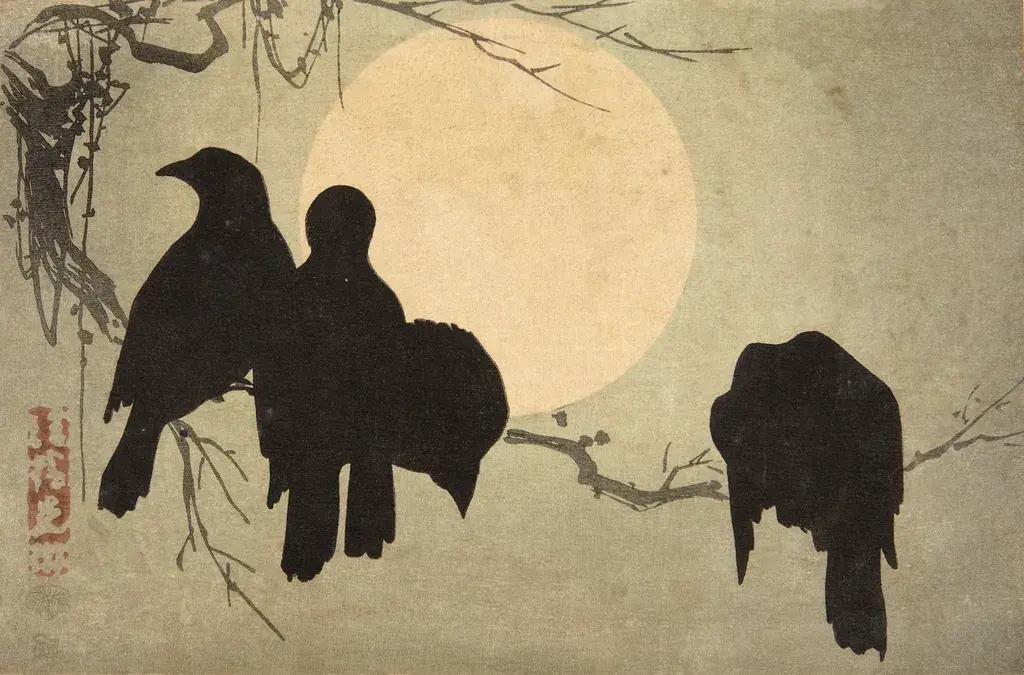
"Crows in the Moonlight" (鴉二羽と月 Tsuki ni karasu) after Ogata Kōrin, an early 19th century woodblock print; ink and colour on paper, by Sakai Hōitsu (酒井 抱一, 1761-1828), a Japanese painter of the Rinpa school. The seals at left read "Hokkyō Kōrin" (法橋光琳), Princeton University Art Museum.
- 14 Mar 2002
- 21,050
- 18,903
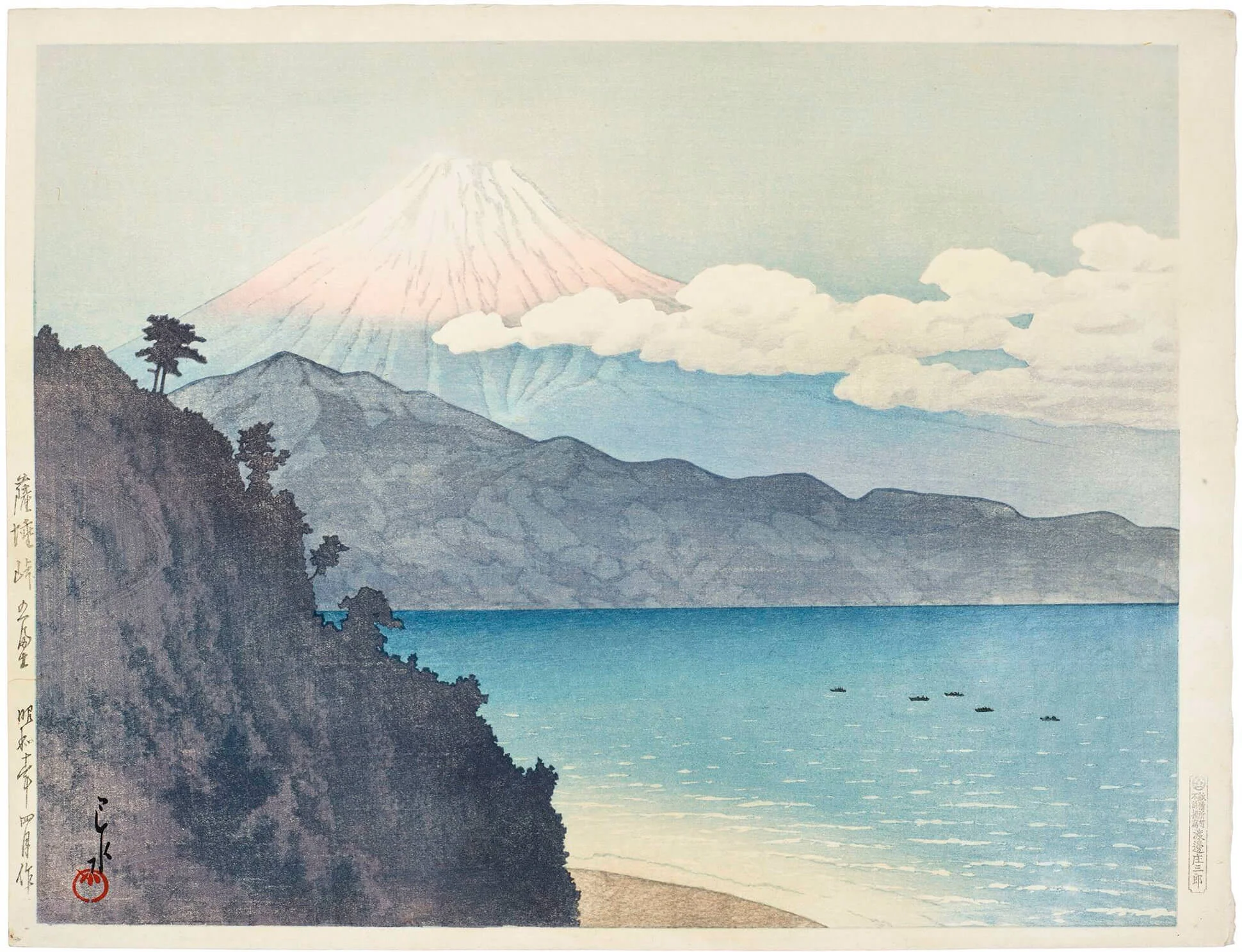
Kawase Hasui (1883-1957, 川瀬巴水), Mount Fuji seen from Satta Pass (さった峠の富士). Published by Watanabe Shozaburo in April 1935. It depicts Mount Fuji as seen from the Satta Pass, a scenic but challenging location along the historic Tōkaidō road.
Related news:

 mainichi.jp
Related news:
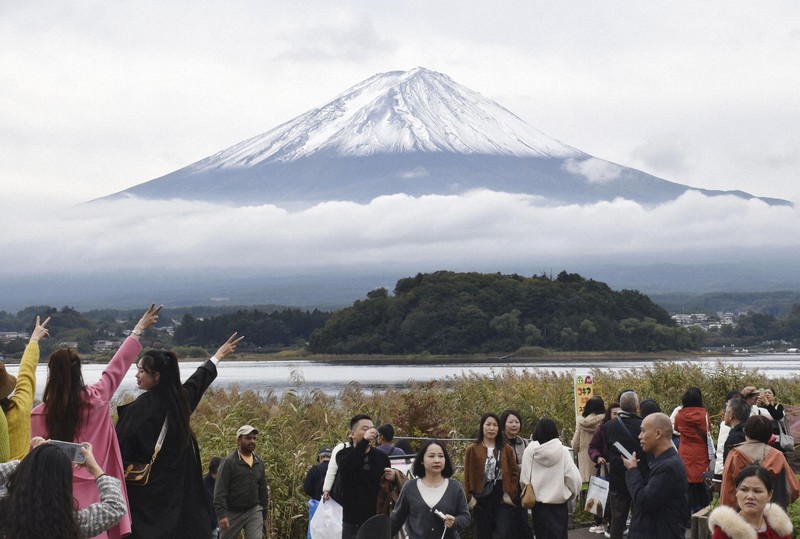
Mt. Fuji gets season's 1st snowcap, 21 days later than usual - The Mainichi
KOFU, Japan (Kyodo) -- The season's first snowcap was observed on Japan's tallest peak, Mt. Fuji, on Thursday, occurring 21 days later than an average
- 14 Mar 2002
- 21,050
- 18,903
Related to our article on Whaling in Japan:
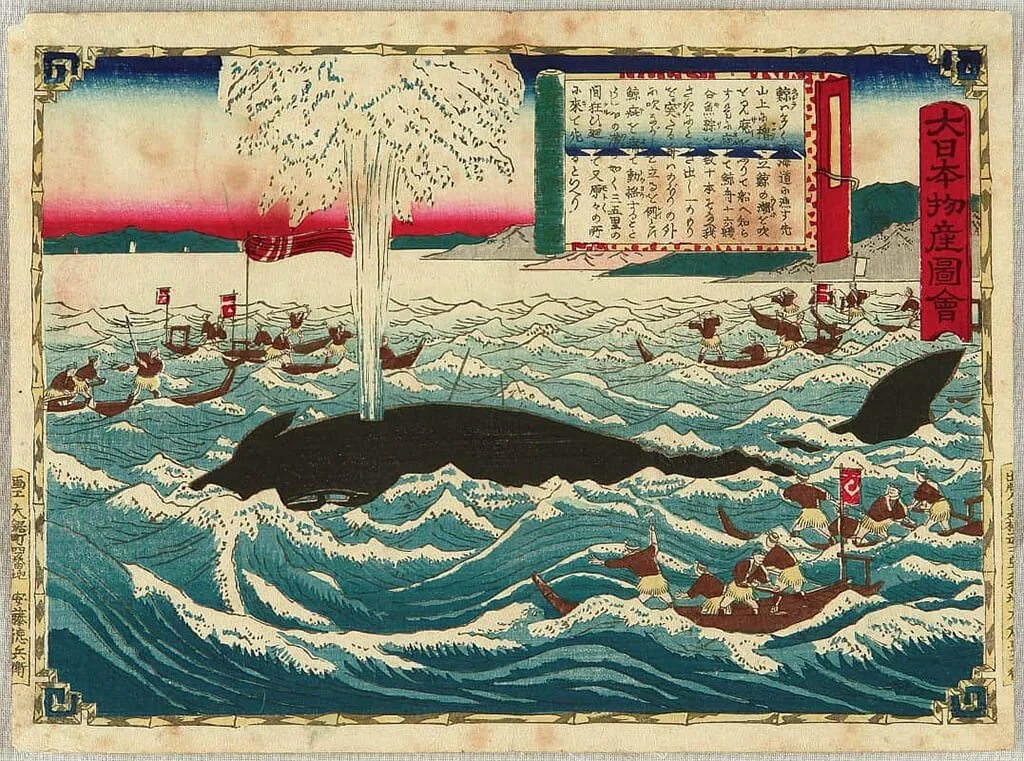
Utagawa Hiroshige III (三代目 歌川 広重, Sandaime Utagawa Hiroshige; 1842 or 1843–1894), Products of Greater Japan: Whaling in Iki Province (大日本物産図会 壱岐国鯨漁之図 Dai Nippon Bussan Zue Iki-no-kuni Kujira-ryō no zu), c. 1877, published by Okura Sonbei of Kin'eidō Yorozuya.
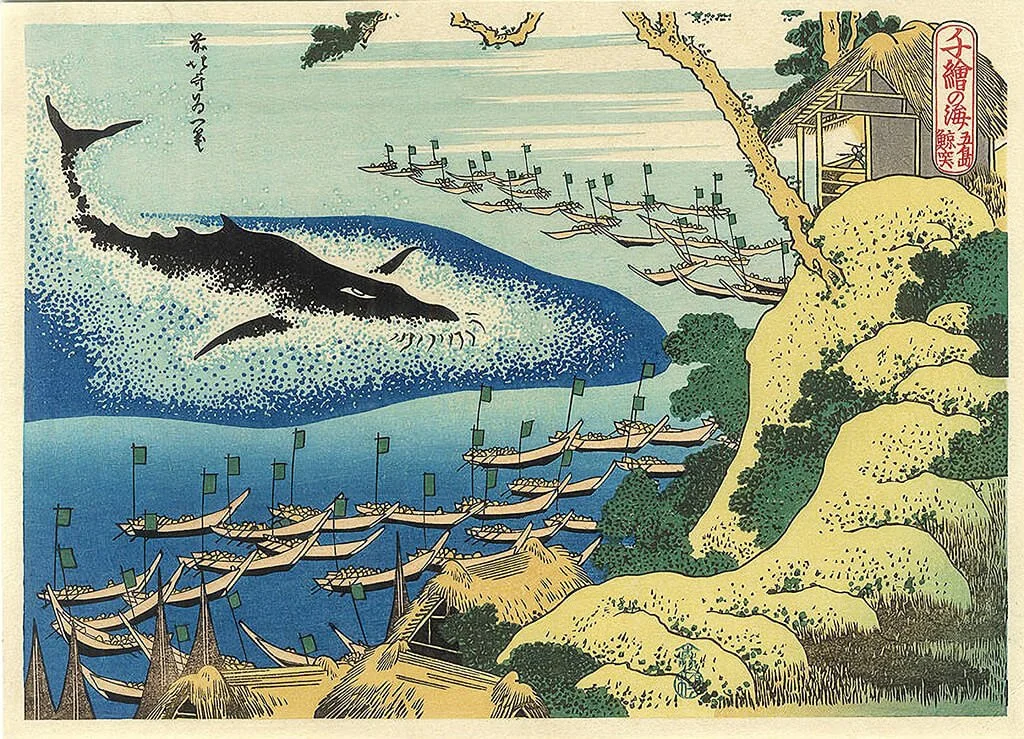
Katsushika Hokusai (葛飾 北斎, 1760–1849), Whaling off the Gotō Islands (五島鯨突 Gotō kujira tsuki), from the series One Thousand Pictures of the Ocean (千絵の海 Chie no umi), c. 1833. Woodblock print (nishiki-e); ink and colour on paper, Horizontal chûban; 18.7 x 25.7 cm.
Utagawa Hiroshige III (三代目 歌川 広重, Sandaime Utagawa Hiroshige; 1842 or 1843–1894), Products of Greater Japan: Whaling in Iki Province (大日本物産図会 壱岐国鯨漁之図 Dai Nippon Bussan Zue Iki-no-kuni Kujira-ryō no zu), c. 1877, published by Okura Sonbei of Kin'eidō Yorozuya.
Katsushika Hokusai (葛飾 北斎, 1760–1849), Whaling off the Gotō Islands (五島鯨突 Gotō kujira tsuki), from the series One Thousand Pictures of the Ocean (千絵の海 Chie no umi), c. 1833. Woodblock print (nishiki-e); ink and colour on paper, Horizontal chûban; 18.7 x 25.7 cm.
- 14 Mar 2002
- 21,050
- 18,903
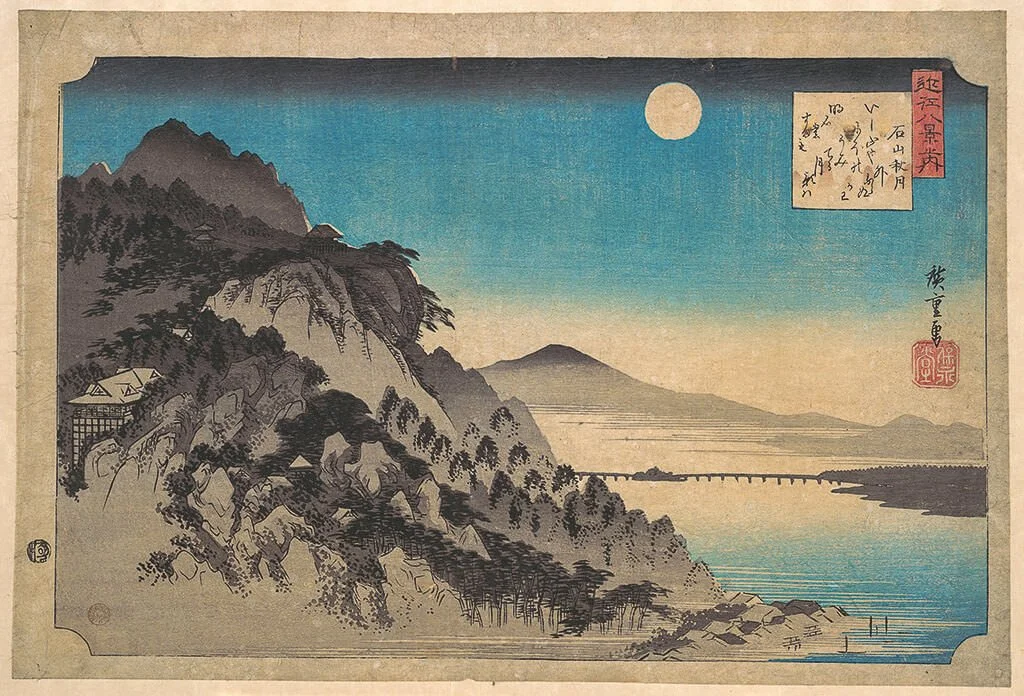
Autumn Moon at Ishiyama
Utagawa Hiroshige (歌川広重, 1797–1858), The Autumn Moon at Ishiyama on Lake Biwa (近江八景之内 石山秋月), ca...
- 14 Mar 2002
- 21,050
- 18,903
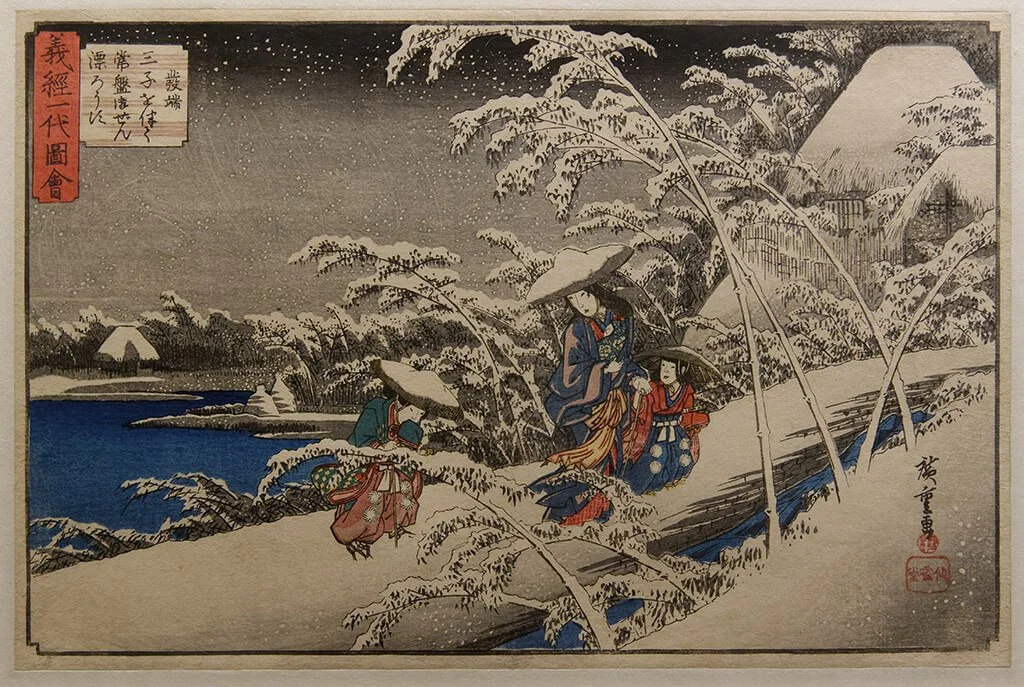
Today's topic is Tokiwa Gozen, considered one of the most legendary beauties of the Heian Period.
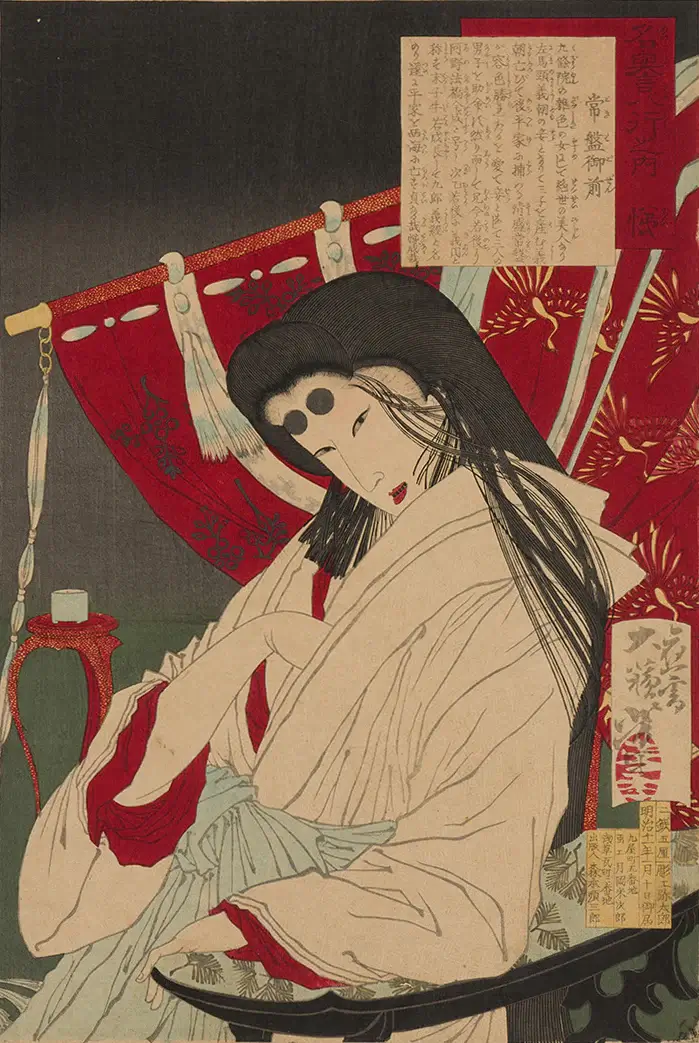
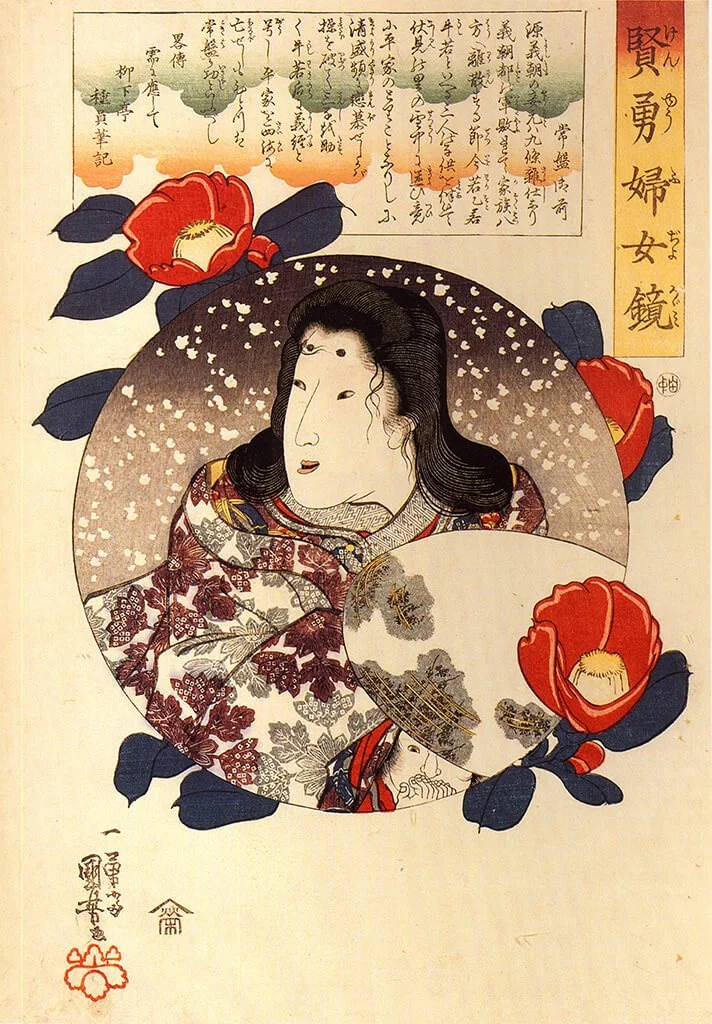
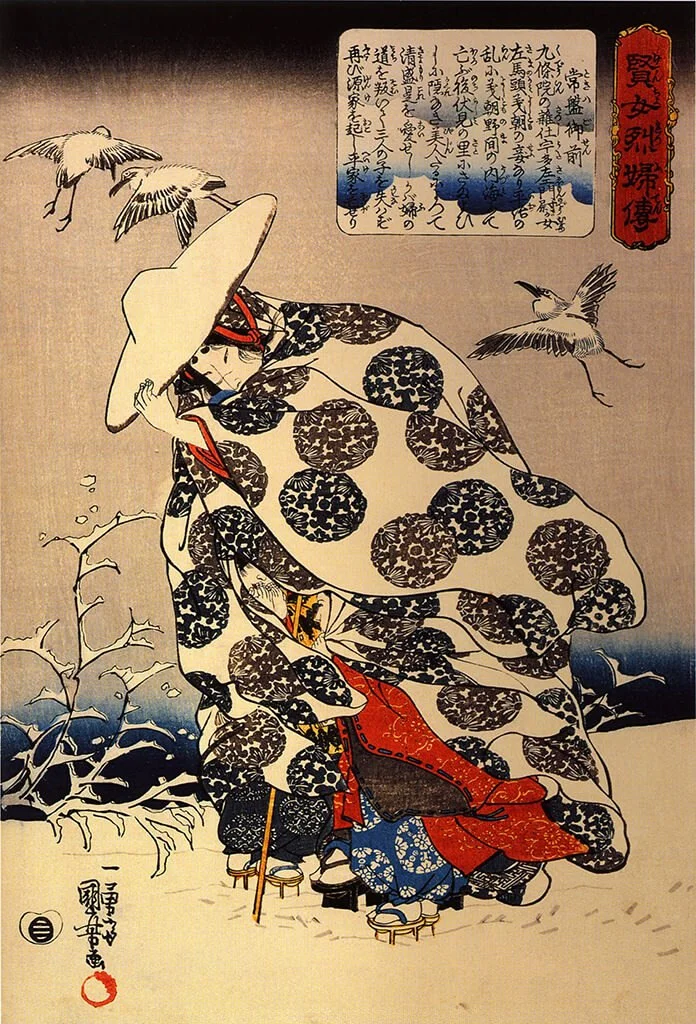
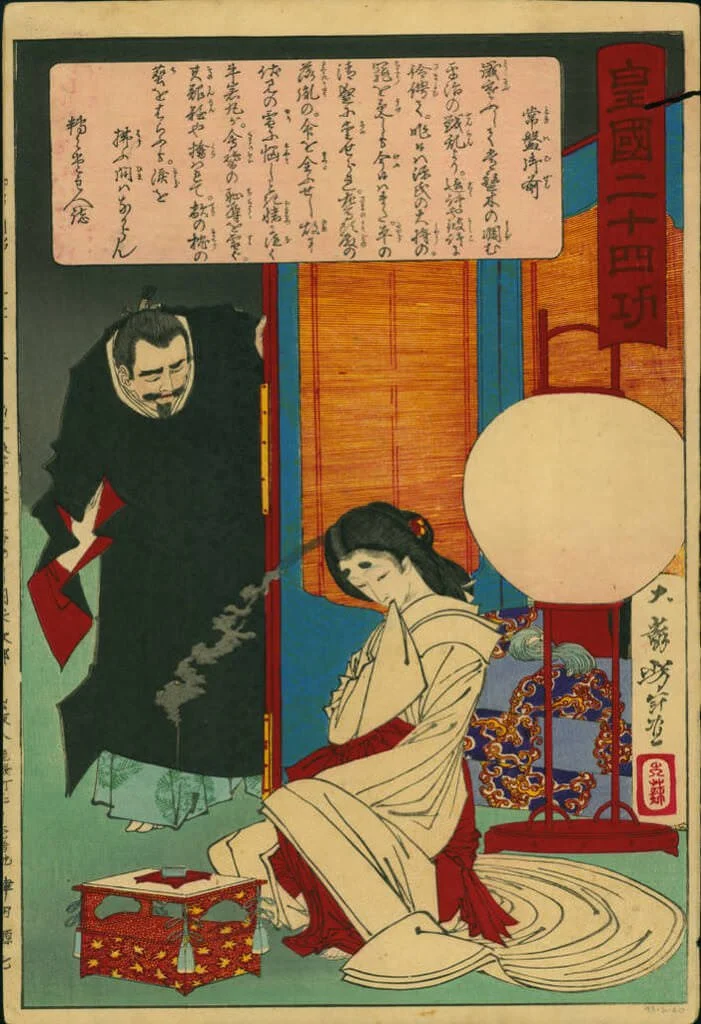
Eight Honorific Lines: Tokiwa Gozen
Tsukioka Yoshitoshi (月岡芳年, 1839–1892), Eight Honorific Lines: Tokiwa Gozen (贈名八所 Zōmei Hassho)...
Tokiwa Gozen
Utagawa Kuniyoshi (歌川国芳, 1798-1861), Tokiwa Gozen, the Wise and Brave Woman Mirror (賢勇婦女鏡)...
Tokiwa Gozen fleeing with her children through the snow
Utagawa Kuniyoshi (歌川国芳, 1798-1861), Tokiwa Gozen fleeing with her children through the snow...
Tokiwa Gozen and her husband Minamoto no Yoshitomo
Tsukioka Yoshitoshi (月岡芳年, 1839–1892), Tokiwa Gozen and her husband Minamoto no Yoshitomo...
Tokiwa Gozen Fleeing with Her Three Children
Utagawa Hiroshige (歌川広重, 1797–1858), Tokiwa Gozen fleeing through the snow with her three sons...
- 14 Mar 2002
- 21,050
- 18,903
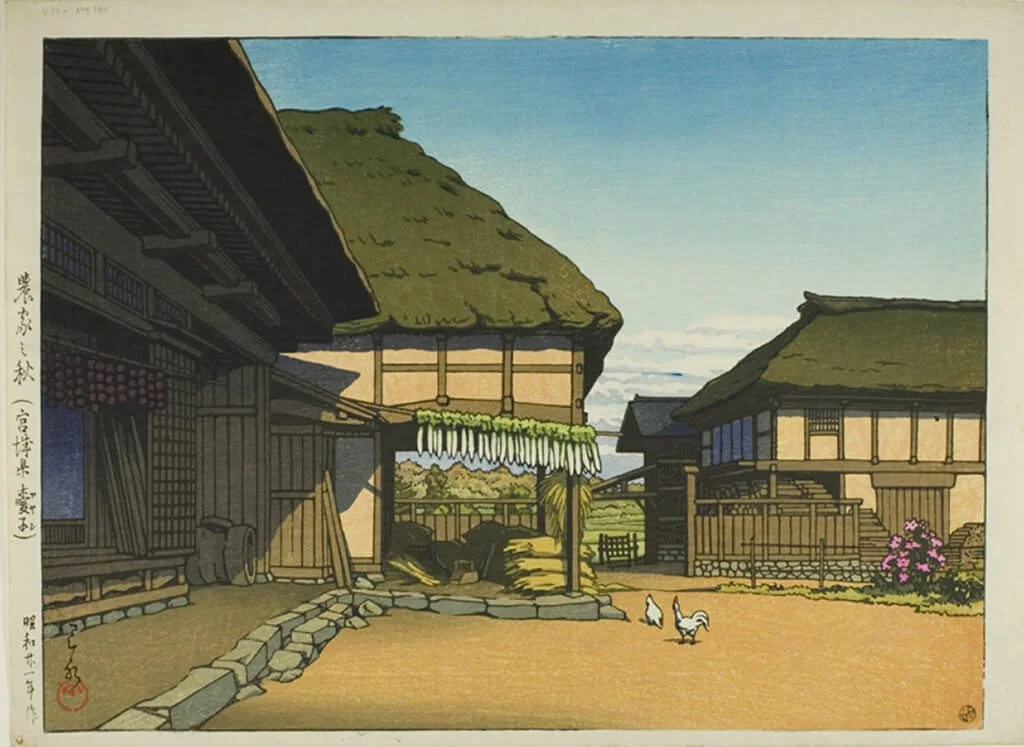
I wonder if Kawase Hasui's shin-hanga style influenced Studio Ghibli. Below are two prints of Sakuradamon and one of a farmhouse in Miyagi.
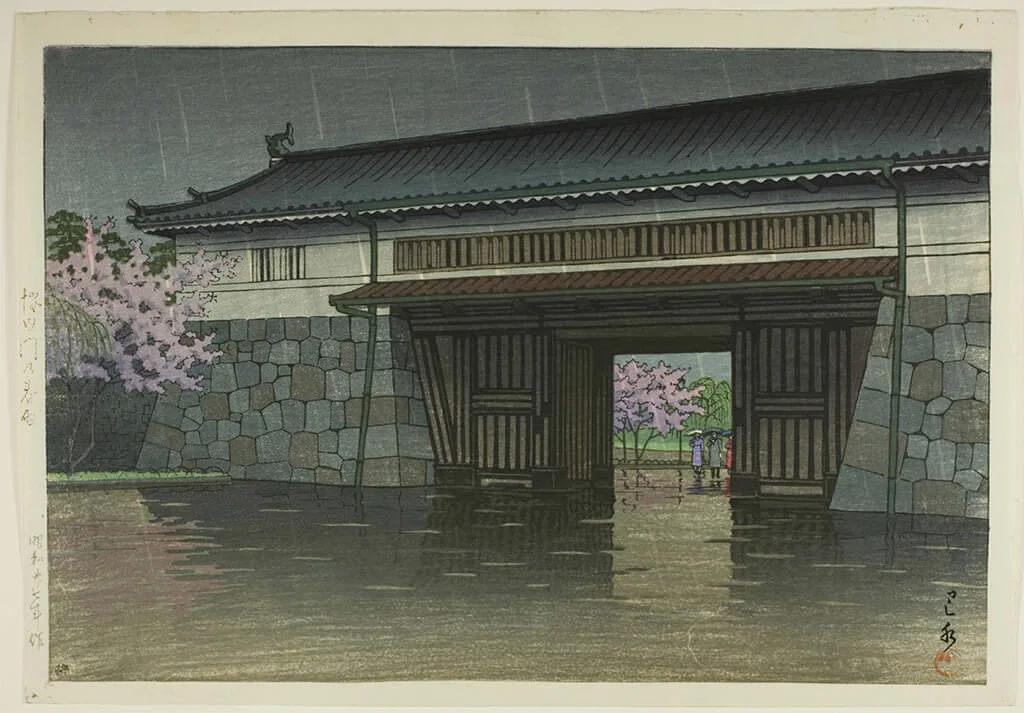
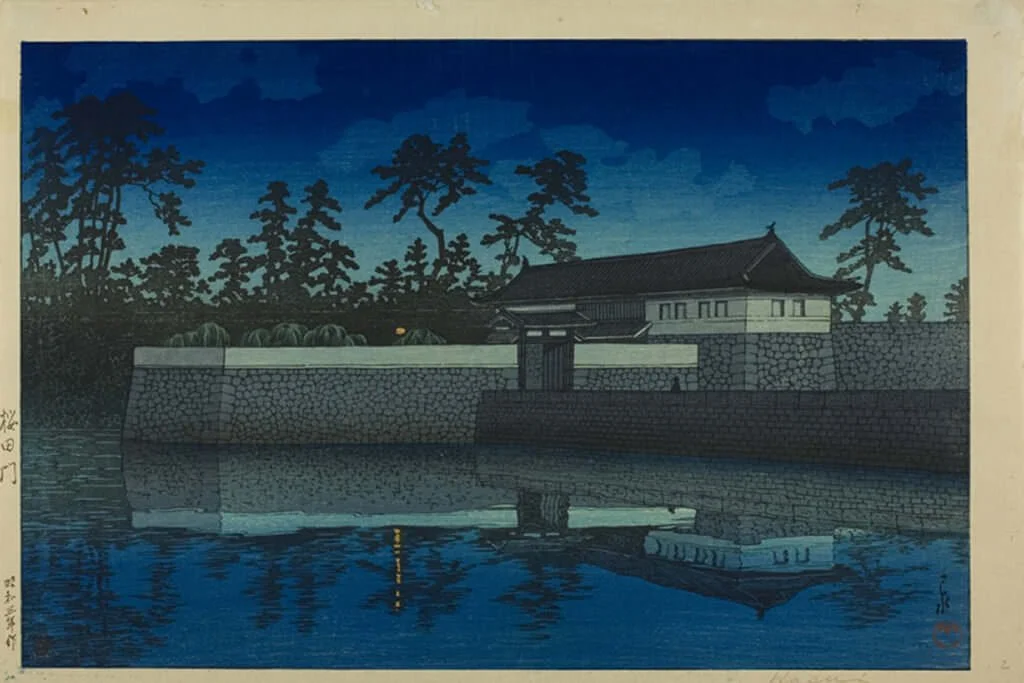
The Sakurada Gate, completed in 1636, originally formed part of the outer defences of Edo Castle, a role it retained until 1868, when the former shogunate stronghold was absorbed into the newly designated Imperial Palace grounds. It has long been remarked upon as one of the few structures to have come through the repeated fires that devastated Edo, as well as the ambitious reconstruction programmes of the early Meiji decades, when much of the old castle complex was altered or swept away in the effort to reshape the seat of imperial authority. Although the gate sustained damage during the Great Kantō Earthquake of 1923, it survived when surrounding districts were reduced to rubble, and it again endured the Allied air raids of the Second World War, which destroyed large parts of the palace precinct and levelled vast stretches of central Tōkyō. In this sense, the gate's endurance has often been taken as a physical reminder of continuity, a sort of steadfast threshold guarding the symbolic heart of the modern Japanese state.
Its long history has also been bound up with episodes of political violence. The best known occurred in 1860, when the Chief Minister Ii Naosuke (井伊直弼, 1815–1860) was killed outside the gate by seventeen rōnin who opposed his role in concluding treaties with the United States and other Western powers. The incident, remembered as the Sakuradamon-gai no Hen, came to epitomise the unrest of the final years of the shogunate and was widely read as a sign of the political order's impending collapse. The gate's name resurfaced during the turbulent early Shōwa era as well. In 1932, it became the scene of a failed attempt on the life of Emperor Hirohito, and in 1936, a group of militant officers launched a short-lived coup that left several senior statesmen dead; contemporary photographs showing armed soldiers standing in snow near the gate capture the stark atmosphere of those days.
Spring Rain at Sakurada Gate
Kawase Hasui (川瀬巴水, 1883-1957), Spring rain at Sakurada Gate (桜田門の春雨), Woodblock print, ink and...
Sakuradamon Twenty Views of Tokyo
Kawase Hasui (川瀬巴水, 1883-1957), Sakurada Gate, from the series "Twenty Views of Tokyo" (Tōkyō...
The Sakurada Gate, completed in 1636, originally formed part of the outer defences of Edo Castle, a role it retained until 1868, when the former shogunate stronghold was absorbed into the newly designated Imperial Palace grounds. It has long been remarked upon as one of the few structures to have come through the repeated fires that devastated Edo, as well as the ambitious reconstruction programmes of the early Meiji decades, when much of the old castle complex was altered or swept away in the effort to reshape the seat of imperial authority. Although the gate sustained damage during the Great Kantō Earthquake of 1923, it survived when surrounding districts were reduced to rubble, and it again endured the Allied air raids of the Second World War, which destroyed large parts of the palace precinct and levelled vast stretches of central Tōkyō. In this sense, the gate's endurance has often been taken as a physical reminder of continuity, a sort of steadfast threshold guarding the symbolic heart of the modern Japanese state.
Its long history has also been bound up with episodes of political violence. The best known occurred in 1860, when the Chief Minister Ii Naosuke (井伊直弼, 1815–1860) was killed outside the gate by seventeen rōnin who opposed his role in concluding treaties with the United States and other Western powers. The incident, remembered as the Sakuradamon-gai no Hen, came to epitomise the unrest of the final years of the shogunate and was widely read as a sign of the political order's impending collapse. The gate's name resurfaced during the turbulent early Shōwa era as well. In 1932, it became the scene of a failed attempt on the life of Emperor Hirohito, and in 1936, a group of militant officers launched a short-lived coup that left several senior statesmen dead; contemporary photographs showing armed soldiers standing in snow near the gate capture the stark atmosphere of those days.
A Farmhouse in Autumn
Kawase Hasui (川瀬巴水, 1883-1957), A Farmhouse in Autumn, Ayashi, Miyagi Prefecture
(農家の秋 (宮城県愛子)...
(農家の秋 (宮城県愛子)...
- 14 Mar 2002
- 21,050
- 18,903
Time for something more wintery:
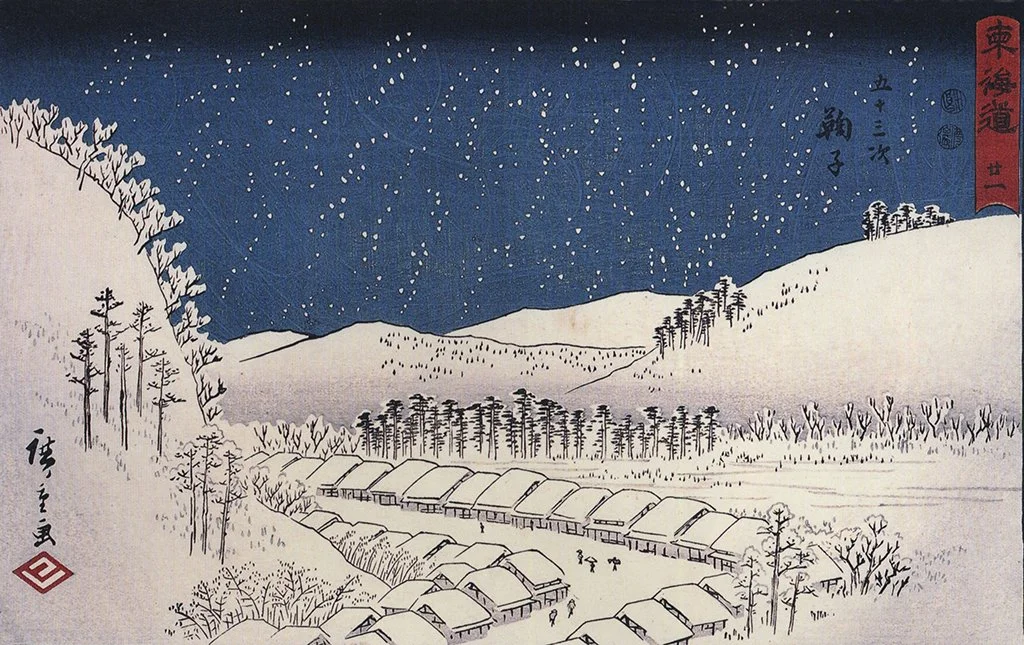
Snow falling on a town.
Utagawa Hiroshige (歌川 広重, 1797–1858), "Tokaido 21, Fifty-three Stations, Mariko" (東海道五十三次(隷書東海道...
- 14 Mar 2002
- 21,050
- 18,903
This famous nishiki-e depicts Kondō Isami, a formidable Shinsengumi leader, facing Imperial troops at Daizen-ji in Yamanashi.
Tsukioka Yoshitoshi (月岡芳年, 1839–1892), Kondō Isami's bravery at Katsunuma Station (勝沼駅近藤勇驍勇之図), nishiki-e woodblock print, 1880; Edo-Tokyo Museum.
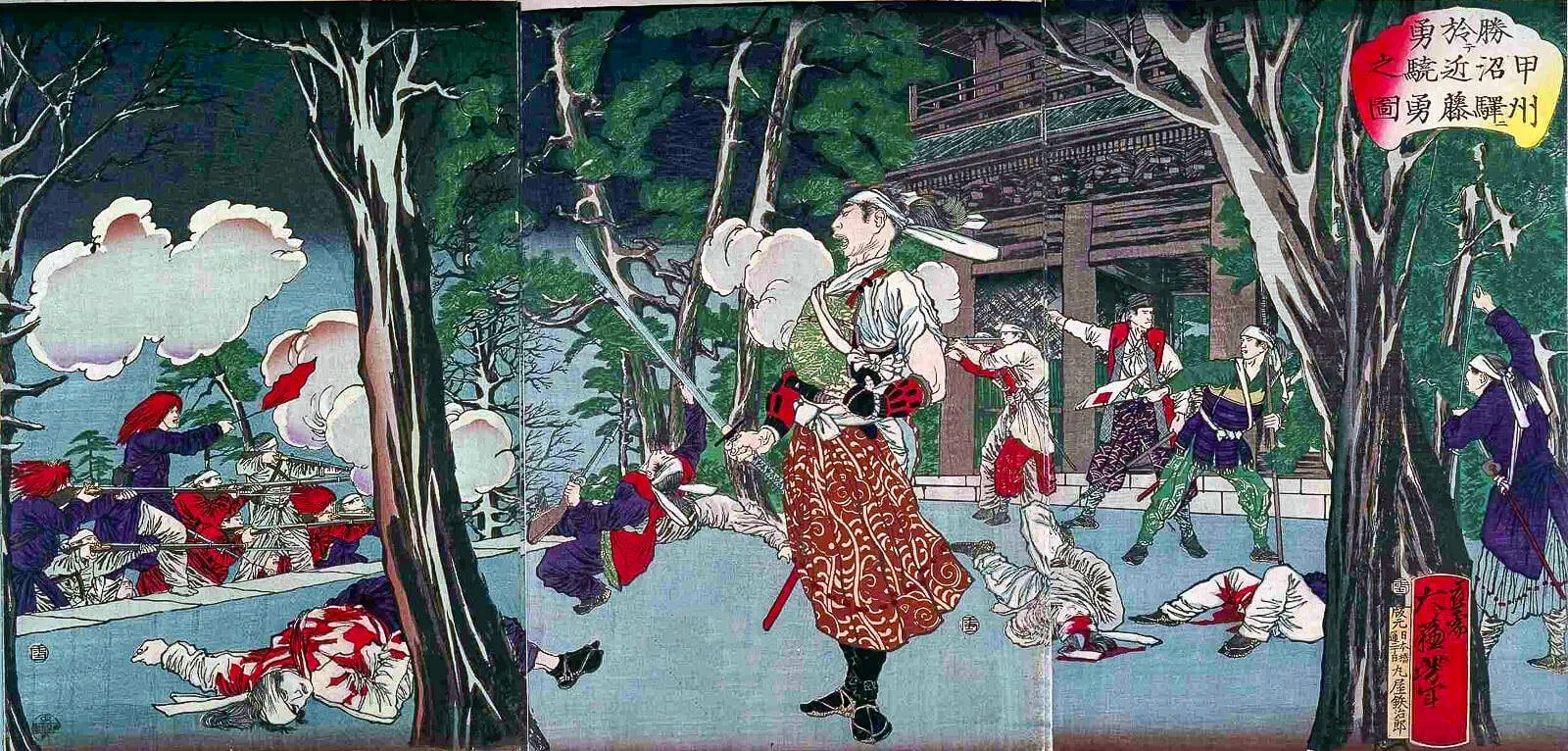
Tsukioka Yoshitoshi (月岡芳年, 1839–1892), Kondō Isami's bravery at Katsunuma Station (勝沼駅近藤勇驍勇之図), nishiki-e woodblock print, 1880; Edo-Tokyo Museum.
Kondo Isami's bravery at Katsunuma Station
Tsukioka Yoshitoshi (月岡芳年, 1839–1892), Kondō Isami's bravery at Katsunuma Station (勝沼駅近藤勇驍勇之図)...
- 14 Mar 2002
- 21,050
- 18,903
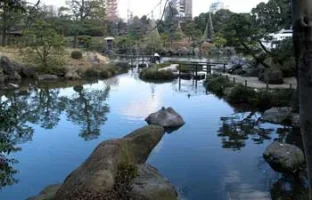
Kawase Hasui (川瀬巴水, 1883–1957), Snow at Kiyosumi Garden (清澄園の雪) — February 1938, colour woodblock print (ink and colour on paper), ōban yokoe, overall c. 27.4 × 40 cm, published by S. Watanabe / Watanabe Shōzaburō (渡邊庄三郎, 1885–1962).
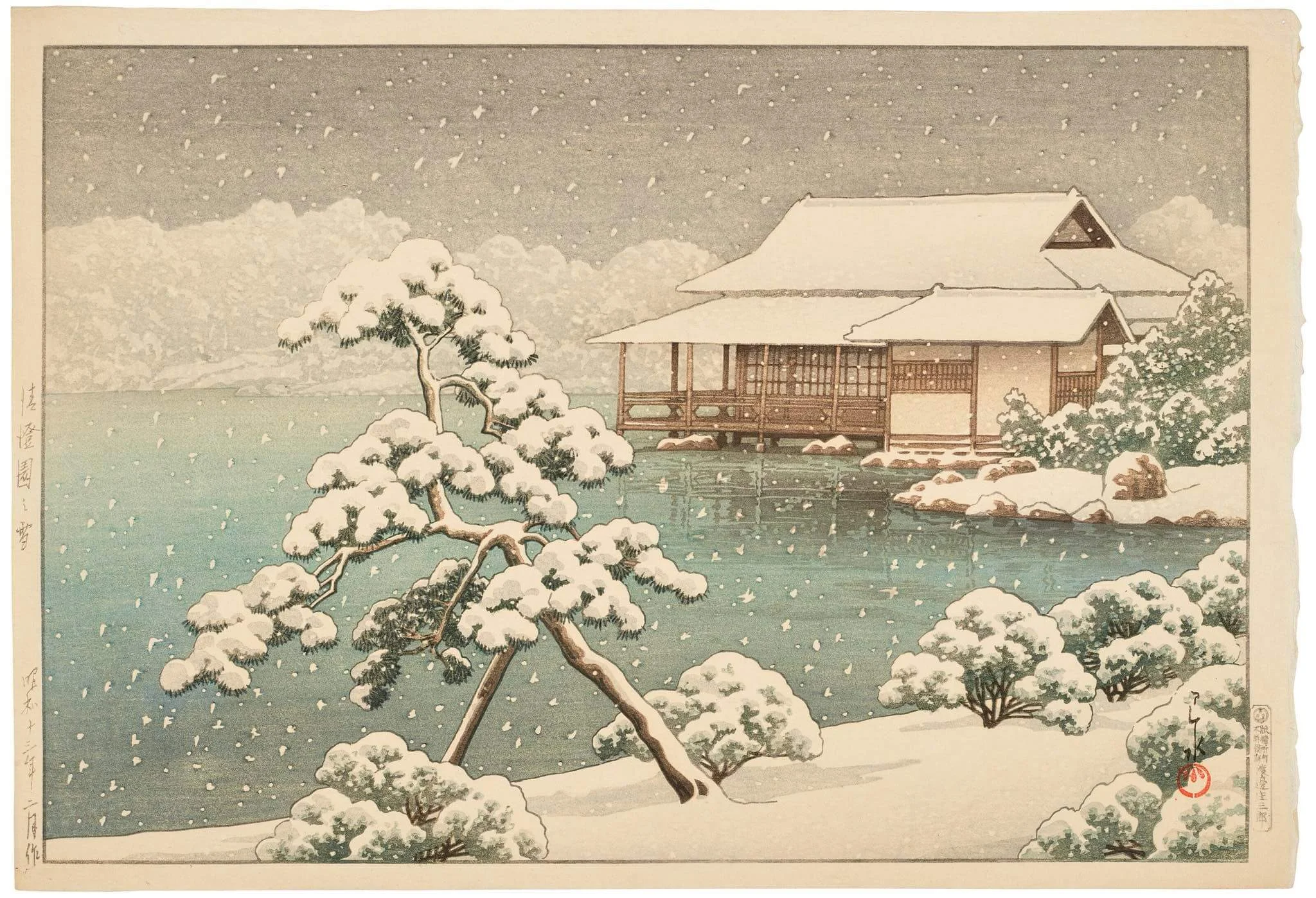
Travel Kiyosumi Gardens
Tokyo Travel Guide: Kiyosumi GardensKiyosumi Garden (清澄庭園) is a traditional Japanese stroll garden located in Fukagawa, Koto-ku, Tokyo. It is a classical “pond-spring-excursion-style-garden” (池泉回遊式庭園 chisen-kaiyū-shiki-teien), that consists of a large pond at its centre, as well as artificial...
- 14 Mar 2002
- 21,050
- 18,903
Tokugawa Yoshimune playing kemari
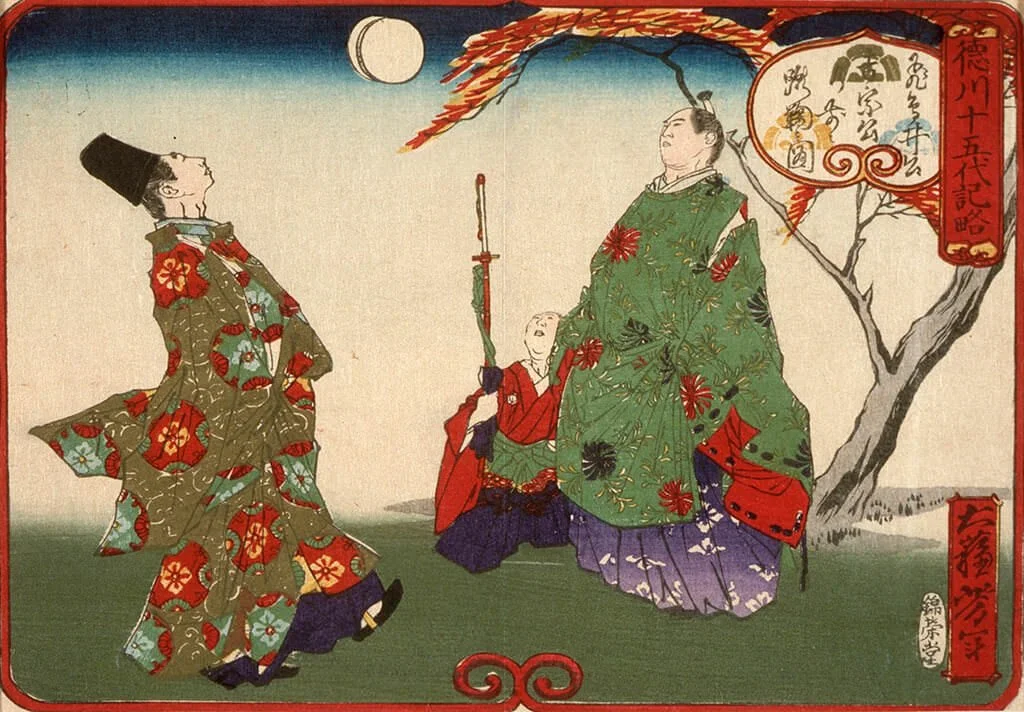
Tsukioka Yoshitoshi (月岡芳年, 1839-1892), Tokugawa Yoshimune Playing Kemari (徳川吉宗 蹴鞠之図), July 1875...
View item 196
- 14 Mar 2002
- 21,050
- 18,903
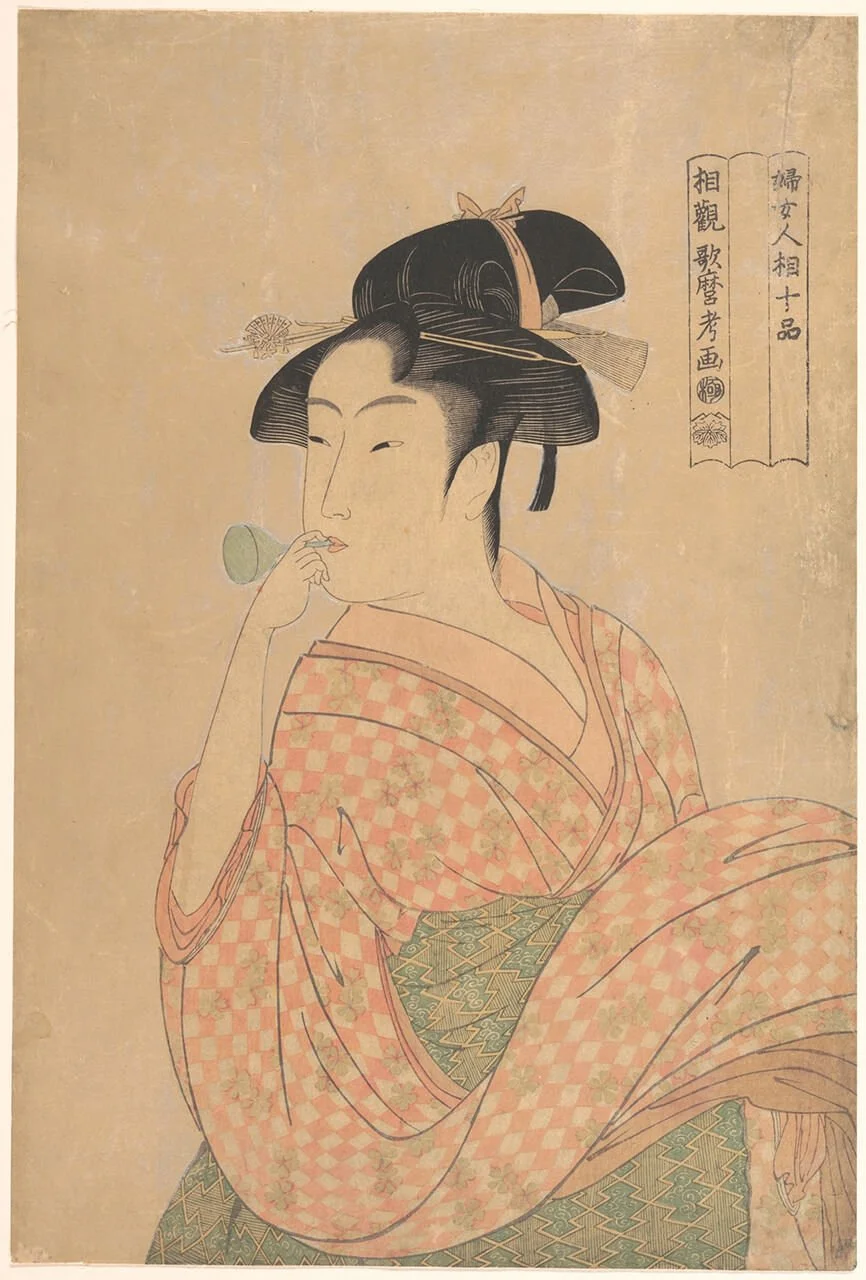
Kitagawa Utamaro (喜多川歌麿, c. 1754–1806), Young Woman Blowing a Popen (ポペンを吹く娘), from Ten Classes of Women's Physiognomy (婦女人相十品), Edo period (1615–1868), c. 1792–93, woodblock print in ink and colour on paper, measures 38.9 × 27.5 cm.
A popen (ポペン) is a small glass noisemaker that was popular in Japan during the Edo period. It is made of a hollow glass bulb with a narrow mouthpiece and produces a soft whistling or buzzing sound when blown into. Popens were commonly sold as toys or curios and were linked to simple, everyday amusement rather than organised play. In art, especially ukiyo-e, a popen can suggest lightheartedness, youth, or an intimate, everyday moment, as well as the introduction of breath and sound into an otherwise still scene.
A popen (ポペン) is a small glass noisemaker that was popular in Japan during the Edo period. It is made of a hollow glass bulb with a narrow mouthpiece and produces a soft whistling or buzzing sound when blown into. Popens were commonly sold as toys or curios and were linked to simple, everyday amusement rather than organised play. In art, especially ukiyo-e, a popen can suggest lightheartedness, youth, or an intimate, everyday moment, as well as the introduction of breath and sound into an otherwise still scene.
Young woman blowing a popen
Kitagawa Utamaro (喜多川歌麿, c. 1754–1806), Young Woman Blowing a Popen (ポペンを吹く娘), from Ten Classes...
Utamaro depicts a young woman blowing into a popen, a small glass noisemaker enjoyed as a casual pastime in the Edo period. It belongs to the series Ten Classes of Women's Physiognomy (婦女人相十品, Fujo ninsō juppen), which focuses on subtle changes in expression and gesture rather than on narrative scenes.
The work represents his later style of bijin-ga (美人画). The woman appears at half-length against an unadorned background, keeping the focus on her face and hands. Her head is gently inclined, and her lips are parted as she exhales into the popen. The mood is quiet and composed. Fine lines and restrained colour bring out the skin's softness and the garments' weave. In this series, Utamaro presents moments of feeling and presence. The popen adds a sense of motion and anticipation to an otherwise still image. The print dates from around 1792–93, when Utamaro was increasingly drawn to close, intimate portrayals of women.
The work represents his later style of bijin-ga (美人画). The woman appears at half-length against an unadorned background, keeping the focus on her face and hands. Her head is gently inclined, and her lips are parted as she exhales into the popen. The mood is quiet and composed. Fine lines and restrained colour bring out the skin's softness and the garments' weave. In this series, Utamaro presents moments of feeling and presence. The popen adds a sense of motion and anticipation to an otherwise still image. The print dates from around 1792–93, when Utamaro was increasingly drawn to close, intimate portrayals of women.
- 14 Mar 2002
- 21,050
- 18,903
Tenno Temple, Ōsaka (大阪天王寺 Ōsaka Tennōji), from Souvenirs of Travel, Third Series ( 旅みやげ第三集 Tabi miyage dai sanshū), colour woodblock, 1927 by Kawase Hasui (川瀬巴水, 1883–1957).
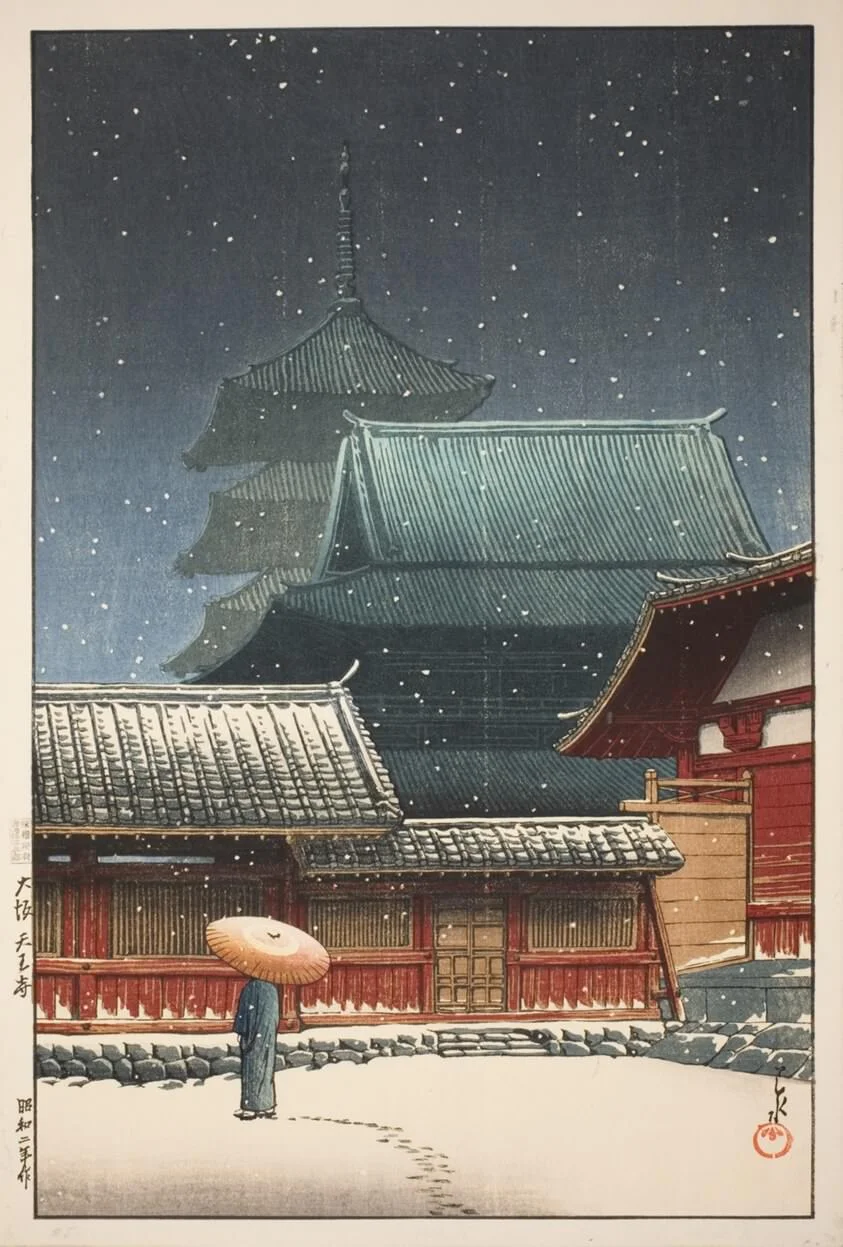
The scene shows Tennōji (天王寺) at night, with its halls and five-storey pagoda (五重塔) fading into the distance under softly falling snow. Light diminishes gradually from foreground to background, creating depth and quiet tension, while a lone figure stands still in the snow, footprints marking a brief human presence. Typical of Hasui's shin-hanga (新版画) style, the print captures a fleeting moment of silence and atmosphere rather than architectural detail; 36.5 × 24.1 cm.
Ōsaka Tennōji
Kawase Hasui (川瀬 巴水, 1883-1957), Tenno-ji, Osaka (Ōsaka Tennōji / 大阪天王寺), from Souvenirs of...
The scene shows Tennōji (天王寺) at night, with its halls and five-storey pagoda (五重塔) fading into the distance under softly falling snow. Light diminishes gradually from foreground to background, creating depth and quiet tension, while a lone figure stands still in the snow, footprints marking a brief human presence. Typical of Hasui's shin-hanga (新版画) style, the print captures a fleeting moment of silence and atmosphere rather than architectural detail; 36.5 × 24.1 cm.
- 14 Mar 2002
- 21,050
- 18,903
Another winter scene by Kawase:
Kawase Hasui (川瀬巴水, 1883–1957), Senzoku Pond (洗足池), 1928. Vertical ōban-format colour woodblock print (大判, 木版画), ink and colour on paper. From the series Twenty Views of Tokyo (東京二十景), published by S. Watanabe Colour Print Co. (渡辺版画店). The print depicts Senzoku Pond in winter, emphasising still water, snow-covered pines, and a subdued, quiet atmosphere characteristic of the shin-hanga style (新版画).
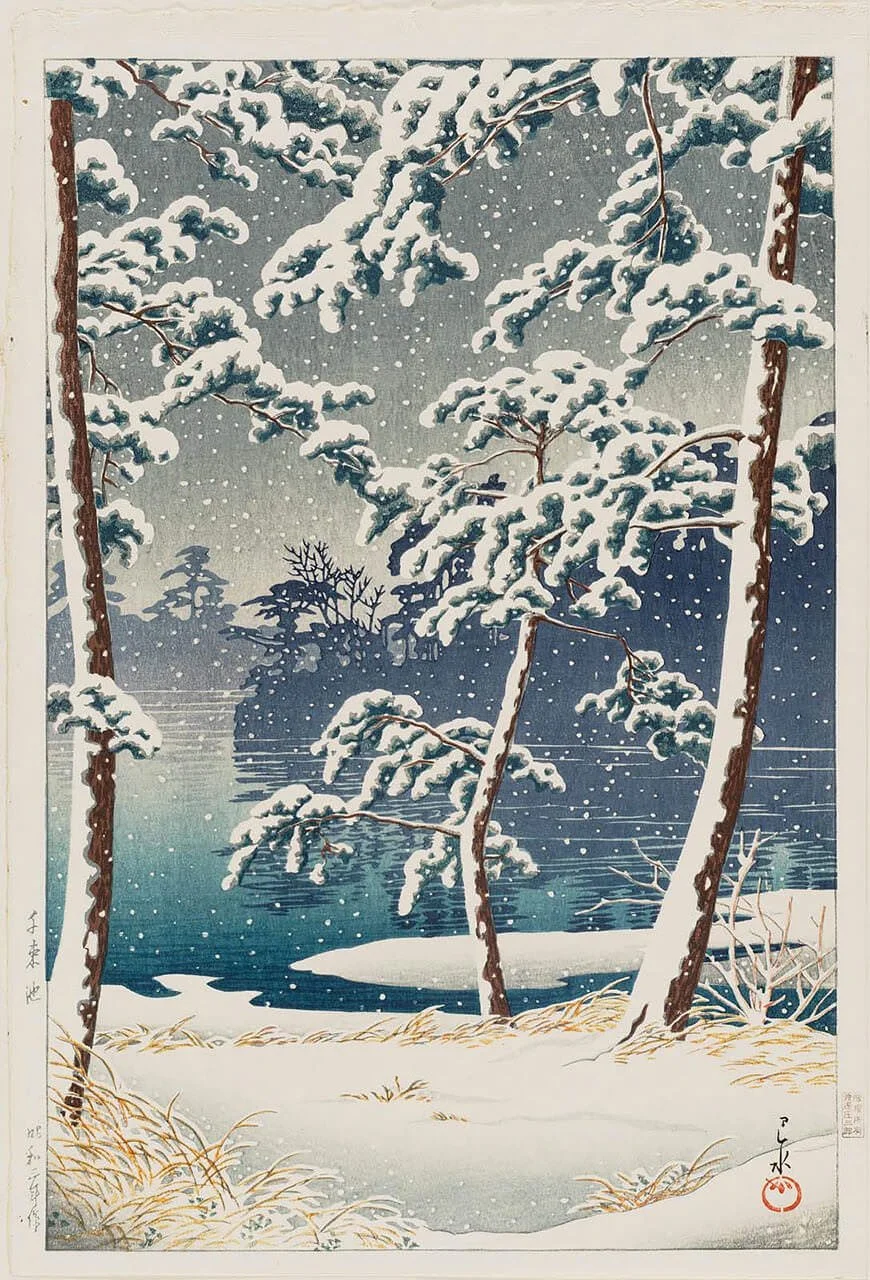
Kawase Hasui (川瀬巴水, 1883–1957), Senzoku Pond (洗足池), 1928. Vertical ōban-format colour woodblock print (大判, 木版画), ink and colour on paper. From the series Twenty Views of Tokyo (東京二十景), published by S. Watanabe Colour Print Co. (渡辺版画店). The print depicts Senzoku Pond in winter, emphasising still water, snow-covered pines, and a subdued, quiet atmosphere characteristic of the shin-hanga style (新版画).
Senzoku Pond
Kawase Hasui (川瀬巴水, 1883–1957), Senzoku Pond (洗足池), 1928. Vertical ōban-format colour woodblock...
- 14 Mar 2002
- 21,050
- 18,903
"In the Mountains of Izu Province" (伊豆山中 Izu sanchū) is a colour woodblock print (錦絵 nishiki-e) made around 1858–1859 and forms part of the late work of Utagawa Hiroshige (歌川 広重, 1797–1858). The sheet measures 37.2 by 23.3 centimetres and is printed in a vertical format typical of his later landscape compositions.
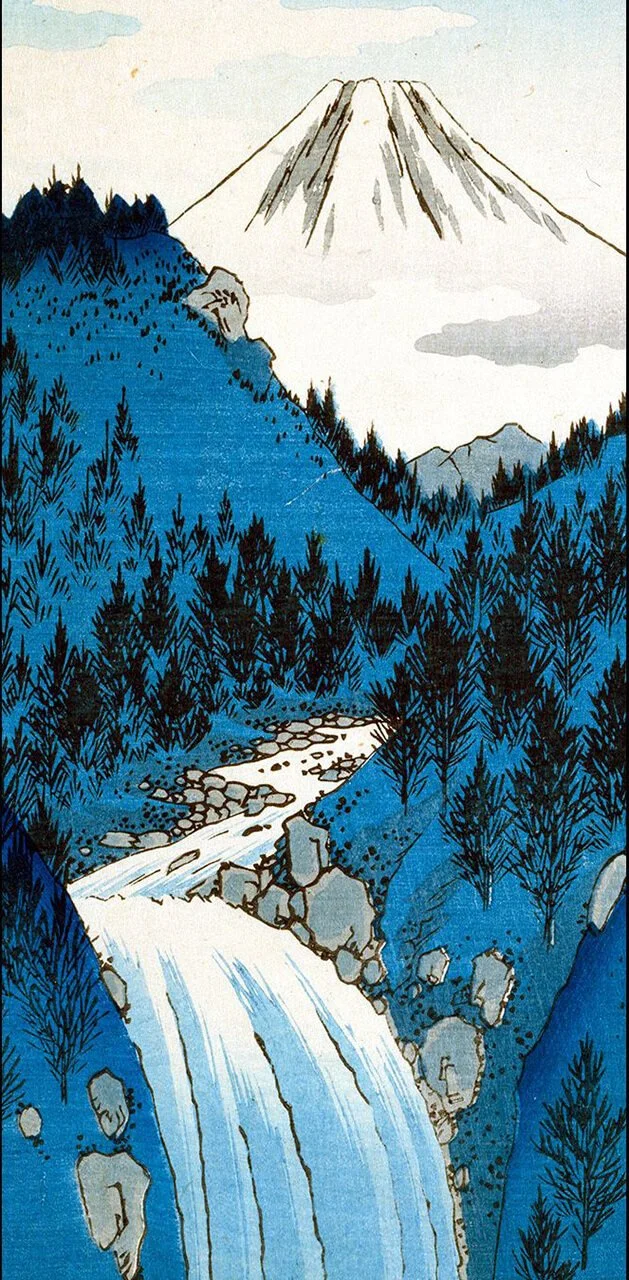
In the Mountains of Izu Province
“In the Mountains of Izu Province” (伊豆山中 Izu sanchū) is a colour woodblock print (nishiki-e 錦絵)...
The composition shows a pale, restrained Mount Fuji in the distance, beyond a cascading waterfall set amid the mountainous terrain of the Izu Peninsula to the south-east of the peak. The waterfall is generally identified as Jōren Falls (浄蓮の滝), a well-known landmark in the region. The scene is not intended as an exact geographical record but as a poetic impression of the landscape. The waterfall draws the eye first, its white stream cutting through dark rocks and trees, while Mount Fuji appears further back on a hazy horizon that conveys both distance and calm.
The surrounding mountains are printed primarily in shades of blue, standing in clear contrast to the pale outline of Fuji behind them. This use of colour reflects the popularity of imported Prussian blue pigment (ベロ藍 bero-ai), which entered Japanese printmaking in the 1830s and quickly became fashionable. At the time, some publishers even issued aizuri-e (藍摺絵), prints made entirely in blue tones to appeal to public interest. Hiroshige's print is not altogether monochrome, yet the strong presence of blue shows the same influence.
The subject resembles earlier waterfall images by Katsushika Hokusai (葛飾北斎), whose cascade prints had already established a widely recognised visual model. It can be assumed that Hiroshige was aware of these motifs.
The surrounding mountains are printed primarily in shades of blue, standing in clear contrast to the pale outline of Fuji behind them. This use of colour reflects the popularity of imported Prussian blue pigment (ベロ藍 bero-ai), which entered Japanese printmaking in the 1830s and quickly became fashionable. At the time, some publishers even issued aizuri-e (藍摺絵), prints made entirely in blue tones to appeal to public interest. Hiroshige's print is not altogether monochrome, yet the strong presence of blue shows the same influence.
The subject resembles earlier waterfall images by Katsushika Hokusai (葛飾北斎), whose cascade prints had already established a widely recognised visual model. It can be assumed that Hiroshige was aware of these motifs.
- 14 Mar 2002
- 21,050
- 18,903
Miyagawa Shuntei (宮川春汀, 1873–1914), Woman Walking in the Snow at Night (雪裏の佳人), 1897, ōban nishiki-e.
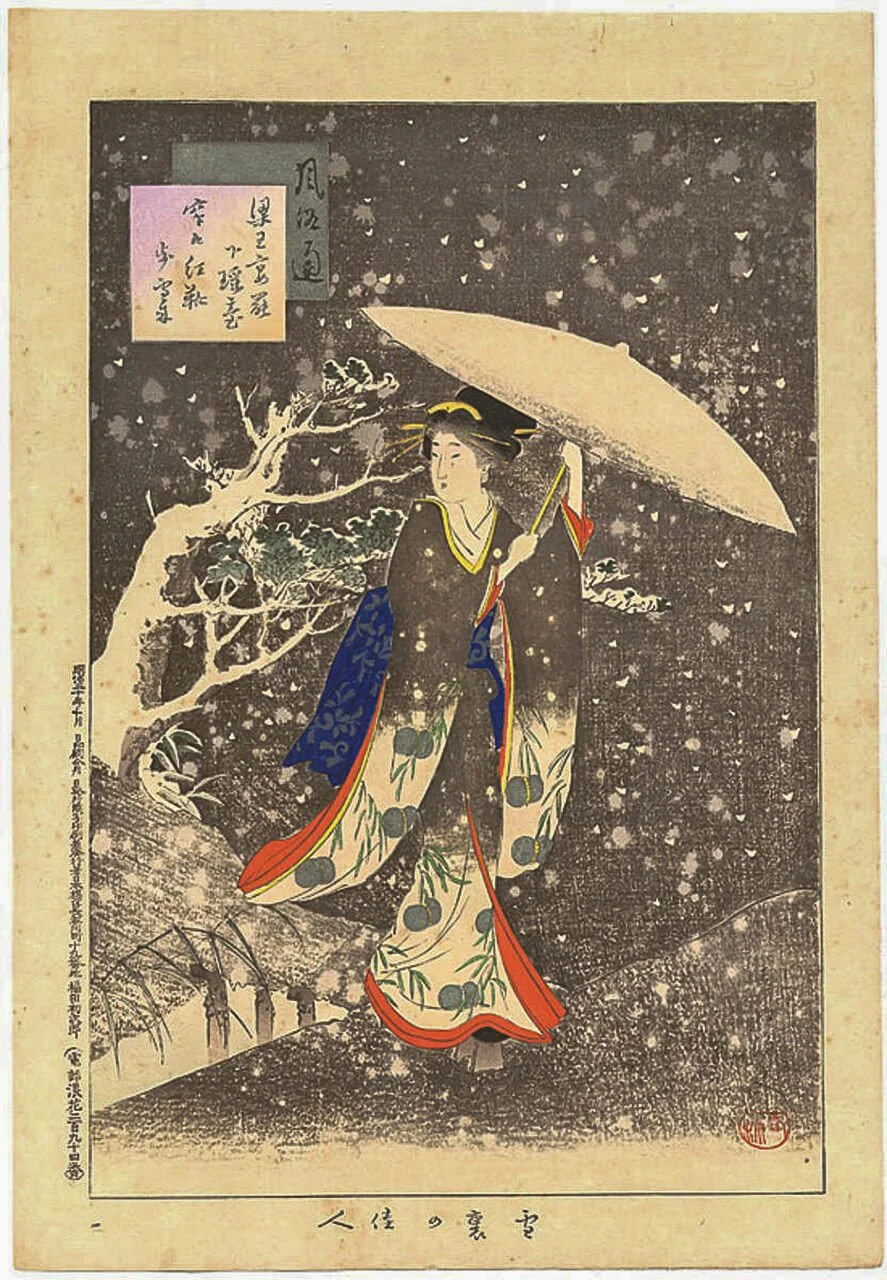
Woman walking in the snow at night
Miyagawa Shuntei (宮川春汀, 1873-1914), Woman walking in the snow at night (雪裏の佳人), oban (9 7/8" X...
This late-Meiji woodblock print is part of the bijin-ga (美人画), or "beautiful women," genre, but its mood is calmer than many earlier Edo-period works. It shows a single woman walking at night through falling snow, her body leaning slightly forward. The setting is simple, with only faint hints of buildings and a background of soft greys and blues that allow the white snow to fill much of the image and make the figure stand out.
The muted palette reflects artistic tendencies of the 1890s, when printmakers absorbed limited Western influence while keeping traditional methods. The night sky is depicted in deep indigo, the clothing in soft browns and blacks, and the skin is pale and even. Snow appears both as falling flakes and as a light mist that softens the edges. This quiet use of colour is common in many late-Meiji bijin-ga and differs from the brighter prints of earlier years. Her clothing appears more practical than decorative, resembling everyday urban wear.
The print is an ōban nishiki-e (大判錦絵), 25 by 36 centimetres, the usual large single-sheet size of the time, made with several carefully aligned colour blocks. It was created in 1897, when photography and lithography were beginning to transform visual culture and traditional woodblock printing was in decline, and it is often seen as expressing a quiet sense of impermanence.
The muted palette reflects artistic tendencies of the 1890s, when printmakers absorbed limited Western influence while keeping traditional methods. The night sky is depicted in deep indigo, the clothing in soft browns and blacks, and the skin is pale and even. Snow appears both as falling flakes and as a light mist that softens the edges. This quiet use of colour is common in many late-Meiji bijin-ga and differs from the brighter prints of earlier years. Her clothing appears more practical than decorative, resembling everyday urban wear.
The print is an ōban nishiki-e (大判錦絵), 25 by 36 centimetres, the usual large single-sheet size of the time, made with several carefully aligned colour blocks. It was created in 1897, when photography and lithography were beginning to transform visual culture and traditional woodblock printing was in decline, and it is often seen as expressing a quiet sense of impermanence.
- 14 Mar 2002
- 21,050
- 18,903
Suzuki Harunobu (鈴木 春信, c. 1725–1770), Lovers Sharing an Umbrella (相合傘, Aiaigasa), c. 1760s, polychrome woodblock print (錦絵 nishiki-e).
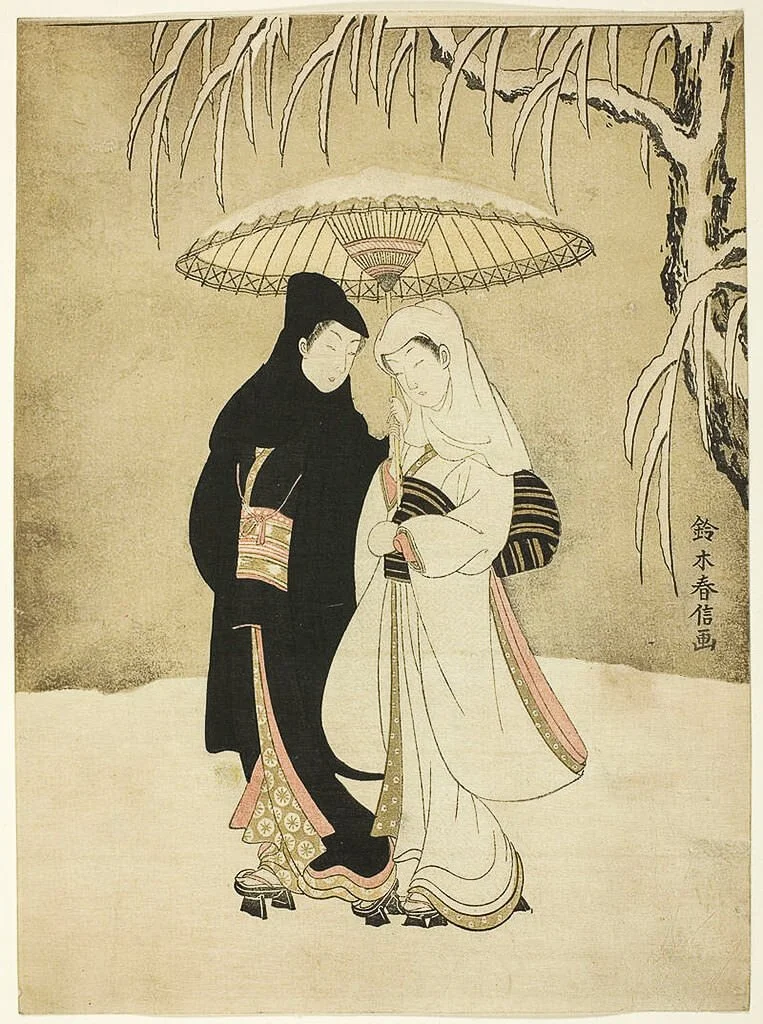
Lovers Sharing an Umbrella
Suzuki Harunobu (鈴木 春信, c. 1725–1770), Lovers Sharing an Umbrella (相合傘, Aiaigasa), c. 1760s...
Suzuki Harunobu's "Lovers Sharing an Umbrella" dates to the 1760s and is modest in size, yet it is often cited as one of the works that helped establish his reputation. Little happens on the surface. A young man and woman walk under a single umbrella, close enough that the shared space becomes the point. In 18th-century Japan, the image of two people beneath one canopy already carried romantic overtones, though usually in a restrained, almost coded way.
Harunobu's name is closely linked with the spread of full-colour woodblock printing, nishiki-e, during the 1760s. The palette stays pale and controlled, the figures narrow and upright. He rarely filled his sheets with bustling crowds; instead, he placed couples in quiet streets or seasonal corners where patterns on robes and the turn of a sleeve do much of the talking. The design feels balanced but not stiff. The umbrella's arc creates a small enclosure within an otherwise open setting. Stripes and checks in the clothing introduce movement without clutter.
Viewers at the time would have recognised the scene as youthful affection, expressed within the social limits of Edo life. The aiaigasa motif turns up elsewhere as well — in poems, on stage, later in popular doodles where two names sit beneath a sketched umbrella. Harunobu treats it less as a sign than as an instant caught in the act, relying on colour control and subtle gestures rather than overt symbolism.
Harunobu's name is closely linked with the spread of full-colour woodblock printing, nishiki-e, during the 1760s. The palette stays pale and controlled, the figures narrow and upright. He rarely filled his sheets with bustling crowds; instead, he placed couples in quiet streets or seasonal corners where patterns on robes and the turn of a sleeve do much of the talking. The design feels balanced but not stiff. The umbrella's arc creates a small enclosure within an otherwise open setting. Stripes and checks in the clothing introduce movement without clutter.
Viewers at the time would have recognised the scene as youthful affection, expressed within the social limits of Edo life. The aiaigasa motif turns up elsewhere as well — in poems, on stage, later in popular doodles where two names sit beneath a sketched umbrella. Harunobu treats it less as a sign than as an instant caught in the act, relying on colour control and subtle gestures rather than overt symbolism.
- 14 Mar 2002
- 21,050
- 18,903
Time to start the sakura series.
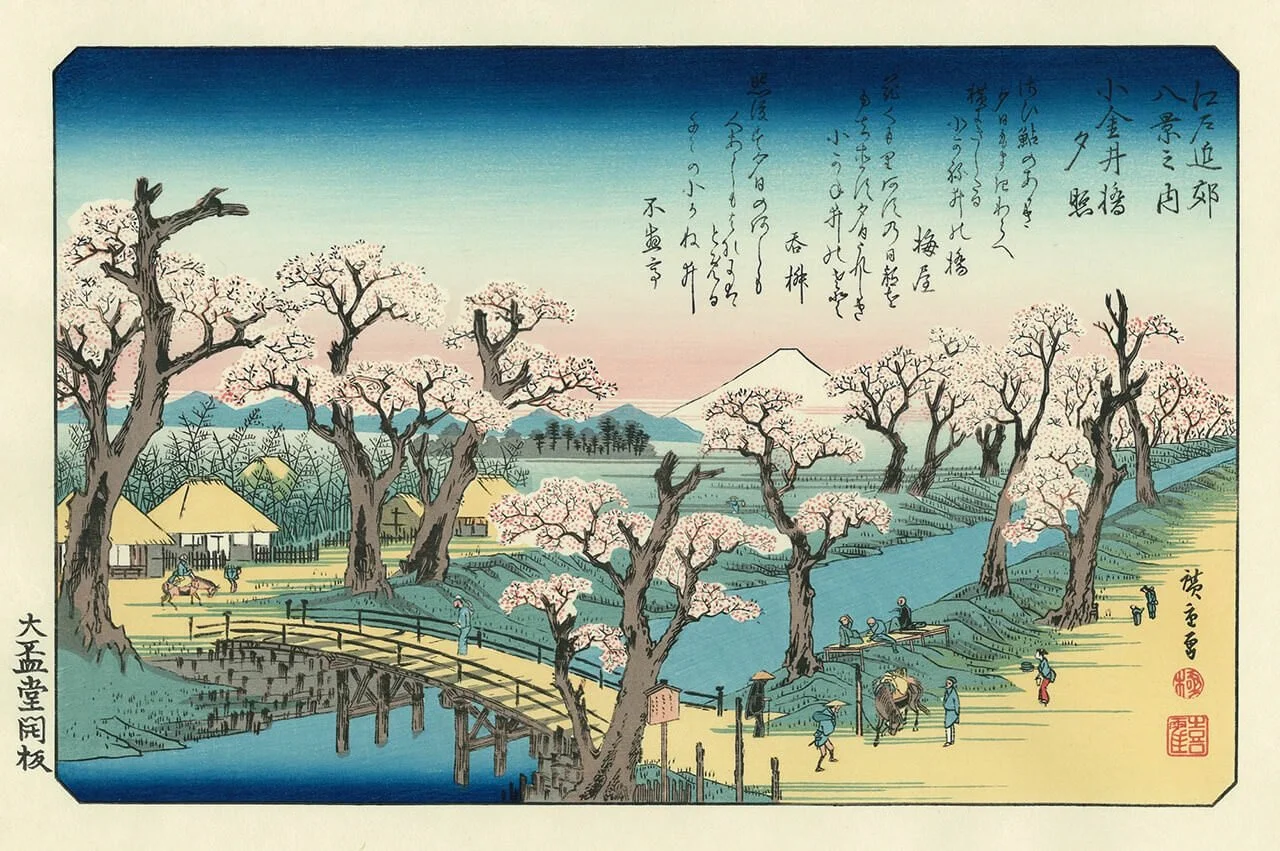
Evening Glow at Koganei
Utagawa Hiroshige (歌川広重, 1797–1858), Evening Glow at Koganei (小金井夕照), from the series Eight...
Evening Glow at Koganei – Eight Views in the Environs of Edo is most commonly attributed to Utagawa Hiroshige (歌川広重, 1797-1858), one of the leading landscape artists of the late Edo period. Hiroshige's style is marked by careful composition, asymmetry, and a sensitivity to seasonal atmosphere. He often used broad areas of space, soft colour gradation (ぼかし bokashi), and shifting viewpoints to create a quiet, contemplative mood—qualities that closely align with the subdued evening scene in this print.
- 14 Mar 2002
- 21,050
- 18,903
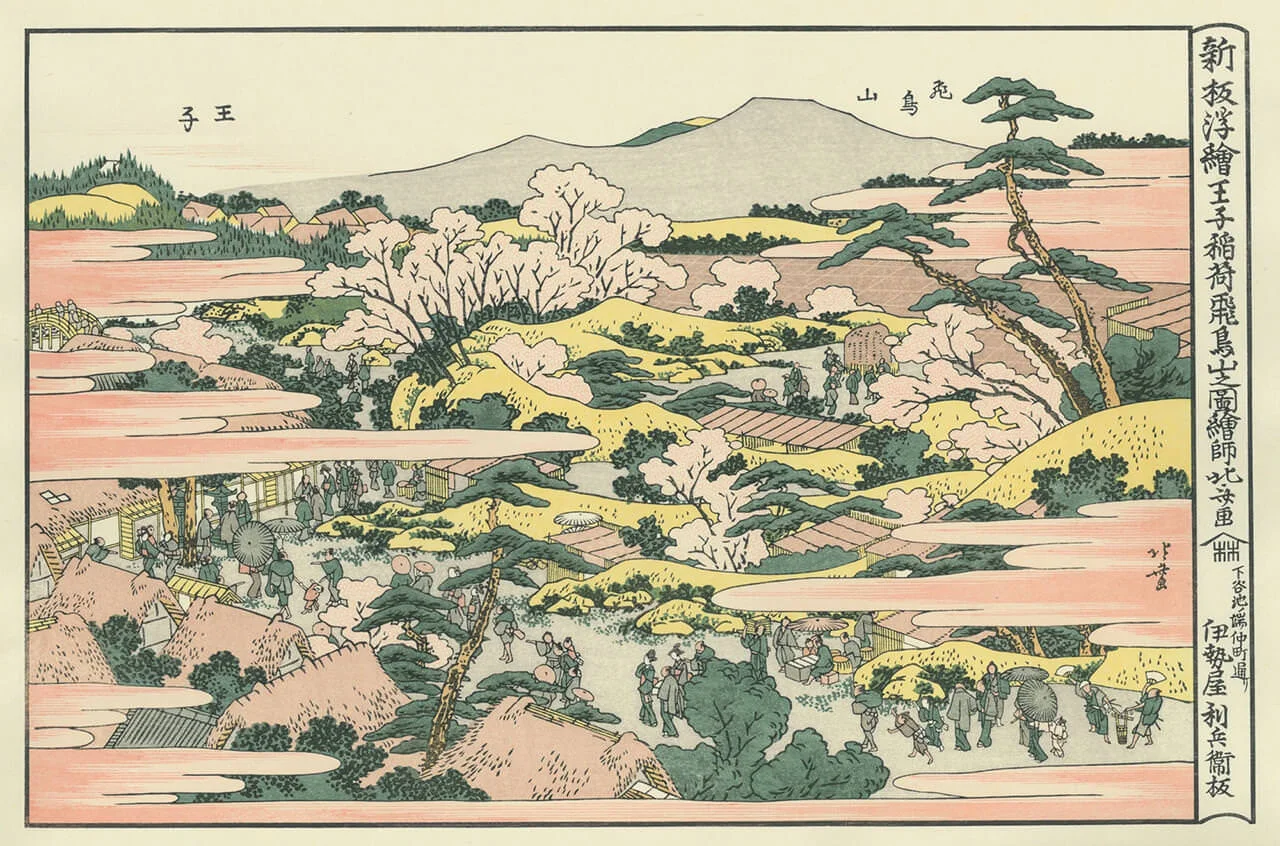
Ōji Inari Asukayama no Zu
Katsushika Hokusai (葛飾北斎, 1760–1849), Shinpan Uki-e Ōji Inari Asukayama no Zu (新板浮絵王子稲荷飛鳥山之図)...
Katsushika Hokusai (葛飾北斎, 1760–1849), Shinpan Uki-e Ōji Inari Asukayama no Zu (新板浮絵王子稲荷飛鳥山之図), presents a lively view of the Ōji area on the northern edge of Edo, combining pilgrimage, leisure, and seasonal landscape. The composition centres on Ōji Inari Shrine (王子稲荷), a well-known site of worship, set against the slopes of Asukayama (飛鳥山), which became a popular spot for cherry-blossom viewing after its development under the Tokugawa shogunate. Executed in the uki-e (浮絵) mode, Hokusai employs a Western-influenced perspective to create depth, drawing the eye along paths and terraces populated with small figures, pilgrims, visitors, and townspeople, moving through the scene. The print captures the mingling of sacred and recreational space typical of late Edo culture. Its clear spatial structure and elevated viewpoint reflect Hokusai's ongoing interest in integrating foreign visual techniques into ukiyo-e.
- 14 Mar 2002
- 21,050
- 18,903
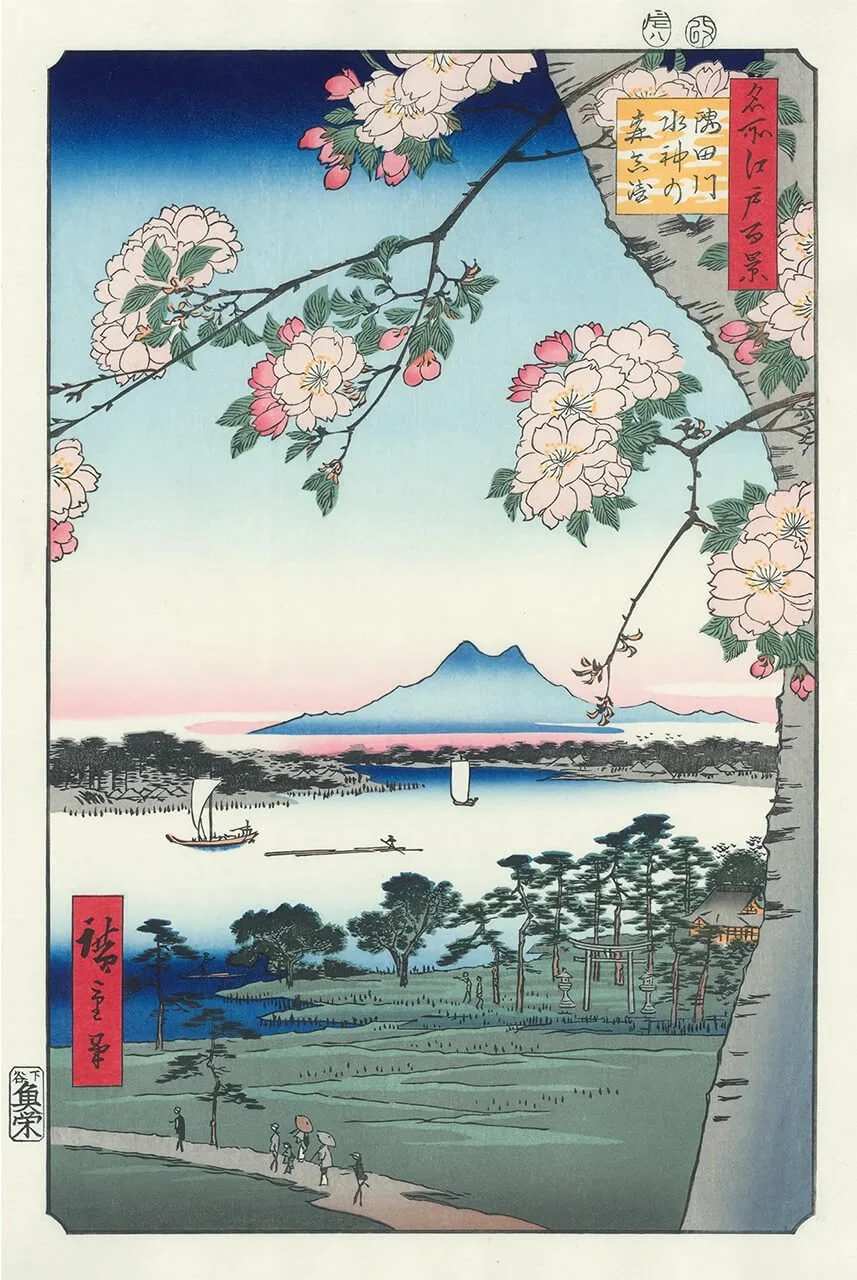
Sumida River: Suijin Forest and Massaki
Utagawa Hiroshige (歌川広重, 1797–1858), Sumida River: Suijin Forest and Massaki (隅田川水神の森真崎), from...
Utagawa Hiroshige (歌川広重, 1797–1858), Sumida River: Suijin Forest and Massaki (隅田川水神の森真崎), from One Hundred Famous Views of Edo (名所江戸百景), captures early spring along the Sumida River during sakura season.
A flowering cherry branch dominates the foreground, rendered in crisp detail and set against a soft bokashi (ぼかし) sky that shifts from deep blue to pale pink. The viewer looks across the river toward Massaki (真崎), with Mount Fuji rising faintly in the distance. Boats drift along the water, while small figures move near the Suijin Shrine grove (水神の森), grounding the scene in everyday life.
The composition is carefully staged: a close, almost tactile foreground contrasts with the open, atmospheric distance. Rather than narrative, Hiroshige emphasises seasonality and mood, using the blossoms to signal renewal and the clear air of a calm spring evening.
A flowering cherry branch dominates the foreground, rendered in crisp detail and set against a soft bokashi (ぼかし) sky that shifts from deep blue to pale pink. The viewer looks across the river toward Massaki (真崎), with Mount Fuji rising faintly in the distance. Boats drift along the water, while small figures move near the Suijin Shrine grove (水神の森), grounding the scene in everyday life.
The composition is carefully staged: a close, almost tactile foreground contrasts with the open, atmospheric distance. Rather than narrative, Hiroshige emphasises seasonality and mood, using the blossoms to signal renewal and the clear air of a calm spring evening.
Similar threads


- Replies
- 421
- Views
- 142K

