


- 14 Mar 2002
- 21,050
- 18,903
In another thread, we touched upon the topic of Nanking deniers. This LDP lawmaker, Nishida Shōji, a member of several nationalist organisations such as Ganbare Nihon, is a prime example of a politician challenging, in this case, Okinawa 's historical narrative. The backlash, especially in Okinawa, must have come as a surprise to him:
On 9 May, Nishida issued a retraction and apology for his disparaging remarks about a war memorial in Okinawa Prefecture. However, he maintained his belief that the region (not he!) is "rewriting history." Speaking at a press conference in Tokyo, the 66-year-old Upper House member acknowledged, "It was highly inappropriate to reference the Himeyuri-no-tō memorial without adequate explanation. I now recognise how excruciating and traumatic this history is for the people of Okinawa."
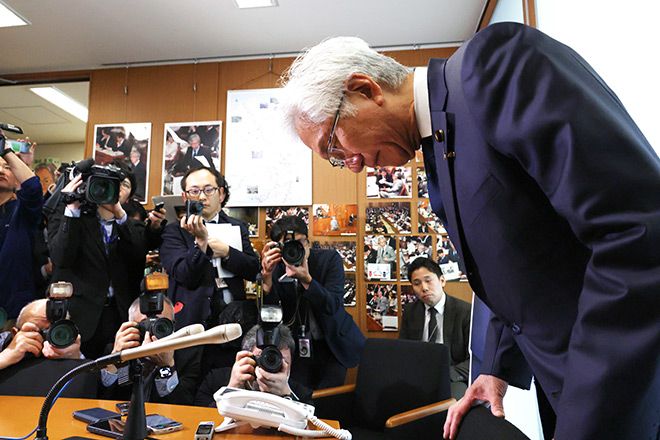
Photo credit: IwashitaTakeshi
The Himeyuri-no-tō memorial in Itoman honours over 200 student nurses and teachers from the Himeyuri (star lily) Student Corps who were mobilised during World War II and died in the 1945 Battle of Okinawa. During a symposium in Naha, the Okinawan prefectural capital, on 3 May, Nishida had described the memorial as "terrible" and accused it of being an example of "rewriting history." He argued that the account wrongly suggested the Japanese military's presence led to the students' deaths while casting the arrival of U.S. forces as an act of liberation.
On 9 May, Nishida issued a retraction and apology for his disparaging remarks about a war memorial in Okinawa Prefecture. However, he maintained his belief that the region (not he!) is "rewriting history." Speaking at a press conference in Tokyo, the 66-year-old Upper House member acknowledged, "It was highly inappropriate to reference the Himeyuri-no-tō memorial without adequate explanation. I now recognise how excruciating and traumatic this history is for the people of Okinawa."
Photo credit: IwashitaTakeshi
The Himeyuri-no-tō memorial in Itoman honours over 200 student nurses and teachers from the Himeyuri (star lily) Student Corps who were mobilised during World War II and died in the 1945 Battle of Okinawa. During a symposium in Naha, the Okinawan prefectural capital, on 3 May, Nishida had described the memorial as "terrible" and accused it of being an example of "rewriting history." He argued that the account wrongly suggested the Japanese military's presence led to the students' deaths while casting the arrival of U.S. forces as an act of liberation.
He claimed the memorial's narrative wrongly implied that the Japanese military's presence led to the students' deaths, while portraying the U.S. arrival as a liberation of Okinawa. An official at the memorial has said the site contains no such narrative. Although acknowledging that he was "insensitive to have caused distress" to the people of Okinawa, Nishida said he stands by his view that the history of the Battle of Okinawa has been distorted. "I still believe what I said to be factual," he said. "I was wrong because I didn't understand the emotions of the Okinawan people, not because I said anything untrue," Nishida said he would not retract his broader critique of Okinawa's history education, including its interpretation of the ground battle.
Yet, is it not Nishida himself who is attempting to rewrite history? Neither the Himeyuri Peace Museum, a memorial museum dedicated to preserving the history and experiences of the student corps, nor the cenotaph contains such crude or simplistic descriptions. During the Battle of Okinawa—the bloodiest conflict in the Pacific theater—the Japanese military, having already lost any realistic chance of victory, mounted an all-out defense, vowing to "fight as long as even an inch of land remained." There is no denying that this stance led to the deaths of countless civilians.


