FreyrStrong
Kouhai
- 22 Mar 2024
- 32
- 23
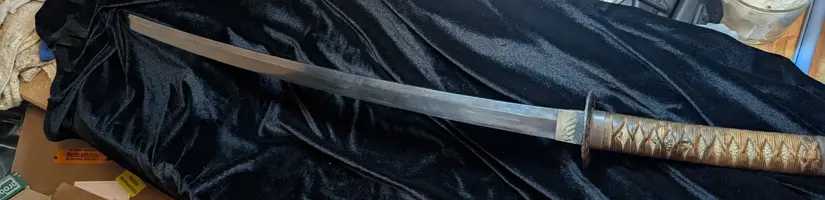
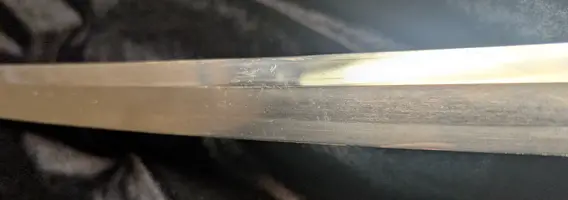
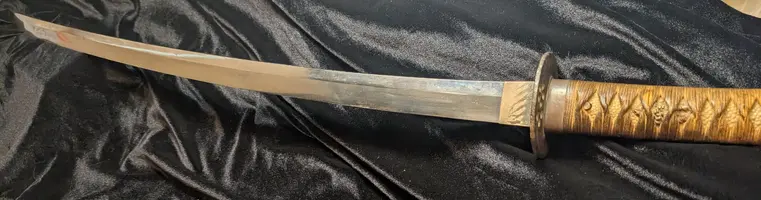
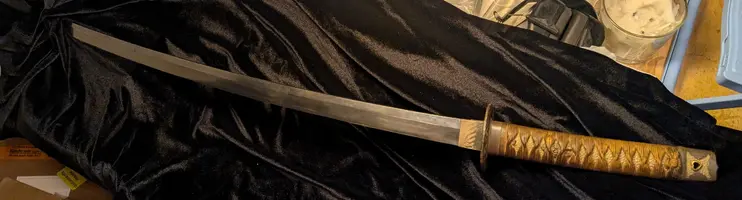
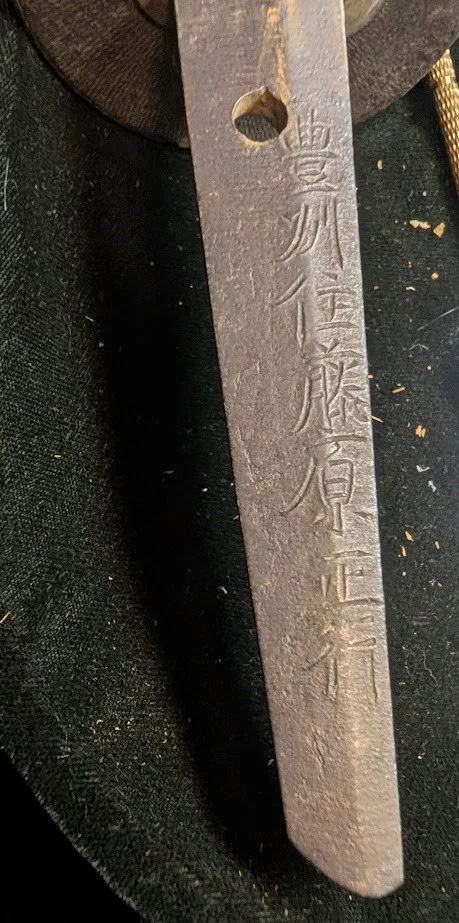
Can someone assist me with this inscription? I would appreciate any help. Thank you!
Follow along with the video below to see how to install our site as a web app on your home screen.
Note: This feature may not be available in some browsers.


It's very simple and easy! You simply press them out with the point of a 'mekugi nuki'I always wonder how difficult it is to remove the handle to see what's underneath. I would think it would be easy to damage the pegs if they are old and dried out.
 ), or put them in some water.

The problem with camelia oil, although it's traditional, is that it is organic and therefore decomposes; You have to remove and reapply very frequently which is fine if you're using the sword and thus doing this anyway. Mineral oil is better and of what choji oil consist these days (with clove oil for scent).FreyrStrong, I wouldn't attempt any polish. I'm firmly of the opinion that you shouldn't use any polishes or solvents on a sword, and you should just oil it lightly to stop rust from advancing. But I can see you have already discovered the range of strong opinions on this topic.

If it's good enough for the British Museum/Victoria and Albert Museum and has His Majesty's Royal Warrant , it's good enough for me! It's also entirely removable as all museum restoration substances have to be.Renaissance Wax I am more ambivalent about, but my default position would be to avoid using anything on a sword other than camellia oil, the "clove oil" that sword shops sell, or light machine oil (like sewing machine or electric shaver oil).
I used camelia oil for a short while but was alarmed at the way it beaded on highly polished blades (cohesion) leaving some areas apparently untreated. Then, I couldn't easily get it all off (I think I had to use alcohol in the end) before I went back to (mineral) choji oil.Actually, some of the commercial "clove oils" that are sold from Japanese sword shops are just camellia oil with some drops of clove oil put in for scent. Anyway the sword only needs a very thin film of oil. It's not good to have so much oil that it pools up where gravity takes it.
I was told that a cut down chopstick tip works as a replacement.It's very simple and easy! You simply press them out with the point of a 'mekugi nuki'
View attachment 126869
I have one made from the tang of an old tantō!
Sometimes the tsuka is a little stuck in place if they haven't been removed in a while so a sharp blow to the wrist of the hand grasping the tsuka usually works it free.
The little bamboo pegs (mekugi) do dry out and shrink a little over time sometimes allowing them to drop out and get lost. They are considered disposable and replaceable and one gets quite good at carving them from smoked bamboo (smoking toughens the bamboo) Traditionally when they were removed you put them in your mouth and let them absorb a little moisture and swell (
 ). It has a lovely kizamizaya carved into ridges.