Tourism Mount Fuji: climber cap, gate, and fees

thomas

Unswerving cyclist
Admin
Joined
14 Mar 2002
Messages
21,050
Reaction score
18,903
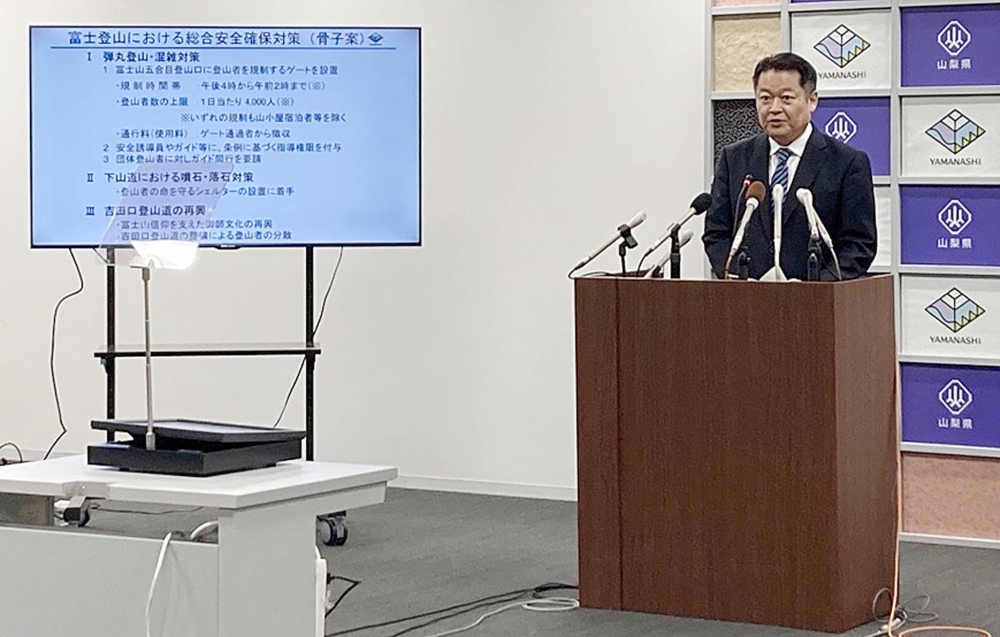
The Yamanashi Prefectural Government has drafted a proposal on safety measures for visitors to Mount Fuji amid issues including congestion near the summit and lack of manners among people attempting overnight "bullet climbs."
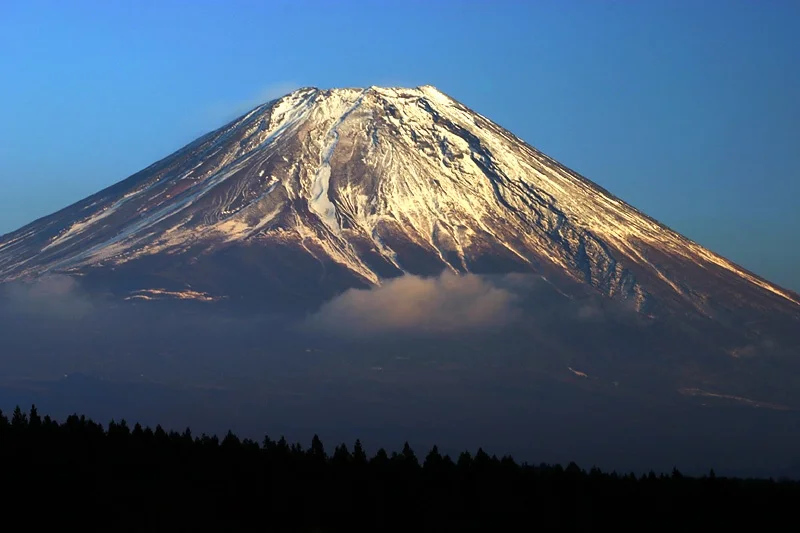
Mount Fuji

[...] a gate will reportedly be installed at the fifth station's trailhead, and the maximum number of hikers will be capped at 4,000 per day excluding lodge guests. Entry to the mountain will also be restricted between 4 p.m. and 2 a.m. during the mountain's opening period to prevent visitors from making overnight "bullet climbs." Collection of a toll, separate from the conservation cooperation fee currently being collected voluntarily, is also being considered. Safety officers and guides will apparently be given authority to provide instructions to visitors to prevent nuisances.


Currently, climbers who hike from the mountain's fifth station onward are asked to donate 1,000 JPY toward maintenance and conservation. However, some climbers don't pay since doing so is only voluntary.
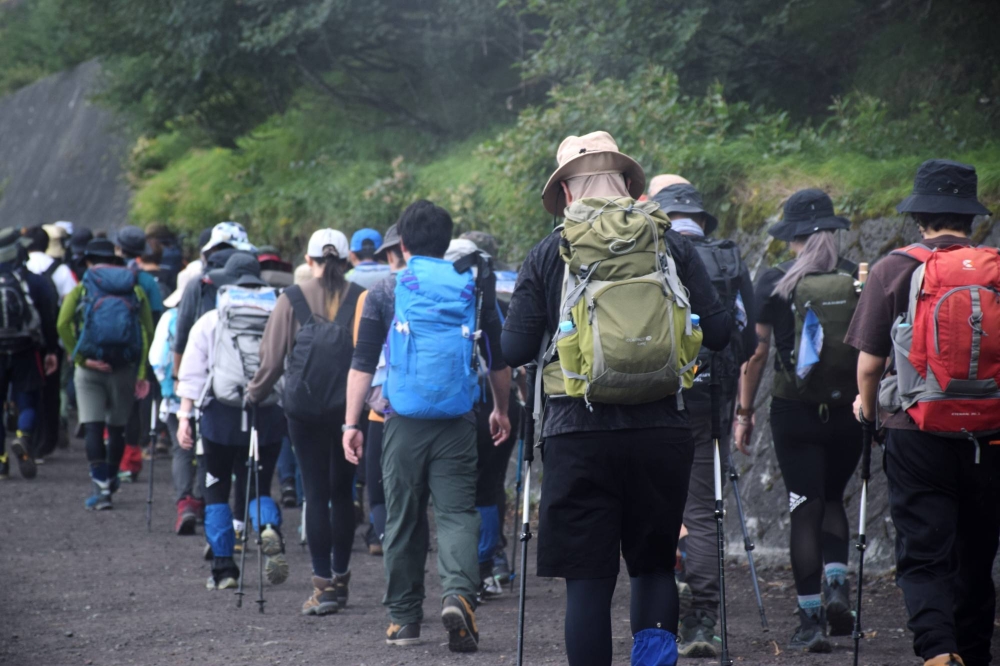
Over-tourism has been recognized as a problem on Mount Fuji, causing Yamanashi and Shizuoka prefectures, the environment ministry and others to form a council to discuss countermeasures. The number of climbers this summer was 221,322, returning to pre-pandemic levels. Of these, 137,236 climbers were on the Yoshida trail, the most in any year, including trails on the Shizuoka side. There were about 3,800 bullet climbers on Mount Fuji this summer, and some were seen sleeping on the open mountainside and making bonfires.


Yamanashi Prefecture will start imposing a 2000-yen fee on climbers ascending Mt. Fuji from the most commonly used trail this summer.


9.jpg


The fees will be collected at a gate to be installed at the 5th station of the Yoshida Trail on the Yamanashi Prefecture side of the mountain, which can be accessed by buses and taxis. The 3,776-meter mountain trail is broken into 10 stages, with the summit marking the 10th station. The revenues will be used to take measures to prevent bullet climbing and to build a shelter in case the mountain erupts, among other steps, according to the source. The planned charges would be separate from the 1,000 yen climbers are currently asked to pay voluntarily in the name of supporting the upkeep of the mountain.


The Shizuoka prefectural government has announced measures to restrict entrance to Mount Fuji trails after 4 p.m. starting this summer.

This decision aims to alleviate overcrowding and enhance safety. The neighbouring Yamanashi Prefecture has also made a similar announcement. These restrictions will be implemented on a trial basis. The goal is to prevent unsafe climbing practices, including the practice known as "bullet climbing", where climbers attempt to reach Japan's tallest summit of 3,776 meters in one continuous ascent without spending the night on the mountain. The initiative focuses on ensuring climbers' safety and maintaining the pristine environment of Mount Fuji.

The three trails on the Shizuoka side -- Subashiri, Gotemba and Fujinomiya -- will be closed during evenings except for people staying at mountain lodges. The prefectural government plans to negotiate the details with the municipalities concerned. The local government earmarked 52.50m JPY (USD 351,000) in relevant expenses under a draft budget for fiscal 2024, including for developing an online system for mountain lodge reservations. Yamanashi Prefecture will set up a gate at the 5th station of the Yoshida trail on its side to close the route between 4 p.m. and 3 a.m., except for lodging guests, and cap the number of climbers at 4,000 a day. It is also planning to collect 2,000 JPY per climber for using the trail from this summer. The Yoshida trail normally opens on 1 July, earlier than 10 July on the Shizuoka side, and it is used by more climbers.


The Yamanashi Prefectural Government announced that starting this summer, a new reservation system will be implemented for hikers using the most popular trail to ascend Mount Fuji. The system, which opens for reservations at 22:00 on 20 May, is designed to reduce crowding at the trailhead by allowing climbers to prepay an entry fee of 2,000 JPY (approximately USD13). To manage the number of daily climbers, the prefecture has capped the limit at 4,000. Of these, 3,000 spots can be reserved online, while a minimum of 1,000 hikers can secure their entry by paying the fee on-site on the day they intend to hike, as per the local authorities.


Reservations can be made on the official website for climbing Mt. Fuji, which is operated by the prefecture and other stakeholders, until the day before the climb, with up to 100 people allowed to book at once. Payments can be made by credit card or QR code, and no refunds will be made in principle. [...] Also starting this summer, Yamanashi Prefecture will set up a gate at the 5th station to close the trail between 4 p.m. and 3 a.m., with the only exception being for those who have made prior reservations, who must stay overnight in huts to prevent bullet climbing.


Official website for Mt. Fuji climbing:

 
Starting this summer, new restrictions and fees will be implemented for climbers on Mount Fuji. The Yamanashi Prefecture trail will limit climbers to 4,000 per day and charge a 2,000-yen toll, with a gate closing the trail at night. The Shizuoka Prefecture trail will have no climber limits but encourages pre-registration and learning climbing rules via a dedicated website. These measures aim to reduce congestion, enhance safety, and preserve Mount Fuji's environment.

Last season, around 220,000 visitors climbed Mount Fuji, almost reaching pre-pandemic numbers. The congestion from climbers aiming to see the sunrise at the summit remains a significant issue, posing risks such as injuries from falls, hypothermia, and altitude sickness due to restricted movement.

Recently, so-called "bullet climbers" aiming to reach the summit overnight, as well as those taking naps along the trails and people in casual outfits have also become an issue. They are not only risking their own lives but causing trouble for others around them. There has also been a rising number of climbers in distress. Last year, 97 people required assistance on Mount Fuji, nearly double the average figure over the preceding five years. On June 26 this year, just before the trails open, it was announced that four people had died on the mountain.


And a grim reminder of why climbing Mount Fuji should not be taken lightly:

 
Watching the sun rise from the top of Mt. Fuji is breathtaking. I don't remember what time we started from the 5th station, but we stayed at one of the "hotels" for only a few hours sleep before heading out again. There were a number of people at the top, but I don't remember it being as crowded as in those pictures. Of course, we're talking maybe 20 years ago. (Has it really been that long? sigh )

I don't recall any campfires at all. Who would even think of such a thing? I think these restrictions are fully justified, but sad. People are just bad at policing themselves, I guess.
 
Another reminder why climbing Mount Fuji should not be taken lightly:

hree hikers died on Mount Fuji within two days of the climbing trails opening on the Shizuoka Prefecture side. On 10 July, a man in his 70s was found collapsed on the Fujinomiya trail near the summit, believed to have fallen from a rocky slope. The next day, a climber in his 60s was found motionless at the original seventh station on the same trail. Also, on 10 July, a 77-year-old man from Komae was discovered slumped over on the Gotenba trail between the eighth station and the summit. The trails opened for the season on 10 July, while the Yoshida trail on the Yamanashi Prefecture side opened on 1 July.

 
Mount Fuji accident.
Three people die of 2nd.
"The light dress" which the "forced mountain climbing" series are dangerous to in the stormy weather.
(July 13, 2024)

Accident accidents occurred successively on the Shizuoka side of Mount Fuji which performed opening of the mountaineering season, and three died of only two days this week. Mountain climbing visitors toward the top occurred successively while I blew a gale on 12th and was stormy.

■Wind and rain which are intense in the mountain trail that "felt the danger of the life"

Mount Fuji of 12th hit by strong rain and wind was bad weather as several meters ahead was pure white and was hard to be seen. The people who descended a mountain on the way were seen a lot.

The person whom I gave up at the seventh stage
"I never see the view anymore. I am really transferred and think that it is dangerous as wind was strong"

The mountain climbing visitor whom I gave up on the way
"I tried it, but it blows and gives up a bodily sensation wind speed of 200 meters per second and returns"

The wind velocity at the mountaintop of past 2:00 p.m. was 16.3 meters, and wind and rain which were intense in the mountain trail raged on 12th.

It is said that an appeal was carried out to stop mountain climbing to the top by the mountains rescue team at the ninth stage.

The mountain climbing visitor whom I gave up on the way
"In this situation I thought that there was the risk to slip down. I completely felt the danger of the life"

■As for the light dress which forced mountain climbing is dangerous to in the stormy weather

Shizuoka side of Mount Fuji which reached opening of the mountaineering season on 10th. However, male one of the mountain climbing visitors died on the first day. It is considered to have slipped down near the sword ケ peak at the mountaintop.

Megumi Ueda who went to rescue
"One taken a picture of seemed to be slipped down on backward, and lose your footing from the place of the bluff. The state that AED does not react to at all"

On 11th, a man dies near the seventh stage of the Fujinomiya route, and in total three die of only two days from opening of the mountaineering season.

The Fuji mountain climbing that the precise judgment that matched the elaborate preparations and situation is demanded from. However, a party traveler from Hong Kong forcing mountain climbing in bad weather is ... for 12 days.

Party traveler from Hong Kong
"(Q. weather is bad, but is it all right?) All right, I go up to the eighth stage"

Chinese male group of 2 whom the Fuji mountain climbing has never met. The vinyl umbrella which I purchased in a hand just before that is ... When take unfair advantage of weakness; ...

Foreign student from China
"(this Q. shoes are for mountain climbing?) It is not shoes for the mountain climbing particularly. Probably think that is all right; "(Q. is not afraid of that climb it?) There is not it at all (scared). Because is made a reservation (in a mountain hut), is too good; because "is confident of physical strength, think that is all right"

Two people disappeared to the mountain trail toward the mountain hut of the eighth stage when they said so.

"The light dress mountain climbing" by the foreigner is ... on Shizuoka side on opening of the mountaineering season and 10th when it was. A person in charge warns a foreign man which "please do not climb the mountain" saying "it is dangerous".

Weather considerably turns worse, and it is the situation that the view considerably has bad, but the foreign man dressed in jeans is going to enter the mountain in short sleeves. I climbed it on the run after all.

At yet another place, a foreign mountain climbing visitor dressed in sneakers was seen in shorts.

Fuji mountain climbing in the light equipment and the bad weather that there is no end to.

Following the fact that help requests increased, the Shizuoka Prefectural Police posted a state of the severe help at the time of the rainstorm on SNS on 12th.

■I am concerned by the concentration of the mountain climbing visitor to the Shizuoka side

Furthermore, it is the concentration of the mountain climbing visitor to the Shizuoka side that there is concern. A limit, a toll of the number of the advance reservations and the mountaineers were introduced by the Yoshida route of the Yamanashi side from this year.

On the other hand, the Shizuoka side is introduced into neither the limit of the number of the mountaineers nor the toll. Therefore I am worried when a mountaineer may concentrate on the Shizuoka side.

Fuji mountain climbing navigator Naoji Shimizu
When "the other side (Yamanashi side) is closed (Shizuoka side), I think that it increases. An Asian person comes over en masse at the time of Bon Festival of August. It is very uneasy and is worry"
 
The new measures to curb Mount Fuji overcrowding are showing promising results: Yamanashi Prefecture's implementation of a daily climber cap, nighttime restrictions, and a 2,000 yen fee on the Yoshida Trail has significantly reduced the number of nocturnal climbers, often associated with dangerous "bullet climbing." These changes aim to protect the mountain and ensure the safety of climbers.

Long queues form as climbers pay the new toll to access Mount Fuji's Yoshida Trail

Long queues form as climbers pay the new toll to access Mount Fuji's Yoshida Trail (photo credit: Noda Tatsuki via Mainichi)

The Fujiyoshida Municipal Government and associated organizations have released data on climbing activity one month into the implementation of new restrictions on the Yoshida Trail. Between 1 and 31 July, 55,185 climbers passed through the sixth station, marking a 16% decrease compared to the same period in 2023. The most significant decline was observed between 5 PM and 3 AM, with a 76.1% reduction in climbers compared to the previous year. This time frame was specifically targeted by the new regulations, which restricted access to those with mountain lodge reservations or those descending the mountain. Yamanashi Prefecture, managing the fifth station gate, reported 62,660 toll payments between 1 and 31 July. Of these, 31,887 climbers (50.8%) utilized the prefecture's reservation system, while 39,784 were mountain lodge guests and 22,876 were day-trippers. It's important to note that these figures include individuals who made reservations but did not actually ascend the mountain.


I live in the foothills of the Rocky Mountains so for me Mount Fuji is actually a fairly low mountain no issue to "bullet climb" if weather is good, but for people from lower elevations it can indeed be dangerous. Heck I bicycle from my house to 12000 feet plus but only because I live at elevation. My wife got altitude sickness just from running exited from a train in the Swiss alps (before she moved to Colorado) and her father felt sick just going around looking at snow at around 14,000 feet getting off at a drive in Colorado. I showed my wife a rodeo once and one horse didn't acclimate had literally just arrived and died right there due to altitude we were told. They can't screen where people live and are acclimated to. As wifey wants to move permanently back to Kyushu I will of course lose my adaptations in less than a year after we move back there. We have flatlanders come and try dangerous climbs and die as they don't respect it. I was surprised though how easily altitude sickness affected family with very mild exertion, my wife had like blue lips and was semi-conscious we had to bring her back down in the train and my father in law felt sick
.
 
Last edited:
Until very recently, the done thing by Japanese and non-Japanese people alike was to climb the mountain overnight to see the sunrise from the top. There's a whiff of self-interest (maximising revenue per climber) about these sudden warnings of the danger of 'bullet climbing' after nothing for many years.
 
Some revenue, perhaps, but it's not really significant. Another option might've been to require hiking insurance specifically for a Fuji climb (or attempt). Tho I'm not sure whether it would be cheaper than the govt collecting a fee, or if it would have the same effect of reducing numbers.
 
Some revenue, perhaps, but it's not really significant. Another option might've been to require hiking insurance specifically for a Fuji climb (or attempt). Tho I'm not sure whether it would be cheaper than the govt collecting a fee, or if it would have the same effect of reducing numbers.
I'm guessing that it's several thousand yen for a rest at a mountain hut, which is what I was thinking of when I commented on revenue.
 
I'm guessing that it's several thousand yen for a rest at a mountain hut, which is what I was thinking of when I commented on revenue.
Ah, got it.

It would seem the numbers need to be controlled, that there is at least some agreement about that. But there are, uh, different paths to the top of that mountain.
 
Shizuoka Prefecture, too, is contemplating charging fees for climbers ascending Mt. Fuji via three trails starting next summer, aiming to regulate access in line with neighbouring Yamanashi Prefecture. While Yamanashi has already implemented measures to curb risky activities like "bullet climbing" (see above), Shizuoka has yet to introduce any restrictions. Mt. Fuji, located across both prefectures, has only seen Shizuoka request that hikers submit pre-registration plans detailing their ascent start times and hut reservations.

Mount Fuji Hiking Trails
Courtesy of Japan Times

There are three trails -- Fujinomiya, Gotemba and Subashiri -- in Shizuoka. As they are not on prefectural land, it has been difficult for the local government to impose regulations on climbers ascending Mt. Fuji through its ordinance. Shizuoka is studying through November how it can limit access to Mt. Fuji with a view to enacting a new ordinance to collect entrance fees, the official said, adding the prefecture plans to earmark 37 million yen ($256,000) to estimate costs for controls on hikers. In Yamanashi, meanwhile, a gate has been set up to close the Yoshida trail from 4 p.m. to 3 a.m. to individuals without mountain hut reservations at the 5th station of the route, which is the most commonly used path in the prefecture.


2,000 yen a climber to clean up after their mess is reasonable I think. In the US I have a state park pass to help with that and a national park pass so I don't climb for free either. I am looking at a 6 hour climb this week actually and I don't have to tell anyone my plan (except my wife) but they like it if you sign in at a station so they know who to look for if you run into trouble but it is only a suggestion. A mountain as popular as that I can imagine the pain flatlanders cause trying to overnight climb it. We have rescues here and people die every year on 14,000 ft mountain climbs (falling) and of course people getting stuck in snow with no preparation or other issues but for climbing we have nothing like that. Rocky Mountain national park is overcrowded and has timed reservations now but I would say 90% of people just drive around and look at pretty stuff rather than climb.

The one time I had put time in to do Fuji I came to the Fujinomiya side but alas a typhoon was coming they told me so I aborted, no thank you. These days it is so crowded not sure I'd enjoy climbing Fuji itself. Lots of other beautiful mountains to hike up in Japan though.
 
My cousin's husband, on a working visit to Japan, did the Yoshida Trail last week. Due to their schedule, he couldn't climb Mount Fuji to watch the sunrise. Taking the first bus from Shinjuku, they arrived at the 5th station in the morning, climbed the summit and made it back to reach the last bus back to Tokyo. By doing so, they avoided the worst of the crowds.


According to recent reports, 'bullet climbing' on Mt. Fuji is down 90% after the gate was put in place:


The number of people attempting the dangerous "bullet climb" to the summit of Mount Fuji this summer has plummeted by 90% following the installation of a gate to restrict the practice. The gate at the 5th station on the famous Yoshida Trail was closed between 4 p.m. and 3 a.m. during this year's climbing season, which ended on Tuesday.

An official from Fujiyoshida City in Yamanashi Prefecture stated that the gate has been highly effective in deterring "bullet climbing." According to the city, the number of climbers who passed the 6th station between 9 p.m. and midnight – typical hours for this dangerous practice – dropped to 317 between July 1 and Tuesday. This represents a significant 90.7% decrease compared to last year. While the percentage of foreign climbers increased to 42.4% of the total (53,075) this year, the number of those who passed the 6th station between 5 p.m. and 3 a.m. still saw a dramatic 91% decline to 1,416.

 
Despite an overall decrease in Mount Fuji climbers this summer, the three climbing routes in Shizuoka Prefecture experienced a significant increase in visitors. The Fujinomiya, Subashiri, and Gotenba trails recorded 89,459 climbers, surpassing pre-pandemic levels. This rise is attributed to introducing a daily access limit and fee at the popular Yoshida trail in Yamanashi Prefecture. While the Yoshida trail opened on 1 July, the Shizuoka trail opened nine days later and closed on 10 September.

I wouldn't be surprised if Shizuoka implemented the same restrictions next season.

According to the Environment Ministry, the Yoshida trail experienced a 16.3 percent decrease in climbers compared to the previous year, with a total of 114,857. This marks a 23.4 percent decline from 2019. In comparison, the Fujinomiya trail saw a 7.4 percent increase, reaching 53,218 climbers, while the Subashiri trail experienced a substantial 19.8 percent increase with 22,830 climbers. However, the Gotenba trail counted a 13.4 percent decrease to 13,411, possibly attributable to a 12-day malfunction of the infrared sensor used to count climbers. As the number of climbers on the Shizuoka routes surged, so did the revenue generated by donations from visitors.


I climbed Mt. Fuji to catch the sunrise with some friends in late summer of 2006, starting from the 5th station around 10pm. We were woefully underprepared for just how cold the higher stations could get (I had a light puffy and was still quite chilled by the 2nd and 1st station), and since the mountain huts only offered 15 minutes of heated shelter with the purchase of a cup of noodles (at an eye-popping markup), we broke college students ended up huddled together on a bench outside, shivering for an hour before finishing the climb to catch the sunrise.

We got to the top, looked around, and started down pretty much immediately, already quite done with the entire experience. The most fun I had on the trip was glissading down the cinder cone, running down the 8ish hour climb in a little less than 2 hours, unaware of the potential danger I put myself in. Despite there being other trails, climbing Mt. Fuji was a rather miserable hike I'm in no hurry to repeat. It's a boring slog up a barren cone, and that's not even mentioning the crowds, which apparently have only gotten worse.

I guess it's worth doing once to find out if I'm wrong, and catch a somewhat nice view, but if you truly enjoy hiking Fujisan, I'd be surprised.
 
I climbed Mt. Fuji to catch the sunrise with some friends in late summer of 2006, starting from the 5th station around 10pm. We were woefully underprepared for just how cold the higher stations could get (I had a light puffy and was still quite chilled by the 2nd and 1st station), and since the mountain huts only offered 15 minutes of heated shelter with the purchase of a cup of noodles (at an eye-popping markup), we broke college students ended up huddled together on a bench outside, shivering for an hour before finishing the climb to catch the sunrise.

We got to the top, looked around, and started down pretty much immediately, already quite done with the entire experience. The most fun I had on the trip was glissading down the cinder cone, running down the 8ish hour climb in a little less than 2 hours, unaware of the potential danger I put myself in. Despite there being other trails, climbing Mt. Fuji was a rather miserable hike I'm in no hurry to repeat. It's a boring slog up a barren cone, and that's not even mentioning the crowds, which apparently have only gotten worse.

I guess it's worth doing once to find out if I'm wrong, and catch a somewhat nice view, but if you truly enjoy hiking Fujisan, I'd be surprised.
I climbed it twice. I don't regret either time. Of course the best parts are the ramen at the top and/or the onsen at the bottom. The first time was the traditional climb at night among crowds to see the sunrise. The second time was more of a real mountain experience since we climbed it during the day about one week after it had "closed." So we only saw a handful of other people on the mountain. It was the first time I saw rime ice which was pretty neat. Also enjoyed running down the cinders. It felt like we were bouncing on the moon.
 
I climbed Mt. Fuji once back in the early naughties. I loved it! Or more accurately, I loved watching the sun rise from the peak. It wasn't the first time I had seen the sun rise from a mountaintop, but it was the best by far. It's also the last time I've done it, now that I think about it.

I guess what you get out of it stems in large part what your expectations are. I was there to get to the top and see the sun rise. The actual hike was a necessary means toward that end. Yes, it got cold, especially at night when we were climbing through the clouds. This despite the fact that it was summertime. Yes, there were a lot of people, but I guess I expected that. It sounds like there are a lot more people now than there were at the time.

I remember reading a story about an old man who knew his life was almost at an end, so his friends helped him climb Mt. Fuji to see the sun rise. It was his dream, finally made real. That story always stuck with me. I suppose part of me felt like I was sharing in the old man's experience, although I wasn't old, and it wasn't really my dream. But it was an amazing experience for me, nonetheless.
 
I climbed Mt. Fuji once back in the early naughties. I loved it! Or more accurately, I loved watching the sun rise from the peak. It wasn't the first time I had seen the sun rise from a mountaintop, but it was the best by far. It's also the last time I've done it, now that I think about it.

I guess what you get out of it stems in large part what your expectations are. I was there to get to the top and see the sun rise. The actual hike was a necessary means toward that end. Yes, it got cold, especially at night when we were climbing through the clouds. This despite the fact that it was summertime. Yes, there were a lot of people, but I guess I expected that. It sounds like there are a lot more people now than there were at the time.

I remember reading a story about an old man who knew his life was almost at an end, so his friends helped him climb Mt. Fuji to see the sun rise. It was his dream, finally made real. That story always stuck with me. I suppose part of me felt like I was sharing in the old man's experience, although I wasn't old, and it wasn't really my dream. But it was an amazing experience for me, nonetheless.
I cannot get over the fact you call the early 2000's the "naughtiest". Granted, I call any time before the 90's the prehistoric times.
 
Back
Top Bottom