- 14 Mar 2002
- 21,053
- 18,908
- Thread starter
- #101
Two years ago, a 2000-year-old stone artefact that appeared to have some writing on it caused an academic sensation as the find would have constituted the oldest example of written language in Japan. Researchers insisted the fragment found in the Tawayama archaeological site in Matsue, Shimane Prefecture, bore faint kanji characters scribbled in Indian ink.
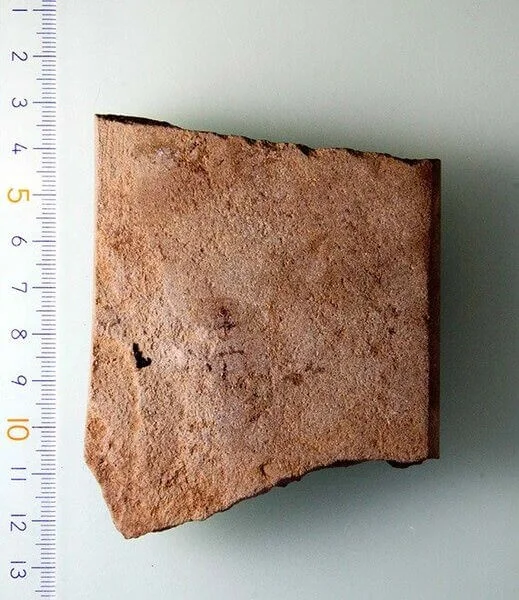
Now it turned out that the black mark on the artefact was likely made with a modern permanent marker.
Now it turned out that the black mark on the artefact was likely made with a modern permanent marker.
A research team that included the Archaeological Institute of Kashihara, Nara Prefecture, reached the conclusion after analyzing the 2,000-year-old artifact. The team said the "character" was probably made through contamination from a marker. It will announce the finding at the Japan Society for Scientific Studies on Cultural Properties congress on Sept. 10. The stone artifact, 9 centimeters long and 7.5 cm wide, was found at the Tawayama ruins in Matsue, Shimane Prefecture. It dates back to the latter half of the middle part of the Yayoi Pottery Culture Period (1000 B.C.-A.D. 250). The artifact was described as a grindstone in a 2005 survey report. In 2020, however, Takeo Kusumi, a researcher with the Fukuoka city government's Archaeological Center, theorized that the artifact was used as an inkstone based on the black mark and other factors. At a conference of archaeologists, Kusumi said the black mark was likely a character written in ink. Newspapers and TV programs then ran stories about the "oldest letter in the nation."