Japan's education problems... is it the lack of critical thinking?

Status
Not open for further replies.
There is no reason why we must shy away from teaching anything. The problem I see here is that he sees, as most Westerners do, cultural progression to be linear and singular. I am afraid that he is suggesting Japanese students to "move away" from the traditional Eastern way of thinking, which would be quite unfortunate. It is to anyone's advantage to acquire different ways of thinking. What would be beneficial for Japanese students is to encourage them to employ multiple styles of thinking, not to see one to be superior to the others, and not to be so blindly attached to one.

This is a quote taken from the first link above on this page. I certainly think it would be beneficial, and I'M sure I and other posters don't mean to suggest that Japanese should abandon various other types of decision making, but rather adopt critical thinking as well as an alternative decion making process.
Options are good, aren't they caster?

Asian learners of English are often characterized by constructs which claim that they lack an individual voice and critical thinking skills. In addition, it is said that unlike their Western counterparts, because of collectivist and hierarchical tendencies, they hesitate to express adversarial views. These behavioural patterns are claimed to be reflected in the rhetorical styles of Japanese learners when writing in English. Contrary to these claims, in an attitude survey of 70 Japanese undergraduates, the present study found little hesitation to voice opinions counter to authority figures. Moreover, participants possessed a firm grasp of elements of critical thinking. These results suggest that traditional constructs describing Asian students may no longer be accurate. "

Glenski, I would say that things have not changed that much, though it is true that some young people are less afraid to voice their opinions, yet they often cannot justify their opinions as they have had little practice in doing so. In addition some still merely 'parrot' arguments that others have used, often showing little understanding of the nuances of the argument or the consequences of taking their suggested or recommended action(s).

ejcjs - Critical Thinking and Modern Japan: Conflict in the Discourse of Government and Business

If employees possess the ability to judge the credibility of statements, to identify assumptions and biases, and to come to independent conclusions, what is to stop them applying these skills with regard to the ideas and policies of their superiors? Critical thinking has been defined as 'reasonable and reflective thinking that is focused on deciding what to believe or do' (Ennis 1985: 28), implying an emancipatory quality to the concept, a freeing of people's minds from a slavish acceptance of conventional beliefs.

This seems to be a major concern in Japan, rocking the boat. In addition, the idea of a 'friendly debate/discussion' in Japan is often not considered possible.

The general education policy is often opposed to this, with cramming for exams the norm, and little thought given to why people do things, beyond that's the way they have been done in the past (what I would term forcefully married to tradition). Even the learning of the Japanese written system requires strong memorization skills, and this skill is often repeated where parroted statements are mistook for real acquisition.

http://209.85.175.104/search?q=cach...ical+thinking+in+japanese&hl=en&ct=clnk&cd=20

Another link from Davidson.

Probably disagreements are most threatening among students in Japan because friendship is very highly valued, perhaps above everything else, even romantic love. This is shown by the fact that if you ask students to write about something that they consider their "treasure," they will often write about their friends. My own students often express sentiments like "you should always believe your friends." In fact, from my point of view, they exalt friendship to a dangerous degree, and I find myself challenging them sometimes on this point as a teacher.

Sound familiar?
 
Last edited:
It is quite a bit to read, and I haven't read every word either yet.

One thing that is mentioned is the opposition to general opinion and accepted methods and the difficulty that that students face if they go against the "norm." I know that even in America, even if you make a good case and write a brilliant paper I have seen teachers mark a student down simply for the reason they don't agree. Doesn't happen too often, but I've seen it.

Clearly having that sort of reaction doesn't foster critical thinking and a questioning mindset. Especially in a hierarchical society and education system that is dependent on filling in those entrance exam tests "correctly." Don't give the right answer by some else's generally accepted opinion? BZZZT -10 points.

Now, one thing I have seen which I'm sure is most likely connected in some part to academic freedom and critical evaluation and thought is that during my two years abroad, the universities I was at in Japan both had strict policies on "Academic Harassment." I.E. a teacher abusing their power. While the rules were clearly vague.

http://www.waseda.jp/stop/hpc/guideline_e.html#sent2

"Academic Harassment: This type of harassment signifies academically inappropriate remarks/behavior and guidance by a faculty member or an individual of authority within the University. Whether or not such statements/actions are intentional, they are considered harassment when taking advantage of or deviating from authoritative responsibilities and markedly interfering with or damaging a student's motivation for study and research."

As stated in the link you provided Glenski, the idea of critical thinking and questioning material, especially when it comes to generally accepted views, can be seen as quite radical as well as adversarial. Throw in a social system like Japan where hierarchy is of critical importance and it is no wonder that you would have at least some aversion by students to challenge and question those above them. I do see slow movement towards more critical thinking focused education, especially at universities like Waseda which are more internationally focused and open, but it will be a long time coming I believe. I believe that there are numerous factors, such as this one I have stated, that hamper the acceptance and consideration of critical thinking methods.

I'm curious, as you have said you are an educator, since the mindset and possible source of resistance to critical thinking might be as well as the current status, what do YOU feel would make critical thinking more accepted in Japanese education? I haven't thought much about this aspect of critical thinking methods in Japan, but my first impression is that it would have to take place from a top-down approach due to the social systems in place. For example, not only the declaration by MEXT but enforcement and active programs to promote it.
 
Mars Man, but what about the reality of what you call, the benefit for the whole society?
Better public education for children just because the parent(s) lives in a wealthy property tax areas, metal-detector at school, or else.

I don't intend to bush education in other countries, but every country has its own problems.
Critical thinking does not always lead to a right answer, the good example must be the relaxed education deteriorating basic public education here, so another kaizen is planned. Of course, the activity itself does not end.

To gaijinalways,
Glenski, I would say that things have not changed that much, though it is true that some young people are less afraid to voice their opinions, yet they often cannot justify their opinions as they have had little practice in doing so. In addition some still merely 'parrot' arguments that others have used, often showing little understanding of the nuances of the argument or the consequences of taking their suggested or recommended action(s).

The parrot argument, or the bring_here_the_source attitude esp., in 2ch, is better than generalization of your personal experiences with your students. At least, you cannot debate without evidences/data.

*snip
About the nuances and other stuffs, many thanks in advance for your generosity/understanding that I am fully aware of my bad language skill.
Needless to say, I am really pleased to meet somebody with great critical mindset and the Japanese skill and debate something here in the Japanese section here. Hope you will be the first one.
 
When I had pointed to the 'benefit of the whole,' pipokun san, I had been applying it on the 'international' level. (set by the word 'universal')

Here in Japan, I reason that if critical thinking were applied (especially) and taught in the education system more and more, an eventual point of a well balanced and empirically supported understanding of what is beneficial for the whole (universal) will be more readily obtainable.

Regardless of other problems elsewhere, we are focusing on the Japanese education system alone here, therefore other systems should be of no concern to our discussion.

Critical thinking will tend to lead us to a stronger appreciation that not only is 'right' relative in nature, but that it is most evidently, much broader in nature than 'old world models' have more commonly settled for.

Among the first suppliment (required) courses by the Job Hunting Department at our college, there will be attention given to 'this is the way it is done' (how to knock on the door, how to enter the room, wait to be invited to have a seat, etc.). In our Major Seminar classes, we are unspokenly assumed to be backing up that which is taught there.

Upon asking first semester second year students (since my seminar is in the jr. college department) to explain away, for example, the 'necessity' for a certain, otherwise casual behavior pattern (say, how to hand a document to a superior) they are at a total loss. This, I tend to reason, is due to a lack of critical skills rather than any lack of creativity--since questions which draw on imagination are usually rather robust.

Again, as I had mentioned earlier, and as been brought out again above, is this not due to a mental ceiling having been set on how far polemical thinking can go?
 
No method of education is the perfect way and method towards an ultimate "rightness." That is one of the major flaws of teaching without consideration of critical thinking and instead using a one subject, one way, one answer mindset. It isn't about "right" as much as it is finding MORE answers and considering other options through more articulate evaluation methods.

I don't see this as an issue of the West pushing it's views on the East. Keep in mind critical thinking is not everywhere in the United States either. It mostly exists at the University level and begins around high school, but before that, I'd say there is a lot of similarities to the ideology behind which education is taught prior to high school in the "West" and "East." Because up to that point, you are usually telling children to follow rules and do things a certain way, rather than to question the rules and try things a new way and think hard about the results. The later is much more difficult and time consuming and often creates "trouble" in some form or another.

That's why I stated that most likely you'll have to start at the University level if critical thinking is to be applied in Japan. While I believe critical thinking is a method of education/thinking that is applicable far beyond formal education, it is most likely in an isolated environment that it would most be accepted at first.
 
Last edited:
gaijinalways,
Good point, and I would like to echo those sentiments. Stapleton's article/abstract talked about his results showing that students are more willing than people perceive to voice their own opinions. While that may be true, I agree with you in the respect that they may not be able to support those opinions, and that is where critical thinking comes in, whether they justify themselves in English or Japanese.

It mostly exists at the University level and begins around high school, but before that, I'd say there is a lot of similarities to the ideology behind which education is taught prior to high school in the "West" and "East." Because up to that point, you are usually telling children to follow rules and do things a certain way, rather than to question the rules and try things a new way and think hard about the results. The later is much more difficult and time consuming and often creates "trouble" in some form or another.
That's why I stated that most likely you'll have to start at the University level if critical thinking is to be applied in Japan. While I believe critical thinking is a method of education/thinking that is applicable far beyond formal education, it is most likely in an isolated environment that it would most be accepted at first.
Get 'em early! The earlier, the better. You can occasionally see NHK programs about K-12 school programs where a keen Japanese teacher is breaking ground to teach critical thinking, usually in a science course. Get 'em while they are young, and the motivation and energy will be better when they have to apply CT in university.
 
Last edited:
you are usually telling children to follow rules and do things a certain way, rather than to question the rules and try things a new way and think hard about the results. The later is much more difficult and time consuming and often creates "trouble" in some form or another.
at first. rule is a rule.
The problem is "how do you think about it by break through"..
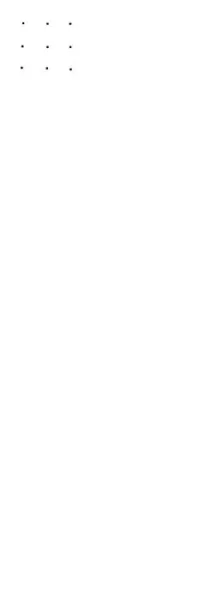
for example, there are 9 points like this.
then , how can you write a one-stroke sketch through every points by four straight lines ...
if you cant solve this within 5 min., I would say you dont have a critical thought?:p
The child also understands what is important as a basic thought
 

Attachments

  • 111.webp
    111.webp
    640 bytes · Views: 211
Here is another Example.


do you see only one side.
most ppl konw there are two drawing...
However, the other disappears if persisting in one view.
debito's veiw is something like that..It might be a one-sided critical thinking.
I see alot here .because they like to insist own critical thinking.?

I think these thought is more important than critical thinking.
it is natural teacher should teach these as a concrete method
 
gaijinalways,

Get 'em early! The earlier, the better. You can occasionally see NHK programs about K-12 school programs where a keen Japanese teacher is breaking ground to teach critical thinking, usually in a science course. Get 'em while they are young, and the motivation and energy will be better when they have to apply CT in university.

Oh I agree, getting critical thinking taught early would be good. I just am not sure that it would be the fastest way to "get the message out" so to say. Then again, of course a kid who learns such a view will be able to apply it during a longer period and that would be the most beneficial. However, the mention of it being taught in a science course at a young age I can see being a good avenue like you mentioned in the specials.
 
What you have provided in your first example, caster51 is what I would say is a good 'problem solving skill' exerciser. To be able to work on such, analytical process is needed for sure, and to that degree, it requires critical thinking.

What is needed in the school system here would be not only that, but even more. The area of critical thought process which I'd say is lacking more so, is not that of the more specifically, problem solving process (because there, a problem is presented or assumed) but rather in the testing for a problem process. Here, there would be no 'problem' first presented. Here, where no problem may be readily seen or recognized, a testing is applied to isolate any possible or likely problem. (after that, the problem solving portion of critical thinking takes over)

The second example, is actually not a matter of critical thinking in itself. It is a matter of association and empirical knowledge on hand. Such association tests are always interesting. What the Japanese education system needs to work on applying and teaching more, is surely the 'testing for problems' portion.
 
Caster,

Thanks for supplying an example, though I assume the link worked at one time (was that the solution?). I have heard of this problem, so I can imagine this without the link.

As mars man said, the second example is not using critical thinking. Actually, this is more of an example used to test visualisation skills. It's a common example used in psychology and art classes.

I do agree with mars man that the process is very important, much more so than the end results, which in some cases can be found using some electronic aid and/or by doing research, or discussing the matter with others who are more knowledgeable about the subject matter than the seeker. But when considering using others or electronic aids, we need to know what questions to ask as often the person or aid helping us might not be intelligent enough to figure out what we're trying to find out.

pipokun posted
Critical thinking does not always lead to a right answer, the good example must be the relaxed education deteriorating basic public education here, so another kaizen is planned. Of course, the activity itself does not end.

Very true, but it is a better answer than giving up and saying "Shoganai":eek:! Critical thinking will not always get you the right answer. As for most things in life, there is no one 'right' answer just as there is no one right investment strategy nor teaching method.

B]pipokun posted [/B]
Needless to say, I am really pleased to meet somebody with great critical mindset and the Japanese skill and debate something here in the Japanese section here. Hope you will be the first one.

I'm sorry, you might be waiting a long time, like our next lives. My Japanese skills are poor, and I'm lazy to do much about them. Writing and reading at a high level are a long way off, especialy for doing any kind of discussion. But one can always hope..:-)

Emoni posted
No method of education is the perfect way and method towards an ultimate "rightness." That is one of the major flaws of teaching without consideration of critical thinking and instead using a one subject, one way, one answer mindset. It isn't about "right" as much as it is finding MORE answers and considering other options through more articulate evaluation methods.

Very well put, I whole heartedly agree.

Emoni posted
I don't see this as an issue of the West pushing it's views on the East. Keep in mind critical thinking is not everywhere in the United States either. It mostly exists at the University level and begins around high school, but before that, I'd say there is a lot of similarities to the ideology behind which education is taught prior to high school in the "West" and "East." Because up to that point, you are usually telling children to follow rules and do things a certain way, rather than to question the rules and try things a new way and think hard about the results. The later is much more difficult and time consuming and often creates "trouble" in some form or another.

I agree, and certainly we can also use consensus building for some decision making in the West, and we do.

I would say though that this trouble is well worth it, and having kids that question not to be obstinate, but because they're wondering, "Why do we do it this way?". A lot of the educational process can be questioned in that way. We have schools for gifted children, but we don't reach all those people. The next Warren Buffet or Bill Gates may be out there, some of the next generation of great visionaries just may need an extra push to get to that level.
 
...
Get 'em early! The earlier, the better. You can occasionally see NHK programs about K-12 school programs where a keen Japanese teacher is breaking ground to teach critical thinking, usually in a science course. Get 'em while they are young, and the motivation and energy will be better when they have to apply CT in university.

Your benchmarking to judge the critical thinking is Nobel or other science/math-related prizes/awards, right?
But the data I posted here is not what you think. Not that good, but not that bad.

I don't think the prizes explain everything, but I am just playing your game in the field as you posted.
 
Your benchmarking to judge the critical thinking is Nobel or other science/math-related prizes/awards, right?
It's one, yes. It's not the only one. I've provided a link or two that support the latter.

Optical illusions like caster's are pointless.


But the data I posted here is not what you think. Not that good, but not that bad.
The thread is long, pipokun. What "data"?

Emoni wrote:
Oh I agree, getting critical thinking taught early would be good. I just am not sure that it would be the fastest way to "get the message out" so to say.
Why? Do you think waiting until students are 18 or 19 years old and practically set in their ways is a better age?
 
Why? Do you think waiting until students are 18 or 19 years old and practically set in their ways is a better age?

What I mean to say, is that in order for critical thinking to be adopted as a viable method of observation and analysis, I believe it first has to be accepted and prominent in higher education before it to be considered for lower education due to the hierarchical tendencies of Japan.

I'm absolutely not against starting young and earlier, but I don't even see it taught much (if at all sometimes) to school kids in the US... even when I totally agree that they should be taught it earlier on.
 
I don't see why young kids can't be started on critical thinking, and they're more malleable, they aren't used to the current system, so they to me would seem the best candidates for learning critical thinking.

Science would probably be the best area for critical thinking, so if students were given some proven facts, and asked how those facts could fit together, then you'd have the beginning of critical thinking.

I also believe in debate, and children who learn how to debate and seperate themselves from their feelings while discussing a topic would also learn better how to take in facts from an opposing side (and in life, facts often come in from the opposing side). A lot of people have learned to even enjoy exploring differences of opinion, but it all depends on the emotional setting of the debate, which is also why I'd recommend some classes in emotional development and a bit of rudimentary neuroscience (to dispel the belief that a lot of children hold, that since they weren't praised for something, they must not be smart enough for it, when a lot of intelligence and skills come about just by plain old effort).
 
The attachment shows how the Japanese loves something practical/unpractical.

World Skills Competition
Patent
Paper, not toilet ones, but scientific ones
Nobel Prize
Math-related prizes
Ig Nobel Prize!

Patents- Yes thanks to this guy Shunpei Yamazaki, with some 80% or more of his patents related to computer display technology, he was the 1# holder of patents in the US.

Diversity of inventions, uh, not really.
He has also been criticized by another prolific inventor of inventing things that are not terribly useful.

Top US Patent Holder is Legendary Japanese Inventor Shunpei Yamazaki - Impact Lab

Shunpei Yamazaki - Wikipedia

Papers - The Japanese ranked 2nd, though about 1/3 of the US total. England with half the population of Japan was third, though they had more top ranking papers than either the US or Japan.

http://scientific.thomsonreuters.com/news/newsletter/2007-06/8392239/

World Skills competition

Japan won in 2007 for Confectionery/Pastry??? Basically, the organization that runs this contest every 2 years is a NGO trying to promote vocational education and training. Japan doesn't seem to rank as one of the better countries to do that, as all of the recent lawsuits involving trainees has been related to that they have gotten very little training or education.

Will add more, got to run some errands.
 
I strongly agree that science would be the best sort of class to get kids interested in critical thinking. One of the areas where I see a great need is history as well, but that is the most sensitive subject when it comes to the angle that the education department and nationalists in the government like to push. That goes for almost every country there.

I also think that your point about adding a good deal of debate would be a wonderful idea in regards to critical thinking. There is a lot of critical thinking skill required in formulating a strong argument for one side, and the benefit on the side being separating personal ego with the issue is something I see as very important as well. I can't count how many study abroad students from certain countries (China being one of the top) attaching every bit of their identity with any sort of critique or comment given.

Debate and Science seem to be the best way to introduce critical thinking mentioned so far.
 
in my PERSONAL opinion
the subject in which little ones learn the art of critical thinking and judging that which is before them,
i.e. not just accepting that which is put in front of you...
is the subject of HISTORY
could this be the (quote) "Shamefull" history of Japan in WW2 (Yes ive mentioned that DIRTY word because i do BELIEVE it is relevant to the topic)
and the will of the Japanese GOV. to whitewash the bad events (i.e 731 ect.)have anything to do with a lack of critical thinking?
I.E. the kids are taught how it went down and told not to question what they are told but mearly to accept it as truth?
just for balance and so that i don't get judged a racist...
England did plenty of bad **** in it's past...
we invented carpet bombing, concentration camps and the internet....
the ALPHA Duck
 
Last edited:
Other stuff put aside (and thanks for editing that for me), I believe you are actually talking about the application of critical thinking, rather than the 'learning' of critical thinking.

Yes, I would tend to agree that in the subject of history, the application of critical thinking is a necessary thing. However, in order to apply critical thinking, it has to be acquired/learned, and in the Japanese education system that would better be done firstly through, or in tandem with, the pure sciences, then applied to (the philosophy of) history later.
 
hmmm i'm afraid i really do have to disagree there mr mars san

science is NOT the place to learn critical thinking at all...
science in its nature is about fact...
is about understanding the world around you..

if your science teacher tells you
"two body's will be attracted to each other....this is what we call gravity"
you cant really critisize that...or deny it....

its a fact...

it's not open to interpritation in ANY way.
the only subjects that are open to critical thinking are the subjects which contain a SUBJECTIVE element...yet rely on a base line objective element
i.e. HISTORY, R.E., ART HISTORY, ECT.

one learns by doing...
it's like riding a bike....
you don't learn the theory and then do the practical, you just get on the bike and see where it takes you...

Quack Quack... the Alpha Duck hath spoken
 
Well, there are a few different theories within certain realms of science, so science isn't just about facts, it involves looking at facts and trying to think carefully about what theories those facts might imply, and which theory best fits the facts. A simple example however doesn't come to mind though.
 
pipokun posted
Math-related prizes

Back to pipokun's list as evidence that the Japanese show critical thinking;

What kind? As in, winning math contests or testing high in ability to use math? If so, these don't show critical thinking, rather good skills in using what has already been learned.
 
hmmm i'm afraid i really do have to disagree there mr mars san
science is NOT the place to learn critical thinking at all...
science in its nature is about fact...
is about understanding the world around you..
if your science teacher tells you
"two body's will be attracted to each other....this is what we call gravity"
you cant really critisize that...or deny it....
its a fact...
it's not open to interpritation in ANY way.
the only subjects that are open to critical thinking are the subjects which contain a SUBJECTIVE element...yet rely on a base line objective element
i.e. HISTORY, R.E., ART HISTORY, ECT.
one learns by doing...
it's like riding a bike....
you don't learn the theory and then do the practical, you just get on the bike and see where it takes you...
Quack Quack... the Alpha Duck hath spoken

Science doesnt necessarily take things as "fact". Einsteins Theory of relativity to this day remains as a "theory" not a fact. Same with Darwin's "Theory" of evolution. These arent "facts" these theories may be taken as the yardstick in science but still people CAN in fact challenge them so long as they have the research to back up their claims. What does this require? Critical thinking. The only reason these theories have stood the test of time is that many scientists have been unable to disprove these theories.

The point of a lot of research is to test and re-test hypthoses or theories to see if they can still "hold water" so to speak. It requires an objective look at existing theories or hypotheses.
 
Science is great...for developing logic and problem solving skills,
this is because it is an objective subject...i.e. based on Facts.

(yes the theory of Relativity is a fact...it states in laymans terms that what you see is not necessarily the case everywhere and is in fact RELATIVE to your own situation.
evolution is also a fact...facts are things that can be proved...and HAVE been proved)

subjects that inspire creative thinking are....the purely subjective subjects, art ect.
critical thinking is about OPINIONS.... OPINIONS on things that are in the very least quasi-factual.
a subjective take on an objective thing...
example

"the gov. is planning to give free carrots to racoons in order to bolster the weakening economy of the magical forrest, (FACT, objective)... i think thats a really good thing (OPINION, subjective) because last time the racoons were in financial trouble they stole lots of stuff by paying for goods and services with fake currency that turned out to be made of leaves (FACT, objective)"

this is BEST in the subject of history...
Peace and gravy
 
Status
Not open for further replies.
Back
Top Bottom