

Navigation
Install the app
How to install the app on iOS
Follow along with the video below to see how to install our site as a web app on your home screen.
Note: This feature may not be available in some browsers.
More options
Style variation
System
Light
Dark
You are using an out of date browser. It may not display this or other websites correctly.
You should upgrade or use an alternative browser.
You should upgrade or use an alternative browser.
Notion of ALL LOOK SAME (ALLLOOKSAME.com). Is it really true?
- Thread starter Color red
- Start date
- Thread starter
- #102
All look same
One feature konnyaku did not mention is the longer forearms, and shorter legs for similar size of body builds. Hairy mid-face regions are also common in jomon japanese.
konnyaku said:The unusual features of the Japanese that set them apart clearly in most cases from any of the continental East Asians are:
1) Japanese tend to have a more pronounced facial topography (i.e., a rather "bumpy" or "projecting" look to the face, such as around the eyebrows, rather than the smooth and flat contours of Chinese or Koreans)
2) Japanese tend to have a more perceptually salient nose. This can be either more salient in simply the degree of projection from the surface of the face, or more salient in terms of the total volume of the nose (i.e., including the width). In general, Japanese seem to exhibit a much greater variety of nose sizes and shapes than do continental East Asians, and I have met many Japanese who even have "bumpy" noses with several bulges and constrictions in the contour of the nose, as I have otherwise only observed in Europeans. Chinese and Koreans appear to have only smooth-contoured noses, regardless of whether they are flat and broad (as is common in southern Chinese, Vietnamese, etc.) or narrow and slightly projecting. This feature is particularly relevant for distinguishing Japanese men from Chinese or Korean men, because women of every nationality tend to be rather paedomorphic when it comes to their noses.
3) Japanese people tend to have a diminutive lower facial region. They often have small jaws, which may be the direct cause of their propensity for having poor alignment of the teeth. Continental East Asians, on the other hand, seem to have huge jaws, flaring malars (cheekbones), and a generally large and imposing lower face when viewed from a Caucasian perspective.
4) Japanese people often have rather translucent skin, similar to that of Europeans, when they are not tanned. Therefore, Japanese people often have rosy cheeks and a generally healthy-looking complexion. When they do tan, they tend to take on a reddish-brown color. The Chinese and Koreans, on the other hand, are almost all cream- or beige-colored ("pasty") from the start, and they have completely opaque skin, so that it is impossible for them to have rosy cheeks and they always look sort of sickly unless they are tanned, in which case they take on a yellow-brown color.
As for distinguishing Chinese and Koreans by sight, I think it is quite difficult, but not impossible. They both have a propensity for big faces with a smoothly rounded outline, but Koreans tend to be more extreme in the width of their faces, so that they often have a nearly circular look, whereas Chinese tend to have more elliptical faces when viewed directly from the front. Chinese also more frequently have double eyelids and larger eyes that seem to bulge out of their (flat) sockets. Korean people tend to have very small eyes and no eyelid creases. Among East Asians, Chinese people also have a peculiar tendency towards prognathism, so that they often have bulging mouths that look somewhat reminiscent of black Africans. The big, bulgy eyes and mouth that appear so frequently among Chinese people seem to me to suggest some sort of affinity with populations of Southeast Asia. Also, I'm not totally sure about this, but I have a hunch that Koreans more frequently have a sort of oily shine to their skin, whereas Chinese people's skin tends to be more dull and dry-looking.
One feature konnyaku did not mention is the longer forearms, and shorter legs for similar size of body builds. Hairy mid-face regions are also common in jomon japanese.
Lovelynice
後輩
- 17 Mar 2007
- 3
- 0
How much of these differences is due to diet and climate?
Just curious. It is very interesting, and you've put a lot of work into this.
Just curious. It is very interesting, and you've put a lot of work into this.
- Thread starter
- #104
All Look Same
Nobody has a clear answer to your questions.You know that foods are made up of proteins, and also our human bodies are. Contributions of different proteins might affect skin, eye, and other outward appearances. Climate, exposure to sunshines, has a known association with height. My understanding of contribution to facial features is a product of darwinian forces, mating, crossovers, because we know that similar food intakes do not alter appearances, similar climates don't make east indians and iranians look much similar. But that's just my opinion.
How much of these differences is due to diet and climate?
Just curious. It is very interesting, and you've put a lot of work into this.
Nobody has a clear answer to your questions.You know that foods are made up of proteins, and also our human bodies are. Contributions of different proteins might affect skin, eye, and other outward appearances. Climate, exposure to sunshines, has a known association with height. My understanding of contribution to facial features is a product of darwinian forces, mating, crossovers, because we know that similar food intakes do not alter appearances, similar climates don't make east indians and iranians look much similar. But that's just my opinion.
- Thread starter
- #105
All Look Same
Let me cite the comments on all look same web site.
Please compare to All Look Same site.
Let me cite the comments on all look same web site.
Uncle Zed said:That's an old test that was rigged to make a point that all Asians look the same. They purposely picked out the people that looked similar.
But I got this article from a website:
You Asians all look alike!ツ・
Many Asians growing up in mostly Caucasian communities have heard this before. I certainly have.
Well in 1994, I took a trip to China with my Caucasian college roommate. While stopping for some water in a small village, I remember being puzzled when an elderly Chinese woman commented that all the foreigners coming through looked alike. Now it all makes sense to me. I spent much of my childhood growing up in the United States and went to a nearly all Caucasian boarding school in Connecticut. To her, in an environment where she was only exposed to other Chinese faces, she was exquisitely trained at differentiating between other Chinese, but had trouble with my Caucasian friend.
Likewise, Caucasians inexperienced at analyzing Asian faces might find it difficult to differentiate between Asians. They窶决e eyes have not been trained to see the subtle differences because their mean templates represent the average features of a Caucasian, and all the Asian faces perhaps far exceed the sensitivity of their perception skills.
For many Asians who have spent much of their lives in certain mixed Asian populations like Los Angeles, differentiating between various Asian ethnic groups, eg Korean vs Vietnamese vs Japanese and even between southern and northern Chinese faces, is easy and instantaneous.
Please compare to All Look Same site.
- Thread starter
- #106
Question
I've been wondering on your comment, and I stopped posting any new pictures. I think you are right on random faces of ordinary japanese, chinese, korean, vietnamese. In a sense, I wanted to achieve statistical precisions by random selections of samples, but it will of course take more bandwidth to load those pics too. So, I wonder if I could post only a few new pictures that may show a common trait of Jomon Japanese. I would like you to respond to me in this thread, and also, because I noticed that reading counts of this thread reached 7000 in a half year, I would like to know if new pics and images would be cool to many readers in JREF forum.
Previously, on my genetic threads, a few loud readers, koreans, and chinese, were angry over my threads, and called for deletion of topics and even sent me spams which had many dirty words on my races, and backgrounds, but later I found many moderate and neutral people supports my threads, and expressed enthusiasm in the topic itself. You would of course guess I felt very proud by these encouragements, and yes ,I was. Just please drop a line or two please to let me know that this thread should be alive.
While I appreciate your zeal for this topic... is there any specific reason you keep adding more random faces with every new reply? Please keep this in check, thnx.
I've been wondering on your comment, and I stopped posting any new pictures. I think you are right on random faces of ordinary japanese, chinese, korean, vietnamese. In a sense, I wanted to achieve statistical precisions by random selections of samples, but it will of course take more bandwidth to load those pics too. So, I wonder if I could post only a few new pictures that may show a common trait of Jomon Japanese. I would like you to respond to me in this thread, and also, because I noticed that reading counts of this thread reached 7000 in a half year, I would like to know if new pics and images would be cool to many readers in JREF forum.
Previously, on my genetic threads, a few loud readers, koreans, and chinese, were angry over my threads, and called for deletion of topics and even sent me spams which had many dirty words on my races, and backgrounds, but later I found many moderate and neutral people supports my threads, and expressed enthusiasm in the topic itself. You would of course guess I felt very proud by these encouragements, and yes ,I was. Just please drop a line or two please to let me know that this thread should be alive.


- Thread starter
- #113
Korean and Japanese Looks
Beware that these images are more of my subjective views in contrast to my earlier contributions on jomon japanese of noble ancestry.
Note that certain population (1-3% of total population) of korea and china seems to be interbred with jomon japanese during the period of japanese occupation of chinese coastal lands, manchuria, and korea. It was very natural that ruling japanese males could mate with chinese and korean females since they could financially and politically protect females during the period of chaos.
I will then list up korean models/actors/actresses who seem to be most common in korean population. This is a contrast to the pictures of Jomon Japanese posted earlier.
Korean
Park Hae-Il
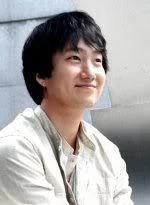
Korean
Park Sang-Myun
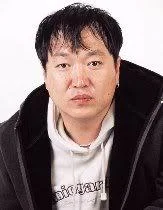
Korean
Shin Ha-Kyun
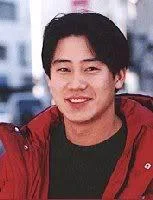
Korean
Moon Sori
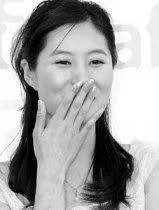
Korean
Kwon Sang-Woo
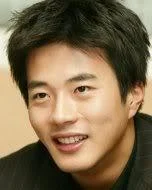
Korean
Kim Hee Sun

Korean
Jung Jae-Young
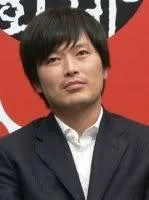
Korean
Cho Seung-woo

Beware that these images are more of my subjective views in contrast to my earlier contributions on jomon japanese of noble ancestry.
Note that certain population (1-3% of total population) of korea and china seems to be interbred with jomon japanese during the period of japanese occupation of chinese coastal lands, manchuria, and korea. It was very natural that ruling japanese males could mate with chinese and korean females since they could financially and politically protect females during the period of chaos.
I will then list up korean models/actors/actresses who seem to be most common in korean population. This is a contrast to the pictures of Jomon Japanese posted earlier.
Korean
Park Hae-Il
Korean
Park Sang-Myun
Korean
Shin Ha-Kyun
Korean
Moon Sori
Korean
Kwon Sang-Woo
Korean
Kim Hee Sun
Korean
Jung Jae-Young
Korean
Cho Seung-woo
Last edited:
- Thread starter
- #115
Chinese and Korean Faces
Here I list up chinese models/actors/actresses who seem to be most common in chinese population. This is a contrast to the pictures of Jomon Japanese posted earlier.
Chinese
Ada Choi
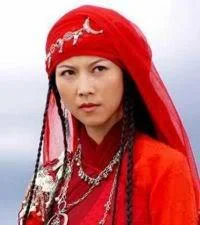
Chinese
Andy Lau
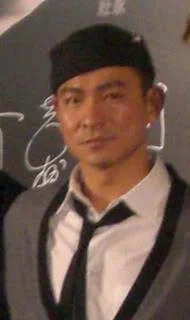
Chinese
Athena Chu

Chinese
Bai Ling
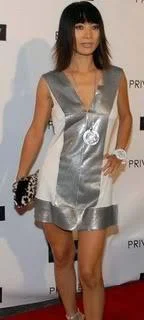
Chinese
Bernice Liu
Chinese
Chen Zhi Gong
Chinese
Gong Li
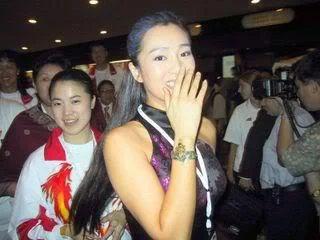
Chinese
Cynthia Khan
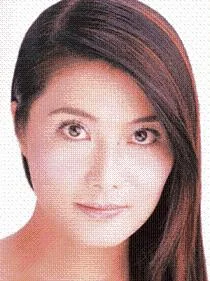
Chinese
Jessica Hsuan

Chinese
Joan Chen

Chinese
Michelle Yeo
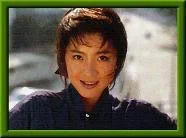
Chinese
Myolie Wu
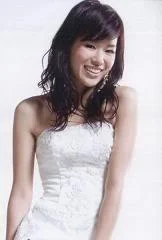
Chinese
Rosamund Kwan
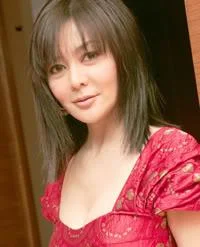
Chinese
Sandra Yue
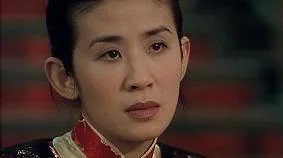
Chinese
Shirley Kwan
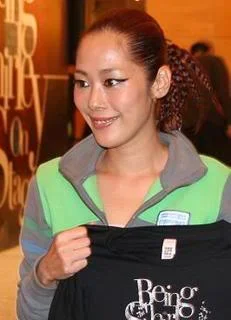
Chinese
Amy Yip
Chinese
Yuen Biao
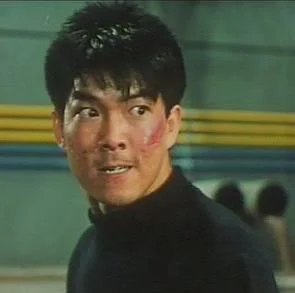
Here I list up chinese models/actors/actresses who seem to be most common in chinese population. This is a contrast to the pictures of Jomon Japanese posted earlier.
Chinese
Ada Choi
Chinese
Andy Lau
Chinese
Athena Chu
Chinese
Bai Ling
Chinese
Bernice Liu
Chinese
Chen Zhi Gong
Chinese
Gong Li
Chinese
Cynthia Khan
Chinese
Jessica Hsuan
Chinese
Joan Chen
Chinese
Michelle Yeo
Chinese
Myolie Wu
Chinese
Rosamund Kwan
Chinese
Sandra Yue
Chinese
Shirley Kwan
Chinese
Amy Yip
Chinese
Yuen Biao
Last edited:

kireikoori
Sempai
- 3 Aug 2007
- 264
- 7
It's hard to tell the difference between haplogroup D and haplogroup R1a1 on that picture. Both are such a similar yellow.and the following charts will illustrate the multiple origin of japanese people.

Last edited:
- Thread starter
- #118
Origin of Japanese

I had similar problems. thx for the comment though.
It's hard to tell the difference between haplogroup D and haplogroup R1a1 on that picture. Both are such a similar yellow.
I had similar problems. thx for the comment though.

kireikoori
Sempai
- 3 Aug 2007
- 264
- 7
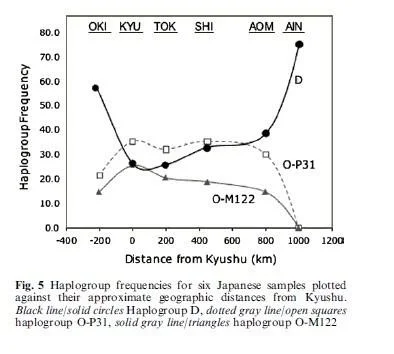
Ok, if I understand that haplomap right, Japan has less of haplogroup O than their East Asian neighbors. And instead more haplogroup N and C than their East Asian neighbors. And a whole lot of Haplogroup D.
Haplogroup O is a mainly East Asian haplogroup. Haplogroup N is a mainly Finnish haplogroup. Haplogroup C is a mostly Mongol/Siberian haplogroup. And the only places elsewhere that Haplogroup D is found other than Japan, is East India. And considering how Caucasian some East Indians look, it explains why so many of these "Jomon Japanese" look Caucasian themselves.
Unless I'm confusing the coloring and Japan actually has a significant amount of Haplogroup R1a instead. In which case would also explain the Caucasian features because R1a is a very European haplogroup.
Haplogroup O is a mainly East Asian haplogroup. Haplogroup N is a mainly Finnish haplogroup. Haplogroup C is a mostly Mongol/Siberian haplogroup. And the only places elsewhere that Haplogroup D is found other than Japan, is East India. And considering how Caucasian some East Indians look, it explains why so many of these "Jomon Japanese" look Caucasian themselves.
Unless I'm confusing the coloring and Japan actually has a significant amount of Haplogroup R1a instead. In which case would also explain the Caucasian features because R1a is a very European haplogroup.
kireikoori
Sempai
- 3 Aug 2007
- 264
- 7
Hmmm....it seems I was wrong about Haplogroup D being Indian. It's actually only found outside of Japan in small amounts among Central Asians and a decent amount among Tibetans according to wikipedia.
So now I know the Y(male)-DNA of Japan really well. But what of the mt(female)DNA? I'd like to see a map of that as well.
So now I know the Y(male)-DNA of Japan really well. But what of the mt(female)DNA? I'd like to see a map of that as well.
- Thread starter
- #122
All Look Same Japanese Korean Chinese
To Kireikoori,
Dual origins of the Japanese: common ground for hunter-gatherer
and farmer Y chromosomes
Michael F. Hammer, Tatiana M. Karafet, Hwayong Park et al, 2006
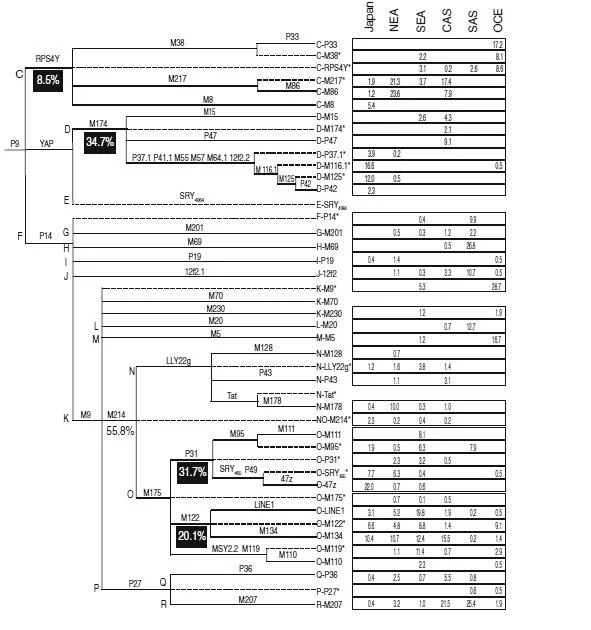
Fig. 2 Maximum-parsimonytree of 44 Y chromosomehaplogroups together with their frequencies in Japan and five Asian regions. Samples sizes for each region: Japan 259; northeast Asia (NEA) 441; Southeast Asia (SEA) 683; central Asia (CAS) 419; south Asia (SAS) 496; Oceania (OCE) 209. Major clades (i.e., Cテ「竄ャ窶彝) are labeled with upper case letters to the left of each clade. Mutation names are given along the branches. The length of each branch is not proportional to the number of mutations or the age of the mutation. Dotted lines indicate internal nodes not defined by downstream markers (i.e., paragroups). The names of the 41 haplogroups observed in the present study are shown to the right of the branches. Haplogroup frequencies are shown on the far right, and frequencies of selected Japanese clades are shown within black boxes.
To Kireikoori,
Dual origins of the Japanese: common ground for hunter-gatherer
and farmer Y chromosomes
Michael F. Hammer, Tatiana M. Karafet, Hwayong Park et al, 2006
Fig. 2 Maximum-parsimonytree of 44 Y chromosomehaplogroups together with their frequencies in Japan and five Asian regions. Samples sizes for each region: Japan 259; northeast Asia (NEA) 441; Southeast Asia (SEA) 683; central Asia (CAS) 419; south Asia (SAS) 496; Oceania (OCE) 209. Major clades (i.e., Cテ「竄ャ窶彝) are labeled with upper case letters to the left of each clade. Mutation names are given along the branches. The length of each branch is not proportional to the number of mutations or the age of the mutation. Dotted lines indicate internal nodes not defined by downstream markers (i.e., paragroups). The names of the 41 haplogroups observed in the present study are shown to the right of the branches. Haplogroup frequencies are shown on the far right, and frequencies of selected Japanese clades are shown within black boxes.

Similar threads

- Replies
- 43
- Views
- 166K


