

The big one is really forcing cyclists onto the road. There wide open and many parts hardly used footpaths. You have to contend with all the cycling paths blocked by idling stop cars, parked cars and trucks. Are Japanese police going to clamp down on that?If you commute daily, you will need to plan your route diligently. It is not exactly rocket science to chart an economical route that minimises traffic signals and other impediments. If commuters give up their bicycles because they have to comply with traffic regulations, I am glad they stay off the roads!
Navigation
Install the app
How to install the app on iOS
Follow along with the video below to see how to install our site as a web app on your home screen.
Note: This feature may not be available in some browsers.
More options
Style variation
System
Light
Dark
You are using an out of date browser. It may not display this or other websites correctly.
You should upgrade or use an alternative browser.
You should upgrade or use an alternative browser.
News NPA to introduce fines for bicycle traffic offences
- Thread starter thomas
- Start date

- 14 Mar 2002
- 21,050
- 18,904
- Thread starter
- #27
You have to contend with all the cycling paths blocked by idling stop cars, parked cars and trucks. Are Japanese police going to clamp down on that?
I hear you — and I hope so. It's frustrating being pushed into traffic thanks to husbands idling outside the dry cleaners while their wives run errands.
- 14 Mar 2002
- 21,050
- 18,904
- Thread starter
- #28
Cyclists beware, the new ticketing system will come into force on Wednesday:
The National Police Agency compiled a rulebook on bicycle use last year, but it has not been widely distributed. There are calls to make it more accessible. One option would be to hand out a summary version to people when they buy a bicycle, rather than leaving it unused. Bicycles are, in principle, meant to be used on the road. There are exceptions, though. Children under 13 and people aged 70 and above may use sidewalks, and, in some cases, riding on the road is allowed where riding on the road is difficult, such as during construction or in areas with heavy traffic.
Basic rules should be taught more clearly, especially to elementary and junior high school students. For example, when riding on sidewalks, cyclists are expected to slow down and stay closer to the road. The changes are not limited to cyclists. They are also meant to prompt drivers to revisit traffic rules and their sharing of the road. Under the new system, both drivers and cyclists will have obligations when a car passes a bicycle on the right. If there is not enough space, the driver should reduce speed, while the cyclist should stay as far left as possible.
Covering riders 16 and older, there are 113 possible violations, such as distractedly riding a bike while looking at a smartphone or ignoring traffic lights. No criminal penalties will be involved as long as a violator pays the fines of between 3,000 yen ($19) and 12,000 yen. According to the National Police Agency, the blue tickets will be written by police officers who observe egregious or dangerous acts. Until now, either red tickets, which involve criminal penalties, were issued for violations by bike riders or the riders were simply given a warning and guidance. The blue tickets are intended to quickly penalize egregious bike riding to prevent even more tragic accidents.
The National Police Agency compiled a rulebook on bicycle use last year, but it has not been widely distributed. There are calls to make it more accessible. One option would be to hand out a summary version to people when they buy a bicycle, rather than leaving it unused. Bicycles are, in principle, meant to be used on the road. There are exceptions, though. Children under 13 and people aged 70 and above may use sidewalks, and, in some cases, riding on the road is allowed where riding on the road is difficult, such as during construction or in areas with heavy traffic.
Basic rules should be taught more clearly, especially to elementary and junior high school students. For example, when riding on sidewalks, cyclists are expected to slow down and stay closer to the road. The changes are not limited to cyclists. They are also meant to prompt drivers to revisit traffic rules and their sharing of the road. Under the new system, both drivers and cyclists will have obligations when a car passes a bicycle on the right. If there is not enough space, the driver should reduce speed, while the cyclist should stay as far left as possible.
The article does not mention how awful the sides of roads are for bicycles- they are super rough with gutters and high kerbs and even screws in them- not designed for bicycles, I have problem with the reasonable users of stopping by the side of the road like delivery drivers or trucks or drivers just apparently taking a break with no enforcement of time limits.
- 14 Mar 2002
- 21,050
- 18,904
- Thread starter
- #30
How are cyclists supposed to comply if the rule book hasn't been "widely distributed" yet? It sounds like a lot is again at the discretion of the police. Not good. 
And is it true that the maximum speed on bike lanes will be 8kph?? Does this refer to sidewalks or dedicated bike lanes?
And is it true that the maximum speed on bike lanes will be 8kph?? Does this refer to sidewalks or dedicated bike lanes?
- 14 Mar 2002
- 21,050
- 18,904
- Thread starter
- #31
And is it true that the maximum speed on bike lanes will be 8kph?? Does this refer to sidewalks or dedicated bike lanes?
Replying to myself: this is incorrect. Claimed on a mailing list.
You must ride slowly in pedestrian areas.
- 14 Mar 2002
- 21,050
- 18,904
- Thread starter
- #32
In case anyone's interested in the NPA's rulebook, it's here:
Jake Adelstein listed all of the 113 bicycle-related violations here:

 tokyopaladin.substack.com
Jake Adelstein listed all of the 113 bicycle-related violations here:
Japan's War on Two-Wheels: There Are Now 113 New Ways To Break The Law on A Bicycle. Not an April Fools Joke
Starting today, April 1st 2026, there are over 100 new traffic violations that the police can use to ruin your day in this little island country. Japanese police once waged a war on dancing and now...
tokyopaladin.substack.com
A. Signal & Lane Violations (1–15)
- Ignoring traffic signals
- Crossing at a red light
- Failing to stop at a stop sign
- Riding against the one-way direction
- Disobeying pedestrian crossing signals
- Entering vehicle-only lanes
- Crossing at a no-entry zone
- Failing to yield at unmarked intersections
- Illegal right turn
- Illegal left turn
- Not following lane markings
- Riding outside the designated bike lane
- Cutting into traffic without signalling
- Sudden lane entry without safety confirmation
- U-turn in a prohibited area
B. Speed & Dangerous Operation (16–29)
- Excessive speed
- Reckless zigzagging between cars
- Failing to reduce speed near crossings
- Attempting to overtake unsafely
- Chasing or racing another bicycle
- Tailgating pedestrians
- Jumping curbs at speed
- Unnecessary honking or bell use
- Abrupt braking causing danger
- Wheelie or one-wheel riding
- Riding without both hands on the handlebars
- Riding while standing on pedals in traffic
- Reckless downhill riding
- Performing stunts or acrobatics
C. Pedestrian-Related Infractions (30–43)
- Failing to yield to pedestrians on sidewalks
- Riding too fast on shared pedestrian paths
- Passing pedestrians without an audible signal
- Splattering water or mud on pedestrians
- Colliding with a pedestrian
- Using a sidewalk where cycling is prohibited
- Ignoring posted pedestrian priority
- Failing to dismount in pedestrian zones
- Harassing or intimidating pedestrians
- Use of horn/bell to force passage
- Riding through school zones during restricted hours
- Passing too close to baby strollers
- Ignoring pedestrian crossing lights
- Failing to give a verbal warning when approaching pedestrians
D. Lighting, Equipment, and Visibility (44–58)
- No headlight at night
- No tail reflector
- No rear light when required
- Broken or missing brakes
- No functional bell
- Removing safety features
- Using illegal modifications
- Missing reflectors on wheels
- No reflective clothing or gear at night (delivery zones)
- Carrying an oversized load blocking light
- Riding with an unregistered e-bike motor
- Use of excessive sound systems
- Riding without a required license plate (certain e-bikes)
- Using a mobile phone while riding
- Use of an umbrella or sunshade while operating a bicycle
E. Alcohol, Drugs, and Distraction (59–67)
- Riding under the influence of alcohol
- Riding under the influence of drugs
- Using a smartphone/GPS while riding
- Listening to earphones on both ears
- Filming or taking selfies while riding
- Reading or writing messages/texts
- Using VR/AR devices while riding
- Eating while operating
- Smoking while operating a bicycle
F. Passenger & Load Rules (68–80)
- Carrying a passenger on a standard bicycle
- Overloading the cargo carrier
- Carrying a child in a non-designated seat
- Riding double without allowance
- Transporting a pet improperly secured
- Carrying objects obstructing vision
- Carrying hazardous materials
- Holding an umbrella or items in hand
- Attaching trailers without a permit
- Using a baby seat without an approved harness
- Carrying excessive shopping bags interferes with control
- Loading uneven cargo distribution
- Towing another bicycle
G. Parking, Obstruction & Registration (81–93)
- Illegal bicycle parking
- Blocking bus stops or fire hydrants
- Parking on pedestrian crossings
- Abandoning a bicycle in a public place
- Failing to display registration sticker
- Removing serial number plate
- Parking in no-bicycle zones
- Leaving the bike in front of the station exit
- Obstructing the emergency vehicle route
- Ignoring removal notices
- Failure to pay impound fees
- Using an unregistered or stolen bicycle
- Tampering with the registration number
H. Crossing, Signals, and Shared-Road Duties (94–105)
- Crossing rail tracks unsafely
- Entering a level crossing while the gates are down
- Crossing the intersection diagonally
- Failing to obey hand signals from police
- Not using a hand signal when turning
- Not checking behind before turning
- Entering crosswalk when unsafe
- Failing to stop for school crossing guards
- Ignoring local cycling restriction zones
- Ignoring bicycle traffic signals
- Disobeying the "vehicle priority" road sign
- Obstructing buses or taxis while manoeuvring
I. Miscellaneous / Conduct and Responsibility (106–113)
- Failure to attend the safety seminar after repeated infractions
- Failing to report an accident
- Leaving the accident scene without offering aid
- Damaging public property while cycling
- Using non-approved electric assistance modification
- Riding without insurance (e-bikes or shared fleets)
- Allowing underage or unlicensed riders one-bike
- Refusing police inspection or questioning relating to a traffic offence
Last edited:
- 14 Mar 2002
- 21,050
- 18,904
- Thread starter
- #33
No eating while cycling, no reflectors on the wheels, no functional bell... 
Using an unregistered bicycle... most road bikes are NOT registered.
"Excessive speed", "No wheelies".
More, of course, on our sister site.
 tokyocycle.com
Using an unregistered bicycle... most road bikes are NOT registered.
"Excessive speed", "No wheelies".
More, of course, on our sister site.
Japan’s New Bicycle Laws: Practical or Punitive?
Japan is rolling out new bicycle laws from April 1, and honestly, some of this is borderline ridiculous. Narrow streets, chaotic intersections, and barely any bike lanes make some rules nearly impossible to follow. Safety is important, but enforcement is going to be a nightmare. Are these laws...
tokyocycle.com

- 6 Mar 2003
- 9,317
- 9,444
If it's that windy then maybe they shouldn't be riding bicycles.First day of fine enforcement and no police presence just like every other day. By the way it was windy with a good chance of bicycles blown into traffic. Japanese politicians acting against safety.
What choice do you have? I have to go home and to work. JR train network is rubbish because they are incompetent the ridiculopus single track Kawagoe line does not join to Keihin Tohoku line most off the time.If it's that windy then maybe they shouldn't be riding bicycles.
Also it is powerful sudden gusts that are the danger.If it's that windy then maybe they shouldn't be riding bicycles.
- 14 Mar 2002
- 21,050
- 18,904
- Thread starter
- #38
Also it is powerful sudden gusts that are the danger.
When cycling in urban areas, you have to prepare for sudden gusts from small alleys. They act as wind tunnels and can literally blow you over.
I have my first commute into Tokyo later today under the revised law. I'm curious to see if there is a heightened police presence!
I never have gusts from small alleys- it is all gusts in open areas.. There is nothing you can do except to barely direct the bicycle a little.When cycling in urban areas, you have to prepare for sudden gusts from small alleys. They act as wind tunnels and can literally blow you over.
I have my first commute into Tokyo later today under the revised law. I'm curious to see if there is a heightened police presence!
- 6 Mar 2003
- 9,317
- 9,444
Do the laws impact your normal riding patterns? Did you ride on the street previously?When cycling in urban areas, you have to prepare for sudden gusts from small alleys. They act as wind tunnels and can literally blow you over.
I have my first commute into Tokyo later today under the revised law. I'm curious to see if there is a heightened police presence!
- 14 Mar 2002
- 21,050
- 18,904
- Thread starter
- #41
Do the laws impact your normal riding patterns? Did you ride on the street previously?
I paid a little more attention to red signals and stop signs today, but obviously not much has changed. I do ride on the street 98.5% of the time and avoid "dangerous roads". Most of the perpetrators are mama-charri riders without lights, with umbrellas and/or texting. I guess it's them, the traffic cops are after.
More people are riding on footpahs now. I noticed more bicycle riders on foothpath on my ride to work that avoids police stations.Near Omiya has equal numbers on the road as on footpaths. I even saw a guy riding while holding smart phone to his ear in a quiet road.
- 14 Mar 2002
- 21,050
- 18,904
- Thread starter
- #45
As of 1 April, over 2,000 "blue tickets" have been issued by the police.
According to a survey conducted by Mainichi, frustrations over the new regulations are growing. Here's the brief on the acceptance of the new bicycle rules:

 mainichi.jp
Police have issued 2,147 "blue ticket" traffic citations nationwide just over a month after Japan introduced bicycle penalties on April 1, according to preliminary data from the National Police Agency. Failing to heed stop signs accounted for the largest share of violations at 39 percent. This was followed by distracted riding, which includes using a smartphone while cycling, at 33 percent. Violations related to riding on sidewalks totaled 10 cases. Blue tickets are issued for relatively minor traffic offenses; if the fine is paid, no criminal penalty is imposed.
According to a survey conducted by Mainichi, frustrations over the new regulations are growing. Here's the brief on the acceptance of the new bicycle rules:
Overall responses:
- 62% said the new rules were "appropriate".
- 20% said they were "too strict".
- 8% said they were "not strict enough".
- 36% said "appropriate".
- 33% said "too strict".
- More than 50% said "appropriate".
- More than 60% said "appropriate".
- 75% said "appropriate".
- 57% of full-time employees said "appropriate".
- 69% of homemakers said "appropriate".
- 20% said "appropriate".
- 60% said "too strict".
Frustrations grow over Japan's new bicycle 'blue ticket' traffic fine system - The Mainichi
TOKYO -- Japan's

- 18 Jan 2005
- 11,682
- 3,641
In May 2026, a strange case in Chikushino attracted attention across Japan. A university student falsely claimed that he had been scammed through Japan's new bicycle traffic ticket system, known as the "blue ticket" system.
At first, the 18-year-old student told police that:
he had been stopped while riding a bicycle,
a man pretending to be a police officer accused him of traffic violations,
and he was forced to pay 8,000 yen in cash as a penalty on the spot.
Because Japan had recently introduced stricter bicycle traffic enforcement, many people feared that criminals were already exploiting the new system. The story was widely reported in the media.
However, during further questioning, the student admitted that the entire story was fake. According to police reports, he confessed that:
he had run out of money,
he wanted to deceive his parents into giving him financial support,
and he never expected the story to become national news.
In reality:
there was no fake police officer,
no bicycle ticket scam,
and no theft.
Japanese police later reminded the public that real police officers do not collect traffic fines directly in cash on the street. Official penalties are handled through formal procedures later.
The incident became an example of how public anxiety about new regulations can quickly spread misinformation.
At first, the 18-year-old student told police that:
he had been stopped while riding a bicycle,
a man pretending to be a police officer accused him of traffic violations,
and he was forced to pay 8,000 yen in cash as a penalty on the spot.
Because Japan had recently introduced stricter bicycle traffic enforcement, many people feared that criminals were already exploiting the new system. The story was widely reported in the media.
However, during further questioning, the student admitted that the entire story was fake. According to police reports, he confessed that:
he had run out of money,
he wanted to deceive his parents into giving him financial support,
and he never expected the story to become national news.
In reality:
there was no fake police officer,
no bicycle ticket scam,
and no theft.
Japanese police later reminded the public that real police officers do not collect traffic fines directly in cash on the street. Official penalties are handled through formal procedures later.
The incident became an example of how public anxiety about new regulations can quickly spread misinformation.
The survey didn't ask about enforcement- here it is basically non-existent. Some people put some lip service to following the rules but cops on the street have no interest in trying to enforce it. I could just see the laws going to court and seeing the lawyer introducing how wriggle room the NPA introduced in its statement of the laws and case falling apart.As of 1 April, over 2,000 "blue tickets" have been issued by the police.
According to a survey conducted by Mainichi, frustrations over the new regulations are growing. Here's the brief on the acceptance of the new bicycle rules:
Overall responses:
Age 18–29:
- 62% said the new rules were "appropriate".
- 20% said they were "too strict".
- 8% said they were "not strict enough".
People in their 30s and 40s:
- 36% said "appropriate".
- 33% said "too strict".
People in their 50s and 60s:
- More than 50% said "appropriate".
People aged 70 and older:
- More than 60% said "appropriate".
By occupation:
- 75% said "appropriate".
Students:
- 57% of full-time employees said "appropriate".
- 69% of homemakers said "appropriate".
- 20% said "appropriate".
- 60% said "too strict".
Frustrations grow over Japan's new bicycle 'blue ticket' traffic fine system - The Mainichi
TOKYO -- Japan's
- 14 Mar 2002
- 21,050
- 18,904
- Thread starter
- #48
It seems that some prefectures interpret the law more strictly than others. Mie Prefecture banned handlebar umbrella stands (自転車用傘スタンド).
Umbrella holders for bicycle handlebars have long been sold in Japan, allowing cyclists to ride in rain or strong sunlight without taking their hands off the handlebars. However, using such devices can lead to a traffic citation and a possible fine.
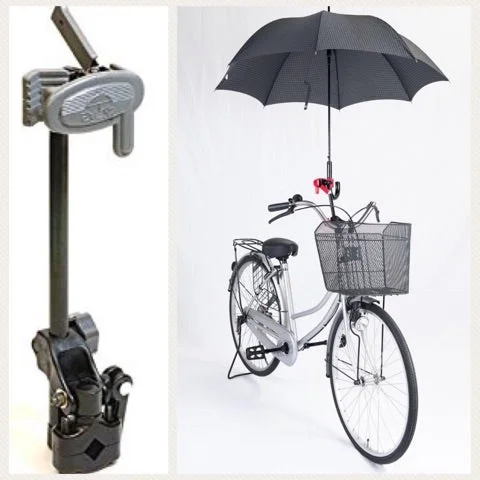
In Mie Prefecture, central Japan, police guidelines on safe cycling explicitly prohibit riding with a device that fixes an umbrella to a bicycle. Authorities say the equipment can interfere with steering, make the bicycle unstable and increase the risk of accidents. As a result, cyclists in the prefecture using handlebar-mounted umbrella holders may be issued a so-called "blue ticket" for a traffic violation.
As calls for tighter regulation grow, Kazuyoshi Arakawa, 57, president of Unite Co., said he was puzzled and frustrated by the criticism. He argued that it was unfair to restrict a product that has been used for nearly half a century and was once recognised for its innovative design.
The company's best-known product, the "Sasubee" (さすべえ) umbrella holder, was invented about 50 years ago by Arakawa's father after Arakawa's grandmother reportedly fell while riding one-handed with an umbrella. Designed to let cyclists keep both hands on the handlebars, the device has been sold ever since and received a local innovation award in 2001.
 mainichi.jp
Umbrella holders for bicycle handlebars have long been sold in Japan, allowing cyclists to ride in rain or strong sunlight without taking their hands off the handlebars. However, using such devices can lead to a traffic citation and a possible fine.
In Mie Prefecture, central Japan, police guidelines on safe cycling explicitly prohibit riding with a device that fixes an umbrella to a bicycle. Authorities say the equipment can interfere with steering, make the bicycle unstable and increase the risk of accidents. As a result, cyclists in the prefecture using handlebar-mounted umbrella holders may be issued a so-called "blue ticket" for a traffic violation.
Yet even in prefectures without clear rules, cycling while using an umbrella stand is not necessarily exempt from regulation. Osaka Prefecture, where umbrella stands are most common, does not specifically mention them in its traffic rules, but there are limits on loads, with regulations stating that items "must not protrude more than 0.15 meters from either side of the carrier." Similar provisions exist in most other prefectures, including Hokkaido, Tokyo, Aichi and Fukuoka prefectures. If an umbrella stand is considered a "load," it could be subject to a blue ticket for a "light vehicle loading violation," which carries a 3,000 yen (around $19) fine.
As calls for tighter regulation grow, Kazuyoshi Arakawa, 57, president of Unite Co., said he was puzzled and frustrated by the criticism. He argued that it was unfair to restrict a product that has been used for nearly half a century and was once recognised for its innovative design.
The company's best-known product, the "Sasubee" (さすべえ) umbrella holder, was invented about 50 years ago by Arakawa's father after Arakawa's grandmother reportedly fell while riding one-handed with an umbrella. Designed to let cyclists keep both hands on the handlebars, the device has been sold ever since and received a local innovation award in 2001.
Crackdown on bicycle violations in Japan casts cloud over handlebar umbrella stands - The Mainichi
NAGOYA -- Umbrella stands that can be attached to bicycle handlebars have long been sold in Japan as a means for cyclists to ride in the rain or stron
I wonder if there are similar/parallel regulations for those umbrella hats--"max 15cm beyond the side of the head", or something like that.
Just wondering... Personally I think the aerodynamics would be funky. Raise your head and lose it, or even a good gust. Images don't show them having one, but I'd think a chin strap or some other kind of tether would be important.
Just wondering... Personally I think the aerodynamics would be funky. Raise your head and lose it, or even a good gust. Images don't show them having one, but I'd think a chin strap or some other kind of tether would be important.
- 14 Mar 2002
- 21,050
- 18,904
- Thread starter
- #50
I wonder if there are similar/parallel regulations for those umbrella hats--"max 15cm beyond the side of the head", or something like that.
Just wondering... Personally I think the aerodynamics would be funky. Raise your head and lose it, or even a good gust. Images don't show them having one, but I'd think a chin strap or some other kind of tether would be important.
I'd be reluctant to try it on a road bike.

Generally, I would imagine that umbrella stands are quite dangerous in strong winds.
Similar threads

- Replies
- 43
- Views
- 166K

- Replies
- 23
- Views
- 11K


