Japanese Food Japan’s famous 7-Eleven egg salad sandwich makes its U.S. debut

thomas

Unswerving cyclist
Admin
Joined
14 Mar 2002
Messages
21,053
Reaction score
18,908
Overseas travellers often single out Japan's 7-Eleven egg salad sandwich as an unexpected highlight, despite its humble appearance. The snack has developed a strong following, with entire blogs and forum threads devoted to it, and some visitors even attempting to bring it home or find equivalents abroad. 7-Eleven has now introduced a U.S. version of the Japanese tamago sando, made with soft milk bread and Kewpie mayonnaise, announcing the launch on social media. The company has confirmed the sandwich's availability only in the United States for now.
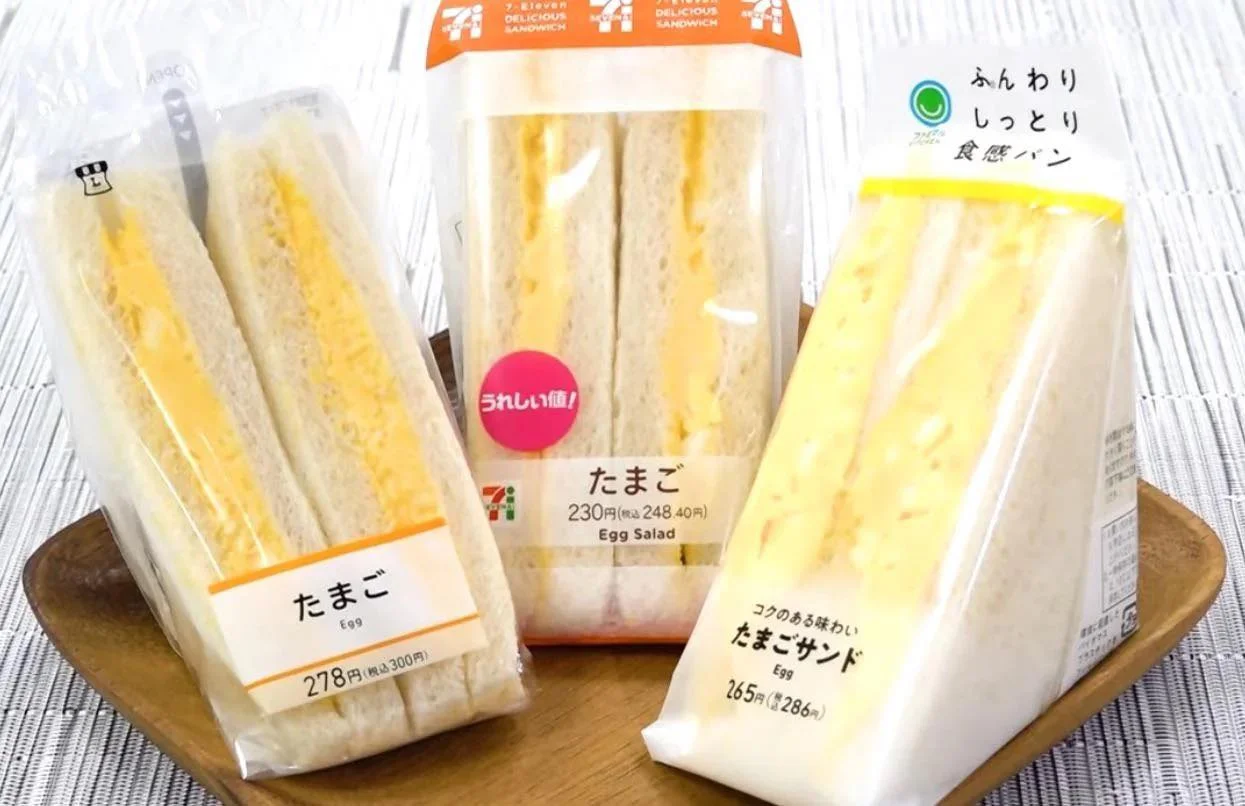
7-Eleven egg salad sandwich


"The freshness and quality of convenience food in Japan is next level," Robert Kirkwood, 44, of Calgary, told CBC News. He travels to Japan for work about 4 times a year and says he's a regular konbini customer. "It's good food, easy to get, cheaper than Canadian grocery stores, and I love it." The company is now on a mission to bring some of its most popular food items to the U.S. Last year, Seven & i said it was introducing more than 200 food items in its U.S. stores — some of them distinctly Japanese — a strategy that was enthusiastically received by fans on social media and food-related websites, according to Reuters. Meanwhile, the tourists have taken note. On the Japanese Food subreddit, locals say that they can't find any sandwiches because travellers snatch them up. "To the people of Japan, I sincerely apologise for the 318 egg salad sandwiches I bought each day while visiting your marvellous country," someone commented.

New York-based food influencer Jeremy Jacobowitz wrote on Instagram Friday that "the headlines are lying to you, but that doesn't mean I don't applaud the attempt." When he tries the U.S. version in the video he posted, he says the bread is nice and fluffy, but it's still not the same. "This won't give you the exact thing you can get there," he said. "But I think it's pretty good."


Here's another review:
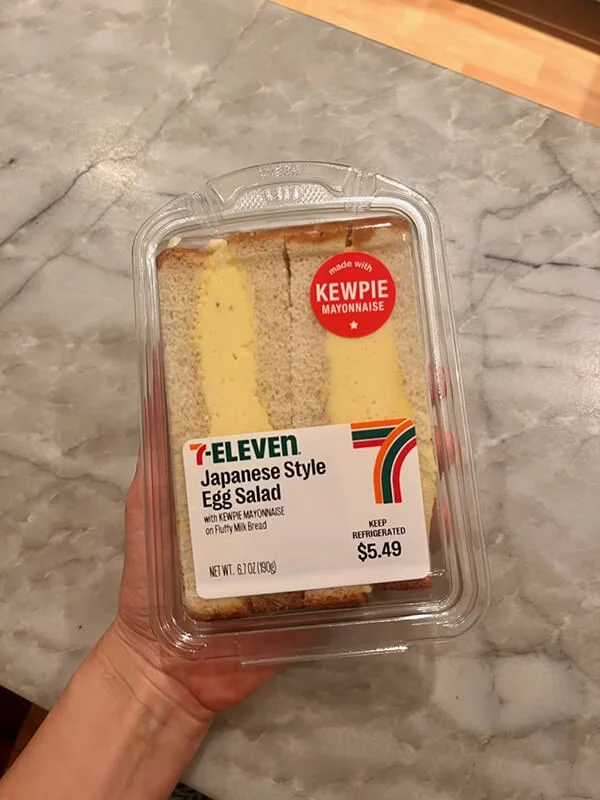
American 7-Eleven egg salad sandwich


That's about Y850. I applaud the effort but I don't think I'll be trying it any time soon. I'll wait until my next trip to Japan.
Actually I'm not sure I've tried 7-11's egg salad sandwich. Every trip I eat at least a couple from Daily Yamazaki.
I'll try to make an effort to try 7-11's next time.
 
I like Daily Yamazaki's bread as well. I used to look forward to buying an ebi-katsu sandwich at a Daily Yamazaki convenience store on my way to work. Since there aren't many Daily Yamazaki stores that sell freshly baked bread, maybe tourists just haven't discovered them yet.


About Daily Yamazaki's Freshly Baked Bread
Daily Yamazaki is unique among Japanese convenience stores because it offers freshly baked bread made right inside the store. While most convenience stores sell factory-made bread, Daily Yamazaki has in-store bakery equipment that allows them to knead, proof, and bake dough on-site. This gives their bread a quality that's close to what you'd find in a real bakery.

What Makes It Special
Many stores have a section called "Daily Hot", where staff bake bread throughout the day.
When the timing is right, you can smell freshly baked bread the moment you walk in.
Because the bread is made in-store, it is fresher and softer than typical convenience store bread.

Popular Items
The selection varies by location, but you can often find:
Freshly baked curry bread (kare-pan)
Melon bread with a crispy top
Croissants
French bread and loaves
Cream bread and anpan (sweet red-bean bread)
Freshly made sandwiches, including the popular ebi-katsu sandwich (fried shrimp cutlet sandwich)

Why Tourists Don't Often Know About It
Although Daily Yamazaki stores exist across Japan,
only a small number of them have in-store bakeries.
Because of this, many travelers never come across these special locations.
They're a bit of a hidden gem—more commonly known among locals than tourists.

Best Time to Visit
The bakery selection is usually best:
In the morning
Around lunchtime or early afternoon
These are when fresh batches often come out of the oven.
 
That's about Y850. I applaud the effort but I don't think I'll be trying it any time soon. I'll wait until my next trip to Japan.
Actually I'm not sure I've tried 7-11's egg salad sandwich. Every trip I eat at least a couple from Daily Yamazaki.
I'll try to make an effort to try 7-11's next time.

That's triple the price in Japan. Also, they seem bigger and come with a crust! That's a no-no in Japan.
 
They look and taste repulsive! Why do the Japanese put sugar in their bread? Has wholemeal/multigrain/sourdough bread not made it to Japan?
 
They look and taste repulsive! Why do the Japanese put sugar in their bread? Has wholemeal/multigrain/sourdough bread not made it to Japan?
That's the vegan in you talking. I'm sure we could find many more food items that deserve the moniker "repulsive" but this isn't one of them. Have you actually had an egg salad sandwich in Japan?

As for the sugar, it's because bread is more of a treat than a staple. But you can find "normal" bread if you look hard enough. If it's called French bread it should have much less sugar content.
 
Unfortunately my wife only likes white bread so that's pretty much all I get these days. Can't remember the last time I've had pumpernickel. :cry:
 
Unfortunately my wife only likes white bread so that's pretty much all I get these days. Can't remember the last time I've had pumpernickel. :cry:

Have you expounded the nutritional benefits of whole-grain and multigrain bread? White bread tastes like cardboard and has about the same nutritional value. Actually, rye bread and sourdough are more popular among Japanese people than one might expect.

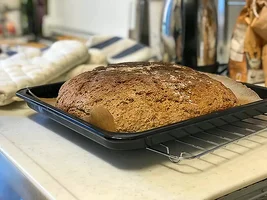
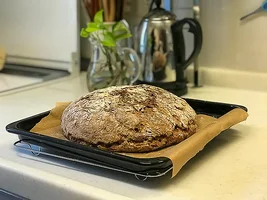
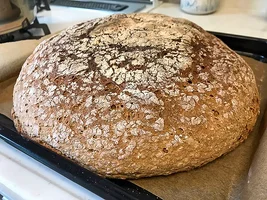
During the pandemic, we started baking bread; below v01 - v03 of our rye loaves. My wife loved it.

bread-01.webp bread-02.webp bread-03.webp
 
That's the vegan in you talking.
Veggie; I eat eggs and and milk occasionally.
I'm sure we could find many more food items that deserve the moniker "repulsive" but this isn't one of them. Have you actually had an egg salad sandwich in Japan?
Yes…sweet bread is not pleasant. I was in Burma eating breakfast in a hotel and the lovely thick slab of toasted bread was like eating cake!🤢
As for the sugar, it's because bread is more of a treat than a staple. But you can find "normal" bread if you look hard enough. If it's called French bread it should have much less sugar content.
Ah, I see!
 
Have you expounded the nutritional benefits of whole-grain and multigrain bread? White bread tastes like cardboard and has about the same nutritional value. Actually, rye bread and sourdough are more popular among Japanese people than one might expect.

During the pandemic, we started baking bread; below v01 - v03 of our rye loaves. My wife loved it.

View attachment 133684 View attachment 133685 View attachment 133686
A mouthful of bread should take an hour to chew before reaching the point it can be swallowed safely and without excoriating the oesophagus and one should be fearful of breaking teeth in the process. Good bread is like a gym weight-training machine for the muscles of mastication. My masseters are like Arnie's biceps at his peak!😑😉
 
Have you expounded the nutritional benefits of whole-grain and multigrain bread? White bread tastes like cardboard and has about the same nutritional value. Actually, rye bread and sourdough are more popular among Japanese people than one might expect.

During the pandemic, we started baking bread; below v01 - v03 of our rye loaves. My wife loved it.

View attachment 133684 View attachment 133685 View attachment 133686
Wow looks wonderful. It wouldn't help if I said anything. But if some Japanese show on TV expounded on the benefits of whole grains she might relent. She won't eat sourdough either. Thinks it smells rotten. (But she likes natto so go figure.)

We bake all our own bread too -- in a fancy Japanese bread maker -- but only white. The recipe calls for a tablespoon of sugar but I assumed it's needed for the yeast to feast on. The end result doesn't taste sweet.
 
In Japan, we have rice-flour bread made from rice as the main ingredient. We also have familiar items like koppe-pan, which is often served in school lunches.

rice-flour bread

koppe-pan

 
This is pretty rare isn't it?
Rice-flour bread (bread made primarily from rice flour) is a relatively new food, and it only began to spread widely in Japan after the 2000s.
However, if we trace its roots, rice flour itself has a much older history. It first came to Japan in the Nara period , introduced as tōgashi (Tang-style confections) brought back by envoys to Tang China.
The traditional Japanese sweet rakugan is also believed to have originated from a confection introduced from China during the Muromachi period . The Chinese sweet called "nanrakukan" (軟落甘) was brought to Japan, shortened to "rakkan" (落甘), and later written with the characters "落雁".

Rice flour can also be used as a substitute for wheat flour, such as in tempura batter. Tempura made with rice flour is "delicious anytime," but it is especially valued because it stays crisp even when cold and absorbs less oil, making it healthier. This makes it ideal for bento lunches, prepared dishes, and make-ahead meals, and it can be enjoyed year-round—even in summer, when people often feel fatigued.

Today, rice flour is not only used as a traditional ingredient in Japanese sweets and rice crackers, but thanks to advances in milling technology, it is now widely used as an alternative to wheat flour in bread, cakes, noodles, and fried foods. Because it is naturally gluten-free, it has gained attention among health-conscious individuals and those with wheat allergies.
 
Back
Top Bottom