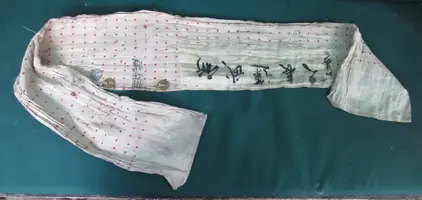
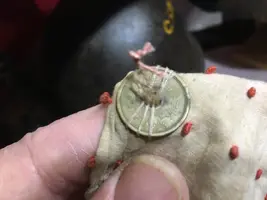
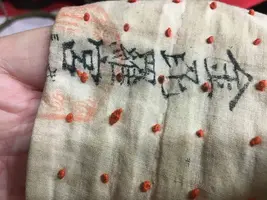
Please translate 1000 stitch belt.

ViniVidiDejaVu

VeniVidiDejaVu
Joined
24 Apr 2014
Messages
65
Reaction score
7
I have had this belt for several years, and would like a translation of the kanji. Thank you! I hope I have the picture in the correct orientation.
 

Attachments

  • 1.webp
    1.webp
    48.8 KB · Views: 52
  • 20150727_175001.webp
    20150727_175001.webp
    162.7 KB · Views: 50
  • 20150727_175114.webp
    20150727_175114.webp
    156.8 KB · Views: 49
  • IMG_2295.webp
    IMG_2295.webp
    64.9 KB · Views: 45
  • IMG_2296.webp
    IMG_2296.webp
    153.8 KB · Views: 49
  • IMG_2297.webp
    IMG_2297.webp
    105.4 KB · Views: 51
  • IMG_2300.webp
    IMG_2300.webp
    90.5 KB · Views: 49
  • IMG_2307.webp
    IMG_2307.webp
    98.6 KB · Views: 49
  • IMG_2311.webp
    IMG_2311.webp
    38.6 KB · Views: 43
  • IMG_2315.webp
    IMG_2315.webp
    100.3 KB · Views: 49
Not a big deal, but for your information:
  • 1 is upside down
  • 175001 and 175114 are rotated counter-clockwise,
  • 2295, 2296,2297, and 2300 are all correctly oriented
  • 2315 is rotated to the right.
I am not a history buff and don't know much about these things, this is just my understanding

Japanese can be written vertically (read top to bottom, right to left if multiple lines) and horizontally. Modern Japanese is read left to right, but up until around the end of WWII it could also be written right to left (horizontal writing was introduced to Japan in the Meiji era and the left-right convention wasn't cemented until the mid-20th century after the war ended.

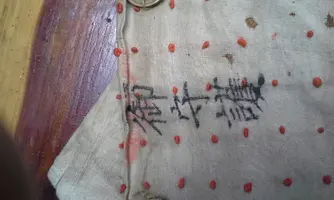
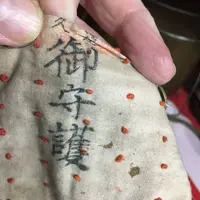
In 175114 and 2300,
御守護... go-shugo ? I'm not sure about the reading of the first kanji but it's usually the honorific "go-" prefix when preceding a kanji compound word. It means "protection, safeguard;" the belt is a kind of omamori, a physical embodiment of someone's prayer for their safety and protection in battle.

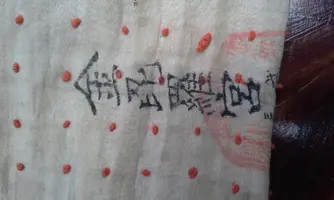
in 175001 and 2315:
金刀比羅宮 is Kotohira-gū, a shrine in Kagawa prefecture known as Konpira Shrine in English. The belt was probably blessed there. If authentic (not that I have any reason to say otherwise), it would suggest the soldier was from Kagawa prefecture, or at least Shikoku , or the shrine held some significance to his family.


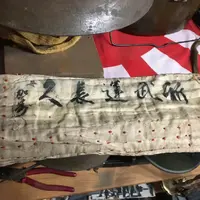
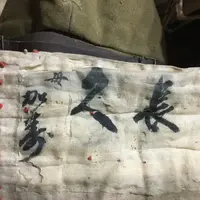
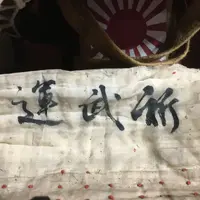
The horizontal text in 1, 2295-7 is 祈(?)武運長久, written right to left:
Bu-un Chōkyū, A somewhat common slogan from what I have seen, meaning Long-lasting good luck in battle. I think the character before the phrase is, which means prayer.

The large kanji next to the phrase looks like a stylized 寿 (kotobuki/jū, longevity), but the mark above it I'm not sure... it could be , which means "add," as in "more life (so please come home safe)".

The small character next to the phrase is , mother. I could imagine the mom went to the shrine to pray for her son's good fortune and got the belt she stitched herself blessed and stamped there before giving it to him as he went off to war.

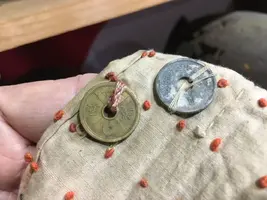
I went to google to see what the coins were for (added sense of protection) and of course found an article on Senninbari that could have saved me some time, but that was fun to unravel :geek:
 
Last edited:
Not a big deal, but for your information:
  • 1 is upside down
  • 175001 and 175114 are rotated counter-clockwise,
  • 2295, 2296,2297, and 2300 are all correctly oriented
  • 2315 is rotated to the right.
I am not a history buff and don't know much about these things, this is just my understanding

Japanese can be written vertically (read top to bottom, right to left if multiple lines) and horizontally. Modern Japanese is read left to right, but up until around the end of WWII it could also be written right to left (horizontal writing was introduced to Japan in the Meiji era and the left-right convention wasn't cemented until the mid-20th century after the war ended.

In 175114 and 2300,
御守護... go-shugo? I'm not sure about the reading of the first kanji but it's usually the honorific "go-" prefix when preceding a kanji compound word. It means "protection, safeguard;" the belt is a kind of omamori, a physical embodiment of someone's prayer for their safety and protection in battle.

in 175001 and 2315:
金刀比羅宮 is Kotohira-gū, a shrine in Kagawa prefecture known as Konpira Shrine in English. The belt was probably blessed there. If authentic (not that I have any reason to say otherwise), it would suggest the soldier was from Kagawa prefecture, or at least Shikoku, or the shrine held some significance to his family.


The horizontal text in 1, 2295-7 is 祈(?)武運長久, written right to left:
Bu-un Chōkyū, A somewhat common slogan from what I have seen, meaning Long-lasting good luck in battle. I think the character before the phrase is, which means prayer.

The large kanji next to the phrase looks like a stylized 寿 (kotobuki/jū, longevity), but the mark above it I'm not sure... it could be , which means "add," as in "more life (so please come home safe)".

The small character next to the phrase is , mother. I could imagine the mom went to the shrine to pray for her son's good fortune and got the belt she stitched herself blessed and stamped there before giving it to him as he went off to war.

I went to google to see what the coins were for (added sense of protection) and of course found an article on Senninbari that could have saved me some time, but that was fun to unravel :geek:
Thank you so much for interpreting my inept posting! I sincerely appreciate your effort. ~ Mike
 
Back
Top Bottom