News Alcohol producers withdraw their 'strong' products

thomas

Unswerving cyclist
Admin
Joined
14 Mar 2002
Messages
21,053
Reaction score
18,907
Alcohol producers are withdrawing their high-alcohol content beverages from the market, responding to health ministry recommendations for safe drinking levels and a worldwide shift towards less alcohol consumption: they create gentler, non-alcoholic options instead of strong "chuhai" drinks. The Ministry of Health, Labor and Welfare issued its inaugural guidelines on the dangers of excessive alcohol use in February.

According to these guidelines, men who consume 40 grams or more of pure alcohol daily are at an increased risk of lifestyle diseases like cancer and strokes. For women, the threshold is 20 grams or more. A 500-millilitre beer can, and a 180-millilitre serving of sake contains 20 grams of alcohol.
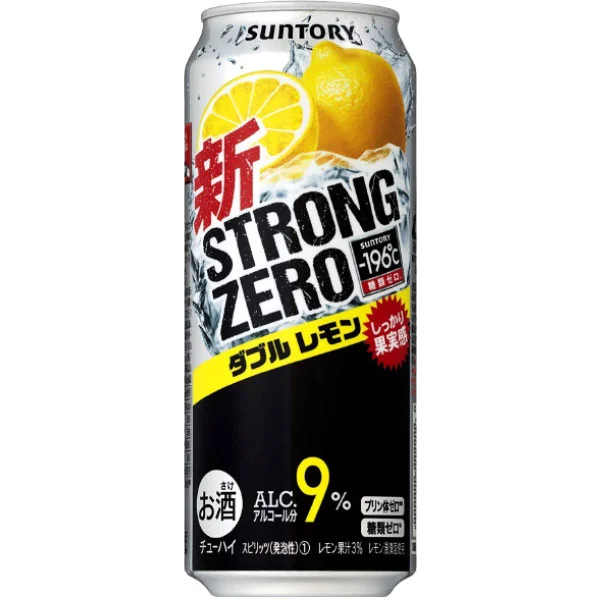

4901777-192799_1.webp


Since the mid-2010s, brewers had released a succession of canned chuhai and other ready-to-drink offerings touting alcoholic content of 8 percent to 9 percent. These "strong-style" drinks are usually mixed with lemon, grape and other flavors, carry affordable price tags, and are easier to gulp down than straight spirits. As a result, these canned beverages make it simpler for consumers to quickly get inebriated. Asahi Breweries Ltd. had a staggering 79 products boasting 8 percent alcohol or higher in 2020. But it now has only two such offerings. The company said it has no plans to roll out additional strong-style beverages. Sapporo Breweries Ltd. has marketed 20 high-potency beverages so far. It currently has only one 9-percent alcohol drink available under the category, and it shows no intention of introducing new strong potables. Suntory Holdings Ltd. sells 14 drinks with 8 percent or higher alcohol content to cater to the various needs of customers. However, it said it is determined to continue raising awareness for responsible alcohol consumption. "We take seriously alcohol-relevant (health) issues as our own important challenge," said a public relations representative of Suntory.


Countries around the world are shifting towards moderate alcohol consumption, influenced by the "sober curious" movement that encourages abstaining from alcohol for health reasons. In 2022, Asahi Breweries launched Sumadori Bar Shibuya on Tokyo's iconic Shibuya Center-gai street, offering a menu of non-alcoholic cocktails and lighter drinks.

 
As a recovering alcoholic who is not really recovering and will forever be grateful to Japan and its alcohol culture for teaching me to love life -- even if it destroys me in the end -- needless to say I have very, very mixed feelings about this all.
 
Or, rather, to put it more directly, I think it's bullshit.

People who want to drink (myself included) will find a way to drink.

If you don't want to drink, buy a ******* Coke or uulong tea or whatever -- no one is stopping you.

But don't just deprive the poor homeless dude in Shinjuku Chuo Kouen who loves his 120 yen Strong Zero of even having the option to purchase it.

(My poison of choice is sake so I rarely even explore this options, but still...it's the principle of it all.)
 
I am happy to see this trend. I wouldn't want to tell a homeless guy what is good for them or make them look for a more dangerous alternative. However, most people don't get drunk most of the time, so I'll be glad to see the back of advertisers pushing products containing much more alcohol than they need and normalising heavy alcohol use.
 
I'm skeptical that it's really a reaction to health ministry guidelines. They must feel that it's good business practice and better for their bottom line. If they can get brownie points with the government while they're at it, then all the better.
 
According to these guidelines, men who consume 40 grams or more of pure alcohol daily are at an increased risk of lifestyle diseases like cancer and strokes. For women, the threshold is 20 grams or more. A 500-millilitre beer can, and a 180-millilitre serving of sake contains 20 grams of alcohol.
I'm surprised the recommended maximum intake is higher in Japan than it is here in Denmark. In Denmark, we talk about the recommended maximum number of 'genstande' we should drink where a 'genstand' (literal translation: 'object') is a way to measure the amount of alcohol in a drink. A normal pilsener is 4.5%/4.6% and contains 12 grams of alcohol which equals one 'genstand'. If it's a strong 9% beer, like the Strong Zero, we would say it contained two 'genstande'. It's a way to estimate how much you've had to drink.
Our weekly recommended maximum is 7 'genstande' for women and 14 for men, which comes down to 84/168 grams of alcohol respectively.
As a funny aside, the Strong Zero can be purchased here in Denmark for a whopping $7 or ¥1,100
 
Genstand seems similar to the German "Gegenstand". Interesting way of measuring. On a side-note: 1,100 JPY for Strong Zero just isn't worth it. 😅
 
I never thought of chuhai drinks as strong. They always seemed to be the equivalent of wine coolers, and many in my college days considered them to be "girl's drinks". They did taste good, though.

Nowadays it's quite rare for me to imbibe any alcohol. It's not good for your health, and it's expensive to boot. I only drink socially, and then only occassionally. If the beverage makers have decided that it's good business to get away from higher alcoholic drinks, I think it's a good thing overall.

It does surprise me, though. I remember the drinking culture in Japan was pretty strong, especially when going out with colleagues. Mostly we just drank beer and/or sake, but it was at every event.
 
Meanwhile, in the US:
People Have Discovered MD 20/20 AKA 'Mad Dog' and Gen-X is Having Serious Flashbacks

Wow this marks the end of an era. For a long time the "Strong" and "Strong zero" products were my go-to, because I could squeeze a decent buzz out of one cheap can, then switch to something I actually enjoyed sipping on. As time wore on I found myself drinking less and less, moving from the 500ml cans to the 350ml ones. Nowadays I rarely bother drinking unless it's a good craft beer or a nice sake or a quality aged liquor, something to actually savor... the Nikko distillery is a great memory. I don't really care for the effects of alcohol anymore, which quickly wear thin and leave me with a premature headache. The times, they are a-changin'!
 
My father , grandfather and 5 uncles all died before 65. They all were 3 pack a day smokers and like my dad , at least a fifth of whiskey a day. My mother drank herself to death in just 2 years after my father died. As a home care nurse for 17 years , I saw the damage cigs & booze can do , both mentally & physically. I don't have the right to look down on people hooked , I've been addicted to soda and junk food since I was about 5 years old. I've lost all my teeth and now am a full bore diabetic. Knowing all this , I still give in to the urge for sugar every few weeks. I feel for anyone addicted to anything , it's tough to fight it.
 
Last edited:
My father , grandfather and 5 uncles all died before 65. They all were 3 pack a day smokers and like my dad , at least a fifth of whiskey a day. My mother drank herself to death in just 2 years after my father died. As a home care nurse for 17 years , I saw the damage cigs & booze can do , both mentally & physically.
Among me and my cousins, a lot of our parents have died of cancer relatively early. My mother was the last to go, just a few months after turning 60. They all smoked most of their lives; the only ones still alive are the non-smokers. I know this means absolutely nothing but it had a lasting impact on us and none of us smoke. My sister vapes since 10+ years but that's it.
I don't judge people for their addiction but because of all the hurt we've been through, I have a hard time accepting parents who smoke. Perhaps it won't matter, perhaps they'll live long, healthy lives but the risk it carries should be enough to deter any parent from smoking. Children deserve to have their parents for as long as possible.
 
I used to be a Strong Zero drinker, and it was because it had the highest alcohol content for the price. Definitely, these drinks encourage alcohol consumption from a psychological perspective. A person drinking four 9% Strong Zeros at a time will consider things differently if forced to drink six 6% drinks for a similar buzz. Most regular drinkers rationalize their use, and it gets harder when forced to make more effort for the same effect. So this is positive if it reduces alcohol consumption even a bit.

I don't know that these companies could care less about the health of people though. It's just as likely that this is more of the shrinkflation hitting Japan. Why not incentivize people buy 50% more drinks?
 
Back
Top Bottom