


- 14 Mar 2002
- 21,050
- 18,904
Effective 16 March, smoking rooms on the Tokaido, Sanyo, and Kyushu Shinkansen lines have been completely abolished, prohibiting smoking on all bullet trains nationwide. This move follows the earlier ban on smoking in the Nagano (Hokuriku), Tohoku, Joetsu, Akita, and Yamagata Shinkansen lines, which was implemented in 2003 due to the Health Promotion Law's requirement to prevent secondhand smoke exposure. While the N700 series bullet trains on the Tokaido and Sanyo lines have been nonsmoking since their introduction in 2007, passengers previously had access to smoking rooms outside the seating areas. However, these closed-off smoking rooms were eliminated as part of the recent timetable revisions by Japan Railway companies.
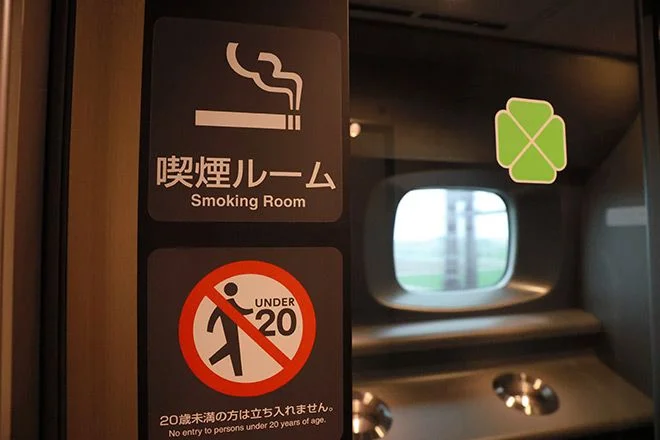
Some smokers have complained about the removal, saying that smokers helped pay off the debt accumulated by Japanese National Railways. This state-owned enterprise was privatized into Japan Railway companies in 1987. The unique tobacco surtax, one of the four types of taxes levied on cigarettes, was created in October 1998 to repay the debts of the JNR and the government's national forestry operations. A transport ministry bureaucrat said one Diet member, a smoker, recently criticized Japan Railway companies for their decision to do away with Shinkansen smoking rooms, pointing out that smokers shouldered part of the JNR debt. On the social media platform X, a poster said that smokers have gotten a "raw deal" for helping repay the JNR debt with the special tobacco surtax. In the special tobacco surtax, smokers pay 16.4 JPY (USD 0.11) per pack or 0.82 JPY per cigarette. The levy brought in 112.2 billion JPY in revenue in fiscal 2020. The JNR debt has fallen to 15 trillion JPY, down from 28 trillion JPY when the state-owned enterprise was disbanded.


