News Golden Week holidays in full swing

thomas

Unswerving cyclist
Admin
Joined
14 Mar 2002
Messages
21,050
Reaction score
18,904
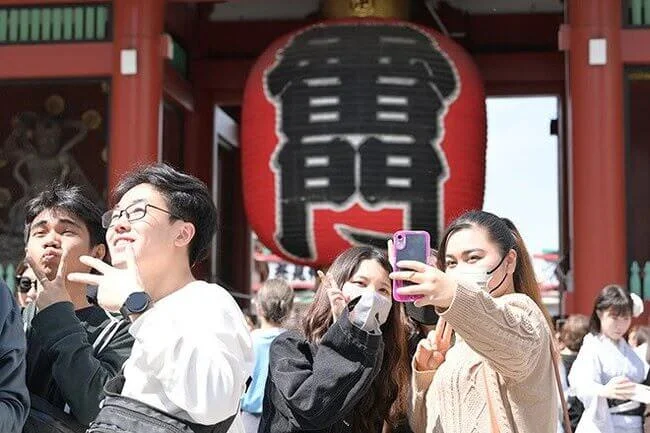
Crowds, domestic and foreign, returned to popular tourist destinations nationwide on 29 April, the start of the Golden Week holidays, as Covid restrictions have been substantially relaxed and travelling became the norm again. However, while many people were not wearing masks, some businesses remain wary about a resurgence of infections.
asakusa-tourists.webp

Photo credit : Shinnosuke Ito / Asahi


Jidaiya Corp., which offers rickshaw rides and kimono rental services in Asakusa, is struggling to meet a sudden rise in demand because the number of workers fell during the long pandemic. "We are grateful for the return of customers," said Hidenori Fujiwara, head of the company. "But we are short-handed and are preoccupied with day-to-day operations." Jidaiya does not ask customers to wear masks although its workers don one. Concerns about infections remain because workers personally help dress customers in rental kimono. "No one can tell whether customers will continue to visit Asakusa in large numbers," Fujiwara said. "We are uncertain about the future."


Reservations for All Nippon Airways Co.'s domestic flights between April 29 and May 7 have returned to 93.5 percent of the pre-COVID-19 pandemic levels in 2018. The ratio for Japan Airlines Co. is 98.6 percent. Reservations for seats on Tokaido Shinkansen Line trains during Golden Week exceeded the 2018 level as of April 26, according to Central Japan Railway Co.


In 2020 and 2021, the holiday week was completely different. Trips were canceled and the Japanese government asked people to stay home to avoid the spread of COVID-19. In 2022, Golden Week returned without restrictions and 2023 will be the second year that residents will enjoy the long holiday without restrictions again. Some of the most famous festivals returning this year are the Hamamatsu-Matsuri in Shizuoka (May 3-5); Kurayami-Matsuri in Tokyo (Apr 30-May 6); Naha Hari in Okinawa (May 3-5); Hakata Dontaku in Fukuoka (May 3-4); Hirosaki Sakura Matsuri in Aomori (Apr 21 – May 5); and Odawara Hojo Godai Matsuri in Kanagawa (May 3).

 
Is it Golden Week already? Wow, time goes by so quickly.

As far as GW traffic is concerned, that's so real. I think the worst traffic I've ever experienced was driving home through the Akashi-kaikyou Ohashi at the end of GW. Talk about a parking lot out there!
 
We don't move/travel at all during golden week, so don't really notice it. But I have seen in the paper that the trains (shinkansen) are booked up between here and tokyo. Downtown sights are probably crowded/busy these days.
 
We don't move/travel at all during golden week, so don't really notice it. But I have seen in the paper that the trains (shinkansen) are booked up between here and tokyo. Downtown sights are probably crowded/busy these days.

We also spend GW at home, just travelling/hiking in the neighbourhood. It's nice to see those 渋滞 reports (today's record in Tohoku: 43 kilometres) from the sofa. 😄
 
We're having a similar Tokyo-based GW. Those 渋滞 reports wear thin after a while and are a really lame way to fill up airtime. The lamest report I've seen during this holiday (Mrs Lothor likes the TV on :() was about about a woman in her twenties somewhere touristy in Yokohama, who - get this! - went to the toilet, and when she came out, she couldn't find her two friends for half an hour! Fortunately, there just happened to be a camera crew to record their emotional reunion. TV in Japan really takes the piss sometimes!
 
We enjoyed the live reports from Kyoto , where transportation officials did their best to rein in the hordes of pesky foreign tourists squeezing into public buses and littering the streets with empty cans and other trash. On the other hand, everyone agreed that those fair-skinned visitors in their rental kimonos were sooooo mecha-kawaii! Ah, the joys of GW.
 
Curious, and my wife isn't here right now to ask, how does that differ (usage/feeling) to 混雑?

I know the latter from signs in an area or two here, warning of traffic congestion.
 
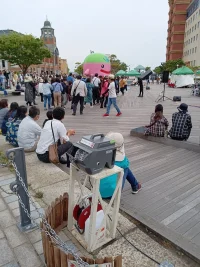
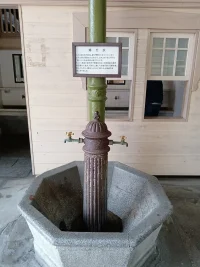
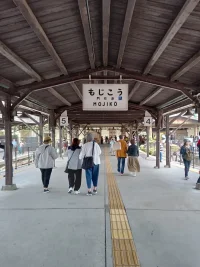
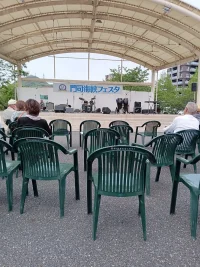
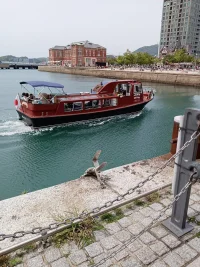
Went to Mojiko, Fukuoka.
 

Attachments

  • IMG_20230504_132707.webp
    IMG_20230504_132707.webp
    337.3 KB · Views: 97
  • IMG_20230504_155440.webp
    IMG_20230504_155440.webp
    273.9 KB · Views: 101
  • IMG_20230504_124117.webp
    IMG_20230504_124117.webp
    284.8 KB · Views: 101
  • IMG_20230504_121717.webp
    IMG_20230504_121717.webp
    207.6 KB · Views: 87
  • IMG_20230504_120009.webp
    IMG_20230504_120009.webp
    153.9 KB · Views: 96
  • IMG_20230504_140419.webp
    IMG_20230504_140419.webp
    352.9 KB · Views: 96
Curious, and my wife isn't here right now to ask, how does that differ (usage/feeling) to 混雑?

I know the latter from signs in an area or two here, warning of traffic congestion.
I just copied it without thinking from Thomas's post. I think that 混雑 refers to congestion in general, including traffic, and you might see it used to refer to busy phone lines, etc., but 渋滞 specifically refers to traffic jams. Anyone with better Japanese than me care to comment?
 
I just copied it without thinking from Thomas's post. I think that 混雑 refers to congestion in general, including traffic, and you might see it used to refer to busy phone lines, etc., but 渋滞 specifically refers to traffic jams. Anyone with better Japanese than me care to comment?
I don't think Jaybot has better Japanese but I think it's correct:
Both 渋滞 and 混雑 refer to traffic congestion or crowdedness, but there are some nuances to their meanings.

渋滞 (jyuu-tai) is used to describe traffic congestion on roads or highways. It implies a slow-moving or stagnant flow of traffic, where vehicles are moving at a much slower pace than usual, or are even at a standstill. 渋滞 can be caused by accidents, road construction, rush hour, or any other factor that slows down the flow of traffic.

混雑 (kon-zatsu) is used to describe crowdedness in general. It can refer to crowded places like trains, buses, or shopping malls, as well as congested traffic on roads. Unlike 渋滞, 混雑 does not necessarily imply slow-moving traffic, but rather a high volume of people or vehicles in a given area.

In summary, 渋滞 specifically refers to traffic congestion on roads or highways, while 混雑 is a more general term that can refer to crowdedness in any context.
 
I don't think Jaybot has better Japanese but I think it's correct:

I asked my wife, and she confirmed Jaybot was spot on.

I couldn't think of any better terms to describe Golden Week than both 渋滞 and 混雑. 😄
 
I asked my wife, and she confirmed Jaybot was spot on.

I couldn't think of any better terms to describe Golden Week than both 渋滞 and 混雑. 😄
But if you were hanging out in Tokyo it was probably neither of those. Assuming you didn't go to Asakusa or some place like that.
 
Several years ago, we decided to travel during GW. We packed the car the night before and, thinking we were smarter than others, departed at 4:30 AM. The first 50 kilometres on the highway took us over six hours. Since then, we have restricted ourselves to exploring our neighbourhood or travelling no further than 30-40 kilometres, lol.
 
Several years ago, we decided to travel during GW. We packed the car the night before and, thinking we were smarter than others, departed at 4:30 AM. The first 50 kilometres on the highway took us over six hours. Since then, we have restricted ourselves to exploring our neighbourhood or travelling no further than 30-40 kilometres, lol.
Perhaps the key is taking a train. At least those will keep running on time. You just need to make sure your seats are reserved in time. A friend of mine is spending his time this GW island hopping in the Seto Inland Sea. I assume he got over there by Shinkansen.
 
Back
Top Bottom