History Japanese history and archaeology: articles, news, and comments

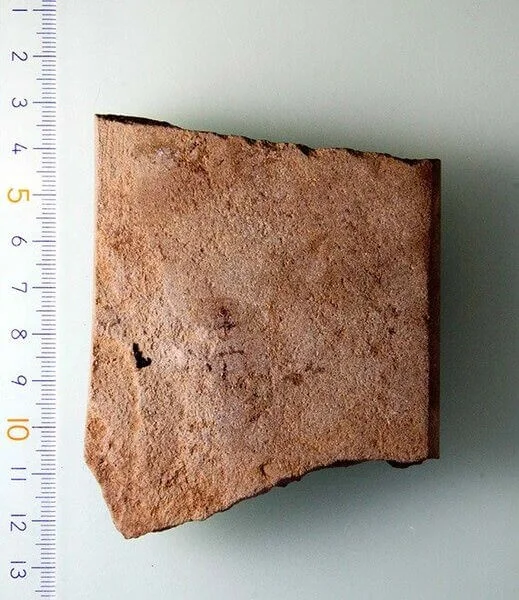
Two years ago, a 2000-year-old stone artefact that appeared to have some writing on it caused an academic sensation as the find would have constituted the oldest example of written language in Japan. Researchers insisted the fragment found in the Tawayama archaeological site in Matsue, Shimane Prefecture, bore faint kanji characters scribbled in Indian ink.
oldest-kanji.webp


Now it turned out that the black mark on the artefact was likely made with a modern permanent marker.

A research team that included the Archaeological Institute of Kashihara, Nara Prefecture, reached the conclusion after analyzing the 2,000-year-old artifact. The team said the "character" was probably made through contamination from a marker. It will announce the finding at the Japan Society for Scientific Studies on Cultural Properties congress on Sept. 10. The stone artifact, 9 centimeters long and 7.5 cm wide, was found at the Tawayama ruins in Matsue, Shimane Prefecture. It dates back to the latter half of the middle part of the Yayoi Pottery Culture Period (1000 B.C.-A.D. 250). The artifact was described as a grindstone in a 2005 survey report. In 2020, however, Takeo Kusumi, a researcher with the Fukuoka city government's Archaeological Center, theorized that the artifact was used as an inkstone based on the black mark and other factors. At a conference of archaeologists, Kusumi said the black mark was likely a character written in ink. Newspapers and TV programs then ran stories about the "oldest letter in the nation."


Archaeological Institute of Kashihara:


Nara Institute of Science and Technology:

 
Tokyo's Chiyoda Ward has reproduced a rare map from 1947 that shows how the postwar U.S. occupation of Japan had dominated and sprawled across the places locals walk past every day. Republished to mark the 75th anniversary of Chiyoda gaining ward status, the map shows many buildings requisitioned by U.S. troops, including an insurance company's head office that served as the General Headquarters of the Supreme Commander for the Allied Powers (GHQ).

"It is believed that only a small number of copies were printed when a map was created soon after the war because of the shortage of materials," said bookstore owner Shingo Nagamori, 55. "A map published in 1947 is rare."


The map can be downloaded as JPEG here.
 
The base I was stationed at in Fukuoka had been a Japanese seaplane base in WWII. The buildings were pretty much the same as they were in the 1940's. The cement ramps that the seaplanes ran up on were still there at the edge of the water. I remember going to visit a prisoner of war camp near Fukuoka where captured Americans were kept. I was struck by the giant pile of dirt about 30 feet high in the camp yard. I was told the prisoners spent their day moving it by hand with pails from spot to spot to keep them busy and too tired to try and escape. I'm told our old base is now a large amusment park.
 
Divers retrieved a V-shaped anchor off the Nagasaki coast that belonged to a Mongolian ship used in the invasion of Japan in 1281. The wooden anchor is 173 centimetres long and weighs just under 200 kilos.

mongolian-ship.jpg

The anchor differs in type from the previous nine anchors that were salvaged, which had anchor stones on both sides of the wood, and it may provide clues to the procurement methods and composition of the Mongolian fleet. The anchor's stone part, about 230 cm long, was recovered on 2 October and was to be put on public display at the centre from 8 October, along with the wooden part.


Tokyo's Chiyoda Ward has reproduced a rare map from 1947 that shows how the postwar U.S. occupation of Japan had dominated and sprawled across the places locals walk past every day. Republished to mark the 75th anniversary of Chiyoda gaining ward status, the map shows many buildings requisitioned by U.S. troops, including an insurance company's head office that served as the General Headquarters of the Supreme Commander for the Allied Powers (GHQ).


The map can be downloaded as JPEG here.
I used to work down the street from there within walking distance. We visited General McArthur's GHQ office once which was still kept for historical purposes.
 
On the occasion of its 150th anniversary in 2022, the Tokyo National Museum will display all 89 works from its treasure trove in one exhibition for the first time since its establishment.


The year 2022 marks the 150th anniversary of the founding of the Tokyo National Museum, the oldest museum of its kind in Japan. It decided to go all out to celebrate its special year by holding the exhibit "Tokyo National Museum: Its History and National Treasures," together with the Mainichi Newspapers Co., which also reached its 150th anniversary this year, and other bodies. Through Dec. 11, the museum will showcase its entire trove of national treasures -- the largest such collection owned by a Japanese museum -- all at once for the first time in its history.


Autumn and Winter Landscapes by Sesshu Toyo (Muromachi period, 15th-16th century),
Dragon head pitcher
The Actor Otani Oniji III as Edobei by Toshusai Sharaku
The Peacock Wisdom King (Heian period, 12th century)
Red and White Cotton Roses by Li Di (China, Southern Song dynasty, 1197)
Tomb Sculpture (Haniwa): Warrior in Keiko Armor, found in Ota City, Gunma (Kofun period, 6th century)


Blade for a Long Sword (Tachi), Named Meibutsu Mikazuki Munechika by Munechika (Heian period, 10th-12th century)
 
An antique art exhibition spotlighting the Kamakura period (1185-1333) is being held in a house constructed with wood from an old Japanese-style home built in Kamakura more than 300 years ago: the exhibition "Toge no Kakaku" (Travelers on the mountain pass) was organized by Yoshihiro Takishita, 77, an architect who serves as chief director of the Association for the Preservation of Old Japanese Farmhouses, a nonprofit organization.

Folding screens created in the Edo period depict scenes from the battles of the Genji and Heike clans


Inu-oumono, a training method featuring mounted archers, painted in Edo period

The exhibition focuses on the period when Kamakura was an important center of samurai society, and introduces various items mainly from the late Heian period (798-1185) to the early Edo period (1603-1867), with Takishita's interpretation of what was going on at that time. Among the items on display, folding screens created in the Edo period depict the scenes from the battles of the Genji and Heike clans, and picture scrolls depict training methods of samurai in the Kamakura period.

The exhibition will continue until mid-December, accepting about two groups, each consisting of four to five people, daily by reservation. Takishita will guide them for about an hour, with guides also available in English.

 
Artisans at Daitoku-ji (大徳寺) in northern Kyōto chanced upon a 400-year-old chisel left behind by carpenters in 1635. The tool was found in the attic of the "hōjō" chief priest's residence, used for receptions and rituals. The structure has been undergoing a six-year preservation and repair work started in 2020.

Chisel from 1635


Chisels from bygone days are rarely discovered because they are ordinary tools. In Kyoto Prefecture, old chisels have previously turned up on three occasions during conservation work of cultural properties. Daitokuji, located in Kyoto's Kita Ward, is the head temple of the Rinzai sect's Daitokuji school. Kyoto prefectural authorities said the chisel was found buried between a decorative backboard of the roof and a rafter to support the roof in the southeastern corner of the hojo at the end of April. The artifact had likely lain there since the hojo was built because the section had never been dismantled before. Why the chisel ended up there remains a mystery, given that they were expensive, important tools for craftsmen. The chisel, which measures 23 centimeters long, has a 17-millimeter-wide, double-edged blade. It was designed to roughly carve and shave wood. Today, single-edge chisels are the norm.

 
Last edited:
Last December, we posted about Hideyoshi's castle in Fushimi. In October, a stone wall unearthed at the castle ruins suggests that the structure was built with the latest quake-resistant techniques after a powerful tremor destroyed a nearby castle. The advanced anti-shock countermeasures are believed to have influenced castle-building methods in later years, according to an announcement by Kyoto city's cultural property protection division.

fushimi-castle-wall.jpg


The stone wall, which is 1.8 meters tall and 7 meters wide and runs east to west, is believed to have been a boundary that divided the central part of the castle and warriors' residences. Its piling stones vary in size on the surface, with some measuring 35 by 50 centimeters and others 60 by 75 cm. Fushimi Castle was built by Hideyoshi on Mount Fushimiyama, also known as Kohatayama, after Shigetsu-Fushimi Castle just nearby was leveled by the Keicho Earthquake in 1596. It was later reconstructed by warlord Tokugawa Ieyasu, the founder and the first shogun of the Tokugawa Shogunate. "In light of stone types, processing and building techniques and other features, the stone wall is thought to have been erected around 1597 during the rule of Toyotomi," said Hideto Morioka, a joint researcher specializing in archaeology at the Archaeological Institute of Kashihara, Nara Prefecture, who is well-versed in stone walls.


Researchers were stunned to come across a previously unknown letter of appreciation from Christians in Japan's northeastern Tohoku region to the pope during the early Edo Period in Florence. The artefact was sent in reply to a message penned by Pope Paul V, whose papacy started in 1605 and ended in 1621, to offer encouragement to Japanese Catholic converts who faced persecution from feudal authorities.

papal-letter-japanese-christians.webp

No such documents had previously been found outside the Vatican. This discovery came about from an on-site study under a program called "Vatican & Japan: The 100-Year Project", organized by the Kadokawa Culture Promotion Foundation and sponsored by The Asahi Shimbun.

Shinzo Kawamura, a professor of history at Sophia University in Tokyo, headed the research and uncovered the letter based on information provided by Timon Screech, a history professor at the International Research Center for Japanese Studies in Kyoto. Similar appreciative notes were delivered between 1620 and 1621 from five areas across Japan, including what is now Nagasaki Prefecture as well as the current-day Kinki and Tohoku regions. They are kept at the Vatican Apostolic Library. The latest letter was found at the Dominican Convent's library that belongs to a church in Florence. The contents are the same as those copies of two replies from the Tohoku region that are stored at the Vatican. It includes the name of Goto Juan (1578-1623), who believed in Christianity as a retainer of famed warlord Date Masamune (1567-1636), among other individuals.


The finding was unveiled at a symposium on the project held at Sophia University on 12 November.

 
Researchers from Tohoku University and other research facilities have recreated the features of a woman who was likely a person of noble birth 1,600 years ago. "Himiko of Okitama" had droopy eyes, a flat nose and straight black hair when she was alive, which indicates she was a direct ancestor of modern people.


okitama-no-himiko.jpg


Her skin color and hair type were determined based on genetic data from her skeletal remains, which were uncovered in 1982 from the Totsukayama burial mound group in Yonezawa's Asagawa district. [...] About 200 graves are located around the foot of Mount Totsukayama in Yonezawa, which is part of the Okitama area. Himiko's bones were found in a box-shaped stone coffin in the No. 137 Totsukayama grave, built from the latter half of the fifth century, along with a long-tooth comb and a small knife. A Dokkyo Medical University study found that she was 143 to 145 centimeters tall. She is estimated to have died at around 40 years old. The reproduction project started after Tohoku Gakuin University excavated the Haizukayama burial mound site in Kitakata, in neighboring Fukushima Prefecture, in fiscal 2017. The bones of a man aged 50 or older were unearthed there. Nuclear DNA was sampled from the ancient woman's teeth for comparison with the man's remains. The study found that 96 to 97 percent of her genetic information was well preserved.


An ensign of an Imperial German Navy torpedo boat has been handed over to the Naruto German House in Tokushima Prefecture. Daisuke Ogaki, 64, brought the flag, preserved at his home in Tsurugi, Tokushima Prefecture, to the Naruto German House in May. Riichi Ogaki, his grandfather, never spoke of how the flag came into his possession. Riichi, who grew rice and raised silkworms along the Yoshinogawa river, died in 1976 at age 84. But Daisuke's mother, Hanako, 94, told him when he was in his late 20s that Riichi obtained the flag from a German warship. After she turned 90, she expressed her hope that the flag would find a good home.

imperial-german-navy-flag.webp

A decisive piece of evidence came from the military service record that Riichi kept. He took part in the 1914 Siege of Tsingtao, where allied Japanese and British forces attacked Germany's East Asian foothold in the city. Riichi, who was a fireman 2nd class aboard the Destroyer Nenohi, possibly joined the search for the S90, which had run aground, officials said. Japanese and British forces won a crushing victory in the Siege of Tsingtao, but Japan lost its Cruiser Takachiho, which was serving as an auxiliary vessel, to a torpedo attack that claimed the lives of around 280 crew members. The S90 is the German warship that scuttled the Takachiho.

The flag will be donated to the Bundeswehr Military History Museum in Dresden early next year.

 
Japan's largest 'wooden haniwa' has been unearthed from the Minegatsuka burial mound in Habikino, Osaka Prefecture, part of the World Heritage Site of Kofun tumuli. It is 352 cm long and was discovered at a burial site. As wooden haniwa are prone to decay, only 15 have been found at burial mounds across the country.


Honestly, it wouldn't have occurred to me that this was a haniwa.

 
I updated the Wikipedia haniwa page so it's official now. :)

Wow, and I first thought you were kidding! You should contribute to our articles at JREF! Or at least add our articles to Wikipedia's references. :)
 
Wow, and I first thought you were kidding! You should contribute to our articles at JREF! Or at least add our articles to Wikipedia's references. :)
Good idea. Have you tried using your site as a reference? Do they accept it?
 
Yesterday, several documents by the Japanese Foreign Ministry's China Division from 1991 were declassified: they focus on the pros and cons of arranging a visit to China by Emperor Akihito. Akihito made an official trip to China the following year, but only after meticulous preparations, as evident in the diplomatic document entitled "Pros & Cons of the Emperor's Visit to China at the Present Stage."

akihito-china-visit-1992.webp

Pros:

  • The Japan-China relationship would significantly improve if the emperor visited China next year (1992), which marks the 20th anniversary of the normalization of diplomatic relations.
  • One absolute condition of the emperor's visit to China is its success. The current Chinese administration can control anti-emperor sentiment among its people.
  • The idea of the emperor visiting South Korea before China is understandable to some extent, but there is no way we can indefinitely decline an invitation from China because South Korea is not quite ready to receive the emperor.
  • The fact that the emperor himself hopes to visit the Chinese side has sufficiently recognized China through previous exchanges. If we delay our reply any further, there are concerns that the Chinese side could interpret it as the Japanese government preventing the emperor from visiting China. This could cause friction in the Japan-China relationship.

Cons:

  • Prime Minister Toshiki Kaifu will be the first leader of an industrialized nation to visit China since the Tiananmen Square crackdown (in 1989 against pro-democracy protesters), and China would be greatly appreciative of the visit as it has become increasingly isolated from the international community. China would appear to be asking too much by requesting a visit by the emperor.
  • The Chinese side might frequently ask for a visit by the emperor because it intends to use the occasion for political gain. It would be unwise for us to jump at such an opportunity.
  • Given (the pro-democracy) movements in the Soviet Union and Eastern Europe, it is difficult to foresee how China will become after the era of Deng Xiaoping. China's current administration has gotten its hands dirty by cracking down on its people at Tiananmen Square. The emperor could be identified with a negative image if he were to visit China in response to its invitation.
  • If the emperor visits China before South Korea, it will leave a bitter aftertaste on the Japan-South Korea relationship. With the emperor scheduled to visit Southeast Asia in autumn this year, his visit to China next year would place a disproportionate emphasis on Asia.

 
Ishiguro Keisho, an 81-year-old antique photo collector from Tokyo, acquired sixteen photos taken about two years after the Great Kanto Earthquake in 1923 that show how the Japanese capital recovered following the natural disaster estimated to have claimed more than 100,000 lives.


The 16 photos were acquired by Keisho Ishiguro, an 81-year-old antique photo collector living in Tokyo, who purchased the collection after seeing it in an inventory that an acquaintance's antiquarian bookstore sent to him in 2017. Despite being discolored, the photos, which all measure approximately 12 centimeters by 16.5 cm, appear to have been printed directly onto photographic paper after being taken by a large format camera or similar, enabling them to convey the scenes of reconstruction with sharpness. Locations, but not dates and times, were written on the back of many of the photos, which captured various familiar places in Tokyo including a national road that runs through present day Sumida Ward, and Ueno Park.


Kyodo shows four of the photos (see the link below). I hope Mr Ishiguro will share the rest with the public, too.

 
There are still little triangular corner houses in present day Tokyo. I wonder if there is still one here.

Knowing that the large building in the distance is the Asahi Brewery, it should be possible to pinpoint the location on Google Maps.


Letters from Tokugawa Nariaki and other feudal warlords recently discovered revealed that they were so incensed by the temerity of the United States in the 19th century to dispatch warships to Japan and demand the country open its ports to foreign trade that they plotted to seize one of the vessels and kill the high-ranking delegates on board.

nariakis-letters.jpg

The letter was written by Tokugawa Nariaki (1800-1860), a daimyo who ruled the Mito Domain (present-day Ibaraki Prefecture). It was found among 103 letters and documents from leading figures during the waning days of Japan's feudal past and after the Meiji Restoration of 1868. They are kept by the Nozaki family, famed as the "king of salt farms of Kojima" during the Edo Period (1603-1867). Word of the trove came from the Ryuo Kaikan Foundation, which maintains and manages the old Nozaki family residence, a government-designated important cultural property here. Foundation officials said they have been analyzing the documents since 2012, adding that many materials represented new discoveries. Of them, 16 documents are related to Nariaki, a prominent nationalist and the father of Tokugawa Yoshinobu, the 15th and last ruler of the Tokugawa Shogunate. One letter begins with a subject line in red ink that states, "About burning barbarians to death." It was sent to his close aide Fujita Toko in 1855, the year after the Japan-U.S. Treaty of Peace and Amity was signed. Nariaki displays his bitter resentment toward the United States, which in his view disrespectfully sent warships and demanded that Japan open up its ports under threat of an attack. He discloses his plot to board one of the vessels under the pretext of wining and dining U.S. delegates, seize the ship and cut down high-ranking members with swords. According to the foundation, the wife of the top official in charge of an administrative district that included the Kojima area was a daughter of a samurai from the Mito Domain. This explains how the Nozaki family ended up with a large number of documents from the Mito Domain.


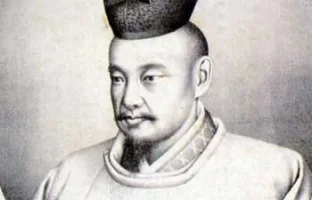
Tokugawa Nariaki

Bio  Tokugawa Nariaki

Mito lord and reactionary reformerTokugawa Nariaki (徳川斉昭, 1800-1860) was the ninth daimyō of the Mito domain (modern-day Ibaraki Prefecture) and father of the fifteenth and last Tokugawa shōgun, Tokugawa Yoshinobu. An active reformer in the domain’s government and a leader in the sonnō jōi...
 
The Nagano Prefectural Museum of History is trying to raise 3.15 million JPY (USD24,000) by 15 March to purchase a letter of commendation written by Takeda Shingen from the operator of a secondhand bookshop in Kyoto Prefecture. The letter was written during the Battles of Kawanakajima, a series of five battles fought in what is now Nagano city between 1553 and 1564 against rival Uesugi Kenshin . The museum mounted a fund-raising campaign to acquire it. In the letter, Shingen (1521-1573), from Kai province (present-day Yamanashi Prefecture), commended the achievements of local warriors in the Battles of Kawanakajima, a series of five battles fought in what is now Nagano city between 1553 and 1564. Shingen fought against Kenshin (1530-1578), a warlord based in Echigo province (present-day Niigata Prefecture), around the crossing of the Chikumagawa and Saigawa rivers.

takeda-shingen-letter.jpg

Photo credit: Nagano Prefectural Museum of History

Measuring 26 centimeters by 37 cm, the letter was addressed to Terao Gyobushoyu, a warrior based in today's Matsushiro district of Nagano. It carried the signature of Takeda Harunobu, the name Shingen used before entering the priesthood, and his seal mark, or stylized signature. It was dated "April 25," but the year was not specified. The museum said the letter is historically significant because it refers to the situation of local warriors fighting at the forefront as well as specific developments in the battles. Shingen expressed admiration for local warriors' "unparalleled loyalty shown by conquering a castle and killing many enemy soldiers." He wrote that he would personally deliver "certificates of commendation to those who have made names for themselves" within three days. He also wrote, "The forces of Nagao Kagetora (Kenshin) are said to be setting out for the front, and our side will reach Suwa (in present-day Nagano Prefecture) today and plans to advance troops to Mount Sanoyama on the 28th."


Nagano Prefectural Museum of History

Nagano Prefectural Museum of History

The Nagano Prefectural Museum of History (長野県立歴史館, Nagano Kenritsu Rekishi-kan) is a public museum located in the Kino no Sato History Park in Chikuma City, Nagano Prefecture, which also houses the Hanishina Kofun Tomb Group, the Mori Shogunzuka Kofun Tomb Museum and Kino no Mura. As well as...

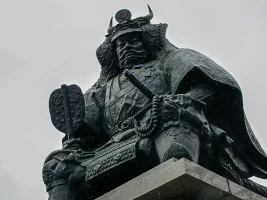
Takeda Shingen (武田信玄, 1521-1573)

Bio  Takeda Shingen (武田信玄, 1521-1573)

Takeda Shingen (1521-1573), also known as the "Tiger of Kai" (甲斐の虎), was one of the foremost daimyō of the Sengoku Period (1467-1568) and the Azuchi-Momoyama period (1568-1600). After deposing his father, he conquered his neighbours' territories and established control over the provinces of Kai...
 
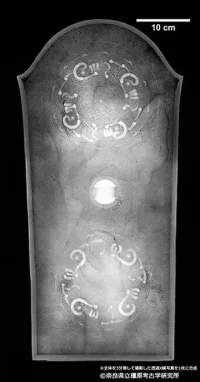
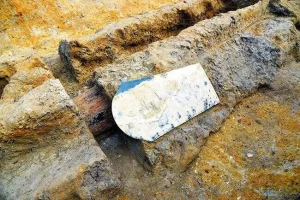
A shield-shaped bronze mirror and massive iron sword were discovered in an ancient kofun burial mound in Nara, unprecedented artefacts of their kind in Japan. The unusually shaped mirror and the blade of more than two metres were discovered at the Tomiomaruyama kofun, Japan's largest round kofun, which was created in the second half of the fourth century.


This was the first time that a shield-shaped bronze mirror was discovered at an archaeological site in Japan. Complex patterns are inscribed on the back and experts praise the mirror as "a masterpiece of bronze artifact from the Kofun Period," which lasted from the third to the seventh century. The mirror is around 64 centimeters long and about 31 cm wide. Typically, bronze mirrors that are found at archaeological sites are rounded, but this one is shield-shaped. The middle part of the back of the mirror is raised, so that it can be picked up. Two rounded patterns sandwich the raised portion on the back of the mirror. The patterns are identical to the patterns inscribed on a type of ancient mirror called "Daryukyo." Daryukyo is a type of mirror that was made in the Japanese archipelago in the Kofun Period. For this reason, experts named the shield-shaped mirror "Daryumon shield-shaped bronze mirror."

nara-mirror01.webp nara-mirror02.webp

The sword, which is around 2.37 meters long and about 6 cm wide, is a type called "dakoken," whose blade is slightly bent, like a snake. This is the largest sword discovered intact at an archaeological site in Japan. Experts believe that the sword was a ceremonial instrument to ward off evil, not a weapon, due to its large size. They believe that no robber had opened the wooden coffin to pilfer its contents as it was found in good condition.

 
Asahi reported on the recent trend to replace concrete castle keeps from the Showa period with authentic wooden donjons. Challenges to these undertakings are not only financial and technical but also related to compliance with the Building Standards Law (wooden structures are not to exceed 13 metres in height).

There are only 12 castles in Japan with their original wooden keeps intact. They are all designated as national treasures or important cultural properties by the Japanese government. Castles refitted with wooden keeps include Shirakawa Castle in Fukushima, Odawara Castle in Kanagawa, and Ozu Castle in Ehime.

Nagoya City will replace the concrete keep of Nagoya Castle this year. Work to demolish the existing donjon will begin once the central government gives permission. Hiroshima Castle's donjon is also slated to be replaced with an authentic wooden structure.

Tetsuo Owada, chairman of the Japan Castle Foundation, said walking directly on the wooden floors of the re-created donjon instead of concrete and wearing shoes will give visitors a real sense of being in an original donjon from olden times. "Also important is that restoring the wooden structure will help pass down the skills of the carpenters of the traditional buildings and others," said Owada. "The many concrete donjons constructed after the war were seemingly a necessity of that era, but authenticity will be required from now," he said. "As long as paintings, photos and other records provide firm historical evidence, wooden replicas should be introduced."

 
Last edited:
I think this is a great initiative. To me the sight of a concrete, modern replica of a feudal-era castle is one of the more forlorn things in Japan. An unappealing, ready-made tourist attraction, complete with parking lots and rows of souvenir stands selling the same mass-produced trinkets to pre-packaged group tours who are allotted perhaps 15 minutes to disembark their bus, take a group photo, buy the obligatory souvenirs for whoever is left back home, and then get back on the bus.

Adding a bit of authenticity to them is a great idea, and I love the "castle stay" program, even if it is a bit steep.

Strangely, Tōkyō's old castle grounds feel to me like one of the most neglected and underdeveloped bits of historical architecture in the country. There are still a few buildings and gates that survived the war, but they somehow feel remote, and even the signage around the structures is very obtuse and, in a way, unhelpful.
 
Back
Top Bottom