MoJ considers joint custody system

thomas

Unswerving cyclist
Admin
Joined
14 Mar 2002
Messages
21,050
Reaction score
18,904
Miracles do happen. In light of rising divorce rates, Japan is considering introducing a joint custody system for divorced couples with children.

The Civil Code allows married couples to have joint custody over their child, but only grants custody to one of the parents after a divorce. In recent years, about 200,000 married couples, or about one in three, are divorcing per year in Japan, and non-payment of child support and disconnection of exchanges between the child and the non-custodial parent have become social problems. Meanwhile, with the social advancement of women and increasing participation of men in child-rearing, some say that it is "irresponsible to abandon the role of the parent after divorce and cutting off the relationship with their child." Furthermore, cases of custody battles and "abduction of a child," when a parent takes a child without the consent of their ex-partner, are becoming frequent. Joint custody after divorce is common practice in many other countries.


Other news related to family law isn't that good: an Osaka court ruled that Japan's ban on same-sex marriage was not unconstitutional, dealing a blow to LGBTQ rights activists in the only G7 nation that doesn't allow people of the same gender to marry.

 
Miracles do happen. In light of rising divorce rates, Japan is considering introducing a joint custody system for divorced couples with children.

Hopefully something will come of this and it becomes binding and enforced! I don't think "irresponsible" is the best word, it doesn't seem strong enough to me when talking about cutting-off access to someone's child.
 
in the only G7 nation that doesn't allow people of the same gender to marry.
And the only G7 nation that hunts whales. The only G7 nation where lolicon genre is legal. I bet if USA had abolished capital punishment Japan would be criticized for being the only G7 country imposing death sentences.
Sure, globalization has its merits, but let`s respect the national differences.

As a side note, i absolutely agree that legalizing same-sex marriages will only benefit the Japanese society at large. It`s just i don`t like things being judged "good" or "bad" in the context of G7 or any other multi-national body.
 
Surely you agree that certain standards and values are (or, at least, should be) universal and not subject to cultural relativism. We have, for example, the Universal Declaration of Human Rights. Is it acceptable to discriminate because of "national differences"? I assume the G7 comparison is based on the premise that a higher level of (industrial) development and wealth should go hand in hand with greater acceptance of diversity.
 
I absolutely agree that certain standards and values, such as human rights should be universal. But i don`t believe same-sex marriage issue is of such universal importance and is better left for the legislative branches of elected or otherwise representative governments to decide.

Historically the most developed and wealthy countries shared similar cultural values, that is why we unconsciously perceive those norms as "universal" now. Let Japan have it`s way. Besides, looking at the current trends in the mass media and on television same-sex marriage will become legalized in the coming 3-4 years. ... Maybe 5-6 years taking Japanese conservative approach into account. I mean, NHKe channel (that`s right, the government-sponsored educational channel aimed at kids and students) has many programmes addressing the issue, and some regular hosts are openly (and somewhat caricaturaly) homosexual.
 
Last edited:
But not all countries have the same list of human rights. There will always be differences between countries.
That's true. Hence my "should be". We should never give up on attaining the universalism of something that's indispensable and fundamentally good for humankind. :)

Whether the right to same-sex marriage is a human right is, indeed, debatable. Many progressive legislations view it as an outflow of the principle of (marriage) equality (see the position paper of the Australian government, for example). Anyhow, however long it may take, Japan is on the right path.
 
A subcommittee under the Justice Ministry's Legislative Council submitted a draft on legal changes in parental authority when marriages fall apart. One of the options included was joint custody of children. Marriage and divorce statistics illustrate a pressing need to tackle an alarmingly low level of child support provided after couples divorce.


The delicate nature of the issue resulted in numerous options being included in the draft cobbled together by a subcommittee under the Justice Ministry's Legislative Council, which serves as an advisory panel to the justice minister. The draft was compiled after roughly 18 months of often heated discussions within the subcommittee. Under Civil Law, parental authority is granted to only one parent after a divorce. But activists have long clamored for joint parental authority, arguing it is unfair to deprive one parent of the opportunity to meet regularly with his or her children. However, groups that provide support to single mothers oppose this option on grounds it would leave open the door for abusive parents to continue physically hurting their children and former spouse.

The notion of joint custody being "dangerous" to children's well-being seems deeply ingrained. Chieko Akaishi, head of the Single Mothers Forum, argues that

... according to an online survey by her organization in June and July with 2,500 valid responses from 2,500, 40 per cent of the respondents said their ex-spouse had physically abused the child, while only 10 percent said they were in favor of joint custody. Sixty per cent wanted single custody. Akaishi even opposed having the option of choosing joint custody on grounds the power relationship between parents would inevitably lead to the weaker partner being forced to choose joint custody.

 
The notion of joint custody being "dangerous" to children's well-being seems deeply ingrained. Chieko Akaishi, head of the Single Mothers Forum, argues that
I'm sorry, but my reaction to this is that it is a huge load of crap! Also, how could her organization's clear bias not discount the findings of any survey that they preform? If you only survey people who you are pretty much guaranteed will side with your view then you shouldn't bother with the survey in the first place as it is useless.

Its the same crap that happens in the US, though not to quite the same extent. Mothers are almost always given primary or sole custody with fathers only getting it if either the mother just isn't interested in the kids or has extremely well documented reasons why she shouldn't (abuse, obvious drug addict, in prison, etc). I would like to note that while fathers are also gone after for child support, spousal support, and any number of other financial "responsibilities" that on the rare occasions that that father is given primary or sole custody the same is rarely true for the mothers.

The same is true for abuse, anytime domestic abuse comes up everyone acts like the only way it could be is that the man is abusing the woman, never the opposite even with plenty of incidents of that being the case.

Sorry, the topic just really gets me riled up.
 
Sorry, the topic just really gets me riled up.

Understandably so. In all fairness, the article also mentioned parental organisations supporting joint custody.

Norihisa Takeda, who heads the Parents and Children's Network, strongly supports introducing joint custody. "Even after a divorce, to the child, there is no change in the fact that both are parents," Takeda said. "The system should be changed to allow for both the father and mother to fulfil their responsibility to care for the child."

Joint custody, keeping maiden names, etc. - the genie is out of the bottle, and no stubborn traditionalism can stop it.
 
Things are moving but at a snail's pace. A Justice Ministry panel suggesting allowing divorced couples to have joint custody of their children met with strong reservations. While joint custody seems to be working in the rest of the world, Japanese lawmakers insist such a system could put both children and parents in danger.

One opponent warned that "maintaining such a relationship with a separated parent could lead to domestic violence and abuse. Some panel members submitted opinion papers to the ministry, expressing "strong concern" about the interim report and saying that "the discussions were too hasty." The panel presented three options if joint custody is introduced. One is to make joint custody the main principle in divorce cases and use single authority as an exception if certain requirements are met. The second is to have single authority as the main principle and allow joint custody as the exception. The third is to decide custody matters on a case-by-case basis. For the proposed joint custody cases, a question was raised on which parent should be given the rights now granted for single parental authority.

 
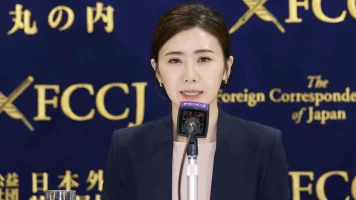
Yesterday, former Japanese table tennis star Ai Fukuhara told reporters at a press conference at the FCCJ in Tokyo that she and her ex-husband have agreed on their son's custody.

https%3A%2F%2Fcms-image-bucket-production-ap-northeast-1-a7d2.s3.ap-northeast-1.amazonaws.com%...jpg

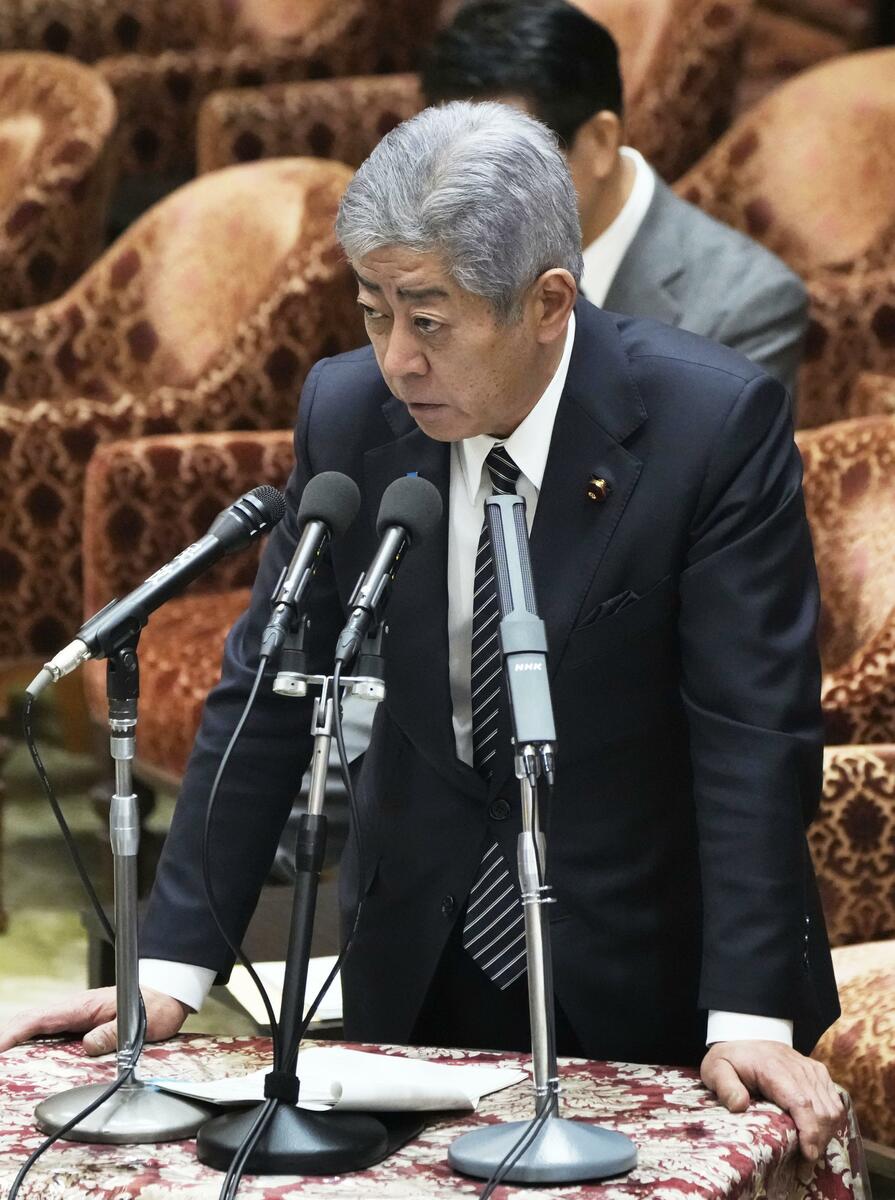
Momentum is growing in Japan to introduce a joint custody system for divorced couples with children. Recently, the cabinet approved a bill to amend a 126-year-old law allowing only one parent's sole custody. The proposed changes would allow divorced parents to opt for either joint or sole custody of their children. In cases where an agreement cannot be reached, family courts will step in, and judges will make decisions based on the children's best interests. Advocates of the bill aim to see it enacted during the ongoing session of the Diet, which is scheduled to conclude in June. If approved, the joint custody system is anticipated to be implemented by 2026. Notably, Japan is the only Group of Seven countries that has not yet legally recognized joint custody, and this amendment would represent the first alteration to the country's family law in 77 years. Justice Minister Ryuji Koizumi emphasized the importance of mothers and fathers remaining actively involved and responsible for their children's upbringing even after divorce.


Several high-profile cases have recently fueled public discussion around joint custody. In July 2023, Taiwanese table tennis player Chiang Hung-chieh accused his ex-wife, retired Japanese table tennis star Ai Fukuhara, of refusing to return the couple's son to Taiwan, where they have joint custody of their two children under domestic law. The son had been visiting Fukuhara in Japan for a summer holiday, and she had failed to return him to his father by the agreed deadline. Chiang took the issue to the Tokyo High Court, which ordered Fukuhara to return the child immediately. At a news conference on Friday, after seven months of negotiations, Fukuhara said that the couple had reached an "agreement" and that her son was back in Taiwan with Chiang. "I am incredibly sorry for the worry and inconvenience I caused," Fukuhara told reporters. "From now on, I would like to cooperate with Chiang to raise our children together." Lawyers for Chiang said they believe the "lack of awareness around the concept of joint custody in Japan" was a significant factor behind Fukuhara's actions. "Japan should seriously consider introducing a joint custody system" like Taiwan's, lawyer Hsu Sung Po told reporters. "If Japan implements such a system, we hope this case can serve as a point of reference," added fellow lawyer Aiko Ohbuchi.

Paywall alert:

 
In cases where an agreement cannot be reached, family courts will step in, and judges will make decisions based on the children's best interests.
I'm glad its improving but I wonder if the "children's best interests" will really be considered in a meaningful way or if it will be the same nonsense that it currently is.

Lawyers for Chiang said they believe the "lack of awareness around the concept of joint custody in Japan" was a significant factor behind Fukuhara's actions.
BS! According to that same article they already had joint custody in Taiwan already. In my opinion this was blatant child abduction from the father and is just being said to try to save face, probably as part of whatever the new agreement is.
 
I couldn't agree more.

Another thing I doubt is in the children's best interest is this:

"I have not been able to ascertain whether my children are alive or dead," Fichot told Nikkei Asia. "Under the current system, it's the first mover's advantage. Whoever takes the kids first gets sole custody."

Fichot was the French national who went on a hunger strike during the Tokyo Olympics.

 
Finally! The Lower House recently passed legislation that allows both parents to share joint custody of their children after a divorce. This significant development amends the Civil Code and other related laws to introduce a joint custody system. The bill received majority approval during a plenary session. If enacted, the revision will take effect within two years of its promulgation.

Under the current Civil Code, during marriage, both parents have custody. However, after divorce, the parents are restricted to "sole custody", with one of them designated as the custodian. The proposed revision aims to change this by allowing both parents to share custody if they agree at the time of divorce. In cases where an agreement cannot be reached or if the divorce is finalized after a trial, a family court will decide whether to grant joint custody or whether one of the parents should have sole custody. Notably, the proposed revision also specifies that a family court will grant sole custody in situations with a threat of danger.

 
It's about time that Japan though of legalising joint parental custody. As usual with social legislation in Japan comes decades after Western countries. Sweden was the first country to introduce joint parental custody in 1973. Socially conservative Italy was one of the last to allow it in Western Europe in 2006.

I asked ChatGPT and joint parental custody is legal in all European countries as well as all other Western countries.

There was a study published last year showing the frequency of joint parental custody in 17 European countries. Lithuania was the only country where they didn't find any case, even though it is legal (I doubled checked).

1713344501334.png


After Sweden, the USA is the country where I joint parental custody is the most common. It is estimated that 50% of divorced parents have joint parental custody.
 
Finally! The Lower House recently passed legislation that allows both parents to share joint custody of their children after a divorce. This significant development amends the Civil Code and other related laws to introduce a joint custody system. The bill received majority approval during a plenary session. If enacted, the revision will take effect within two years of its promulgation.

Under the current Civil Code, during marriage, both parents have custody. However, after divorce, the parents are restricted to "sole custody", with one of them designated as the custodian. The proposed revision aims to change this by allowing both parents to share custody if they agree at the time of divorce. In cases where an agreement cannot be reached or if the divorce is finalized after a trial, a family court will decide whether to grant joint custody or whether one of the parents should have sole custody. Notably, the proposed revision also specifies that a family court will grant sole custody in situations with a threat of danger.

Several questions occur to me for this.

  • Will this be retroactively applicable or will this only apply to divorces that happen after the date the legislation goes into effect?
    • If it is retroactive then there may be hope for spouses who have lost all access to their kids to be able to be part of their life again.
  • Who determines if there is a "threat of danger" and to whom is it applicable?
    • Does the court determine this during the divorce? Is it on testimony from a trusted source? Is it based on police records?
    • By "whom is it applicable" I mean is it just the kids or is it the other parent as well that the threat of danger applies to?
      • Maybe the parents are not capable of being in the same room but it doesn't apply to the kids.
  • How will this statement be interpreted/handled?
    "To prevent parents from being forced to unilaterally agree to joint custody under pressure, the proposed revision includes a measure to confirm whether the agreement is based on "true intentions" when joint custody is agreed upon in a divorce by mutual consent."
    • So if one parent wants to hurt the other can they just refuse joint custody and still prevent the other parent from having any access to the kids? If so then it seems very easy to abuse this law.

It's a step in the right direction but I think that the default requirement should be for joint custody and other options only pursued if that cannot work for some reason. There should also be some thought about grand parents being able to see their grand children as well, though that is perhaps better left for other rules/laws/considerations.
 
Last edited:
Will this be retroactively applicable or will this only apply to divorces that happen after the date the legislation goes into effect?
  • If it is retroactive then there may be hope for spouses who have lost all access to their kids to be able to be part of their life again.

It appears that once the bill is enacted, couples who have already divorced will also be eligible to choose joint custody. However, the proposed bill is already facing stiff resistance from single parents:

 
I read that article and it seems more like the woman just wants to punish the child's father and that the "respecting the child's opinion" is a convenient excuse to continue to do so. There has been many reports in the past about children being coached on what to say to the people who come to see if they want to see the other parent and there have also been lots of examples of the custodial parent abusing the other parent to the child and making the child believe that the missing parent is a bad person.

I have to wonder if she would feel the same way if her daughter had been placed with the father and she was the one who wanted access to her child.

I'm not trying to make light of verbal/emotional abuse at all. But it seems to me that permanently removing one parent's access to the child is also a form of abuse, to both that parent and the child.

Edit: typo
 
Last edited:
I read that article and it seems more like the woman just wants to punish the child's father and that the "respecting the child's opinion" is a convenient excuse to continue to do so. There has been many reports in the past about children being coached on what to say about to the people who come to see if they want to see the other parent and there have also been lots of examples of the custodial parent abusing the other parent to the child and making the child believe that the missing parent is a bad person.

I have to wonder if she would feel the same way if her daughter had been placed with the father and she was the one who wanted access to her child.

I'm not trying to make light of verbal/emotional abuse at all. But it seems to me that permanently removing one parent's access to the child is also a form of abuse, to both that parent and the child.
The system will be abused no matter what.
 
Japan's parliament has approved a significant amendment to the Civil Code, introducing the option of joint child custody for divorced parents, aligning Japan with international standards. This landmark revision, the first in nearly eight decades, is set to be implemented by 2026. It aims to provide a choice between dual or single custody, mandating parental cooperation to safeguard children's rights and welfare. The current legislation, which typically awards custody solely to the mother, is being reformed in response to the rising divorce rates and the increasing desire of divorced fathers to maintain contact with their children. Additionally, high-profile cases involving child abductions by Japanese nationals returning from abroad have spurred this legal update. The new law also stipulates that non-custodial parents contribute to child-rearing expenses, addressing the financial challenges faced by many divorced mothers with limited income and employment opportunities.

In cases in which domestic violence or abuse by either parent is suspected, the other person will have sole custody, according to the revision. Supporters of joint custody say it allows both divorced parents to play a role in child rearing. Opponents, including rights groups and some victims of domestic violence, have raised concern that the new system could make it harder for parents to cut ties with abusive spouses and that they may not be allowed a real say in custody decisions. The concerns prompted some modifications to the legislation during parliamentary debate to require authorities to make sure the custody decision was not one-sided.


Detractors in Japan are using a murder case in Budapest, Hungary, as a pretext to drum up opposition against joint custody.

A 43-year-old Japanese woman residing in Budapest sought help from the Japanese embassy to return home with her two children after divorcing her husband in 2023. However, the embassy informed her that her ex-husband's consent was needed to issue passports based on Hungary's joint custody rules. Fearful of her ex-husband, who had allegedly sent her death threats, she avoided contact with him. Despite reporting the threats to Hungarian police in August and November 2023, no action was taken.

Her body was discovered in her burned apartment on 29 January 2024. Investigators initially suspected an accident, but her ex-husband was arrested on 3 February under suspicion of involvement, though he denied the accusations. Hungarian police later apologised for mishandling her complaints and took disciplinary action against five officers, with two being reassigned. The woman's friend recalled how she had been too afraid to confront her ex-husband about the travel documents, leaving her feeling trapped and unable to escape her situation.


Support groups and lawmakers in Japan concerned about domestic violence are sounding the alarm about a legislative change to allow joint custody in divorce cases after an Irish man was arrested on suspicion of killing his Japanese ex-wife in Hungary. The 43-year-old woman reportedly had contacted the Japanese Embassy in Budapest about her situation and requested that it issue passports to her two children as she hoped to leave the country and return to Japan. However, she did not officially apply for the documents after being told by the embassy that her former husband's consent was required under the Central European country's joint custody rules. But there are concerns that a similar situation could arise in Japan, where a bill was passed last year to introduce joint custody for divorced couples with children, a landmark decision that paves the way for the adoption of the practice widely used by other nations.

 
Detractors in Japan are using a murder case in Budapest, Hungary, as a pretext to drum up opposition against joint custody.

A 43-year-old Japanese woman residing in Budapest sought help from the Japanese embassy to return home with her two children after divorcing her husband in 2023. However, the embassy informed her that her ex-husband's consent was needed to issue passports based on Hungary's joint custody rules. Fearful of her ex-husband, who had allegedly sent her death threats, she avoided contact with him. Despite reporting the threats to Hungarian police in August and November 2023, no action was taken.

Her body was discovered in her burned apartment on 29 January 2024. Investigators initially suspected an accident, but her ex-husband was arrested on 3 February under suspicion of involvement, though he denied the accusations. Hungarian police later apologised for mishandling her complaints and took disciplinary action against five officers, with two being reassigned. The woman's friend recalled how she had been too afraid to confront her ex-husband about the travel documents, leaving her feeling trapped and unable to escape her situation.


It is telling how they focus only on an example of how not having joint custody could have been beneficial instead of the hundreds of cases where it would have been beneficial. I feel like this is just another excuse to keep allowing what is essentially kidnapping by a Japanese spouse.
 
Back
Top Bottom