


- 14 Mar 2002
- 21,050
- 18,903
While classic Japanese tourist destinations like Kyoto and Kamakura experience "tourism pollution" with overcrowding and bad manners, an increasing number of inbound tourists look at gathering authentic Japanese experiences off the beaten track. In March, the central government selected 11 locations, such as "Eastern Hokkaido " and "Okinawa and Amami," as model regions and is providing intensive support for creating tourist destinations that visitors to Japan will find attractive.
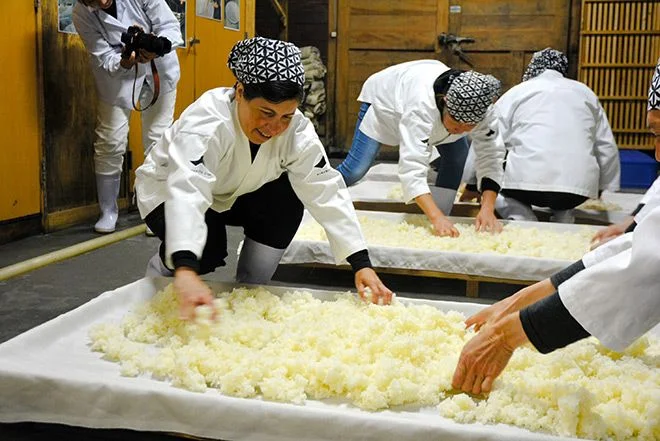
Photo credit: Daisuke Hirabayashi
One example of this type of "local specialities" and "hands-on experiences" tours is an "authentic sake brewing weekend" in Saku, Nagano, at an inn that used to be a brewer's quarters. The inn opens only on weekends and offers a 3-day/2-night program and sake brewing experience for 88,000 JPY (USD580). The rooms are completely booked until next March, and 40 per cent of these reservations are from foreigners.
That's something I'd love to do myself one day.

Photo credit: Daisuke Hirabayashi
One example of this type of "local specialities" and "hands-on experiences" tours is an "authentic sake brewing weekend" in Saku, Nagano, at an inn that used to be a brewer's quarters. The inn opens only on weekends and offers a 3-day/2-night program and sake brewing experience for 88,000 JPY (USD580). The rooms are completely booked until next March, and 40 per cent of these reservations are from foreigners.
That's something I'd love to do myself one day.
While the number of foreign travelers in Japan is increasing rapidly, the tourism industry struggles to draw these visitors, who are concentrated in the three metropolitan prefectures of Tokyo, Osaka, and Kyoto, to other destinations. According to a lodging statistic, the top three prefectures, Tokyo, Osaka, and Kyoto, accounted for 64 percent of all foreign overnight stays from January to August 2023. This is because peak tourist destinations are concentrated along the "Golden Route," which takes visitors from Tokyo to Hakone and Mount Fuji, and then to Kyoto and Osaka.
While visitors to Tokyo have increased by 30 percent, most places around Japan have not yet recovered to pre-COVID levels. Visitors to six prefectures (Shizuoka, Mie, Tottori, Saga, Miyazaki, and Kagoshima) have decreased by over 60 percent.


