


- 14 Mar 2002
- 21,050
- 18,903
The team around Prof Masahiko Inami at the University of Tokyo have created wearable robotic arms based on the question of what society would look like if cyborg body parts were freely available for use, like roadside rental bicycles.
The result is a contraption with an eerie resemblance to Doctor Octopus:
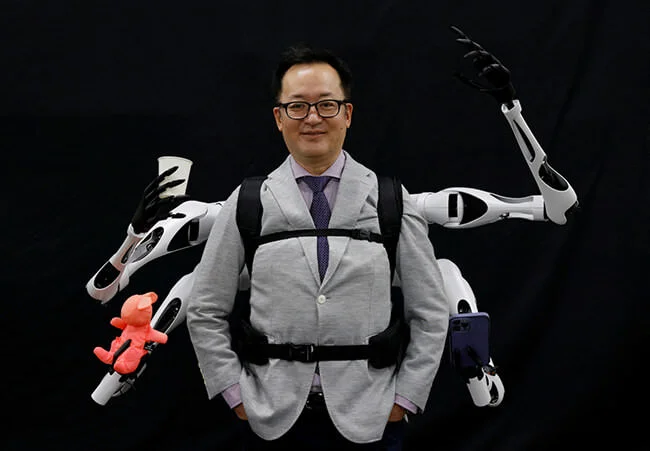
The arms are not mechanised. The aim is to foster something like the relationship between musician and instrument, lying somewhere between a human and a tool, like how a musical instrument can become a part of your body.

 www.reuters.com
An interesting concept and a bizarre video, but let's not forget that Prof Inami is a pioneer in bionic medicine.
The result is a contraption with an eerie resemblance to Doctor Octopus:
The arms are not mechanised. The aim is to foster something like the relationship between musician and instrument, lying somewhere between a human and a tool, like how a musical instrument can become a part of your body.
Inami says he was inspired by traditional Japanese puppetry and a quasi-horror short story by novelist Yasunari Kawabata about a man who borrows a young woman's arm and proceeds to spend the night with it. "This is absolutely not a rival to human beings, but rather something that helps us do as we please, like a bicycle or e-bike. It supports us and can unlock creativity," Inami said. A promotional video for the "Jizai Arms" shows two ballet dancers performing a routine with robotic arms protruding from their backs and torsos - human and machine moving in concert. The dancers ultimately embrace, cyborg arms included.
Dancing cyborgs: Japanese researchers develop robot arms to 'unlock creativity'
What would society look like if cyborg body parts were freely available for use like roadside rental bicycles? Masahiko Inami's team at the University of Tokyo have sought to find out by creating wearable robotic arms.
www.reuters.com
An interesting concept and a bizarre video, but let's not forget that Prof Inami is a pioneer in bionic medicine.


