Crime The Yamagami Tetsuya Trial

thomas

Unswerving cyclist
Admin
Joined
14 Mar 2002
Messages
21,053
Reaction score
18,908
Yamagami Tetsuya prepares to stand trial in the assassination of former PM Abe at the Nara District Court on 28 October. We will use this thread to keep track of the court proceedings.

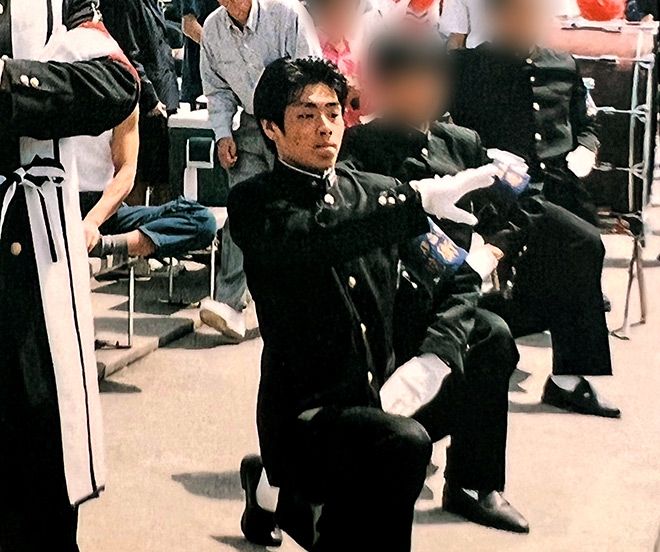
Asahi interviewed one of Yamagami's childhood acquaintances, who offered reminiscences and hopes for what the proceedings will unravel.
91ea85480c1345a96e5bb418abe25f7b.jpg

Tetsuya Yamagami as a member of his senior high school cheerleading team.


Not much has been reported on the court case, which has already seen its seventh hearing:


During testimony at the Nara District Court on Thursday, the mother of Tetsuya Yamagami apologised and acknowledged that she still belongs to the Unification Church. Speaking at her son's seventh hearing, she expressed remorse for what had happened, saying she was deeply sorry for the events her son had set in motion. It was the first time she had addressed the issue publicly. She appeared in court as a defence witness, and the bench was screened off to keep her out of view from those watching in the public gallery.

At the start of the examination, one of the defence lawyers prompted her to speak, saying she had something she wished to convey. She responded by apologising to Abe, his wife, Akie (now 63), and the wider public. When asked about her present religious ties, she replied that she continues to follow the Unification Church. Both sides in the trial have stated that the defendant harboured resentment toward the group because his mother had given it large sums of money. That anger, they say, led him to single out Abe, who had previously sent a video message to an organisation affiliated with the church.

The mother said she donated ¥20 million to the group immediately after joining. "[I was] deeply troubled by my husband's suicide and my eldest son's surgery," she explained. About six months later, she donated another ¥30 million. "My sick eldest son was a major factor," she said, adding that she believed the donations would save him. According to her testimony, the source of the total ¥50 million was a life insurance payout after her husband's death. She also said that she sold property and other items following the death of the defendant's grandfather in 1998 and donated about another ¥40 million. She is said to have donated ¥100 million in total. She told the court that she bought paintings from the group for about ¥700,000 to ¥1 million each and a pot for about ¥700,000. She also took a trip to South Korea, where the Church's headquarters are located, leaving the defendant, who was a minor back then, and his older brother at home.

 
Yamagami's sister gave an emotional testimony on the 18th and 19th of November at the Nara District Court, shedding light on the sad state of family affairs at the Yamagami home. She said that she and her brother were "victims" whose family was destroyed by the Unification Church, and that her brother was "in extreme despair."

According to the sister, the family fell into financial hardship due to their mother's donations to the church, and the eldest brother became violent. After his hopes of attending college were dashed, he cursed their mother, saying, "It's all because of your donations that things have turned out like this. I can't make my decisions freely." He brandished a kitchen knife and threatened to kill himself by setting himself on fire. The sister also told her mother she wanted to go to college, but her mother replied, "I've got no money. You deal with it yourself." Conversely, her mother often asked her for money after pouring her own assets into the church. The sister once had to drag her mother along as she clung to her arms.

Their older brother committed suicide in 2015.

Read the whole testimony here:

 
Jack Adelstein, as eloquent as ever, tracks Yamagami's path from suicide to homemade gun:


Yamagami told the Nara District Court during the 12th hearing that he believed Abe was "at the centre of the Unification Church's political involvement," and that his "dislike and hostility" toward the former prime minister had grown stronger. He admitted that there were times he directed his anger at his mother as well, saying "yes" when asked if he had considered shooting her.

 
Thirteenth hearing, 3 December: former first lady Akie Abe was present, but she and Yamagami had no direct interactions in court that day.

Yamagami said that in early July 2022, he decided to attack Abe when he learned that senior officials of the South Korea-based Unification Church canceled a visit to Japan due to the COVID-19 pandemic.

However, a prosecutor pointed out that senior church officials did visit Japan in June that year.

"You overlooked that visit?" a prosecutor said.

"Yes," Yamagami answered.

"If you had been able to attack the officials in June, would you have refrained from attacking former Prime Minister Abe?" the prosecution asked.

"Yes," Yamagami said.

The prosecutor also asked the defendant why he specifically targeted Abe.

"He was the most prominent politician among those who praised the Unification Church," Yamagami said. "While I didn't consider it meaningless to attack him, I felt he wasn't the most appropriate choice."

The prosecution also pressed Yamagami on why he has not offered to pay for Abe's medical expenses, apologized to Akie or provided other compensation.

The judge raised the same point.

After a slight pause, Yamagami responded: "I was going to talk about them tomorrow."


Fourteenth hearing, 4 December: Yamagami apologises to the former PM's family for the first time.

"I think I have done something very regrettable," Yamagami said during the 14th hearing of his trial in Nara District Court on Thursday afternoon. "I harbor no grudge against the former prime minister's family, including Ms. Akie. I have caused them immense suffering. There is no excuse for my actions," he said. The hearing was the fifth in which Yamagami was questioned. In the previous hearing on Wednesday, Yamagami said he had never apologized to Abe's family.

 
Yesterday, prosecutors asked the court to impose a life sentence on Yamagami.

There were no surprises on either side:

As part of its efforts to seek leniency, the defense team has aimed to establish, through its questioning of the defendant and court testimony of a religion scholar, that he is a victim of religious abuse due to his mother's extreme faith in the church. Prosecutors, meanwhile, have focused on the cruel and premeditated nature of the killing, where he assembled a total of 10 shotguns in a Nara apartment and repeated firing tests in the mountains of Nara before the attack. The prosecution has also maintained that Yamagami was well into his 40s at the time of the attack and, therefore, well aware of the laws and social norms.

In their closing submissions, prosecutors characterised the attack as a reckless act that showed a profound disregard for human life, while stressing that nothing comparable had occurred in Japan since the end of the Second World War. They argued that the killing was carried out as a means of drawing public attention to the harm the defendant believed had been caused by the Unification Church, a point highlighted in coverage by NHK.

Also on Thursday, a lawyer for Akie Abe, the widow of the former prime minister, read out her statement in court. Akie requested the defendant "squarely face his actions and atone for the crime," NHK reported. "Suddenly I became the family member of a crime victim, and my mind went blank with shock," she said in the statement. "But I don't want to have negative feelings such as hatred and resentment. The sense of losing my husband suddenly will stay with me forever."

The ruling is expected on 21 January 2026.

 
Today, the Nara District Court sentenced Yamagami Tetsuya, the man responsible for the 2022 killing of former Prime Minister Shinzo Abe, to life imprisonment.

The case had been examined through 15 court sessions since October 2025. Yamagami's mother and younger sister are among those who took the witness stand. The defendant himself was questioned on the stand for a total of more than 10 hours during five hearings.

Paywall alert:


Yamagami won sympathy from people sceptical of church. Yamagami's case also brought attention to the children of Unification Church adherents in Japan, and influenced a law meant to restrict malicious donation solicitations by religious and other groups. Thousands of people signed a petition requesting leniency for Yamagami, and others have sent care packages to his relatives and the detention centre where he's being housed.

 
Today, Yamagami Tetsuya's legal team appealed against a Japanese court decision handed down last month that sentenced him to life imprisonment, his lawyers said. The move comes after the Nara District Court rejected the defence request for a fixed-term sentence and instead imposed the life term sought by prosecutors.

Yamagami had argued through counsel that the circumstances of his upbringing warranted a limited sentence rather than indefinite incarceration. The court ultimately rejected that reasoning. Chief defence lawyer Masaaki Furukawa said the notice of appeal was filed after discussions with his client and described it as an attempt to have the lower court's decision reviewed, without giving further details. The appeal was submitted to the Osaka High Court on Wednesday, after the district court's ruling on 21 January.

His defense sought a prison term of no more than 20 years on the grounds that the defendant was "a victim of abuse involving religion," saying he should be given a chance to contribute to society by drawing on his experience of having suffered harm at the hands of a religious group. But the court, while acknowledging that Yamagami's upbringing involved significant hardship, said that the resolve to commit murder and carry it out was a "major leap" he had made himself and that Abe was "not at fault."

 
Asahi Shimbun was allowed to interview Yamagami last Wednesday. Yamagami indicated that the suicide of his older brother became the turning point that led him to plan the assassination of former PM Abe, whom he associated with the Unification Church. He made the comments during an interview with the Asahi Shimbun at the Osaka Detention House on 4 February. Reflecting on the court's ruling, he suggested that without his brother's death, his life might have followed a far more ordinary course.

His older brother, who had also opposed their mother's donations to the church, killed himself in 2015. Yamagami's anger toward the church is believed to have intensified after his brother's suicide. When asked whether the attack against Abe could have been prevented, he remained silent for a while before answering that "there was no point" at which it could have been stopped. In sentencing Yamagami to life in prison on Jan. 21, the district court concluded there was a "major leap" between his upbringing and the shooting of Abe. Yamagami's defense lawyers filed an appeal with the Osaka High Court on Feb. 4. The Asahi Shimbun made repeated requests to interview Yamagami following the district court ruling. This was the first time he agreed to meet. When the Asahi reporters entered a visiting room, Yamagami was escorted in by a correctional officer on the other side of an acrylic partition.

 
Back
Top Bottom