News The Carlos Ghosn saga

Today, Michael and Peter Taylor, the American father and son accused of helping Nissan's former chairman, Carlos Ghosn, were both sentenced to prison (two years and one year and 8 months).

In handing down the sentencing, Chief Judge Hideo Nirei said they had committed a serious violation of the law, as now there is next to no chance of putting Ghosn on trial. "This case enabled Ghosn, a defendant of a serious crime, to escape overseas," he said. Although the defense argued the two had been merely used by Ghosn, they clearly were involved, regardless of who was making the decisions, he said. [...] But Nirei, the judge, said the court found that the motive was money. The Taylors can appeal within two weeks, he said. [...] But Nirei said the time they were held before and during trial would not count as time served, saying they were not directly related and should be treated differently. "There is a limit to how much we can consider," he said.


The next one in line will be Greg Kelly, a former top Nissan executive, who is on trial on charges of falsifying securities reports on Ghosn's compensation. A verdict in Kelly's trial is not expected until next year. If convicted, the charges Kelly faces carry the maximum penalty of up to 15 years in prison.
 
Three years after his arrest, Greg Kelly still wonders why the Ghosn issue wasn't addressed in Nissan's boardroom. Last Wednesday, he talked to AP:

Nearly three years later, former Nissan executive Greg Kelly is still wondering why the questions that led to his arrest and trial in Japan weren't simply taken up in the automaker's corporate boardroom. Kelly, an American lawyer who worked for three decades for Nissan Motor Co., is awaiting a verdict in his trial on charges of financial misconduct in the case of Carlos Ghosn. The embattled former chairman of the Renault-Nissan-Mitsubishi alliance jumped bail and fled to Lebanon in late 2019, leaving Kelly in Japan alone to face charges of Ghosn's under-reported Nissan compensation. Kelly has denied the allegations. "I don't think any of us were involved in a crime, or a criminal activity," Kelly told The Associated Press in an interview Wednesday in his Tokyo apartment, where he is out on bail.

 
Three years after his arrest, Greg Kelly still wonders why the Ghosn issue wasn't addressed in Nissan's boardroom. Last Wednesday, he talked to AP:


It does seem like a rather sordid story with the gaijin as the fall guy. The Japanese that got immunity are just as culpable.
 
Today, Mr Kelly received a 6-month sentence suspended for three years. The court found him guilty of charges for one year only, the 2017 fiscal year, while he was not found guilty for the years from 2010 to 2016.

The judge said Ghosn received both paid and unpaid compensation, and the grand total should have been reported. Kelly was acquitted of charges relating to Ghosn's pay between fiscal 2010 and 2016, with Shimotsu saying he wasn't aware of the unreported remuneration. However, the court found that in fiscal 2017 Kelly was aware that Ghosn's total pay wasn't reported. Ghosn that year received discounted stock options that created a difference in reported compensation of about ¥750 million. The failure to report Ghosn's total pay amounted to "false" reporting in Nissan's financial statements, the judge said. The court also found that Ghosn and Toshiaki Onuma, who ran the secretarial office for Nissan's executives and testified for the prosecution in return for immunity, were aware their actions amounted to false reporting and they conspired together to carry out their actions. After the hearing, Kelly said he was "extremely surprised and shocked" by the verdict, which his lawyers said they would appeal. "I have consistently acted by prioritizing the best interests of Nissan, and I absolutely did not take part in illegal activities," Kelly said in a Japanese-language written statement.

Looks like the prosecution owes the judge.

"While the court gave a not-guilty verdict on the greater part of the allegations, I do not understand why it found me guilty for that one year," he said. "I am innocent of all charges."

Mr Kelly will now be able to return home.


It's been four years since Ghosn's arrest. :oops:

Yesterday, Bloomberg reported that Michael and Peter Taylor, the father-son duo hired to assist in Ghosn's escape and extradited to Japan, were sent back to the US to let them serve the remainder of their sentences in the US.

 
It's been four years since Ghosn's arrest. :oops:

Yesterday, Bloomberg reported that Michael and Peter Taylor, the father-son duo hired to assist in Ghosn's escape and extradited to Japan, were sent back to the US to let them serve the remainder of their sentences in the US.

I hope for their sake they got remunerated well.
 
Just in: Carlos Ghosn has filed a $1 billion lawsuit against Nissan, and about a dozen individuals in Beirut over his imprisonment in Japan and what he says is misinformation spread against him. :oops:


According to the officials, Ghosn's lawsuit accuses Nissan and the individuals of defamation and of "fabricating charges" against him, which eventually put him behind bars in Japan. The lawsuit was filed last month, the judicial officials said, speaking on condition of anonymity to discuss the case. The officials did not identify the individuals that Ghosn is accusing.

Auto tycoon Ghosn files $1 billion lawsuit in Lebanon against Nissan over his imprisonment in Japan
 
When I read it, I thought it was an attempt by him to put some pressure on the Nissan execs who turned on him. And in my more paranoid moments I imagine that Ghosn has enough money to bribe the Lebanese justice system so that it can make life really inconvenient for some Nissan execs. The Nissan execs do not want to travel to Lebanon to give depositions in a Lebanese court. Maybe Ghosn is hoping he can exert enough pressure on them from his safe haven in Lebanon, so that the Nissan execs will ease up on some of these charges.
 
When I read it, I thought it was an attempt by him to put some pressure on the Nissan execs who turned on him. And in my more paranoid moments I imagine that Ghosn has enough money to bribe the Lebanese justice system so that it can make life really inconvenient for some Nissan execs. The Nissan execs do not want to travel to Lebanon to give depositions in a Lebanese court. Maybe Ghosn is hoping he can exert enough pressure on them from his safe haven in Lebanon, so that the Nissan execs will ease up on some of these charges.
Why would they even be compelled to respond?
 
Why would they even be compelled to respond?

The only answer I have is stupidity. And I do seriously hope some of them are that stupid. What they did to Ghosn and especially Kelly annoys me greatly because I am sure they all did worse than both of them, yet they skated. The whole "stick it to the foreigner" thing is just a level of bigotry I cannot tolerate, especially since it seems those guys saved the asses of everyone at Nissan, the ungrateful, backstabbing knobs.
 
Because if they don't respond, Ghosn wins by default and Nissan's assets in Lebanon may be seized?
 
Because if they don't respond, Ghosn wins by default and Nissan's assets in Lebanon may be seized?

They would have to be to get anywhere near paying a 1 billion USD settlement!

I have to admit, I don't have a single clue though what Nissan would have in Lebanon they would not be willing to leave behind in exchange for all this "disappearing" from the mind of consumers.
 
Carlos Ghosn says he filed a $1bn lawsuit so Nissan managers cannot 'sleep quietly'.

Former Nissan chair says he is not seeking revenge but wants 'small compensation for the damage' since 2018 arrest.

Source

:LOL: Not that I feel any pity for those Nissan managers.
 
Not directly related to Mr Ghosn, but his "liberator", Michael Taylor, who shared his experiences about detention in Fuchu Prison.


A former U.S. Green Beret says that a recent report in The Japan Times about Fuchu Prison fails to convey the realities of life inside the facility fully. "You know, I think it's a major point that there's no heater. You get frostbite every day," said Michael Taylor, who spent more than a year at the prison in western Tokyo. "That wasn't covered in the article. They didn't tell you about that. During the summertime, you're sweating profusely. You're getting heatstroke because you can't get enough water. All you have is water and little tiny cups, or they give you a cup of tea a couple of times a day," he said in a video call with The Japan Times from his home in Massachusetts in the United States at the end of May.

He had claimed in the past that his human rights were violated, that he was held in solitary confinement for 11 months at Fuchu Prison and that he was tortured. During the video call, Taylor provided more details about his time at Fuchu Prison and gave some insight into how the alleged conditions might have affected others. He noted that the treatment he received during his detention in the facility was not specific to him or to the other foreigners, but that everyone was held under similar conditions. He made clear that he was not singled out despite his crimes and those alleged against Ghosn causing considerable outrage in Japan. But Taylor also said that other inmates deported from Fuchu Prison to a detention center in Los Angeles were so traumatized that they ended up with psychological problems.

 
Not directly related to Mr Ghosn, but his "liberator", Michael Taylor, who shared his experiences about detention in Fuchu Prison.


A former U.S. Green Beret says that a recent report in The Japan Times about Fuchu Prison fails to convey the realities of life inside the facility fully. "You know, I think it's a major point that there's no heater. You get frostbite every day," said Michael Taylor, who spent more than a year at the prison in western Tokyo. "That wasn't covered in the article. They didn't tell you about that. During the summertime, you're sweating profusely. You're getting heatstroke because you can't get enough water. All you have is water and little tiny cups, or they give you a cup of tea a couple of times a day," he said in a video call with The Japan Times from his home in Massachusetts in the United States at the end of May.


I hope Ghosn renumerated him well for his misguided service to him.
 
Whatever they'd have received, wouldn't that be considered illegal gains? :unsure:


I would think so. If you're doing something illegal the gains should be illegal too. 🙂

I wonder what legal scholars he's referring to. The same ones that counseled Trump with regards to the last election?

"It's just amazing that we get extradited for what legal scholars say is not a violation of law whatsoever," he said.
 
Two things can be true:

1. the Japanese legal system does have well-known, and well-publicized problems. I don't know too much about the penal system, but I have no reason to doubt this guy's stories.
2. This guy ran is a completely unsympathetic figure. His company specialized in high-risk extractions, and he knew he was breaking multiple laws in helping Ghosn escape. He also netted (apparently) $1.8 million dollars. Him crying about his unfair treatment while he was in jail for 12 months in Japan arouses very little sympathy in me. I'm no fan of torture-like conditions in prisons, but this guy going on TV whining about no heat in winter and no air-conditioning in summer, just makes me wish he'd have spent more time on the inside. His whole business was built on the back of him being a hardass, ex-special forces green beret, and now he's complaining that he didn't have "attorney client privileges" after pleading guilty, and no a/c. Holy smokes. You kind of wish a green beret wouldn't go on Arab TV complaining about human rights violations he suffered while committing crimes.
 
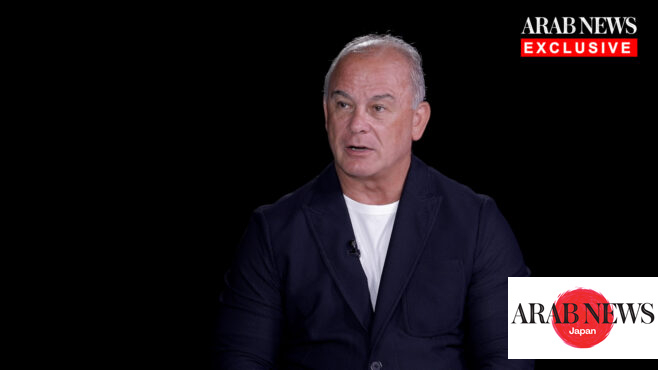
The Foreign Correspondents' Club of Japan again gave a stage to Michael Taylor, the former Green Beret who extracted Mr Ghosn in 2019 (time flies, doesn't it?). He told an online press conference on 23 December that Japan's penal system needed to be reformed to ensure more humane treatment of inmates.

Looking back on his time in prison in Tokyo, Michael Taylor said in late December he suffered "degrading and inhumane treatment," claiming to have been kept in solitary confinement for 17 months. He also said he was only permitted to take two showers in six months. Taylor was sentenced to two years in prison by the Tokyo District Court in 2021 for helping Ghosn jump bail and escape from Japan hidden in a box on a private jet on 29 December 2019. While imprisoned, Taylor suffered frostbite from being housed in an unheated cell, was allowed to write only four letters per month, and was not permitted to make phone calls to family or friends, even when he received news that his father was about to die, he said. Such treatment violates the U.N. Convention Against Torture, which prohibits the use of torture and other acts of cruel, inhumane, or degrading treatment or punishment

Taylor insisted that he had no remorse for helping Ghosn escape, citing the former Nissan executive's claims that he had been tortured, kept in solitary confinement, and prohibited from speaking to his wife while under bail. When asked if he felt it was unfair that Ghosn was now free, Taylor bluntly stated that that was the entire point of the mission.

Taylor expressed surprise at the prospect of facing arrest in Japan, revealing that he had sought legal counsel beforehand and had been assured that bail jumping was not a criminal offence in the Japanese legal system. While Ghosn had contributed to his legal expenses, Taylor acknowledged that he was experiencing significant financial strain, with legal fees exceeding $500,000 in Japan.

 
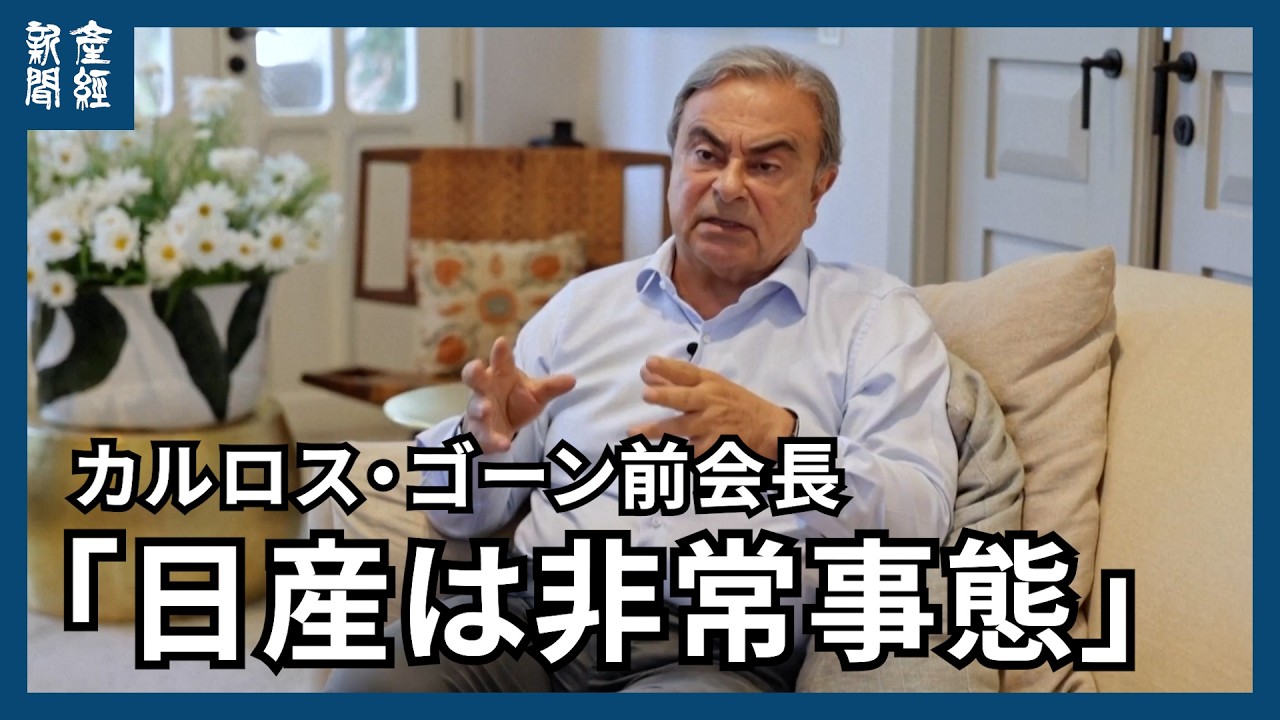
It's been quiet around Mr Ghosn lately. Now he's back with this message:


Former Nissan Motor chairman Carlos Ghosn said the struggling carmaker was in a "state of emergency" and indicated he would be willing to return as chief executive, arguing that only someone with real decision-making authority in the top job could save the company. In an interview with Reuters, Ghosn said he could clearly sense the anger and frustration among some shareholders who had called for his return. He argued that Nissan's successive management teams since his removal in 2018 had steadily eroded the company's value and left it without a clear direction. According to Ghosn, Nissan had already gone through three chief executives, each of whom arrived with a turnaround plan. None, he said, had produced results that would satisfy shareholders or convince them the company was being managed effectively.

He added that it was only natural for some investors to ask why Nissan should not bring back the person who had previously led the company for 19 years and turned it around without any major setbacks. Ghosn argued that only a chief executive could rescue Nissan because the position carried the authority needed to make decisions. He said the company needed someone who was genuinely in charge, not a figurehead.

Ghosn said Nissan needs to pursue offensive measures, growth and profitability, and argued that his experience makes him the profile best suited to lead such a turnaround. "If there is one person or one profile today who can make it happen, it's mine," he said. "I'm not saying it because I'm arrogant. I'm saying it because of the facts, because I've done it already once. I know the company from all the angles." Ghosn also reflected on events before his arrest and dismissal, saying he should never have accepted a new mandate from Renault's board that was backed by the French state. "This was a big mistake," he said.


Back
Top Bottom