C chldudghks0517 Black Rooster Joined 21 Oct 2012 Messages 142 Reaction score 13 10 Nov 2012 #1 Is this true? If so, what's the reason for doing this? I can only think of this as a way to distinguish (or discriminate if you will) men and women.
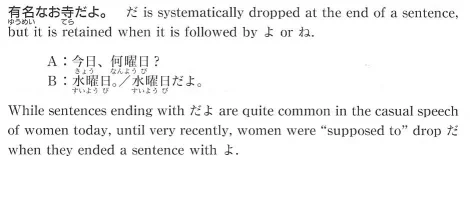
Is this true? If so, what's the reason for doing this? I can only think of this as a way to distinguish (or discriminate if you will) men and women.
Toritoribe 松葉解禁 Moderator Fifteen-year veteran Joined 22 Feb 2008 Messages 18,266 Reaction score 4,926 11 Nov 2012 #2 Yes, that's right. 水曜日よ is a women's wording. ね can be used without だ, but it's for confirmation, like また明日ね. This is not the same as 明日だね.
Yes, that's right. 水曜日よ is a women's wording. ね can be used without だ, but it's for confirmation, like また明日ね. This is not the same as 明日だね.
C chldudghks0517 Black Rooster Joined 21 Oct 2012 Messages 142 Reaction score 13 11 Nov 2012 Thread starter #3 Toritoribe said: Yes, that's right. 水曜日よ is a women's wording. ね can be used without だ, but it's for confirmation, like また明日ね. This is not the same as 明日だね. Click to expand... Thank you for the explanation. I will take note of that.
Toritoribe said: Yes, that's right. 水曜日よ is a women's wording. ね can be used without だ, but it's for confirmation, like また明日ね. This is not the same as 明日だね. Click to expand... Thank you for the explanation. I will take note of that.