

Navigation
Install the app
How to install the app on iOS
Follow along with the video below to see how to install our site as a web app on your home screen.
Note: This feature may not be available in some browsers.
More options
Style variation
System
Light
Dark
You are using an out of date browser. It may not display this or other websites correctly.
You should upgrade or use an alternative browser.
You should upgrade or use an alternative browser.
Please help me with this tang
- Thread starter Royw
- Start date

- 21 May 2003
- 14,310
- 4,404
Sometimes it takes a day or two to get an answer and some members here only get on during the weekend , so it can take a while to get answers. Often times the Kanji on old items is difficult to read and sometimes items turn out to be Chinese and not Japanese. Hopefully someone will be able to help you.
When you mentioned "strokes" , they use that term to describe the markings when they make kanji. It took a minute to understand you meant medical strokes.
When you mentioned "strokes" , they use that term to describe the markings when they make kanji. It took a minute to understand you meant medical strokes.
Last edited:

- 12 Oct 2013
- 4,071
- 5,023
Hello Roy,
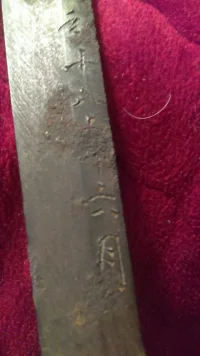
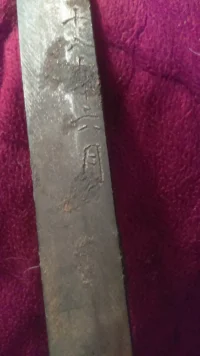
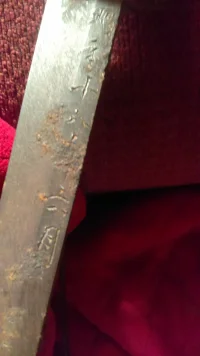
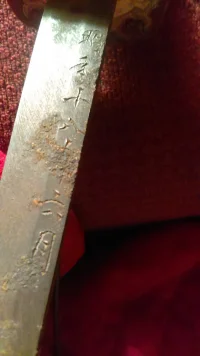
昭和十八年六月 (1943, June)
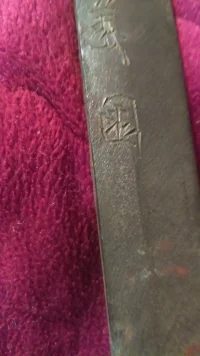
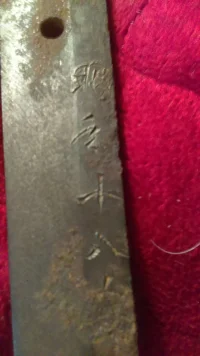
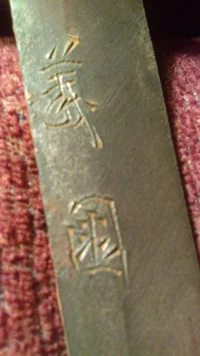
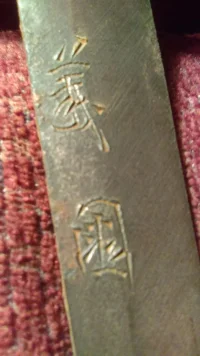
義国 Yoshikuni
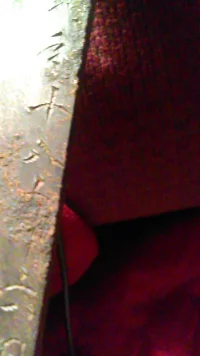
Yoshikuni is the name of the smith. Presumably Esaka Yoshikuni, but the top part of the name appears to be cut off. Can you send a better photo of IMAG2728 above? (There are already three pictures of the date, so no need to send any more pictures of the date).
昭和十八年六月 (1943, June)
義国 Yoshikuni
Yoshikuni is the name of the smith. Presumably Esaka Yoshikuni, but the top part of the name appears to be cut off. Can you send a better photo of IMAG2728 above? (There are already three pictures of the date, so no need to send any more pictures of the date).
- 12 Oct 2013
- 4,071
- 5,023
Hello Roy,
The date is the date carved, or engraved, on to the tang of the sword by the swordsmith. In the case of this sword, the tang has the Japanese date of "Showa 18, June". Showa is the old era name, so "Showa 18" means the 18th year of the era of Showa, which corresponds to the western calendar year of 1943, as I mentioned in my post above.
So this sword was made in June of 1943.
On the opposite side is the name of the swordsmith; Yoshikuni (or 義国 in Japanese characters). I thought there would be more than just two characters for the swordsmith's name, but I guess there are just the two.
The date is the date carved, or engraved, on to the tang of the sword by the swordsmith. In the case of this sword, the tang has the Japanese date of "Showa 18, June". Showa is the old era name, so "Showa 18" means the 18th year of the era of Showa, which corresponds to the western calendar year of 1943, as I mentioned in my post above.
So this sword was made in June of 1943.
On the opposite side is the name of the swordsmith; Yoshikuni (or 義国 in Japanese characters). I thought there would be more than just two characters for the swordsmith's name, but I guess there are just the two.
- 12 Oct 2013
- 4,071
- 5,023
Yes, it is a sword made in 1943 for the war. Also known variously as an arsenal blade, Shōwa-tō (referring to the era in which it was made, or "guntō" (literally meaning "army sword").
They are popular among collectors of militaria. You can read about them at this site below
They are popular among collectors of militaria. You can read about them at this site below
- 12 Oct 2013
- 4,071
- 5,023
There were all sorts of swords made during the last century, including many traditionally forged from tamahagane steel, and many machine-made (or machine-assisted) made in government arsenals. Add to these, many made in quasi-government forges such as the forge at Yasukuni, and Emura's prison forges. Without looking at your sword it is nearly impossible to determine what kind of sword yours is. Various polishing techniques can produce a hamon wave. As for the layered steel, again I would have to look at the sword itself to know exactly what you are referring to. Arsenal swords used folding techniques which layers the steel just like traditional forging techniques.
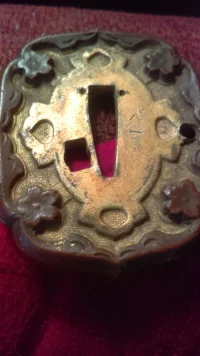
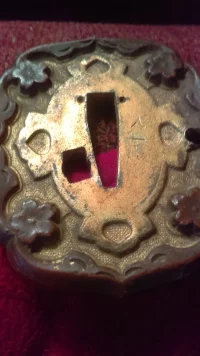
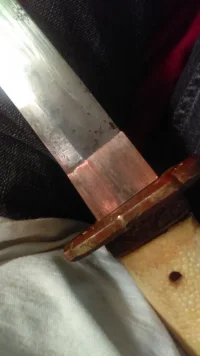
Having said all that, considering the date and considering the standard guntō tsuba that you posted, my inclination is to say the sword is an arsenal sword.
Having said all that, considering the date and considering the standard guntō tsuba that you posted, my inclination is to say the sword is an arsenal sword.
- 12 Oct 2013
- 4,071
- 5,023
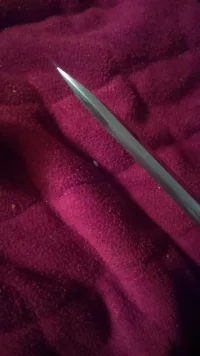
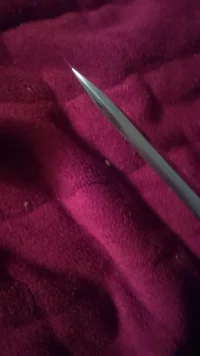
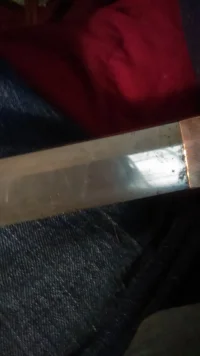
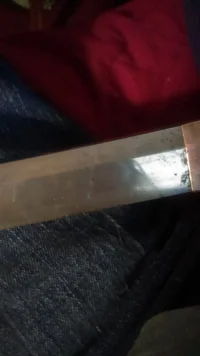
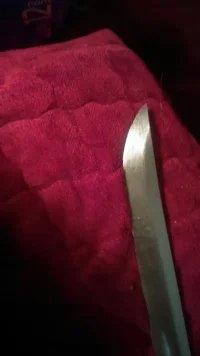
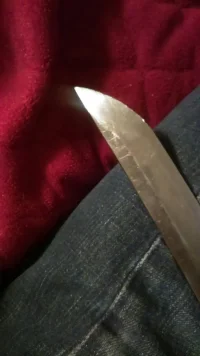
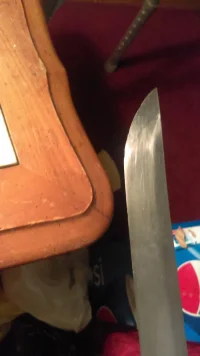
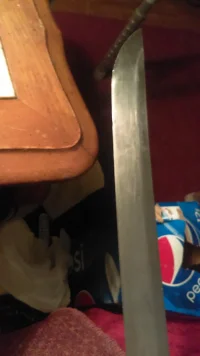
Hard to say because it looks like someone has taken a coarse abrasive (sandpaper?) to this sword in order to make it shiny, which has unfortunately had the effect of erasing its features. Given the military mounts, the date, and the smith, I'm still inclined to say its an arsenal sword.
If it is a traditionally-made, non-arsenal sword, it wouldn't change the value too much. In its current state it would need a polish for any sword-collectors to be interested, and the cost of getting it polished by a professional will be higher than the resulting resale value. In real terms, it would cost you $1500 to $2000 to get it polished, and then the resulting resale value would be about $1000, providing that there are no major flaws in the sword. So getting it polished would be a labor of love. (Avoid amateur polishers as they will likely cause permanent, catastrophic damage to the sword.)
If you like, you could post some of these pictures on the Nihonto Message Board below:
They will want to see better close-ups. I couldn't see any hamon (temper line) in these photos, and I couldn't see the steel well enough other than to say how scratched up it is.
If it is a traditionally-made, non-arsenal sword, it wouldn't change the value too much. In its current state it would need a polish for any sword-collectors to be interested, and the cost of getting it polished by a professional will be higher than the resulting resale value. In real terms, it would cost you $1500 to $2000 to get it polished, and then the resulting resale value would be about $1000, providing that there are no major flaws in the sword. So getting it polished would be a labor of love. (Avoid amateur polishers as they will likely cause permanent, catastrophic damage to the sword.)
If you like, you could post some of these pictures on the Nihonto Message Board below:
They will want to see better close-ups. I couldn't see any hamon (temper line) in these photos, and I couldn't see the steel well enough other than to say how scratched up it is.
Similar threads

- Replies
- 20
- Views
- 14K

- Replies
- 8
- Views
- 8K


