Immigration Onoda pledges stricter response to misconduct by foreign nationals

thomas

Unswerving cyclist
Admin
Joined
14 Mar 2002
Messages
21,050
Reaction score
18,903
Onoda Kimi, the minister responsible for matters involving foreign nationals, said in a recent joint interview that her goal is to ensure that foreigners engaged in misconduct are not allowed to remain in Japan. She suggested this was necessary to ease the broader unease some residents feel toward foreigners. She stressed that accepting foreign workers and imposing stricter rules were not mutually exclusive.
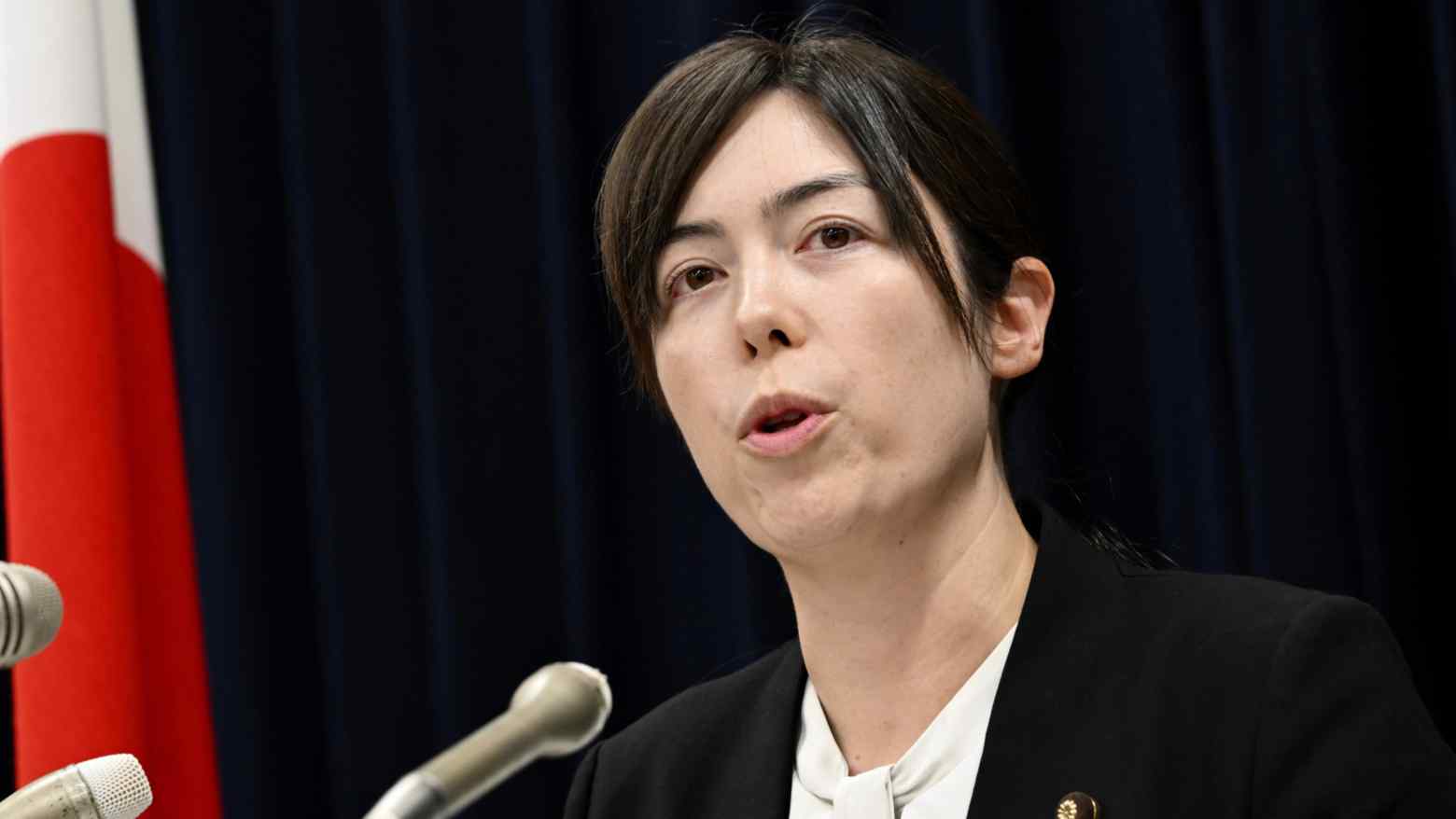
Onoda Kimi

Onoda noted that, given Japan's shrinking population and the labour shortages it has created, some industries clearly rely on foreign workers. She argued that accepting people needed to fill those gaps, while taking a firmer line with those who break the rules should not be seen as conflicting aims. She also stressed that foreigners living in Japan who abide by the rules should not find their daily lives made harder by these policies.


Data from the Immigration Services Agency show that the number of foreign residents, excluding short-term visitors, reached 3.9 million at the end of June, up 5% from last December, marking a new record. [...] With migrant workers and inbound travellers increasing in recent years, issues involving foreign nationals have emerged as political flashpoints, influencing the upper house election in July and the ruling LDP's presidential race in October. The government has rolled out a series of steps, including tightening requirements for business manager visas and imposing stricter address verification when switching foreign driver's licenses -- a process that some short-term stayers had abused.

Paywall alert:
 
Onoda Kimi, the minister responsible for matters involving foreign nationals, said in a recent joint interview that her goal is to ensure that foreigners engaged in misconduct are not allowed to remain in Japan. She suggested this was necessary to ease the broader unease some residents feel toward foreigners. She stressed that accepting foreign workers and imposing stricter rules were not mutually exclusive.


Onoda noted that, given Japan's shrinking population and the labour shortages it has created, some industries clearly rely on foreign workers. She argued that accepting people needed to fill those gaps, while taking a firmer line with those who break the rules should not be seen as conflicting aims. She also stressed that foreigners living in Japan who abide by the rules should not find their daily lives made harder by these policies.


Paywall alert:
The problem is that foreigners' lives ARE made more difficult by frequent comments by politicians about them that focus on the problems they cause. They encourage a climate of suspicion towards all foreigners, particularly in a country where views towards them are often not nuanced.
 
Foreign residents, make sure to pay your health insurance premiums on time!

Japan's government has been considering stricter checks at re-entry for foreign nationals with unpaid medical bills, and officials have said they plan to lower the threshold that triggers scrutiny. Instead of the current ¥200,000, the amount would be reduced to ¥10,000 from the next fiscal year, meaning travellers with even relatively small outstanding charges could be questioned at immigration.

This information will also be considered for use in residency evaluations. The plan was presented at a Nov. 26 meeting of the ruling Liberal Democratic Party's project team on the optimization of systems for foreign nationals. Currently, the government registers foreigners on short-term stays, such as tourists, in the Ministry of Health, Labor and Welfare's system if they have unpaid medical bills of 200,000 yen or more. This information is shared with the Immigration Services Agency, leading to stricter screening of these individuals and making reentry into Japan difficult.

The health ministry intends to adjust its system so that, from April 2026, immigration officers will be alerted whenever a traveller has at least ¥10,000 in unpaid medical charges. They added that, from fiscal 2027 onward, the rules will be expanded to cover people staying in Japan for medium- or long-term periods as well. That information about unpaid bills will then be considered when authorities review an individual's residency status.

 
The government of PM Takaichi will finalise a detailed policy package of tighter residency rules in January 2026, with clearer direction now emerging on targeted visa categories and concrete measures. At the end of 2015, Japan had about 2.23 million foreign residents. By the end of June this year, that number had increased to approximately 3.95 million, a 1.7-fold increase over 10 years. Foreign residents now make up about 3% of the population. It is estimated that the rate will exceed the OECD average of 10% in 2070.

However, then Justice Minister Keisuke Suzuki suggested this past August that if current trends continue, the 10% mark could be reached sooner. The ruling LDP and Nippon Ishin mentioned "quantitative management" in their coalition agreement, which would adjust the number of foreign residents accepted if their proportion reached a level deemed too high. In this context, stricter residency management is being considered. The primary target is the "permanent resident" status, the most common visa category. As of June, there were about 930,000 permanent residents, accounting for some 23% of foreign residents.

The "Engineer/Specialist in Humanities/International Services" status—the second-most-prevalent visa category—is likewise being reassessed. It is intended for work that requires specialised technical or professional expertise, including roles such as interpretation and design, and was held by roughly 450,000 people, or about 11% cent of the foreign resident population, as of June. Concerns have been raised about holders being employed in roles that do not match the visa's skill requirements. In response, the government plans to tighten safeguards against such misuse, including stronger compliance measures directed at employers.

And, of course, "unpaid medical bills."

According to a Ministry of Health, Labor and Welfare survey of about 150 municipalities, the NHI payment rate among foreigners is 63%, below the overall rate of 93% for all residents, including Japanese. Measures to address unpaid medical bills are also being advanced. Currently, information is shared with the Immigration Services Agency if unpaid bills exceed 200,000 yen (approx. $1,300), but preparations are underway to lower this threshold to 10,000 yen (about $65). This information will be used in screening re-entry for short-term visitors such as tourists.

 
so i heard PM takaichi is going to raise naturalization requirement from five to ten years. Is that true? This could really mess up my plans if I don't get married while in school. Can anyone confirm?
 
Amidst the government's continual grumbling about foreign residents they never dare complain about the crimes of US military personnel based in Japan or the large tracts of prime real estate occupied by US military bases or the USA's calls for Japan to pay more for the bases' presence.
 
She's at it again:

In a press conference on 24 July, Justice Minister Onoda said that a visit to Fuchū Prison, where about one in four inmates is a foreign national, had given her valuable first-hand insight into the difficulties prison staff face in managing inmates with different linguistic, cultural and social backgrounds. She said the visit had reinforced her belief in the need for a firm response to crimes committed by foreign nationals.

What she failed to mention is that Fuchū Prison has long been one of Japan's principal correctional facilities for foreign nationals (although not the only one). Over the years, it has developed specialised facilities and expertise for housing non-Japanese inmates, including staff experienced in working with foreign prisoners, interpreters and multilingual support, as well as religious and dietary accommodations to hold a diverse inmate population. As a result, foreign nationals from across Japan are frequently transferred to Fuchū after sentencing, particularly when they require language assistance or other specialised support.

So no, Japan's prison population is not 25% but around 4% foreign!


This is another example of the ultraconservative Takaichi administration's willingness to stoke fears about non-Japanese residents.
 
Back
Top Bottom