


- 14 Mar 2002
- 21,050
- 18,903
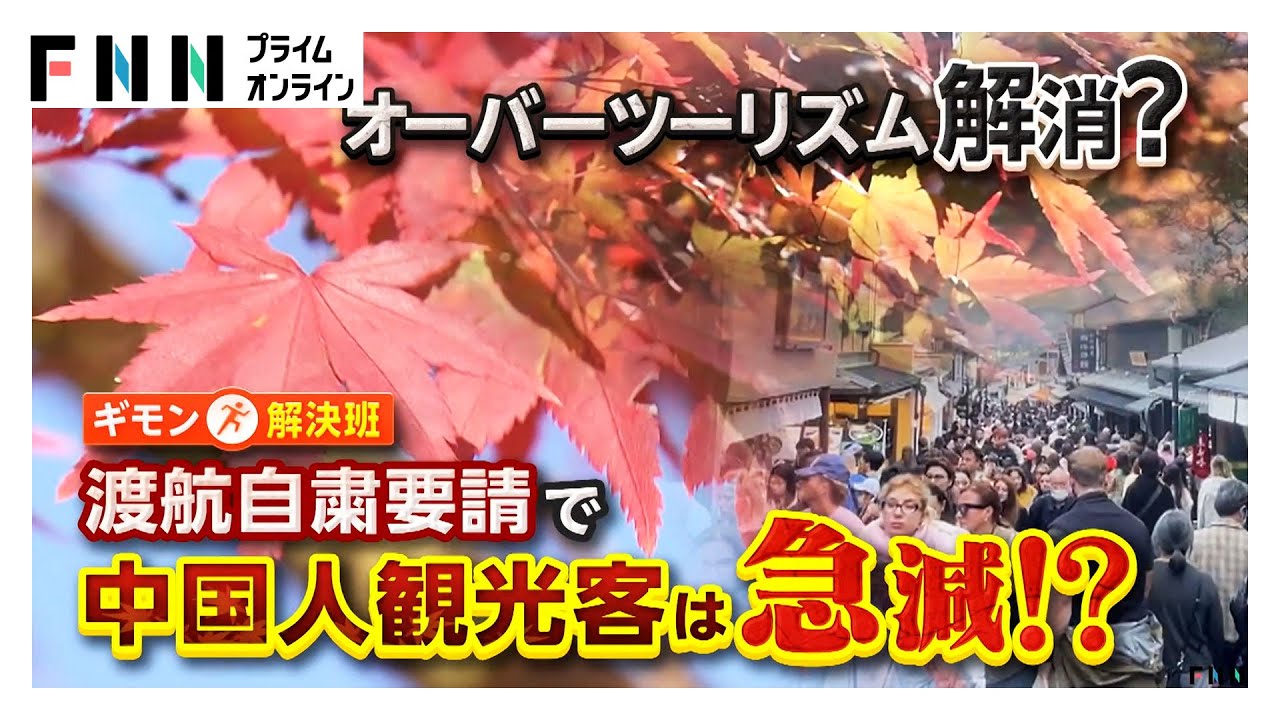
Kyōto 's autumn leaves reached their height in late November, drawing large crowds to Eikandō, one of the city's best-known viewing spots, where visitors stopped for photos along the bridge and foreign tourists were obvious. Chinese travellers typically make up about a fifth of all overseas visitors to Kyōto, and their numbers had been running above 2019 levels for much of 2025, but worsening relations between the two countries have already begun to curb arrivals.
Reporters visiting several popular sites were told that Chinese visitor numbers had fallen sharply, raising the possibility that this shift might ease some of the pressure caused by overtourism. A guide showing people the "maple tunnel" said the colours had reached their most vivid stage, but noted that far fewer Chinese tourists were present despite the ideal timing. Local staff also remarked that overall foreign visitor numbers remained high, but the usual volume of travellers from China had clearly declined after Beijing advised its citizens to avoid nonessential trips to Japan.
A separate survey conducted by the reporting program among shops around Kiyomizudera found that 16 out of 24 stores—around 70%—reported a decline in Chinese customers following the advisory. One commentator noted that China's wealthy travellers tend to have access to diverse sources of information, suggesting that proactively communicating Japan's safety might help reassure them.
I find it a bit hypocritical when people welcome the decline in Chinese visitors, given how heavily many Japanese businesses rely on them.
I asked ChatGPT:
According to a 2024 report, visitors from China spent 1.7 trillion yen, accounting for 21.3% of all tourism-related consumption in Japan. No other single country or region matched this total. However, when looking at individual spending, Western tourists ranked higher. Travellers from the United Kingdom topped the list at about $2,980 per person, with Australia and Spain following close behind. By comparison, Chinese tourists spent an average of $1,660 per person in the same period.
The pattern also varies by category. Chinese visitors still devote a large share of their travel budget to shopping, while Western tourists spend more on accommodation, dining and entertainment. Together, these differences highlight how the makeup of Japan's inbound tourism shapes both the volume and nature of spending across the country.
Reporters visiting several popular sites were told that Chinese visitor numbers had fallen sharply, raising the possibility that this shift might ease some of the pressure caused by overtourism. A guide showing people the "maple tunnel" said the colours had reached their most vivid stage, but noted that far fewer Chinese tourists were present despite the ideal timing. Local staff also remarked that overall foreign visitor numbers remained high, but the usual volume of travellers from China had clearly declined after Beijing advised its citizens to avoid nonessential trips to Japan.
The report also examined hotel rates among Chinese visitors currently in Kyoto. Many appeared to fall into higher-priced accommodation brackets, with some paying about 30,000 yen per night and others around 21,000 yen, noting that prices were not unreasonable compared to major U.S. cities. According to the Kyoto City Tourism Association, the average hotel rate in November last year was 28,686 yen. Among ten Chinese tourists surveyed, several were staying in relatively high-priced rooms, including one paying 60,000 yen per night. Analysts suggested that the more immediate impact was occurring among lower-priced accommodations. At one guesthouse priced at 7,500 yen per night with only two rooms, two Chinese guests cancelled bookings on November 17th, citing family concerns due to deteriorating Japan-China relations. The owner, who relies heavily on Chinese guests, said cancellations are likely to increase, expressing concern that losing half of their business would be painful.
A separate survey conducted by the reporting program among shops around Kiyomizudera found that 16 out of 24 stores—around 70%—reported a decline in Chinese customers following the advisory. One commentator noted that China's wealthy travellers tend to have access to diverse sources of information, suggesting that proactively communicating Japan's safety might help reassure them.
Chinese Tourists Plunge in Kyoto
Kyoto’s famed autumn foliage reached its peak in late November as crowds gathered at Eikando, a temple with more than a thousand years of history and one of the city’s most celebrated spots for viewing fall colors, with visitors posing for photos along the bridge railings and foreign tourists...
newsonjapan.com
I find it a bit hypocritical when people welcome the decline in Chinese visitors, given how heavily many Japanese businesses rely on them.
I asked ChatGPT:
Spending Patterns of Chinese and Western Tourists in Japan
Recent tourism data shows a clear difference between how Chinese visitors and Western travellers spend money in Japan. Chinese tourists account for the largest share of total spending because of their sheer numbers, while Western visitors tend to spend more per person.According to a 2024 report, visitors from China spent 1.7 trillion yen, accounting for 21.3% of all tourism-related consumption in Japan. No other single country or region matched this total. However, when looking at individual spending, Western tourists ranked higher. Travellers from the United Kingdom topped the list at about $2,980 per person, with Australia and Spain following close behind. By comparison, Chinese tourists spent an average of $1,660 per person in the same period.
The pattern also varies by category. Chinese visitors still devote a large share of their travel budget to shopping, while Western tourists spend more on accommodation, dining and entertainment. Together, these differences highlight how the makeup of Japan's inbound tourism shapes both the volume and nature of spending across the country.


