


- 14 Mar 2002
- 21,050
- 18,903
Tokyo's recent population growth is being fueled mainly by foreigners, who in 2024 made up close to 40% of people in their early twenties living in Shinjuku and Toshima wards. This sudden demographic change, however, has stirred anti-foreigner sentiment online and highlighted new social tensions.
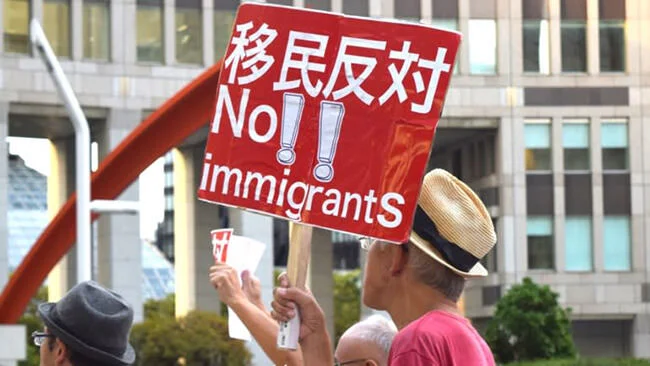
Foreigners accounted for 81% of Tokyo's population growth of 90,632 people as of January. Within the 20- to 24-year-old age group, they accounted for 38% of residents in Toshima ward and 37% in Shinjuku. The sharp pace of change has prompted pushback. In September, demonstrators gathered outside the Tokyo Metropolitan Government Building for several days, urging officials to scrap an agreement signed the previous month with an Egyptian business group, calling for training programmes to help Egyptian workers find jobs in Japan. Protesters carried signs with anti-immigrant slogans, while criticism and rumours spread quickly online. The city had presented the agreement as a step toward easing labour shortages, but the response underscored growing unease over the capital's changing demographics.
The number of Nepalese residents in particular has surged recently. A Tokyo Metropolitan Government survey found that as of July, Tokyo's Nepalese population stood at 58,185, 2.2 times higher than it had been three years earlier. In April, Nepalese residents surpassed those from Vietnam to become the third-largest foreign demographic by country or region behind China and South Korea. Edogawa Ward is one of the municipalities with a large Nepalese population. Himalayan International Academy, a school for Nepalese students that opened in 2021, has around 200 students. In April and May, at the beginning of Japan's school year, it received numerous complaints, including that its students were spreading out across the road on their way to class. Edogawa Ward predicts that by 2100, one in five residents will be foreign.
Paywall alert:

 asia.nikkei.com
Foreigners accounted for 81% of Tokyo's population growth of 90,632 people as of January. Within the 20- to 24-year-old age group, they accounted for 38% of residents in Toshima ward and 37% in Shinjuku. The sharp pace of change has prompted pushback. In September, demonstrators gathered outside the Tokyo Metropolitan Government Building for several days, urging officials to scrap an agreement signed the previous month with an Egyptian business group, calling for training programmes to help Egyptian workers find jobs in Japan. Protesters carried signs with anti-immigrant slogans, while criticism and rumours spread quickly online. The city had presented the agreement as a step toward easing labour shortages, but the response underscored growing unease over the capital's changing demographics.
Foreigners have been crucial to Tokyo's economic growth of late. The largest employment sector for foreigners as of October 2024 was the accommodation and food service industry, with 117,661 people, up 7% from the previous year, according to the Tokyo Labor Bureau. In July, the job-to-applicant ratio for food preparation workers in Tokyo was 5.27, while the figure for customer service and wait staff was 4.91 -- both much higher than the overall ratio of 1.51. A Tokyo association of elderly welfare facilities reported that 77% of nursing homes in Tokyo employ foreign staff, with over 90% of the facilities citing securing personnel as the reason. The job-to-applicant ratio for caregivers was 9.51, the second-highest among all occupations. Foreigners are filling in the gaps in Tokyo's labor market.
The number of Nepalese residents in particular has surged recently. A Tokyo Metropolitan Government survey found that as of July, Tokyo's Nepalese population stood at 58,185, 2.2 times higher than it had been three years earlier. In April, Nepalese residents surpassed those from Vietnam to become the third-largest foreign demographic by country or region behind China and South Korea. Edogawa Ward is one of the municipalities with a large Nepalese population. Himalayan International Academy, a school for Nepalese students that opened in 2021, has around 200 students. In April and May, at the beginning of Japan's school year, it received numerous complaints, including that its students were spreading out across the road on their way to class. Edogawa Ward predicts that by 2100, one in five residents will be foreign.
Paywall alert:
Foreigners in Tokyo's Shinjuku make up nearly 40% of early-20s residents
Immigrants from Nepal, elsewhere drive surge in overall capital population
asia.nikkei.com


