Politics LDP slush fund 'kickback' scandal

thomas

Unswerving cyclist
Admin
Joined
14 Mar 2002
Messages
21,054
Reaction score
18,909
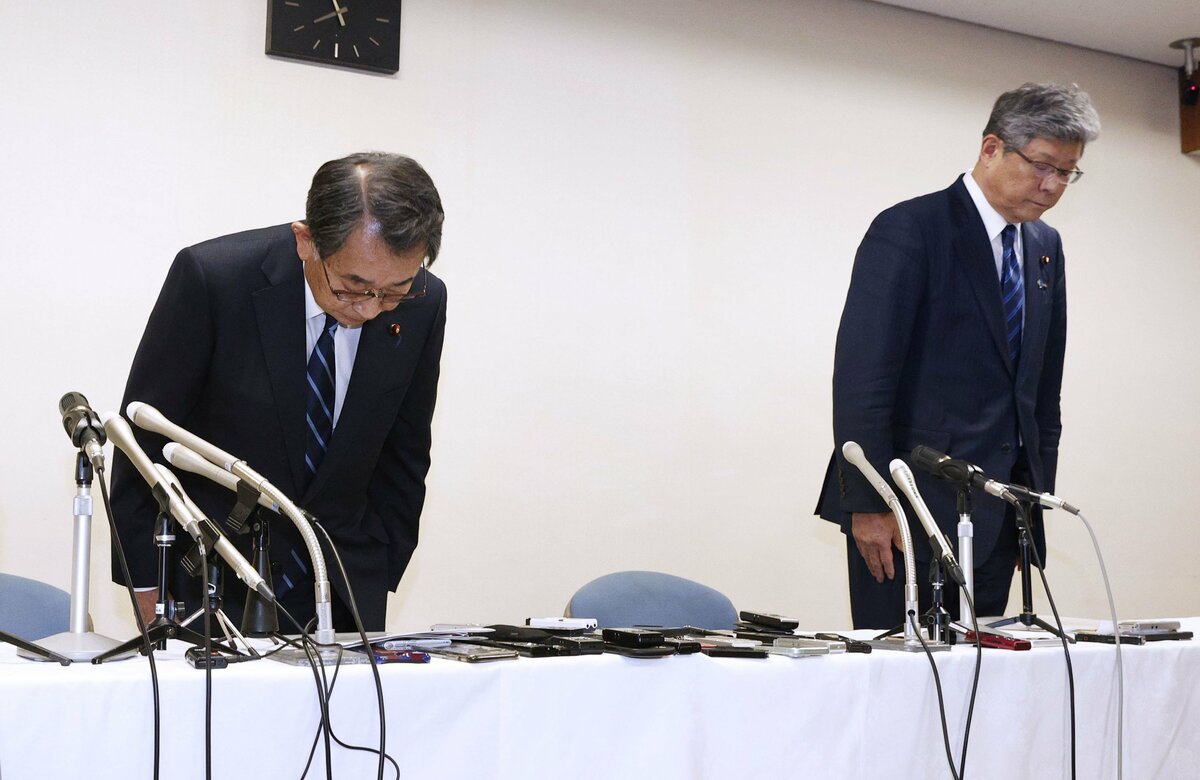
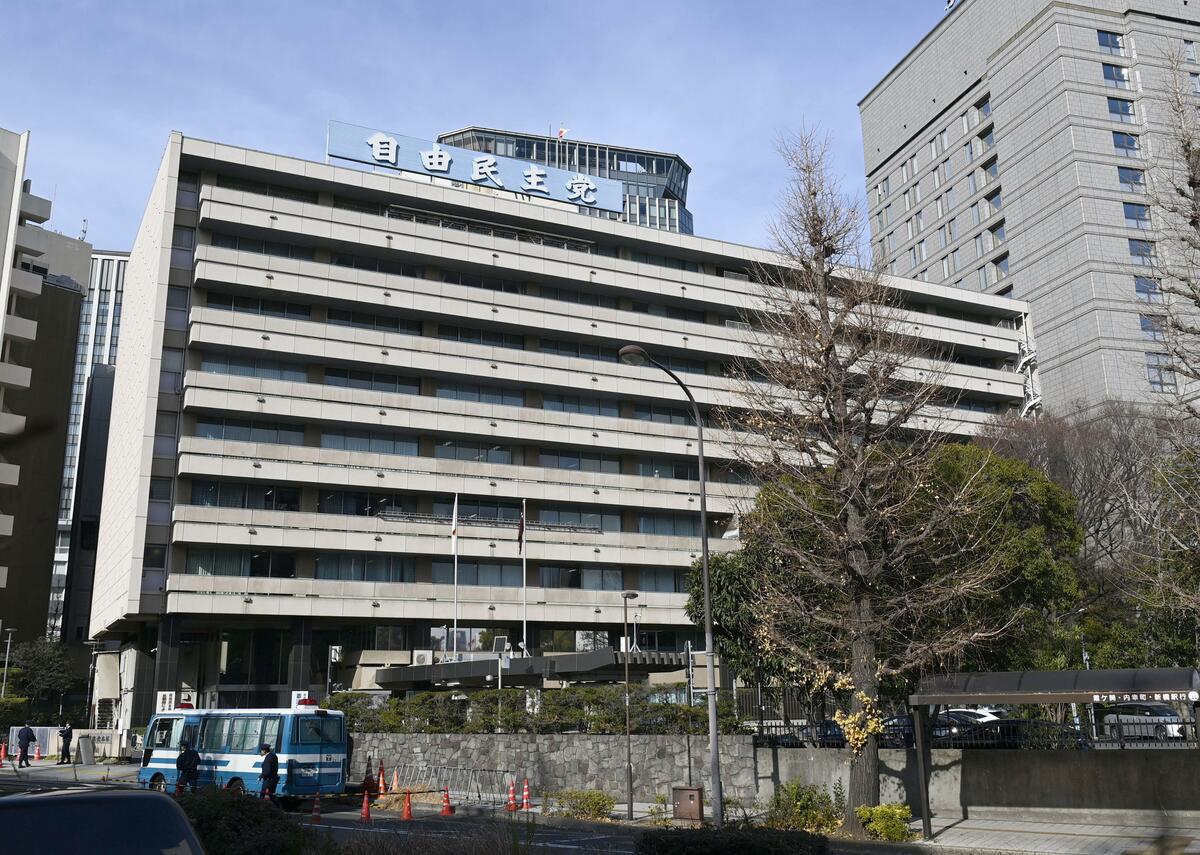
The stench of corruption coming from beyond the grave: prosecutors said that the largest faction of the ruling Liberal Democratic Party, which still bears the name of former Prime Minister Shinzo Abe, who died in 2022, is under investigation for a secret fund that allegedly paid off its members. The fund, which was not disclosed in the political fund reports of the faction or the recipients, amounted to about 100 million JPY (USD 676,000) over five years.


The slush fund is connected to fund-raising parties held by the Abe faction. According to sources, Abe faction members were given quotas to fill for ticket purchases to its fund-raising parties. The size of the quotas depended on how long the members served as Diet members or if they held an LDP or faction post. Each ticket cost 20,000 JPY. The Abe faction political fund reports have listed such ticket purchases. But the reports did not include the amounts that went beyond the quota for each faction member, the sources said. The extra money was placed in the slush fund and was eventually paid back to the member, they said. Investigators from the Tokyo District Public Prosecutors Office have questioned individuals associated with the Abe faction on a voluntary basis about the handling of the funds, sources said.

 
Amid a political funding scandal, PM Kishida announced the replacement of Industry Minister Yasutoshi Nishimura and ruling party policy chief Koichi Hagiuda. It said the top government spokesperson is also to be replaced. The ruling Liberal Democratic Party faces mounting scrutiny after allegations that some lawmakers may have failed to report political funds properly.


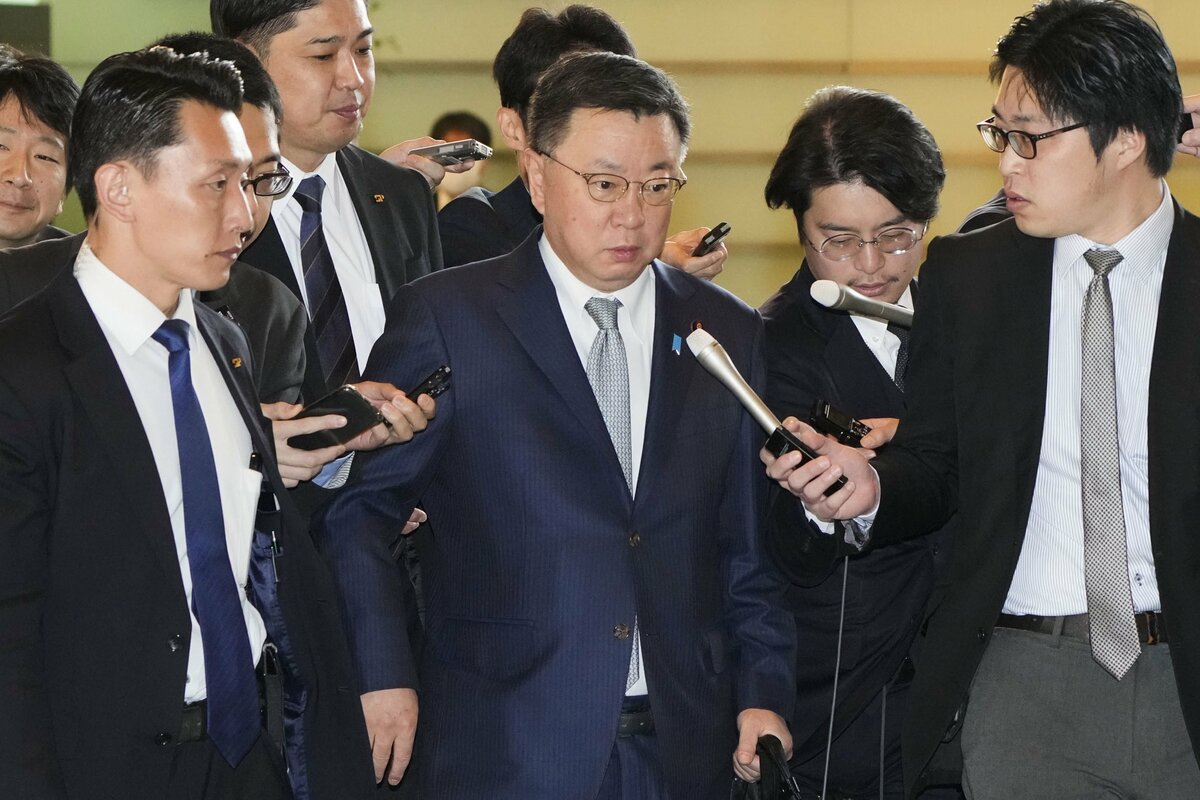
Kishida and his ruling Liberal Democratic Party (LDP) are facing mounting scrutiny after allegations that party lawmakers, including high-profile members, may have pocketed more than 100 million yen ($693,000) of fundraising proceeds that were left off the books. Chief Cabinet Secretary Hirokazu Matsuno, Industry Minister Yasutoshi Nishimura and LDP's policy chief Koichi Hagiuda are set to be replaced as they are among those suspected of having failed to declare political funds properly. [...] The Asahi newspaper and other media said Matsuno is suspected of having failed to declare more than 10 million yen he received in the past five years from the biggest faction in the LDP. Matsuno has declined to comment on the allegations.


Japan PM to replace key government, LDP lawmakers - media reports

 
PM Kishida is picking experienced politicians to replace top ministers set to be removed from his cabinet Thursday in an apparent play to minimize the risk of further political damage:

  • Kishida decided Wednesday to pick Yoshimasa Hayashi as the new chief cabinet secretary, replacing Hirokazu Matsuno. Hayashi, the second-in-command of Kishida's faction within the ruling Liberal Democratic Party, served as foreign minister before Kishida's last cabinet reshuffle in September and has been seen as a potential future prime minister.
  • He chose Ken Saito as the minister of economy, trade and industry to replace Yasutoshi Nishimura. Saito is a former justice minister.
  • Tetsushi Sakamoto is expected to replace Ichiro Miyashita as the minister of agriculture, forestry and fisheries. Sakamoto has previously served as minister for regional revitalization.
  • Takeaki Matsumoto is set to return to the post of internal affairs minister, replacing Junji Suzuki.

All of the new ministerial picks belong to other factions that are more distanced from the scandal and have experience dealing with questioning from parliament. Politicians in cabinet posts are more open to outside scrutiny, and lawmakers who have not yet faced that scrutiny are seen as at greater risk of being involved in the scandal -- which could be disastrous for Kishida should it come to light. The Abe faction had been deeply involved in the Kishida administration's policy decisions thanks to its hold on key government and party posts.

Meanwhile, prosecutors launched a criminal investigation into the ruling Liberal Democratic Party's largest faction over allegations that it failed to report the equivalent of millions of dollars in income from fundraising parties. Formally known as the Seiwa policy group, the faction formerly led by slain Prime Minister Shinzo Abe requires its members to sell specific tickets to the fundraising parties. Members received kickbacks when their sales exceeded quotas.

Dozens of lawmakers, including senior faction officials, are accused of failing to properly report the kickbacks. Yoshitaka Ikeda, a former state minister of education, had amended his political funding statement by Wednesday to include around 32 million yen in donations over a three-year period. Prosecutors have already begun questioning dozens of aides and accountants to suspected lawmakers on a voluntary basis. The scandal could spread even further, with the LDP faction led by party heavyweight Toshihiro Nikai suspected of failing to report over 100 million yen in fundraising income. The faction led by Prime Minister Fumio Kishida appears to have underreported income as well. Prosecutors are questioning staffers from the two factions.

Paywall alert:


What's sad is the complete absence of public outrage. It's as if politicians are supposed to have their hands in the cookie jar.
 
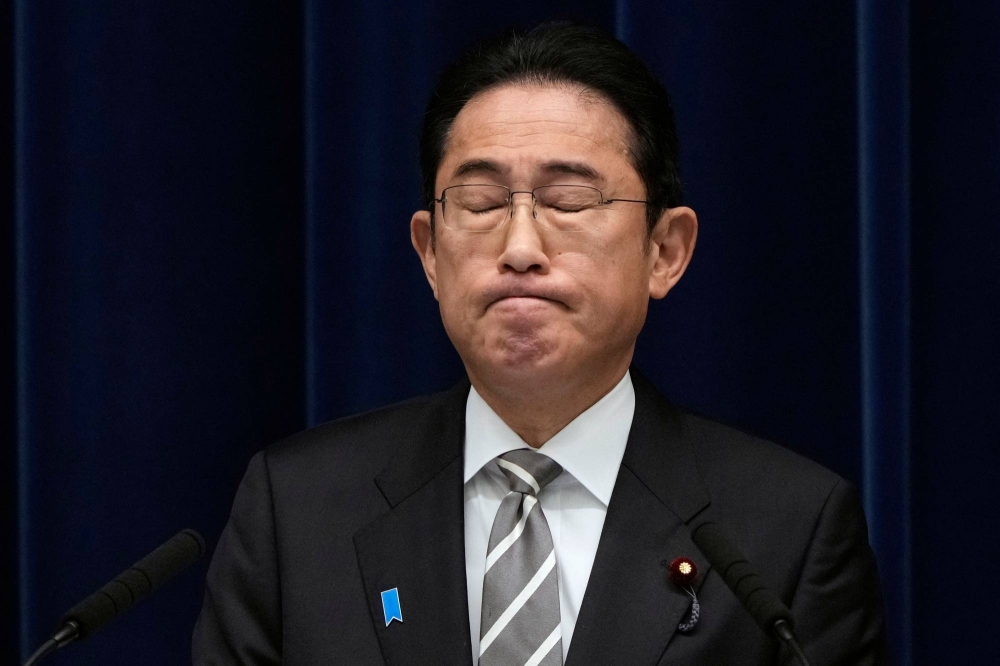
Somehow, this picture makes me sad.

abeha-ousted.jpg


PM Kishida's support rate is in dangerous territory after plunging to 17%

 
I'm more concerned about who will replace Kishida if he goes (and I suspect he will soon, with other leadership contenders sniffing blood). He may not be particularly good at his job but he's not awful at it, and this example of corruption seems to have been a longstanding problem rather than something that started on his watch. I'd rather he stays where he is than be replaced by an unremittingly evil hardliner similar to Abe.
 
I agree. Some TV commentators mentioned Ms Takaichi as a potential successor to Kishida. She is a former Abe protege and a sworn hawk and nationalist who shook hands with Japanese neonazis. Whatever the outcome, the Kishida administration might have unwillingly triggered a catharsis of Japan's profoundly corrupt political system: Olympics bid-rigging, Unification Church, slush funds, and whatever's still in Pandora's box is now on the table.
 
Junji Suzuki, an LDP lawmaker who resigned as internal affairs minister on 14 December, said he regarded kickbacks from fund-raising events as part of the "culture." And probably he's right about that. :D

Suzuki was a member of the LDP faction once led by former Prime Minister Shinzo Abe that accumulated about half a billion yen in unreported money from fund-raising parties. The faction is the largest in the party. [...] Suzuki said he received 600,000 JPY (USD 4,200) from the Abe faction between 2018 and 2022. [...] Regarding the kickback of money raised through fund-raising parties, Suzuki told reporters, "Including local assemblies, in the political world money was returned for tickets sold (to fund-raising parties)." He added, "While it might sound strange to say so, in this world, there was the recognition that it was almost like a culture."

 
More heads are rolling: the LDP replaced two of its executives Friday. Former education minister Kisaburo Tokai became the new policy chief, succeeding Koichi Hagiuda, who offered to resign last week when Kishida replaced four Cabinet members from the powerful faction, formerly led by slain Prime Minister Shinzo Abe. Kishida accepted Hagiuda's resignation letter but asked him to remain in his post until the completion of a draft budget for the next fiscal year starting in April. Former Defense Minister Yasukazu Hamada took over as Diet affairs chief after Tsuyoshi Takagi quit amid allegations the faction failed to declare hundreds of millions of yen from fundraising parties in political funds reports.


Friday's personnel change came days after prosecutors searched the offices of the Abe faction and another led by former LDP Secretary General Toshihiro Nikai, a party heavyweight who has kept his distance from the Kishida government. The prosecutors suspect the Abe faction, called Seiwaken, or the Seiwa policy study group, returned a portion of fundraising party revenues that they raised from ticket sales, sources close to the matter said.

 
I place my bets on 「キックバック」 for the most popular Japanese word in 2024.

On Sunday, Japanese prosecutors arrested ruling Liberal Democratic Party lawmaker Ikeda Yoshitaka on suspicion of failing to report about 48 million JPY (USD 330,000) that his political organization received from the LDP's Abe faction. The TV news named seven other LDP top-brass who received more than 10 million JPY in kickbacks, so more arrests might be around the corner.

Prosecutors suspect the Lower House member failed to list the 48.26 million yen on his organization's political fund reports over those five years in conspiracy with his policy secretary, Kazuhiro Kakinuma, who oversees accounting, sources said. Prosecutors also arrested Kakinuma, 45, who is responsible for preparing political fund income and expenditure reports of the political fund management organization, Ikeda Reimei-kai, the sources said. The LDP decided to expel Ikeda following his arrest.


Meanwhile, PM Kishida, now more isolated within the LDP than ever before, has to rely on political rivals like former PM Taro Aso, called a "kingmaker" by critics, to maintain his administration.

 
We were talking about letting politicians off the hook in the Alkonis thread. Here's what happens to LDP politicians who received tens of millions of yen in kickbacks while their accountants take the fall (they are currently "under house arrest"). The reason is that "it would be too difficult to prove fundraising violations in the case."

Off the hook are these fine gentlemen:

off-the-hook-LDP-bigwigs.jpg


Nikkei had a few more details on the issue: two former members of PM Kishida's cabinet, former Chief Cabinet Secretary Matsuno Hirokazu and former Trade and Economy Minister Nishimura Yasutoshi, most likely avoid indictment. However, prosecutors still intend to build criminal cases against lawmakers Ono Yasutada and TanigawaYaichi, who allegedly received kickbacks of over 50 million yen and 40 million yen, respectively. Ikeda Yoshitaka, a lower house member arrested this month, is also expected to be indicted.

Prosecutors will also pursue a case against the treasurer of a separate faction led by former LDP Secretary-General Toshihiro Nikai for allegedly failing to report over 100 million yen in fundraising income. Japanese law typically holds accounting professionals responsible for submitting accurate political funding reports. Lawmakers themselves are rarely charged unless they can objectively be proven to have ordered or approved improper reporting.


Paywall alert:
 
PM Kishida is now considering disbanding factions that have long held sway over party affairs, but its attempt at reform could crumble without an alternative mechanism. "To dispel concerns and restore trust, we must develop rules governing policy groups," Kishida said. The party is under scrutiny after influential factions, including its largest, Seiwaken, once led by former PM Abe, allegedly concealed fundraising revenue, which was distributed to members as kickbacks.

Tokyo prosecutors indicted current or former accountants from three of six LDP factions, including those led by Kishida and party heavyweight Toshihiro Nikai. Those led by Kishida and Nikai, as well as Seiwaken, have announced plans to disband. The remaining factions include those led by LDP Vice President Taro Aso and Secretary-General Toshimitsu Motegi. Although their members are not facing indictment, they are also under pressure to act as public criticism mounts.

Paywall alert:

What's the purpose of factions (派閥 habatsu)?

LDP factions, which bring together lawmakers with similar policy goals, lobby the leadership for top party posts and cabinet appointments and raise money for their members. If a faction's leader becomes prime minister, then it will have a more significant say on appointments and can extend perks to members, which in turn helps recruit new members. Larger numbers mean more votes in the race for party president -- and, by extension, for Japan's leader. Four out of the country's seven prime ministers since the 2000s belonged to what is now the Abe faction, which has been the LDP's largest throughout the period. There have been exceptions like Kishida, who leads the LDP's fourth-largest party. Former Prime Minister Yoshihide Suga did not belong to a faction. But the Abe faction still had a say.


However, an Asahi editorial argues that the LDP's pledge to dissolve its factions was not credible: past promises of disbanding the factions were not kept.

Back in 1994, the Liberal Democratic Party proclaimed unequivocally, "We are disbanding our 'habatsu' factions, and all habatsu offices will be shut down by the end of this year." The LDP had been ousted from power the year before, and that proclamation was a desperate measure, taken in the hope of winning back the public's support. Has the LDP stuck to its declaration of 30 years ago? I suppose I needn't even bother with the answer. Prime Minister Fumio Kishida, former party Secretary-General Toshihiro Nikai and Ryu Shionoya, chairman of the powerful Abe faction that was once led by the late Prime Minister Shinzo Abe, on Jan. 19 announced the disbandment of LDP factions. Will history repeat itself? Incidentally, the dissolution of those intraparty cliques also occurred under the Fukuda administration in the 1970s. And when the Recruit stock-for-favors scandal came to light in the late 1980s, the party expressed its collective "resolve" to do away with factional politics.


More related news:


Visualising the scope of the scandal: ANN released the latest information about LDP Abe faction politicians who received undocumented funds. Ninety (!) lawmakers have been implicated, and very few are facing significant punishment for their actions.


PM Kishida is still struggling to contain the issue.

The ruling Liberal Democratic Party is considering asking some Abe faction leaders to leave the party over a political fund scandal, a harsher disciplinary measure than previously expected, sources said. The LDP plans to take disciplinary measures against about 40 lawmakers who failed to list 5 million JPY (USD 33,000) or more in revenues from fund-raising parties on their political fund reports, the sources said. The Party Ethics Committee is expected to hold a meeting on April 4 to decide on the specific measures.


As always, some minor Abeha members will take the fall, but none of the top LDP members implicated.

In particular, the LDP leadership is planning to urge two senior members of the party's largest Abe faction -- Ryu Shionoya and Hiroshige Seko -- to leave the party. Former Prime Minister Shinzo Abe in April 2022 instructed the faction, which he led at the time, to end the practice of fundraising kickbacks. But four officials, including Shionoya and Seko, decided to keep the scheme in place in a discussion held in August that year, after Abe was assassinated. Neither Kishida nor Toshihiro Nikai, a party heavyweight who announced he will not seek reelection, would face punishment.


Paywall alert:
 
Back
Top Bottom