


- 14 Mar 2002
- 21,054
- 18,909
We already have heat-resistant rice; now hops can cope with the heat as well. Our beer is safe.


Kirin has devised a way to cultivate heat-resistant hops during the seedling stage without compromising their aroma, bitterness, or flavour. The company has applied for a patent for this method and presented its findings at the International Hop Growers' Convention (IHGC) in Germany in June. Kirin aims to use this approach to improve hops' tolerance to high temperatures and maintain beer quality, particularly as the number of hop farmers in Japan continues to fall. In 2022, the company pioneered the world's first technology for mass-producing hop seedlings, which it now plans to combine with the new heat-resilient cultivation technique. Hops, often referred to as the "soul of beer," typically flourish in cooler climates.
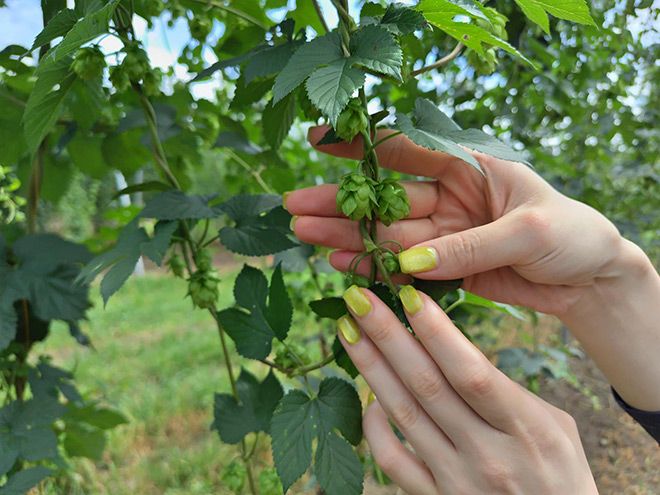
Heat-tolerant Hersbrucker hops (photo credit: Hashida Masaki via Asahi)
Another issue will be more challenging to resolve: demographics.
Japan's hop industry faces another major hurdle — a shrinking pool of farmers with the specialised knowledge needed to cultivate the crop under delicate growing conditions. An ageing population and the decline of rural communities have steadily eroded hop farming. Figures from the national federation of hop agricultural cooperatives show that production has dropped from 2,513 tonnes with 6,682 growers in 1970 to only 123 (!) tonnes and 96 growers in 2023.
Kirin has devised a way to cultivate heat-resistant hops during the seedling stage without compromising their aroma, bitterness, or flavour. The company has applied for a patent for this method and presented its findings at the International Hop Growers' Convention (IHGC) in Germany in June. Kirin aims to use this approach to improve hops' tolerance to high temperatures and maintain beer quality, particularly as the number of hop farmers in Japan continues to fall. In 2022, the company pioneered the world's first technology for mass-producing hop seedlings, which it now plans to combine with the new heat-resilient cultivation technique. Hops, often referred to as the "soul of beer," typically flourish in cooler climates.
Heat-tolerant Hersbrucker hops (photo credit: Hashida Masaki via Asahi)
The project began three years ago, focusing on a phenomenon called "heat acclimation," where plants exposed to mild temperature stress beforehand can survive in high-temperature environments that are not lethal. The company applied this approach to hop cultivation, working with Saaz hops from the Czech Republic and Hersbrucker hops from Germany, both popular varieties in beer production. Kirin treated hop seedlings at 25 degrees before cultivation and found they grew well even in high temperatures of 30 degrees. They showed no signs of poor growth. The same solid growth was observed even after the seedlings were not watered for 10 days to simulate drought conditions. Field tests on the seedlings were conducted outdoors at two locations in Iwate Prefecture, with a daytime temperature difference of about 2 degrees. Seedlings pre-treated with heat performed better than the untreated ones at the warmer site. They grew taller and developed more leaves without growth problems, the company said. Importantly, the hops' aroma and flavor remained unchanged.
Another issue will be more challenging to resolve: demographics.
Japan's hop industry faces another major hurdle — a shrinking pool of farmers with the specialised knowledge needed to cultivate the crop under delicate growing conditions. An ageing population and the decline of rural communities have steadily eroded hop farming. Figures from the national federation of hop agricultural cooperatives show that production has dropped from 2,513 tonnes with 6,682 growers in 1970 to only 123 (!) tonnes and 96 growers in 2023.


