In a previous thread, I asked for and received an explanation for the mythology behind the names of the Japanese carriers of World War 2. I thank all who responded, especially 名無し.
I conclude that Japanese symbols and Egyptian hieroglyphics are not similar, though there seems to be some vague resemblance, maybe a "rare" resemblance.
However, the phonetic sounds seem uncannily similar. As I have stated before, the readers of my threads do not have to take my amateur theories and do anything with them. I hope this information inspires the next generation of students and history buffs to see the possibility...
that Japanese and Egyptian names may be similar, if not identical.
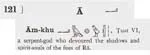
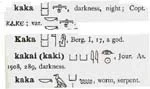
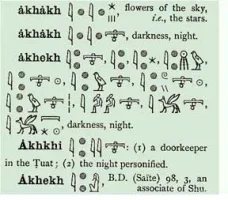
For example, I will list the five largest carrier names, and the plausible Egyptian meaning, for all to review.
赤城 Akagi Mt. Akagi (Gumma pref.)
天城 Amagi Mt. Amagi (Shizuoka pref.)
加賀 Kaga current Ishikawa prefecture
蒼龍 Soryu "deep-blue dragon"
飛龍 Hiryu "flying dragon"
I have been told that this information is too "unbelievable" for anyone to approve; in my lifetime, almost you "have to be dead 20 years" for anyone to start believing. This may be true. However, I am optimistic that young master's or college students might "leave the window of possibility open" and that the Japanese language, in some small part, is related to the Egyptian language, culture, and theologies.
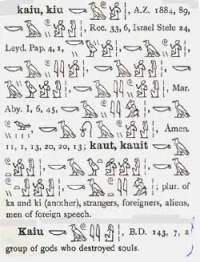
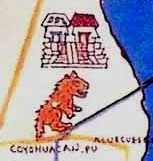
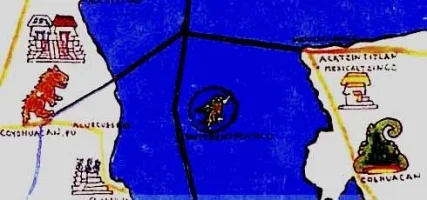
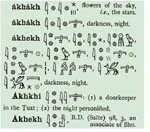
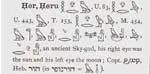
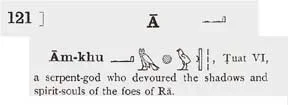
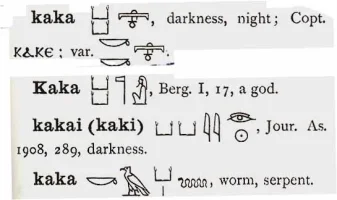
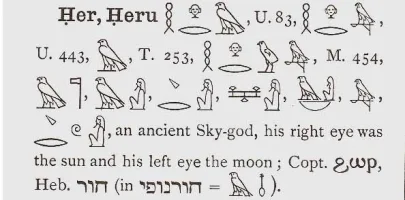
The information definitions come from the fantastic book...written in 1921 or so... "An Egyptian Hieroglyphic Dictionary", by Wallis Budge. I found the book to be an Encyclopedic resource of names and definitions of numerous Amerindian tribes and, more recently, of Japanese naming conventions. In fact, the definitions listed in this two-volume set seem to give a deeper definition of the Japanese naming conventions than even the Japanese historians can give me, but this is only my theory.
I am thrilled and fascinated with the Japanese culture, bottom line.
Your thoughts?
I conclude that Japanese symbols and Egyptian hieroglyphics are not similar, though there seems to be some vague resemblance, maybe a "rare" resemblance.
However, the phonetic sounds seem uncannily similar. As I have stated before, the readers of my threads do not have to take my amateur theories and do anything with them. I hope this information inspires the next generation of students and history buffs to see the possibility...
that Japanese and Egyptian names may be similar, if not identical.
For example, I will list the five largest carrier names, and the plausible Egyptian meaning, for all to review.
赤城 Akagi Mt. Akagi (Gumma pref.)
天城 Amagi Mt. Amagi (Shizuoka pref.)
加賀 Kaga current Ishikawa prefecture
蒼龍 Soryu "deep-blue dragon"
飛龍 Hiryu "flying dragon"
I have been told that this information is too "unbelievable" for anyone to approve; in my lifetime, almost you "have to be dead 20 years" for anyone to start believing. This may be true. However, I am optimistic that young master's or college students might "leave the window of possibility open" and that the Japanese language, in some small part, is related to the Egyptian language, culture, and theologies.
The information definitions come from the fantastic book...written in 1921 or so... "An Egyptian Hieroglyphic Dictionary", by Wallis Budge. I found the book to be an Encyclopedic resource of names and definitions of numerous Amerindian tribes and, more recently, of Japanese naming conventions. In fact, the definitions listed in this two-volume set seem to give a deeper definition of the Japanese naming conventions than even the Japanese historians can give me, but this is only my theory.
I am thrilled and fascinated with the Japanese culture, bottom line.
Your thoughts?



 YOU WIN???