


- 14 Mar 2002
- 21,054
- 18,909
Since its creation in 1955, the LDP has been the dominant force in Japanese politics, either governing outright or leading ruling coalitions. That dominance has now been shaken. After losing control of both houses of parliament in the recent Lower House election in October and the Upper House contest last month, the LDP governs only with the support of its coalition partner, Komeitō, effectively leaving it as a minority administration.
The setback comes at a moment when smaller, more ideologically consistent parties are gaining ground with voters. This has fuelled calls from some critics for the LDP to split, since it remains an uneasy alliance of liberals and conservatives rather than a cohesive movement. On 10 August, Toru Hashimoto, co-founder of Nippon Ishin no Kai and now a political commentator, argued that former economic security minister Sanae Takaichi ought to gather fellow hawkish conservatives and form a separate party. However, he added he was doubtful she would take such a step.
Kentaro Yamamoto, a political scientist at Tokyo's Kokugakuin University, noted that even if Takaichi Sanae had assured Hashimoto Toru she would not leave the party, the split between the LDP's right wing and the rest of the organisation now appeared wider than ever. In his view, this made it increasingly difficult to reconcile the factions and restore the LDP to the broad, politically effective force it once was. Yamamoto observed that the LDP struggled to meet the needs of many voters precisely because it was trying to function as a catch-all party. To maintain that role, he argued, it had to accommodate a wide range of interests, which in practice meant adopting policies mild enough to satisfy all sides but often too weak to bring about meaningful improvements in people's lives.
He also pointed out that opposition parties faced their own limitations: most had little experience of governing, which left them ill-equipped to challenge the LDP's long-standing dominance or to build the kind of broad membership base the ruling party had sustained over its seventy-year history.

 www.japantimes.co.jp
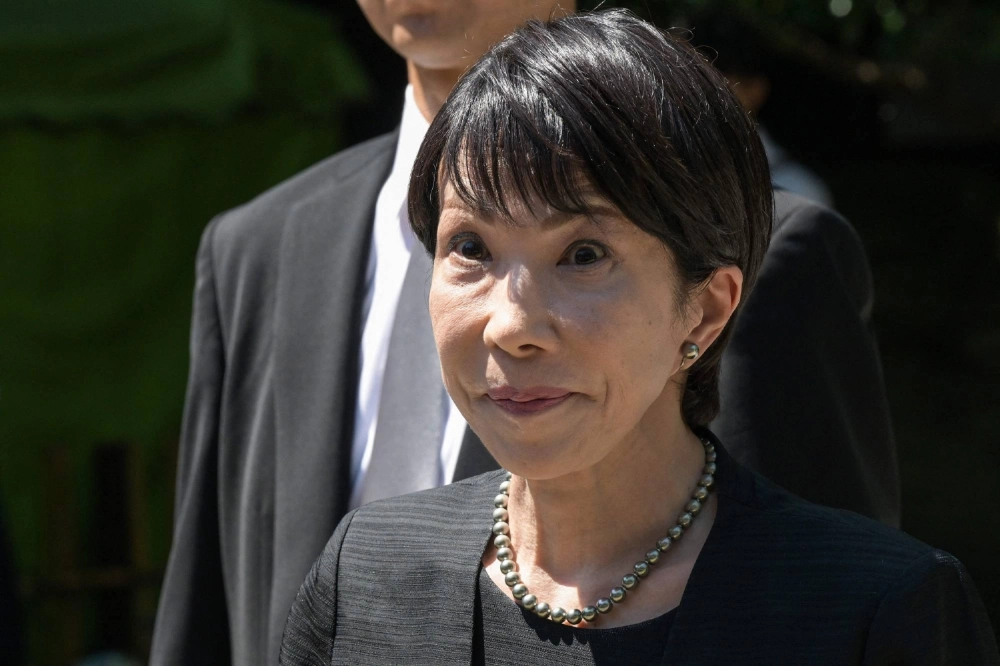
Ultranational former economic security minister Takaichi Sanae visits Yasukuni Shrine in Tokyo on 15 August. A former member of the Abe faction, she strictly opposes the liberal tendencies within the LDP under former PM Kishida and the current PM Ishiba.
The setback comes at a moment when smaller, more ideologically consistent parties are gaining ground with voters. This has fuelled calls from some critics for the LDP to split, since it remains an uneasy alliance of liberals and conservatives rather than a cohesive movement. On 10 August, Toru Hashimoto, co-founder of Nippon Ishin no Kai and now a political commentator, argued that former economic security minister Sanae Takaichi ought to gather fellow hawkish conservatives and form a separate party. However, he added he was doubtful she would take such a step.
The right-wing Takaichi is a rival of the more moderate Prime Minister Shigeru Ishiba. She lost to him in the deciding round of last year's LDP presidential election and has since been a critic of his leadership. Two days after Hashimoto's remarks, on 12 August, Takaichi responded to him on the social media platform X, saying she would not quit the LDP and indicated that she would continue to change the party from the inside. One of the secrets to the LDP's longevity is that it's a catch-all party, a collection of members with different, and sometimes clashing, political views who are nevertheless able to compromise and unite under the banner of a single party. But smaller opposition parties that are less diverse and more philosophically united, such as the Democratic Party for the People and Sanseito, have recently made inroads with younger voters, especially in urban areas.
Kentaro Yamamoto, a political scientist at Tokyo's Kokugakuin University, noted that even if Takaichi Sanae had assured Hashimoto Toru she would not leave the party, the split between the LDP's right wing and the rest of the organisation now appeared wider than ever. In his view, this made it increasingly difficult to reconcile the factions and restore the LDP to the broad, politically effective force it once was. Yamamoto observed that the LDP struggled to meet the needs of many voters precisely because it was trying to function as a catch-all party. To maintain that role, he argued, it had to accommodate a wide range of interests, which in practice meant adopting policies mild enough to satisfy all sides but often too weak to bring about meaningful improvements in people's lives.
He also pointed out that opposition parties faced their own limitations: most had little experience of governing, which left them ill-equipped to challenge the LDP's long-standing dominance or to build the kind of broad membership base the ruling party had sustained over its seventy-year history.
Is the LDP’s catch-all approach to politics still effective?
With smaller, more ideologically unified parties gaining voter support, some critics say the LDP should split into different groups.


