News Health ministry survey: insurance premium payments by foreign residents

thomas

Unswerving cyclist
Admin
Joined
14 Mar 2002
Messages
21,057
Reaction score
18,915
Unbelievable but true: no specific data on foreign nationals' health and pension insurance premium payments currently exists.

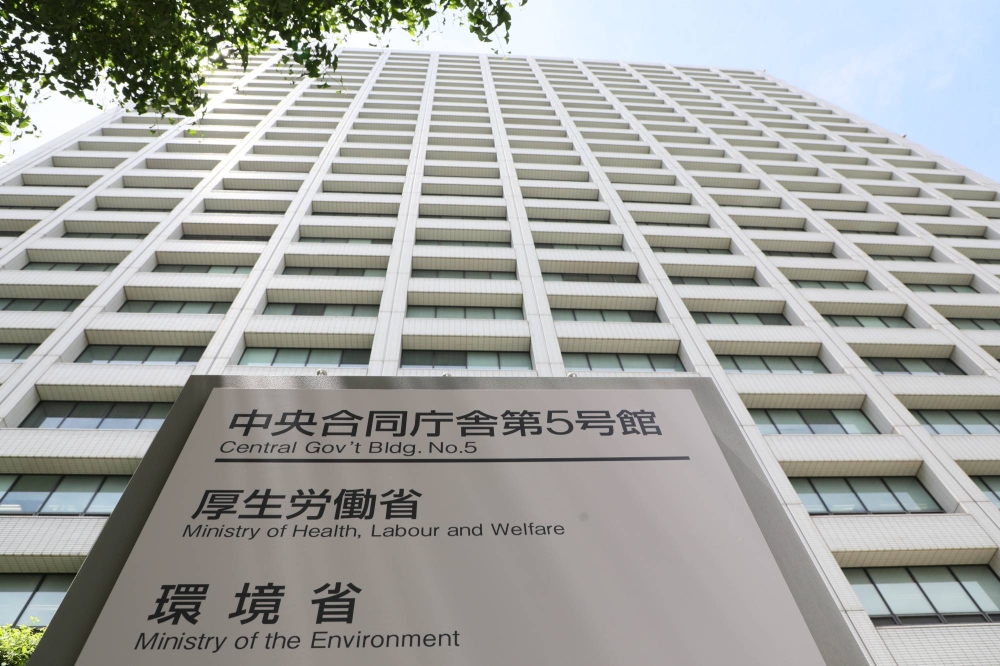
The Japanese Health, Labor, and Welfare Ministry plans to conduct its first survey on foreign residents' health insurance and pension premiums. The survey aims to analyze the impact of these payments on Japan's social security system. Understanding their contributions to the system becomes crucial as Japan prepares to accept more foreign talent to address its labour shortage.


The health ministry official said the decision to collect data on foreign residents' social security payments is based on an exchange in a Lower House committee meeting earlier this month, during which health minister Keizo Takemi acknowledged the need for more data. He was responding to a question from Yasushi Adachi, a member of parliament from Nippon Ishin no Kai. Adachi argued that the burden on the social security system from accepting more foreign residents remains unclear but needs to be weighed against the need to bring them in. In response, Takemi cited a sample survey taken by the Immigration Services Agency of 1,825 foreign nationals who applied for permanent residency between January and June of 2023, in which 235 people were found to have missed payments on their taxes, insurance or pension premiums. Of the 235 people, 213 had not made pension payments, 31 had missed payments of residential taxes and 15 had missed payments of national health insurance premiums.


The breakdown of unpaid social security premiums in Japan reveals an interesting trend: the payments most frequently missed are those for pension premiums. According to Takemi, long-term foreign residents (not just permanent residents) have the right to receive social security services, so it's natural for them to fulfil their duties by paying premiums, similar to Japanese nationals. As of December 2023, the number of foreign residents in Japan reached 3.42 million, representing a 10.9% increase from the previous year. Chinese nationals constituted the largest group (822,000), followed by Vietnamese nationals (565,000), South Koreans (410,000), and Filipinos (322,000).

 
Immigrations almost certainly does not want to be the 'police' for this, but others would probably suggest that.

Any visa renewal, not just the application for PR status, should require the applicant to show that they're up to date on these things.

Still the MyNa system should be (should have been?) a step in this direction--if it was meant to tighten things up on people in general, then it should also help with foreigners.

On the other hand, pension is pretty clear cut: if you have contributed and meet the minimums, you will get a pension based on this contributions. If not, you won't. So it's not like foreigners are getting something for nothing.

Health premiums are a different animal, and the issue seems to be that of interns, or perhaps people who are in the early phase of their stays in japan, who may be "slipping thru the cracks". But I'd guess that this is as much due to employers wanting to save money as anything--they can get away with paying these workers less if the worker take home pay is adequate. Factor in more for health care and the employers would probably have to raise pay (increasing their costs), so in some sense they may be complicit in keeping a group of the foreign worker population 'off the books'.

So maybe companies employing foreigners (actual workers, or trainees/interns) should be sharing responsibility for insuring compliance by their workers. (This is maybe analogous to the US, where companies don't want to be responsible for assessing the immigration status of the people they hire.)

*
By the way, I'm older and retired, so I don't pay pension premiums, I collect payments. (Boy, what a leech!) The Japanese government system (国民年金) is not at all generous, but given the inputs (¥16k/month?), I guess that's to be expected. From what I read, there are more Japanese deadbeats than foreigners, tho again, payouts are based on your record of payments, so people in either group aren't getting something for nothing.

On the other hand, my health insurance premiums were ¥63,000/month this past year, tho set slightly lower at ¥55,000/month for April-May-June, until the reset at the end of June. Fingers crossed on what that will be...
 
So, the Ministry is still considering/mulling/contemplating surveying foreign residents' payments into health and pension insurance (I wonder how many meetings they have had on the issue since May):


Japan will survey foreign residents' contributions to the public pension and medical insurance systems. The government aims to assess the impact of the growing non-citizen population on these programs. Like Japanese nationals, foreign residents with registered addresses must participate in these systems. Despite this mandatory enrollment, the Ministry of Health, Labor, and Welfare currently lacks data on premium payments broken down by nationality. This is because nationality does not influence eligibility for these systems. As of the end of 2023, approximately 3.4 million foreigners were residing in Japan on a medium—to long-term basis. The number of permanent residents who enjoy unrestricted employment, residency, and activity rights is anticipated to increase.


Foreigners are expected to account for 10% of a total 87 million population in 2070, according to an estimate released last year. A financial review of the public pension system published in July was calculated using this estimate, signaling that the role of foreign residents will increase in supporting social security programs. The Japan Pension Service seeks to raise awareness among foreign residents of the public pension system under a five-year plan that began in April. It plans to work with municipalities and foreign support groups to address non-payment of pension premiums.

Japan currently has arrangements with 23 countries that prevent foreign residents from having to make double payments in both their home country and Japan.

Paywall alert:
 
If some foreigner is concerned about leaving the country How to Claim Your Japanese Pension Refund - A Guide for Expats you can get a refund on pension.
I have heard of a small number of foreigners who didn't pay and planned to stay a short time but then ended up staying long term and got in trouble. Really social security in US one has to pay regardless of nationality as well.

health insurance should be required IMHO. It is based on income so being a low wage worker means you pay less.
 
In the eikaiwa/ALT english teaching sphere of things here, one common refrain I hear (from teachers) goes something like, "My company/boss told me I don't have to pay it." (which, I realize, may be more or less actual truth)

To make workers happier, and to insure the workers complain less about their wages, of course those small (or even larger) businesses want to put as much money into the hands of their workers as possible. If these companies told the workers to pay pension (and healthcare, etc) they might have to pay the workers more.

So it's a wink and a knowing nod: "You're not really going to be here that long, are you? Heh heh, you don't have to pay it." The companies are effectively kicking the can down the road, for someone else to take care of. (And this sidesteps the issue whereby some workers are classed as contractors (or trainees), and not as regular employees.)

My point would be that companies/employers, regardless of how they're categorizing their workers (employee--full time or not, contractor, etc.) might be a reasonable point at which to apply some pressure, or to create some responsibility on their part for the people they are paying.

So after whatever survey is done, it might be good to cross reference those foreign workers who are delinquent with workplaces. And if some company has more than a few workers that are delinquent, they could be fined, or maybe they'd no longer be able to sponsor visas. Something like that.

That's not a total solution, but it could be a piece of the puzzle.

It might also help for the Health, Labor, and Welfare ministry to prep an insert or two that Immigrations could then include when issuing anyone a COE (<-I think that's what it's called?). Then, from the very beginning, any new entrant would be made aware of their pension and other obligations--when, where, and how to sign up, and so on.
 
my health insurance premiums were ¥63,000/month this past year

Just curious: is this for two people? It's kind of in line with basic Medicare, but honestly Medicare is so complicated I'm astonished anyone can get a handle on it. From what I understand, Medicare Part A is free, and Medicare Part B is something like $175/month (per individual). So for a couple its $350/month for basic, bare-bones aged healthcare in the US. Then, if you want more coverage, or dental, or vision, or insurance for medications, you have to swim through murky waters to figure out what's best. (Can you believe that? You need separate insurance to get your drugs covered here in the States.)

Anyway, part of my continuing series on the scandalous state of healthcare in the US.
 
is this for two people?
No, for me. Tho we're retired, my wife and I each still have enough income that we're treated/assessed independently. The latest statement on this, dated about a month ago, lists my total as ¥554,277 for the year (and year is defined as this past April thru March of '25). That's broken down into 12 payments. April, May and June were ¥55k, July was ¥43,677, and the remaining months, aug-march, are ¥43,200.

So that ¥554k/12=¥46,167 per month, average. (and 46,167/148 = about $312/month)

While that may seem high, or comparable, this next part may surprise you: I'm both older (72), and for a while have been classed as 障害者 (heart valve replacement) (and my 手帳 has me as 1級 and 1種--I'm not sure which is more important, or both). The bottom line of all that means that tho I pay the above premiums, any ongoing care and meds are 100% covered. Usually here for medical bills it's a 30-70 split, so if a bill is ¥1000 the patient's co-pay would be ¥300, and insurance would pay ¥700. I think there are some cases when it is 20-80, or 10-90, but for me these days it's 0-100. That is, I go to a clinic or hospital for whatever, and when done it is fully covered--I don't pay anything. Same for prescriptions--stop by a drug store, wait a bit, and they bring the meds and say have a nice day.

Next week I see my circulatory doc (循環器内科), will have a lot of blood work, some prescriptions for three months (later free at the drugstore), and the cost will be zero. A week or ten days later I'll see another doc, 呼吸器外科 (after a thoracic CT with contrastive medium), and on completion this will also be zero co-pay.

The system is quirky in more than a few ways. My wife has a condition that we both think is worse than anything about me, but she's only classified as level 3 (障害者 3級, and/or 3種), which is such that it's still 30-70 for her. I have a friend whose wife had a pretty bad stroke about two years ago, who has had trouble getting her classified such that their bills are a little cheaper. For some reason the heart valve was automatic, and these other things are not. (True, it was full open heart surgery, and not just TAVR, but still...)

Questions?
 
Ahh, I see. Yes I think in the States if you are working it becomes slightly complicated as well. Great information (though sorry to hear that you and your wife have these health issues).

I had heard that there were some issues that have high costs, yet the government doesn't classify them as complicated or chronic, so the patient falls into a financial crack that isn't covered by insurance, but costs a lot of money to treat. My impression was that the Japanese system isn't particularly adversarial, so either the doctor or the government is often willing to work something out (that was my vague understanding, anyway). It sounds like my understanding was maybe too generous.

These are the kinds of things that you spend zero brain cells on when you are young and in rude health, but as you get older it suddenly comes into sharp focus. Same as Social Security / Nenkin. When I was a kid I thought I was super intelligent because I knew the system was running out of money, so it was pointless for me to care about Social Security. All of a sudden, I'm nearing the age where I can receive it, and the system still has money, and I'm wondering why I didn't take it more seriously. Same with Japan's nenkin... who thinks about it when you're 25 and running around Roppongi? But also, there used to be a super long commitment before you could receive Japanese pension, so that sort of made it unattainable for a lot of foreigners.

Anyway, thanks much for the info.
 
Also, I'm somewhat encouraged by the fact that the Japanese government didn't keep separate tabs on foreigners' insurance. It sort of feels pointless to me to track this by nationality. I mean, if you pay into the system, you should get the healthcare regardless of your passport, so there should be no need for the government to track payments/benefits by nationality.

Unpaid premiums are a different story, but this feels less like an insurance issue than an employer/employee fraud issue.
 
Thank you johnnyG for the premium information! Those numbers will change but that will apply to me in the future. Sorry to hear you and your wife have health issues. My bigger headache is Japanese taxes on 401k and ROTH IRA and such.
I have never worked for an eikaiwa company I can believe it on trying to pay less doing that. I like the idea of going after bad employers much like in the US you must pay social security. The health care is pretty important, I know youth are "invincible" but they can still have something happen. This could lead to less eikaiwa teachers there for a gap year or 3. Still I think your approach is right tracing back to the company. I have a friend who has been teaching eikaiwa for 20 some years, I know of some others who have done it longer (not sure about some on this forum) but I am sure they are less than 1% of teachers. I remember the revolving door of westerners coming and going. Here we have people from Hitachi and Sumitomo and some others they are typically stationed 3-5 years so it's kind of similar make some friends they go away.
 
These are the kinds of things that you spend zero brain cells on when you are young and in rude health, but as you get older it suddenly comes into sharp focus. Same as Social Security / Nenkin. When I was a kid I thought I was super intelligent because I knew the system was running out of money, so it was pointless for me to care about Social Security. All of a sudden, I'm nearing the age where I can receive it, and the system still has money, and I'm wondering why I didn't take it more seriously. Same with Japan's nenkin... who thinks about it when you're 25 and running around Roppongi? But also, there used to be a super long commitment before you could receive Japanese pension, so that sort of made it unattainable for a lot of foreigners.
Yea you are right very very few people take nenkin or insurance or such seriously when young. It does feel like the years go by fast. I think that applies to most people. If I had saved more I probably could have retired in my 40s but I may have had less fun still i could have made better decisisions and had fun and be in a better position now I think but how could one teach a younger person to find a better balance between fun and planning for the future.
 
Back
Top Bottom