


- 14 Mar 2002
- 21,053
- 18,906
This could serve as a model for other communities with larger segments of foreign residents:
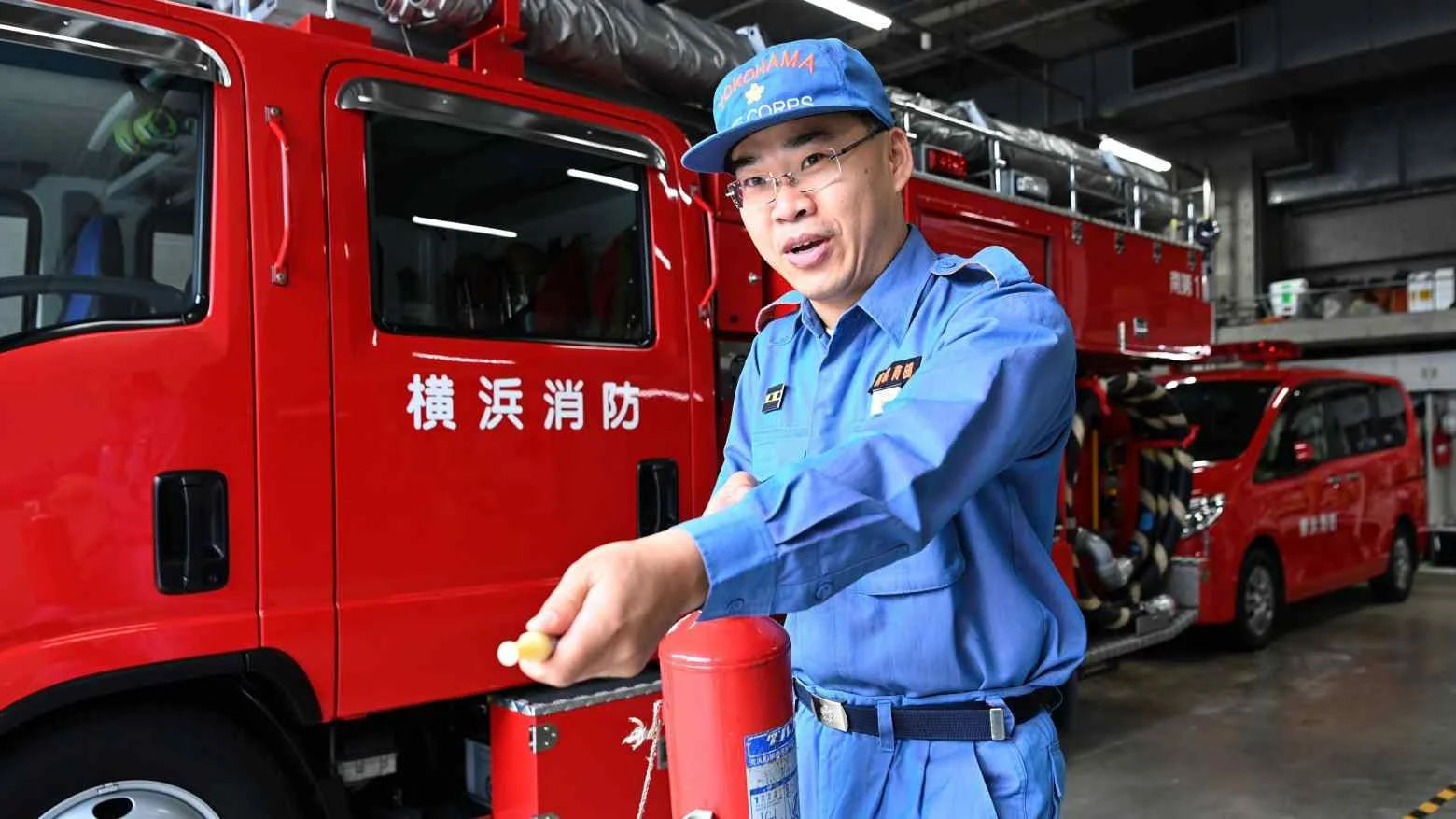
Aikawa Town has established a multinational volunteer firefighting squad to support its growing foreign community in the event of a disaster. The team, comprised of individuals fluent in Portuguese, Tagalog, English, Khmer, Vietnamese, and Spanish, will serve as interpreters, assist with evacuations, and support foreign shelter residents. Beyond disaster response, the squad will participate in public relations activities and drills. This innovative approach, focusing on its members' specific skills and backgrounds, is a departure from traditional firefighting roles. With nearly 9% of its population representing over 45 nationalities, Aikawa Town hopes its model will inspire other communities to implement similar initiatives.
More on Aikawa:
 jref.com
Aikawa Town has established a multinational volunteer firefighting squad to support its growing foreign community in the event of a disaster. The team, comprised of individuals fluent in Portuguese, Tagalog, English, Khmer, Vietnamese, and Spanish, will serve as interpreters, assist with evacuations, and support foreign shelter residents. Beyond disaster response, the squad will participate in public relations activities and drills. This innovative approach, focusing on its members' specific skills and backgrounds, is a departure from traditional firefighting roles. With nearly 9% of its population representing over 45 nationalities, Aikawa Town hopes its model will inspire other communities to implement similar initiatives.
Town officials hope their example will serve as a model for the rest of Japan. Kazuhiko Kojima, Aikawa's fire marshal, handed written appointments to the brigade members during an inauguration ceremony on July 7. Uniform caps and jackets were also distributed to the members. Julia Mayumi Yamashita, a 54-year-old native of Brazil who leads the fire brigade, recalled she was visiting an elementary school with Brazilian kindergartners she was teaching Japanese to when the magnitude-9.0 Great East Japan Earthquake struck in 2011. She said Japanese schoolchildren remained calm in the face of the abrupt shocks, but the kindergartners were clearly frightened. "I hope to help convey information to non-Japanese so they and Japanese people can help each other in times of trouble," Yamashita said. Norma Yamashiro, a 45-year-old Peruvian, said she often sees residents in her neighborhood pass on circular bulletins without looking at them because they cannot read Japanese.
More on Aikawa:
Aikawa: 8% foreign residents, rubbish issues but no discord
Asahi took a closer look at the social fabric of Aikawa, a small town in Kanagawa, where 8% of the population are foreign residents from South America and SE Asia. Aikawa has an inland industrial park with over 100 companies. Following revisions to the immigration law in 1990 allowing permanent...
jref.com


![-]5pace.pirat3]+](/data/avatars/s/10/10061.jpg?1412559883)


