


- 14 Mar 2002
- 21,051
- 18,903
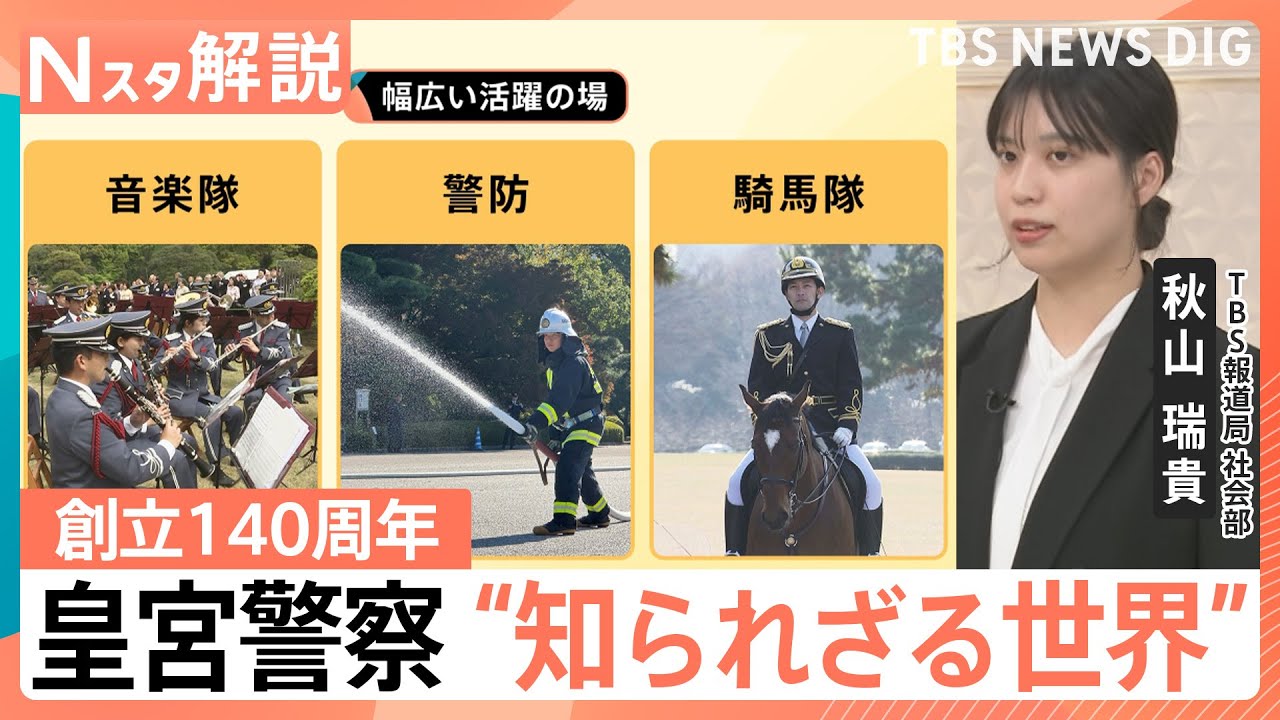
I'd never heard of Japan's Imperial Guard Police (皇宮警察本部 Kōgū Keisatsu Honbu), a specialised police force under the NPA that protects the Emperor, Empress, Imperial Family, and Imperial properties, notably the Imperial Palace in Tokyo and the Kyoto Imperial Palace.
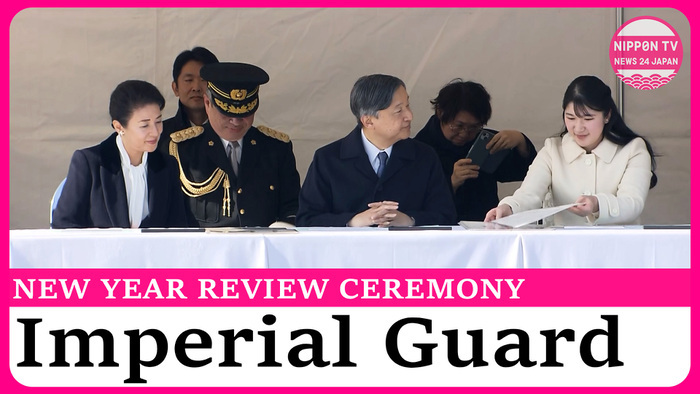
Last Friday, saw the annual New Year review ceremony, held in front of the imperial family.
 www.ntv.co.jp
 en.wikipedia.org
Its duties centre on the close personal protection of the Imperial Family, routine security and patrols within Imperial Palace grounds, the guarding of gates and ceremonial routes, and the maintenance of security during state visits, imperial ceremonies, and other official functions. Within Imperial estates, its officers also conduct investigations and exercise full law-enforcement authority, operating as a full police force rather than a purely symbolic guard.
The organisation's roots lie in the Imperial Guard (近衛) of the Meiji period, which was a body with clear military features. Following the Second World War, it was restructured into a civilian police organisation, in line with Japan's post-war constitutional framework and the Emperor's depoliticised status. As a result, what is often referred to as Japan's "Imperial Guard" is neither a ceremonial unit nor a military force, but a highly trained and specialised police service devoted exclusively to the security and protection of the Imperial Family and imperial property.
Last Friday, saw the annual New Year review ceremony, held in front of the imperial family.
The organisation traces its origins to 1886, when it was established under the former Imperial Household Ministry as the Imperial Guard Police Station. It later became an affiliated body of the National Police Agency and is now known as the Imperial Guard Police Headquarters. Based within the Imperial Palace grounds, it operates guard stations that function similarly to regular police stations at locations including the Akasaka Estate. The force has about 900 personnel. Its core missions are to provide close protection for the Emperor, the Empress, and other members of the Imperial Family, and to secure the Imperial Palace and related facilities. Officers may accompany members of the Imperial Family on official visits to regional areas or overseas, and also provide protection during private activities such as skiing, hiking, and tennis. The unit's training is shaped by past incidents, including a 1975 attack in Okinawa when a firebomb was thrown during a visit by the then Crown Prince and Crown Princess, now Emperor Emeritus Akihito and Empress Emerita Michiko. Imperial Guard Police officers responded by evacuating the couple and managing the situation. More recently, in 2026, a man was arrested on suspicion of public indecency near the end of the New Year's general public greeting at the Imperial Palace. Officers quickly restrained the suspect, preventing disruption to the event's proceedings. Although Japan once had an Imperial Guard, the military was abolished after World War II, and the Self-Defence Forces do not play a role in protecting the Imperial Family. As a result, the Imperial Guard Police remains a rare example of a police organisation serving as the primary shield for the nation's royals.
Emperor Attends Annual Review Of Japan’s Elite Guards
Japan’s Imperial Guard Police, a little-known force tasked with protecting the Imperial Family and guarding key palace facilities, is marking its 140th anniversary this year, with attention turning to the frontline officers who train daily for emergencies and operate with what they describe as a...
newsonjapan.com
Emperor and family watch Imperial Guard's New Year review ceremony
Emperor Naruhito, Empress Masako and their daughter Princess Aiko watched the Imperial Guard's New Year review ceremony ...
www.ntv.co.jp
Imperial Guard (Japan) - Wikipedia
サイトマップ | 皇宮警察本部-IMPERIAL GUARD HEADQUARTERS-
皇宮警察本部は、日本の象徴である天皇陛下をはじめ、皇族各殿下の護衛や皇居、御所、御用邸などの警備を専門に行う警察です。
www.npa.go.jp


