


- 14 Mar 2002
- 21,048
- 18,898
International students in Japan are increasingly taking on demanding part-time jobs to cope with rising living costs and pay for their education. Among the most sought-after workplaces are convenience stores, where students say they can improve their Japanese, gain first-hand experience of the country's customer service culture and develop skills that may prove useful in future careers or business.
The number of international students coming to Japan for study and work has continued to grow, but many find that personal savings are not enough to cover everyday expenses. As a result, they fit part-time jobs around their classes, sometimes working overnight shifts, while staying within the legal limit of 28 working hours a week during the academic term.
Workers said convenience store jobs had helped them improve both everyday Japanese and more formal, polite speech. Because staff deal directly with customers throughout their shifts, convenience stores generally expect a higher level of Japanese than many other part-time employers.
One worker said the job had expanded not only his vocabulary but also his ability to use honorific and customer-service language naturally. The constant interaction with customers gave employees regular opportunities to practise expressions that were difficult to master in the classroom alone.
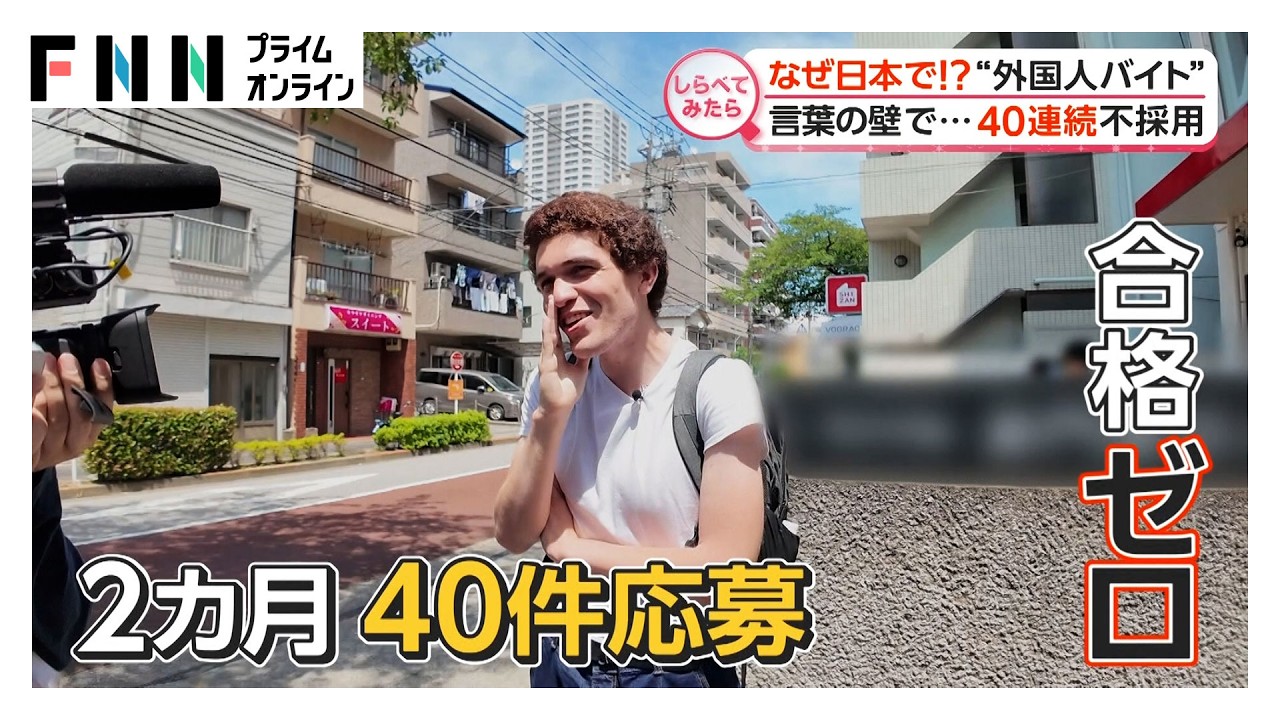
The number of international students coming to Japan for study and work has continued to grow, but many find that personal savings are not enough to cover everyday expenses. As a result, they fit part-time jobs around their classes, sometimes working overnight shifts, while staying within the legal limit of 28 working hours a week during the academic term.
A Nepalese woman looking for full-time employment said she was working at a yakitori pub while facing monthly living expenses of about 160,000 yen. Her monthly earnings were around 170,000 yen, leaving almost no financial margin. A man in his third year in Japan, who attends a Japanese-language school, works twice a week in mobile sales, selling frozen cakes, frozen fish and other products. Each shift lasts about nine hours, and he earns roughly 120,000 yen a month. An Italian man encountered in Tokyo's Nishi-Kasai district works at Bakery & Grill Sawamura in Toranomon, where he handles the register and works on the sales floor. He said he deliberately chose a workplace with many tourists because he speaks English and Spanish as well as Italian, allowing him to make use of his language skills. For others, wages take priority over personal preference. A Nepalese student at a vocational school works overnight cleaning rooms at a hotel because the pay is relatively high. He earns about 180,000 yen a month but works from 10 p.m. until 6 a.m. before attending school.
Workers said convenience store jobs had helped them improve both everyday Japanese and more formal, polite speech. Because staff deal directly with customers throughout their shifts, convenience stores generally expect a higher level of Japanese than many other part-time employers.
One worker said the job had expanded not only his vocabulary but also his ability to use honorific and customer-service language naturally. The constant interaction with customers gave employees regular opportunities to practise expressions that were difficult to master in the classroom alone.
Foreign Students Praise Convenience Store Jobs in Japan
Foreign students in Japan are taking on demanding part-time jobs to cover rising living costs and finance their education, with convenience stores emerging as one of the most desirable workplaces because they offer valuable language training, exposure to Japanese culture and experience that...
newsonjapan.com


