

Navigation
Install the app
How to install the app on iOS
Follow along with the video below to see how to install our site as a web app on your home screen.
Note: This feature may not be available in some browsers.
More options
Style variation
System
Light
Dark
You are using an out of date browser. It may not display this or other websites correctly.
You should upgrade or use an alternative browser.
You should upgrade or use an alternative browser.
Can anyone translate?
- Thread starter Numbers
- Start date

- 21 May 2003
- 14,310
- 4,404
- Thread starter
- #5
Thanks, this world of Japanese swords can be a minefield.肥前國忠吉 Hizen-no-kuni Tadayoshi.
A very famous, and very often faked/forged, sworsmith's name.

Ukigumo
後輩
- 15 Mar 2025
- 1,383
- 2,687
Buying from a reputable dealer, preferably with NBTHK or similar certification is always a good idea, but then you will more for it. Gone are the days when you might find a really special sword in an attic clearance or in the back of an antique shop, gathering dust.
- Thread starter
- #7
True, but sometimes the "WANT TO BUY" overwhelms "THE NEED TO CHECK IF REAL"...Speaking on that, the sword in question came with this certificate, is this some kind of letter of authenticity? Sorry if it's upside down or backwards.Buying from a reputable dealer, preferably with NBTHK or similar certification is always a good idea, but then you will more for it. Gone are the days when you might find a really special sword in an attic clearance or in the back of an antique shop, gathering dust.
Ukigumo
後輩
- 15 Mar 2025
- 1,383
- 2,687
A couple of NBTHK certificates I have look like this-
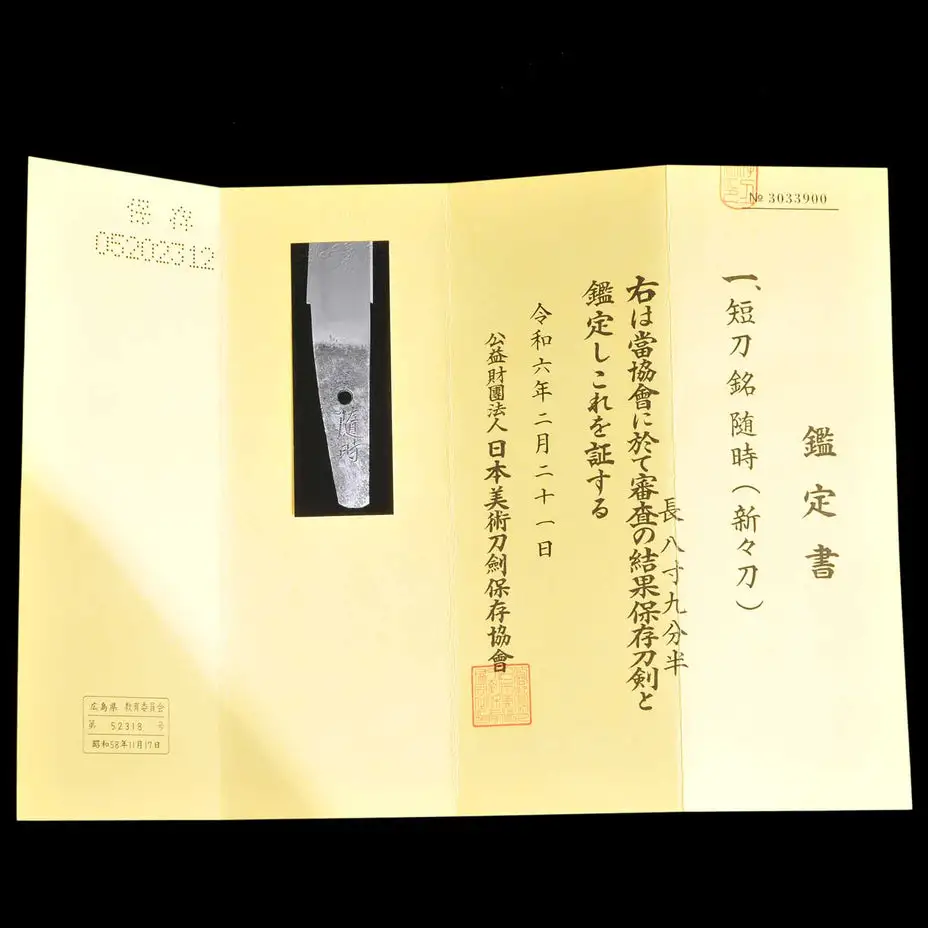 The NBTHK
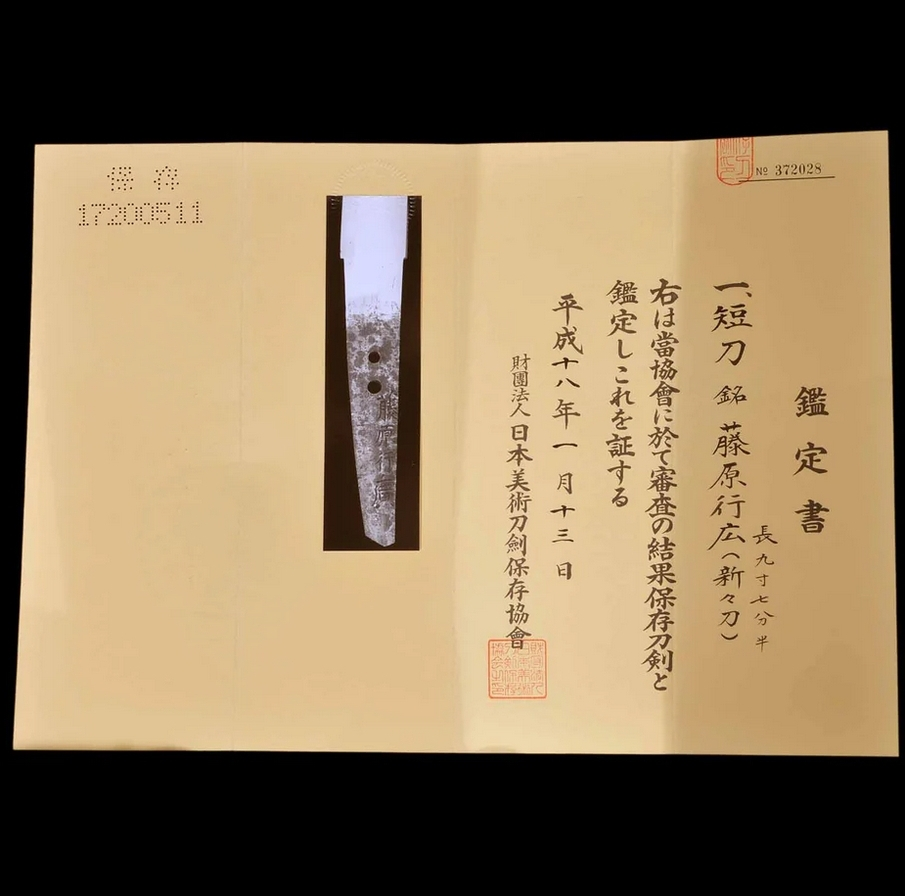
They're on high quality, stiff paper, have perforated numbers and serial numbers plus a photo of the tang/mei. If you contact NBHTK with these numbers, they will verify the sword's authenticity etc.
They're on high quality, stiff paper, have perforated numbers and serial numbers plus a photo of the tang/mei. If you contact NBHTK with these numbers, they will verify the sword's authenticity etc.
- 21 May 2003
- 14,310
- 4,404
Ukigumo
後輩
- 15 Mar 2025
- 1,383
- 2,687
Oh I can understand that. Nobody wants to miss a potentially nice blade and this one you have is probably a nice blade despite the signature.True, but sometimes the "WANT TO BUY" overwhelms "THE NEED TO CHECK IF REAL"...
I once saw a lovely wakizashi for sale at a reputable dealer complete with NBHTK certificate, so put it in my shopping basket. It was a substantial cost so I decided to sleep on it before buying it. The next morning it was no longer in my 'refreshed basket' and the sales listing said it had been sold!
 I was very upset but had to accept that someone else had snatched the opportunity to add it to their collection
  For some reason, a few hours later, I decided to look at the listing again and to my astonishment it was there and available for purchase which I did immediately! I heard heavenly music as I did so. I suspect putting it in my basket removed it from the listing automatically but when I didn't pay for it for a few hours, it put it back up for sale again!
 Anyway, I suspect you're not likely to be as hasty in future, thanks to this experience, which I think is a positively good thing.

- 12 Oct 2013
- 4,071
- 5,023
Speaking on that, the sword in question came with this certificate
This is the sword's registration certificate. It doesn't imply authenticity of the signature. In a way, it kind of says "this is an authentic Japanese sword", but even then some weird things slip through the registration system. Your particular registration certificate is dated 1968, and comes from the Kōchi Board of Education. Each prefecture's Board of Education handles the sword registration paperwork for swords in that particular district. Your certificate indicates the sword has the inscription "Azuma Tamonbei Masatsugu", which is the swordsmith's name. He would be a swordsmith from the early-to-mid 1600s.

- 6 Mar 2003
- 9,318
- 9,446
Where are you getting 1968 from? I see Showa 48.Your particular registration certificate is dated 1968
- Thread starter
- #15
This is the sword's registration certificate. It doesn't imply authenticity of the signature. In a way, it kind of says "this is an authentic Japanese sword", but even then some weird things slip through the registration system. Your particular registration certificate is dated 1968, and comes from the Kōchi Board of Education. Each prefecture's Board of Education handles the sword registration paperwork for swords in that particular district. Your certificate indicates the sword has the inscription "Azuma Tamonbei Masatsugu", which is the swordsmith's name. He would be a swordsmith from the early-to-mid 1600s.
Similar threads

U
- Replies
- 12
- Views
- 3K


