A traditional Iranian potage

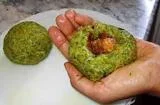
Red beet Halva

It is the first time I see this type of Halva and hear its name and don't know which region of Iran it belongs to. Based on its amazing color it seems to have a tasty flavor!


07-lobster-halva_n04s.webp


halva-laboo_vm0.webp
 
Red beet Halva

It is the first time I see this type of Halva and hear its name and don't know which region of Iran it belongs to. Based on its amazing color it seems to have a tasty flavor!

I miss beetroots. For reasons unknown, they are so hard to come by in Japan: they're either canned and imported or prohibitively expensive.
 
I miss beetroots. For reasons unknown, they are so hard to come by in Japan: they're either canned and imported or prohibitively expensive.


Here in Iran it is almost a cheap fruit or plant (per kilogram 5~ 10 penny). It is sold raw or grilled. In Shiraz we eat the grilled ones cold, but in Tehran it is eaten hot.


The grilled red beetroot that we have cold in Shiraz. I personally eat that fewer due to its cool nature.

68364_lexr.jpg


In Tehran it is sold hot in some shops in the cold seasons.


615264_az5q.jpg


.
 
Last edited:
Baghla Garmak (cooked Broad bean)

It is a simple snack that is eaten hot in Iran for entertainment, especially in autumn and winter (like pop corn or similar snacks). In Shiraz we pour dry powder of thyme, a little salt and black pepper powder on it , and eat along with Doogh. It is very appetizing and is eaten mostly in the late winter and beginning of spring, but the dry board bean that is cooked in water is used in other seasons too. I mostly am interested to eat cooked green board bean. I love it very much and can eat two or three dish of it along with a pitcher of Doogh! Sadly this year due to my Covid 20 disease I could not have it!

Of course, board bean is harmful for those who have Fauvism disease

631cfeeb06bbd4.475971961662844651_azct.webp


baghali-pokhte_n1kd.webp
 
Three other types of Iranian Halva with some differences and similarities


Shirazi Halva. This Halwa is cooked in the religious occasions, as well

shole-zard-min_pbr3.webp


1402_608_569h.webp


Bowl Halwa or Yellow Halwa that usually is cooked as dessert beside foods in some celebrations such as wedding

halva-kase_f8nf.webp


A type of Halwa that is called sweetshop Halwa that is sold in some confectionaries


halva-shirazi_d42.webp
 
Steamed turnip

We use it at autumn and winter and is eaten hot. People pour thyme powder, salt and somebodies black pepper on it. In the cold weather It has very magnetic attraction for eating. It is told it has a natural antibiotic and prevent cold disease that may be good against influenza and covid 19.

When I was a kid, I remember, some peddlers sold it in some particular carts in the " Darvazeh Isfahan", a neighborhood in Shiraz close to the Vakeel bazar that was my birthplace. Of course, people themselves cooked it at home as well. It is cooked with a little water, so it is considered as steamed turnip. It is one of the cheapest edible root plants (3~4 penny).

I have heard Japanese love and use turnip and radish vey much.


turnip-seeds-purple-top-white-globe_8n1e.jpg


%D8%B4%D9%84%D8%BA%D9%85-%D9%BE%D8%AE%D8%AA%D9%87-%D8%AF%D8%B3%D8%AA%D9%88%D8%B1-%D8%A7%D8%B5%...jpg


The German ambassador eating turnips in one of Tehran's neighborhoods

57799019_1qv0.jpg
 
Last edited:
Haleem

It is another traditional foods of Iran. It is cooked with a particular type of wheat and lamb. Previously only some grill shop cooked it in morning for breakfast but today it is cooked for evening as well. Of course, some people may cook it at home, but cooking it takes long a few hours and should be stirred alternatively, so cooking it is not easy.

When it is prepared for eating, cinnamon, oil and sugar are added on it, In Shiraz, but I heard slat is added on Haleem instead of sugar, in Tehran. I hate cinnamon in foods and sweets except in Halim and yellow Halwa.

I heard, some shops in Tehran instead water (for cooking) add milk to their Halim, and also use turkey instead of lamb. I have not eaten such Haleem but probably it has more price than the ordinary Haleem.

It is a delicious and energic breakfast and I sometimes buy a bowl of it.


halim-gandom-_qwwo.jpg


This Haleem is in a stony and engraved container. Such traditional fantastic pots are made in Mashhad city from a particular black rocks that is found there. Some people cook their foods in these stony pots that is resistant against high temperatures. They believe this makes foods more tasty and probably it is so. The stone is unsolvable. Some travelers buy such famous stony container from Mashhad city.

Just know I read, these stony pots are made in Hamadan city, as well.

Also, it is good to know, generally, Haleem is cooked in the large stony pots (not black stones)!


1120520_z6oh.jpg
 
Shirazi Koofteh Sabzy

There is not a matched word that I can translate this food in English. The only word I found was meatball but the main ingredient of this food is not minced meat, though an amount of minced lamb with damson and raisin is inserted into the vegetableball. I called it vegetableball, though it is not from vegetable wholly. It is cooked within its soup with the same ingredients.

Previously It was a homely food in Shiraz but now some shops (or maybe restaurants) cook and sell it. Preparing its raw mixture and cooking it takes time and need enough skill. Some particular vegetables are used in this Koofteh that make it delicious and appetizing.


shirazi-vegetable-dumplings-3_bkio.jpg


79759020488838987991451519915419317028_9pe2.webp


c6d25f44443bb3b51606280ba29f07d1kc7dltnwpar66r4v0_sf46.jpg
 

Attachments

  • 79759020488838987991451519915419317028_9pe2_thumb.webp
    79759020488838987991451519915419317028_9pe2_thumb.webp
    4.3 KB · Views: 99
Tabrizi Koofteh ( Tabrizi meatball)

This food comes from Tabriz city in the North West of Iran, though in recent decades it may be cooked in other cities following the Tabrizi recipe.

The main mixture of this Koofteh is minced lamb. I have not tasted it yet but surely is an excellent food.


%D9%BE%D8%AE%D8%AA-%D9%85%D9%86%D8%AD%D8%B5%D8%B1-%D8%A8%D9%87-%D9%81%D8%B1%D8%AF-%DA%A9%D9%88...jpg
1559504567_i6bu1_bkmt.jpg
5fc440b7-5c86-44b3-889c-08a370098c7a_lmk8.jpeg
 
Shirazi Kalam Polo ( Shirazi cabbage - cooked rice)

Although, it is a traditional Shiraz food, today, the majority of Iranian people know it, and when they want travel to Shiraz one of their journey plan is that to eat this famous Shirazi food that is cooked with a particular style. One of its ingredients is small meatballs that is prepared with lamb and other particular ingredients.


kalam-polo_sikx.webp


kalam-polo-shirazi3-640x477_u5uv.webp
 
Morgh fesenjan

It is a popular, famous and so much delicious Iranian food that is cooked in all areas of Iran with a little different. Most likely, the Iranians who have a restaurant in the western or eastern lands cook this unique Iranian food.
It is cooked with chicken, sweet grape syrup, sour pomegranate syrup, and grinded walnut and some spices. Being this food a little sweet or sour dependent on the percentage of the syrups mixture. Usually, the expert cookers make an appropriate mixture from these syrups to cook the best food.

The dark color of the food is because of the syrups.


fesenjoun_74h7.webp


fesenjan_grw.webp
 
Hello Mansoor, apologies if this is a stupid question; these traditional foods use a lot of lamb meat - is beef (cow meat) not a part of traditional Iranian foods, or is lamb meat just preferred in Shiraz dishes?
 
Hi, Majestic

It is good question :)

As far as I know, the choice of majority of Iranian people was lamb from thousands of years ago up to now. Beef was the second choice for meat, and cow breeding was mostly for producing milk besides the sheep's milk. If I want bring an example experimentally between lamb and beef, I say, 90% lamb and 10% beef.

Generally, unlike the sheep herds, the large cattle herds (like what in the West is seen) didn't exist in Iran. Usually, (compared with the large sheep herds) the number of cattle in a village was low, and every family had a few cows (one, two, three, or a little more) that was not in the shape of a herd.

Usually, they didn't use beef except for occasional reasons. When I was a child, I had never seen beef in the butcheries, except in the Jews' neighborhood. The Jews citizens in Shiraz didn't use lamb at all, and the meat they used was only beef. I think you are Jewish and know the meat they use is beef.

Today is different from the past. Today I see markets sell ( almost 30%) beef besides (70%) lamb, and there are some new beef cattle in the countryside of cities besides the milk cattle.

Lamb is thinner and fattier than beef and has mild nature. Beef has rougher tissue and cold nature, so lamb is more suitable and delicious than beef in many foods, especially since it is very suitable for barbecue, kebob, and steak. Of course, Iranians use goat meat that is similar to lamb but with less fat.

Recently, I see, some other types of meats in the markets such as camel, ostrich, turkey, and even the birds like partridge (not wild ones) in the markets, though they are used fewer.

Grilling a piece of beef is not appropriate anymore because it burns (and is cooked late) due to lack of enough fat and rough tissue.

I want to say something honestly; Halal lamb, or generally halal meat has a state that makes it more delicious and eatable than the meats in other cultures, I don't know accurately why, but I think, because of its particular spiritual state.
 
I want to say something honestly; Halal lamb, or generally halal meat has a state that makes it more delicious and eatable than the meats in other cultures, I don't know accurately why, but I think, because of its particular spiritual state.
Have you tried meat that is not Halal?
 
Thank you for the very detailed and thoughtful answer. The photos of these Iranian dishes are making me curious to try more foods from this region. In the states we can get halal food from some specialty markets. Well, it is easy to find around Los Angeles, where there is a large population Iranian immigrants. I don't know why lamb doesn't grow in popularity here.
I grew up in a non-religious family. We did not go to church or read any religious texts in my house. Someone in my family took an online DNA test to trace our roots, and the results showed something like 10% Jewish descent, which was a small surprise to us (my parents both came from Christian/Catholic families). Eventually my father rejected the church, and more or less became an atheist.
Anyway, thank you again.
 
Ghormeh Sbazy

We call it Khoroshe Sbazy in Shiraz.

It is one of the top popular, lovable and famous foods in all areas of Iran. It is cooked with some particular vegetables (every type pf vegetable is not suitable for this stew), lamb, and a little bean (somebodies add a little small pieces of potato, in Shiraz or maybe in other cities). It is cooked enough for hours and is oily a little. I think, it is served in the Iranian restaurants in other lands. I haven't seen anybody eat this stew solely with bread and always is eaten with cooked rice.


ghormeh-sabzi_x5sl.webp


%D8%AE%D9%88%D8%B1%D8%B4%D8%AA-%D9%82%D9%88%D8%B1%D9%85%D9%87-%D8%B3%D8%A8%D8%B2%DB%8C_va67.webp


ghorme-2-1_8dl2.webp
 
Polo & Ghymeh

It is another popular Iranian foods that families and restaurants cook often. It is a delicious and favorite food.

Some families or religious groups cook it as a vow or memorial of the messenger or imams in some holly days and give people freely (especially needful persons).


khoresht-gheymeh_6ysf.webp


20181015092028602597_t92v.webp


%D9%82%DB%8C%D9%85%D9%87-%D9%86%D8%B0%D8%B1%DB%8C-10_hp3t.webp


%D8%BA%D8%B0%D8%A7%DB%8C_%D9%86%D8%B0%D8%B1%DB%8C_iy5p.webp
 
Shekar Polo or Shirin Polo (sweet rice)

We call it "Shekar Polo" in Shiraz, but it is called "Shirin Polo" in Tehran or probably other cities of Iran. This rice is eaten with Ghimeh or Ghormeh Sabzy.

It is cooked with sugar (not much), saffron and Rose water, and is a fragrant food with nice flavor. Some people add fried slice of orange skin to it. I Love SheKar Polo (with Ghimeh) very much but without the slices of orange skin.


1456_602_63la.jpg
 
Sheved Bgheleh ba Mahi ( Broad bean rice with fish)

Shiraz = Sheved Baghele
Tehran and other cities = Shevid Baghela

It is another famous food in Iran. Some people cook it especially for the feast of the new year (No Rooz in spring), but Baghela polo is eaten with chicken or cooked lamb's muscle in other days, as well. Usually, it is one of the receipt of the Iranian restaurants.


photo_2017-10-27_10-05-49-03-07-2018_32d.jpg
ylnrb1f6go11_585f.jpeg
baghali-polo-ba-morgh-02_51oh.jpg
baghali-polo-ba-morgh-06_azid.jpg
 
Back
Top Bottom