Sake specs
- Prefecture
- Hiroshima (広島)
- Rice type
- Hattan Nishiki (八反錦)
- Polishing rate (semaibuai)
- 60%
- Alcohol content
- 13.5%
- SMV
- +1.0
- Acidity
- 1.4–1.5
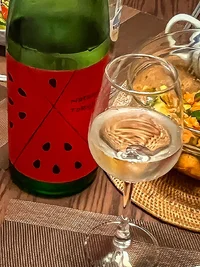
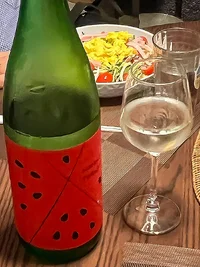
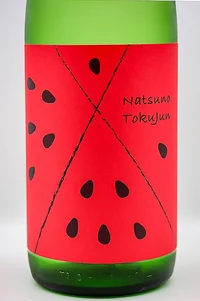
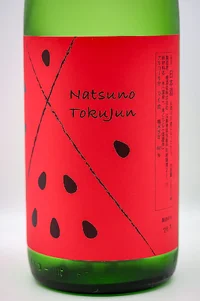
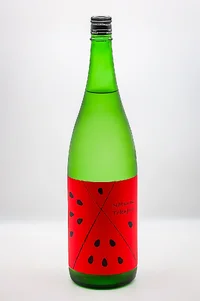
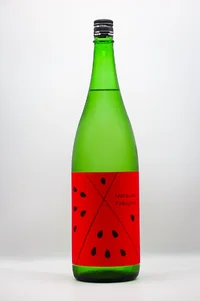
Hanahato Summer Tokubetsu Junmaishu "Suika Label" (華鳩 夏の特別純米酒『すいかラベル』) is a seasonal Tokubetsu Junmai Genshu brewed by Enoki Shuzō. Created as a refreshing summer sake, it is brewed to Junmai Ginjō standards while maintaining a relatively low alcohol content of around 13.5%, making it lighter and more approachable than most undiluted sake. The distinctive watermelon-themed label reflects the brewery's intention of offering an easy-drinking sake for the warmer months.
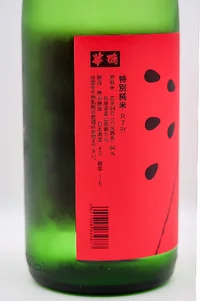
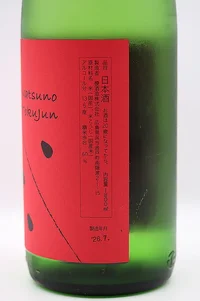
The sake is brewed with Hattannishiki (八反錦) rice from Hiroshima, polished to 60%, and fermented with Kumamoto yeast (KA-1). It has an SMV of +1, an acidity of 1.4, and is pasteurised once using the traditional bin-kan hiire method. The brewery aims for a light, clean style with gentle fruitiness, refreshing acidity and soft rice umami, making it particularly well suited to summer dining. It is best served lightly chilled and pairs naturally with seasonal Japanese cuisine, seafood and lighter dishes. Available only during the summer months, it has become one of Hanahato's most recognisable seasonal releases thanks to its distinctive label and easy-drinking character.





About the brewery
- Brewery
- Enoki Shuzō
- Name in Japanese
- 榎酒造
- Address
- 2-1-15 Ondochō Minamiondo, Kure, Hiroshima 737-1205
- Phone
- 0823-52-1234
- Website
ホッとやすらぐ日本酒、榎酒造の華鳩(ハナハト)日本で初めて(きじょうしゅ)を醸造した広島の蔵元です。
音戸の瀬戸で知られる呉市音戸町で育まれた広島県の日本酒です。榎酒造は明治32年よりこの地で酒造りをつづけてきました。広島らしい、たおやかでやさしい味わいの酒、それが華鳩(はなはと)のお酒。榎酒造が日本で初めて商品化した貴醸酒は、ブランドの顔として全 国的に有名です。榎酒造サイトのショッピングページでは、希少な限定品やその季節の旬のお酒など、華鳩ブランドの全商品をご覧いただけ、直接ネット購入していただくこともできます。hanahato.ocnk.net
Enoki Brewery is located in Ondo on Kurahashi Island, southeast of Hiroshima Bay and south of Kure City. Ondochō is the legendary Ondo-no-Seto (音戸の瀬戸), where Taira no Kiyomori arrested the setting sun with a fan to be able to complete his new capital, Fukuhara-kyō, faster. Enoki Sake Brewery was founded in Ondo in 1899. Legend has it that the town is home to many descendants of fallen Heike warriors. That's why the brewery used the brand name "Kiyomori", but as historical views on Taira no Kiyomori were not favourable, the owners changed it to 'Hanahato' (華鳩), the primary brand name. 'Kiyomori' is still used as a sub-brand. Hanahato derives from the place name of Hato-oka (鳩岡), where the brewery is built.
Before the war, Enoki Brewery was awarded an honorary prize at national sake competitions. Since the 1950s, it has won 14 gold medals at the National New Sake Competition. In 2001, it won the National New Sake Competition and became the first brewery in Hiroshima to win four awards, including a gold medal at the Competition. Since then, the brewery has won prizes in the National New Sake Competition and continues to produce high-quality sake. At the International Wine Challenge, the world's largest sake competition, held in London, the brewery was awarded a gold medal in the old sake category for its 8-year-old kijōshu sake (貴醸酒), which won trophies in 2008, 2010, 2012, 2013, 2014, 2015 and 2016. In 2010, it was the champion. The brewery was the first in Japan to brew kijōshu in 1974.
Hanahato's sake is mild and gentle. Its natural and deep flavour is refreshing and sour. The water quality is medium-soft. The average rice polishing ratio is 60%. The brewery uses Yamadanishiki from Yoshikawa, Hyōgo, for its daiginjō; all other rice is grown in Hiroshima Prefecture. Hachitan-Nishiki and Koi-Omachi are used with high- and flat-polished rice for special sake.
In 1974, Hanahato became the first company in Japan to produce kijōshu, based on a production patent from the National Tax Agency's brewing laboratory. In the early days, this type of sake was criticised, with some saying that such dark-coloured, sweet sake is not sake. Still, after repeated trial and error, the acceptance of kijōshu gradually grew as food culture diversified. Just as brewing water is essential for sake, kijōshu requires high-quality sake. It takes more time, effort, and cost than sake, but the quality of the sake is preserved even when stored for a long time, and as it ages, it develops a rich flavour that is smoother on the palate and has a more profound, sharper aftertaste.
The taste is rich and mildly sweet. It has a rich, full-bodied flavour with a raisin and nutty aroma. However, it has a more acidic flavour than ordinary sake, making it sweet yet surprisingly refreshing. The more it matures, the deeper the amber colour becomes and the more mature the taste becomes. It may be closer to sherry or Madeira than to sake.
Oishi so Japan had an excellent feature on Enoki Brewery, its Hanahato brand, and kijōshu:

 www.oishisojapan.com
Before the war, Enoki Brewery was awarded an honorary prize at national sake competitions. Since the 1950s, it has won 14 gold medals at the National New Sake Competition. In 2001, it won the National New Sake Competition and became the first brewery in Hiroshima to win four awards, including a gold medal at the Competition. Since then, the brewery has won prizes in the National New Sake Competition and continues to produce high-quality sake. At the International Wine Challenge, the world's largest sake competition, held in London, the brewery was awarded a gold medal in the old sake category for its 8-year-old kijōshu sake (貴醸酒), which won trophies in 2008, 2010, 2012, 2013, 2014, 2015 and 2016. In 2010, it was the champion. The brewery was the first in Japan to brew kijōshu in 1974.
Hanahato's sake is mild and gentle. Its natural and deep flavour is refreshing and sour. The water quality is medium-soft. The average rice polishing ratio is 60%. The brewery uses Yamadanishiki from Yoshikawa, Hyōgo, for its daiginjō; all other rice is grown in Hiroshima Prefecture. Hachitan-Nishiki and Koi-Omachi are used with high- and flat-polished rice for special sake.
Kijōshu (貴醸酒)
Kijōshu was developed by the National Research Institute of Brewing and Fermentation as a sake for foreign dignitaries. It was named Kijōshu to denote a type of premium sake comparable to Kijō wine. Sake is made from rice, kōji and water; the main characteristic of kijōshu is that it is made from sake instead of water. At the end of the three-stage brewing process, the sake is brewed using junmai-shu instead of water. Brewing with sake allows the yeast to ferment the alcohol more slowly, producing rich, mellow, fragrant sake.In 1974, Hanahato became the first company in Japan to produce kijōshu, based on a production patent from the National Tax Agency's brewing laboratory. In the early days, this type of sake was criticised, with some saying that such dark-coloured, sweet sake is not sake. Still, after repeated trial and error, the acceptance of kijōshu gradually grew as food culture diversified. Just as brewing water is essential for sake, kijōshu requires high-quality sake. It takes more time, effort, and cost than sake, but the quality of the sake is preserved even when stored for a long time, and as it ages, it develops a rich flavour that is smoother on the palate and has a more profound, sharper aftertaste.
The taste is rich and mildly sweet. It has a rich, full-bodied flavour with a raisin and nutty aroma. However, it has a more acidic flavour than ordinary sake, making it sweet yet surprisingly refreshing. The more it matures, the deeper the amber colour becomes and the more mature the taste becomes. It may be closer to sherry or Madeira than to sake.
Oishi so Japan had an excellent feature on Enoki Brewery, its Hanahato brand, and kijōshu:
Enoki Shuzo’s Twice-Brewed & Aged Kijoshu Sake — OISHI SO JAPAN
The first modern brewer in Japan of rich, double-brewed and aged kijoshu sake, Enoki Shuzo continues to lead a growing trend for this rare category of sake through its many delicious innovations.
www.oishisojapan.com