

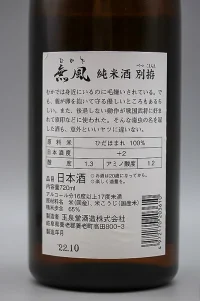
Sake specs
- Prefecture
- Gifu (岐阜)
- Rice type
- Hidahomare (ひだほまれ)
- Polishing rate (semaibuai)
- 65%
- Alcohol content
- 16%
- SMV
- +2
- Acidity
- 1.3
- Amino acid level
- 1.2
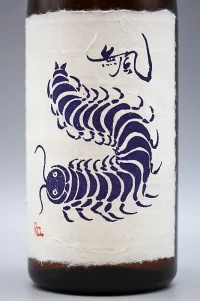
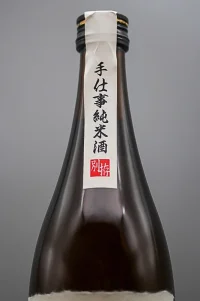
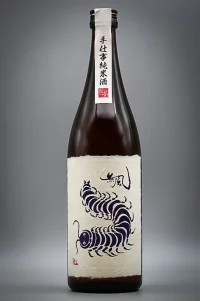
Gyokusendō Junmai Mukaze Betsukoshirae (無風 純米酒 別拵) is made of Hidahomare rice grown in Gifu and milled to 65%. It is brewed slowly at low temperatures in the traditional sandan jikomi (三段仕込) three-stage brewing process using soft water from the Yoro mountain range. The silky mouthfeel with a gently spreading umami flavour is the essence of soft-water brewing. After bottling, the sake is left to mature slowly before shipping. It is very versatile and can be enjoyed at all temperatures.
Centipedes, like dragonflies, were regarded as 'winning insects' and have long been considered good luck charms. Many Sengoku samurai used them as symbols on their flags and helmets, as centipedes only advance but never retreat (as they cannot walk backwards). Centipede legs also symbolise the legs of many customers and are therefore associated with prosperous business.



About the brewery
- Brewery
- Gyokusendō Shuzō
- Name in Japanese
- 玉泉堂酒造
- Address
- 800-3 Takada, Yoro, Yoro, Gifu 503-1314
- Phone
- 0584-321-155
- Website


The brewery is near the Yōrō mountain range and the famous Yōrō Falls (養老の滝), a site closely associated with one of Japan's best-known legends of filial piety. According to the Yōrō legend (Yōrō Kōshi Densetsu 養老孝子伝説), water from the falls turned into sake for a devoted son caring for his elderly father. The area later became associated with auspicious spring water, and historical records state that Emperor Genshō (元正天皇, 680–748) visited the region in 717. Tradition holds that the era name "Yōrō" was adopted following this imperial visit and the local spring water's reputation.
Water remains central to the brewery's identity. Gyokusendō uses exceptionally soft underground water flowing from the Yōrō mountains, a feature that strongly shapes the character of its sake. The softness of the water allows for slow, low-temperature fermentation, contributing to the brewery's refined, elegant style, particularly in its ginjō sake.
In 1957, the brewery adopted the company name Gyokugiku (玉菊). During the late Shōwa period, especially from the 1970s onward, it shifted its focus away from mass production and increasingly emphasised small-batch, hand-crafted brewing (tezukuri 手造り). At the same time, the brewery modernised parts of its production process, introducing advanced rice-polishing and washing equipment while maintaining traditional kōji-making methods in specialised kōji rooms (麹室 kōjimuro).
The brewery launched its Reisen (醴泉) label in 1987. The name "Reisen", meaning roughly "auspicious spring" or "sweet spring", was deliberately chosen to reflect both the region's historical water legends and the brewery's brewing philosophy. Reisen soon became the brewery's flagship premium line, known for carefully controlled fermentation and the use of high-quality rice, including top-grade Yamada Nishiki from Hyōgo Prefecture.
In 1989, the brewery introduced the Minōgiku (美濃菊) label, named after the historic Mino region of Gifu. The same year, Minōgiku won a gold medal at the National New Sake Competition, one of Japan's most prestigious sake contests. The brewery continued its success by winning consecutive gold medals from 1989 to 1992, helping establish its reputation among modern Gifu sake producers. Today, Gyokusendō Shuzō is regarded as one of Gifu Prefecture's leading breweries, balancing modern brewing technology with traditional craftsmanship while remaining deeply connected to Yōrō's water culture and history.


