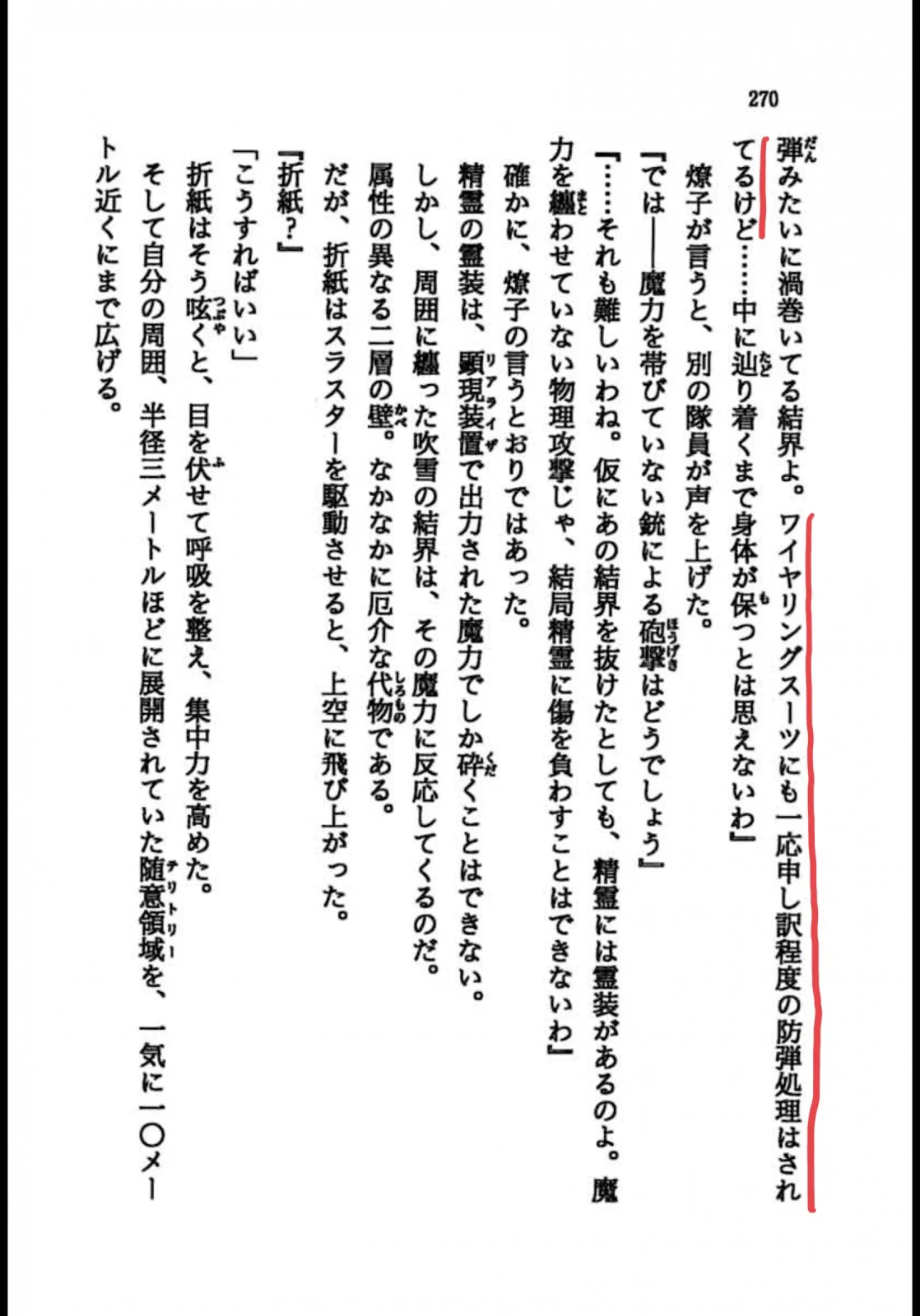
Your confusion here is assuming that the に is marking (and
has to mark) the wiring suit as the agent or "doer" of the action 処理する.
Of course, that's one role に can serve in a passive construction, but it's not the only one.
Consider the following expressions, where に is used adverbially:
順番に呼んだ ⇒ 順番に呼ばれた
or these, where it's used to mark the target of the verb:
料理に工夫を加える ⇒ 料理に工夫が加えられる
Note that those passive expressions do
not mean (or, at least, are highly unlikely to mean in any real-life situation) "[someone]
was called by an/the order" (i.e. an "order" called them) or "[something] is given a twist
by food".
In neither case is に marking the agent. It is simply functioning in the same role it serves in the corresponding active sentence. In both, the agent is implied.
Because I imagine you're going to ask me, "Then how am I supposed to know in a passive sentence whether に is marking the agent or functioning in its usual role with the agent implied?" (if you're not thinking this, sorry for assuming

), I'll add this:
Japanese is a very high-context language, so you often have to use common sense and context to interpret things.
Does it make more sense that a "wiring suit" (an inanimate, non-sentient object) would be "processing" some other thing that the author doesn't even bother mentioning to be (kinda-sorta) bulletproof, or that the wiring suit itself was the target of the action, and the agent isn't mentioned because it's not relevant? It's the latter, just like in the above sentences, where it makes more sense that people were called
in order and a new twist was added
to the food by someone unstated.