- 14 Mar 2002
- 21,053
- 18,908
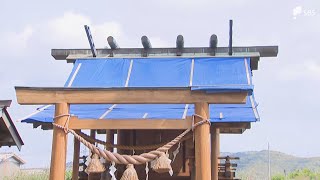
Drainage grates and copper cables at solar panel stations are common targets of theft. This time, Ōyamazumi Shrine (大山祇神社), a remote shrine in the mountains near Ashikaga, Tochigi , lost its copper roofing panels.
During the Kyūan era (久安年間), roughly 850 years ago, a shrine connected to this lineage was established on the summit of Mount Daibō (大坊山) in what was then Ōnumata village (大沼田村). The principal deity (主祭神 saishin) enshrined was Ōyamatsumi no Mikoto (大山祇命), invoked for national safety and abundant harvests (五穀豊穣 gokoku hōjō). In 1907, the site was designated a shrine entitled to official offerings (神饌幣帛料供進社 shinsen heihaku-ryō kyōshinsha).
The main hall (社殿 shaden) was completed in 1935 by several thousand residents of all ages. That structure was later destroyed by lightning in 1965. Reconstruction followed in 1969, when cypress trees from Mount Daibō were felled, transported, and milled by community effort, and a new hall, together with its approach path (参道 sandō), was built halfway up the mountain using donated funds (浄財 jōzai).
The origins of kagura dance offerings (神楽奉納 kagura hōnō) at Ōyamazumi Shrine (大山祇神社) appear to extend back to the late Edo period . Votive picture ema (絵馬) from the Bunsei era (文政年間, 1818–1830), along with documents preserved by the Iizuka family (飯塚家), who once served as shrine stewards, indicate that ritual performances were already established by the Tenpō years (天保年間, 1830–1844).
Today, the spring and autumn festivals (春祭り haru matsuri / 秋祭り aki matsuri) are accompanied by a hiking event known as the Ke no Daibōyama Hiking Tournament (毛野大坊山ハイキング大会), linking the ceremonial calendar with local outdoor activity.
Source: 大山祇神社(おおやまづみじんじゃ) « 栃木県神社庁
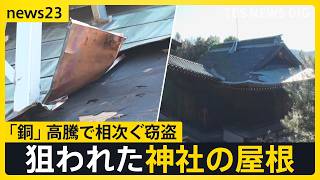
In Tochigi Prefecture, a shrine located deep in the mountains suffered extensive damage after copper roofing panels were stolen, with photographs showing that nearly half of the roof plates on one side had been removed, while the shrine reported to police that additional panels appeared to have been taken overnight, leaving the damage far worse by the following morning. The shrine is normally unattended except when local residents visit to pray, and officials said they were shocked that thieves would go so far as to enter a remote area and strip copper from the roof. Traces believed to have been left by the perpetrators were later found near the site, with shrine officials noting that the objects were not present the previous day and may have been left behind by the thieves. Similar incidents have been reported nationwide. In Ebino, Miyazaki Prefecture, 12 copper plates bearing the names of bridges were stolen last month, causing damage estimated at 480,000 yen. In Hagi, Yamaguchi Prefecture, a tourist site known for its plum blossoms suffered the theft of about 38 kilograms of copper roofing from a rest area in November last year, with the city now considering how to repair the damage amid concerns that the site could be targeted again.
Copper Thieves Target Mountain Shrine in Japan
Copper prices, which have been climbing partly due to the weaker yen, are now behind a growing wave of thefts across Japan, with criminals targeting everything from agricultural facilities to the roofs of remote mountain shrines.
newsonjapan.com
Ōyamazumi Shrine (大山祇神社)
Taitō Kagura (太々神楽) is designated as an Intangible Cultural Property of Ashikaga City. Its associated shrine history dates back to the mid-12th century. In Ten'yō 2 (1145), when a comet was said to have appeared in the eastern sky, the 76th emperor Konoe (近衛天皇) is recorded as having travelled to two shrines at Otokoyama (男山) and Kamo (賀茂) in Yamashiro Province (山城国, present-day south-eastern Kyōto Prefecture) to conduct rites out of concern for national calamities. The bettō (別当), or shrine administrators, of the two sites were regarded as deeply devout, offering continual prayers for the country's protection.During the Kyūan era (久安年間), roughly 850 years ago, a shrine connected to this lineage was established on the summit of Mount Daibō (大坊山) in what was then Ōnumata village (大沼田村). The principal deity (主祭神 saishin) enshrined was Ōyamatsumi no Mikoto (大山祇命), invoked for national safety and abundant harvests (五穀豊穣 gokoku hōjō). In 1907, the site was designated a shrine entitled to official offerings (神饌幣帛料供進社 shinsen heihaku-ryō kyōshinsha).
The main hall (社殿 shaden) was completed in 1935 by several thousand residents of all ages. That structure was later destroyed by lightning in 1965. Reconstruction followed in 1969, when cypress trees from Mount Daibō were felled, transported, and milled by community effort, and a new hall, together with its approach path (参道 sandō), was built halfway up the mountain using donated funds (浄財 jōzai).
The origins of kagura dance offerings (神楽奉納 kagura hōnō) at Ōyamazumi Shrine (大山祇神社) appear to extend back to the late Edo period . Votive picture ema (絵馬) from the Bunsei era (文政年間, 1818–1830), along with documents preserved by the Iizuka family (飯塚家), who once served as shrine stewards, indicate that ritual performances were already established by the Tenpō years (天保年間, 1830–1844).
Today, the spring and autumn festivals (春祭り haru matsuri / 秋祭り aki matsuri) are accompanied by a hiking event known as the Ke no Daibōyama Hiking Tournament (毛野大坊山ハイキング大会), linking the ceremonial calendar with local outdoor activity.
Source: 大山祇神社(おおやまづみじんじゃ) « 栃木県神社庁