

Navigation
Install the app
How to install the app on iOS
Follow along with the video below to see how to install our site as a web app on your home screen.
Note: This feature may not be available in some browsers.
More options
Style variation
System
Light
Dark

You are using an out of date browser. It may not display this or other websites correctly.
You should upgrade or use an alternative browser.
You should upgrade or use an alternative browser.
Question Text on reverse of kabuki photo
- Thread starter Ger
- Start date
-
- Tags
- game of go kabuki


- 12 Oct 2013
- 4,071
- 5,023
Actors are Nakamura Kichibei (1st Gen) portraying the character Ikai Jisokubei, and Sawamura Sōjūrō, portraying Iseiya Tabei.
But I can't find which play has these two characters in it. It is possible that the person who wrote on the back of the photo made an error.
But I can't find which play has these two characters in it. It is possible that the person who wrote on the back of the photo made an error.

Ger
後輩
- 17 Jan 2018
- 190
- 95
- Thread starter
- #4
Thanks a lot! Would you please give the kanji?Actors are Nakamura Kichibei (1st Gen) portraying the character Ikai Jisokubei, and Sawamura Sōjūrō, portraying Iseiya Tabei.
But I can't find which play has these two characters in it. It is possible that the person who wrote on the back of the photo made an error.
The romanized names fed into google images, give as second hit already a kabuki woodblock triptych showing the game of go:

With different first or last names, but that might be because in Japan many people seem to be known under several different (artist) names.
From the play Kubei yoi no itosuji performed at the Morita-za Theatre, 1864
However no sign of the spider ghost in the photo...
- 12 Oct 2013
- 4,071
- 5,023
(初代)中村吉右衛門 Nakamura Kichiemon (1st)
猪飼次即兵衛 Ikai Jisokubei
澤村宗十郎 Sawamura Sōjūrō
伊勢屋多兵衛 Iseya Tabei
I think its a different play than the one from 1864, but I'm not sure. The photo also has the name of something at the top 囗紅梅 (something-Kōbai). I can't figure it out. Also, I can't get the two kanji on the far left.
猪飼次即兵衛 Ikai Jisokubei
澤村宗十郎 Sawamura Sōjūrō
伊勢屋多兵衛 Iseya Tabei
I think its a different play than the one from 1864, but I'm not sure. The photo also has the name of something at the top 囗紅梅 (something-Kōbai). I can't figure it out. Also, I can't get the two kanji on the far left.
Konnichiwa Mina-san!
I thought the letter 「薄紅梅(Usukoubai)」 was the title of Kabuki play, so I looked up information about it online. And I found a Kabuki performance from January 1946(昭和二十一年).
about 薄紅梅(Usukoubai)
 kabukidb.net
wiki Sawamura Sōjūrō

 ja.wikipedia.org
wiki Nakamura Kichiemon
 ja.wikipedia.org
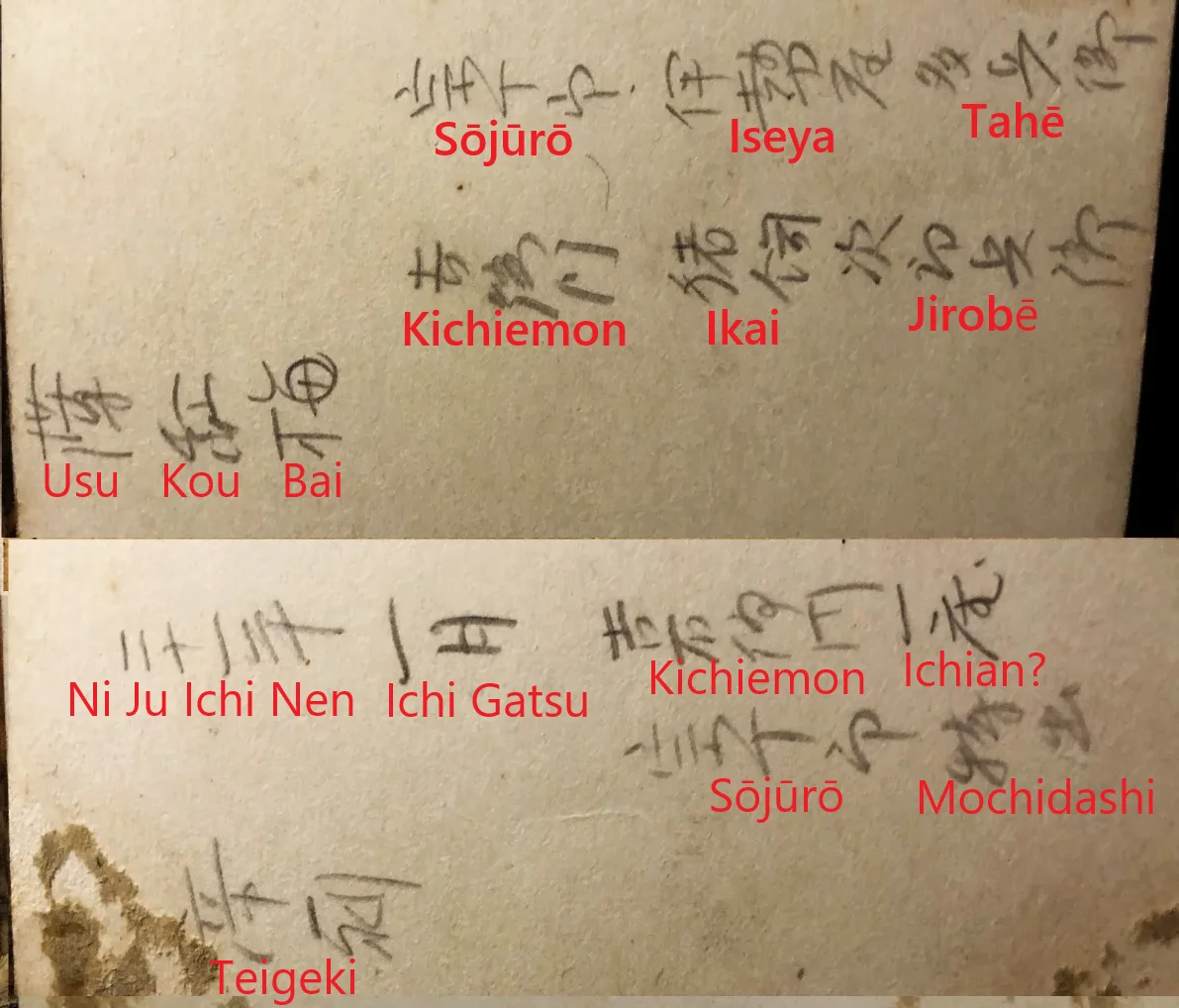
I added furigana, but I'm not sure about Ichian.
Unfortunately, I couldn't find any clues about the photo of persons playing Go.
NANGI
I thought the letter 「薄紅梅(Usukoubai)」 was the title of Kabuki play, so I looked up information about it online. And I found a Kabuki performance from January 1946(昭和二十一年).
about 薄紅梅(Usukoubai)
帝国劇場 (1946年01月) - 歌舞伎公演データベース
wiki Sawamura Sōjūrō
澤村宗十郎 (7代目) - Wikipedia
wiki Nakamura Kichiemon
中村吉右衛門 (初代) - Wikipedia
I added furigana, but I'm not sure about Ichian.
Unfortunately, I couldn't find any clues about the photo of persons playing Go.
NANGI
Last edited:
Ger
後輩
- 17 Jan 2018
- 190
- 95
- Thread starter
- #9
Would the complete translation be:
宗十郎 伊勢屋 多兵衛 sōjūrō iseya tahei
吉衛門 猪飼 次即兵衛 kichiemon ikai jirobei
薄紅梅 usukoubai
二一年一月 吉右衛門 一座 niju ichinen ichigatsu kichiemon 1st
宗十郎 特出 sōjūrō mochidashi
Teigeki (帝劇) The Imperial Theatre (帝国劇場, Teikoku Gekijō), often referred to simply as the Teigeki (帝劇)
refer to:
kabukidb.net
宗十郎 伊勢屋 多兵衛 sōjūrō iseya tahei
吉衛門 猪飼 次即兵衛 kichiemon ikai jirobei
薄紅梅 usukoubai
二一年一月 吉右衛門 一座 niju ichinen ichigatsu kichiemon 1st
宗十郎 特出 sōjūrō mochidashi
Teigeki (帝劇) The Imperial Theatre (帝国劇場, Teikoku Gekijō), often referred to simply as the Teigeki (帝劇)
refer to:
帝国劇場 (1946年01月) - 歌舞伎公演データベース
- 12 Oct 2013
- 4,071
- 5,023
猪飼 次郎兵衛 ikai jirobei I made a mistake in my translation. This is the correct one.
Ichiza (一座) doesn't mean 1st. Normally it would mean "troupe or group (of actors)". I'm not sure if that is the meaning here (indicating the show featured Kichiemon and his company of actors), or if it means he was the star of the show.
Ichiza (一座) doesn't mean 1st. Normally it would mean "troupe or group (of actors)". I'm not sure if that is the meaning here (indicating the show featured Kichiemon and his company of actors), or if it means he was the star of the show.
Ger
後輩
- 17 Jan 2018
- 190
- 95
- Thread starter
- #11
indeed, here it gives the very likely "noun - troupe, (theatrical) company".Ichiza (一座) doesn't mean 1st. Normally it would mean "troupe or group (of actors)". I'm not sure if that is the meaning here (indicating the show featured Kichiemon and his company of actors), or if it means he was the star of the show.

JapanDict: Japanese Dictionary - Definition of 一座
Definition of 一座. Click for more info and examples: いちざ - ichiza - the whole company, the party, all those present, everyone in attendance
 www.japandict.com
帝国劇場 (1946年01月) - 歌舞伎公演データベース
Nakamura Kichiemon's troupe, special appearance by Sojuro Sawamura, Toho Shochiku partnership New Year's performance, two-part performance starting on New Year's Day and the 25th on the evening of the 25th [the date right now in Japan...] directed by Nobuo Uno
Last edited:
Konnichiwa Mina-san!
Corrections to the previous post and addition of new information.
I made a mistake in my previous post so I'll correct it.
"Ichian" is wrong. The correct answer is "Ichiza". Thanks for the correction, Majestic-san!
And "Mochidashi" is wrong. The correct answer is "Tokushutsu". "Tokushutu:特出" is abbreviation for "特別出演", and means "Special appearance".
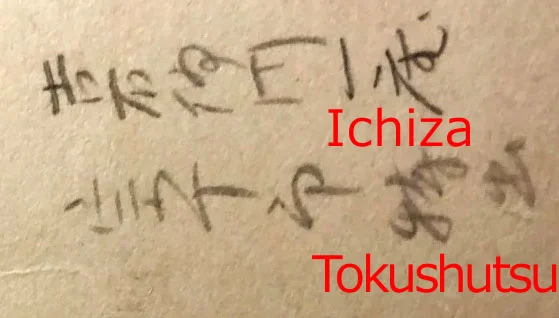
I posted a link to "Kabuki Performance Database" last time, but I didn't have time to check the contents. I checked it and noticed the mistake, sorry.
About name characters' name "多兵衛". This kanji is written as "たへえ" in hiragana, and is "Tahee" in furigana, and is pronounced "Tahē".
"Tahei" is the modern furigana, but "Tahee" or "Tahē" is correct for the Edo period furigana.
Same goes for "次郎兵衛". "Jirobee" or "Jirobē" is correct for the Edo period furigana.
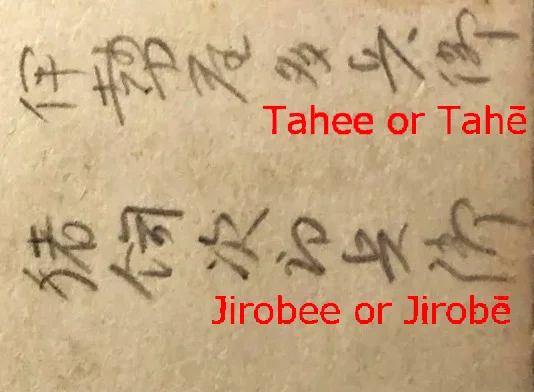
Then, add new information from the database.
Although the content of the story is unknown, but the characters' names and scenes give insight into their settings.
The story is set in the Edo period. The story is divided into three scenes. The first scene is at 伊勢屋多兵衛's separate building. The 2nd scene is at 猪飼次郎兵衞's home. The 3rd scene is at Village Hisakata.
The main character is "猪飼 次郎兵衞". The comprimario is "伊勢屋 多兵衛".
"伊勢屋" is a family name and also represents the shop name. So we know that "伊勢屋 多兵衛" is a merchant. The first scene is in a separate building(house) of 伊勢屋's shop. The photo appears to show two people playing Go in this separate building.
The 2nd scene is at 猪飼's home, and is "猪飼浪宅" in Kanji. "猪飼" is his name, "宅" means home, and "浪" means "浪人:Rōnin". "浪人" is a Samurai without a master. In other words, "猪飼 次郎兵衞" is a Rōnin(Samurai).
"伊勢屋 多兵衛" has a wife and daughters, but "猪飼 次郎兵衞" appears to be single.
There is no information about the third scene other than that it is a village.
The people in the photo are thought to be "猪飼 次郎兵衞" and "伊勢屋 多兵衛". On the back of the photo, the names "伊勢屋 多兵衛" and "猪飼 次郎兵衞" are written on the right and left, respectively. If we believe this, the right side of the photo is "伊勢屋 多兵衛" and the left side is "猪飼 次郎兵衞".
"猪飼 次郎兵衞" is dressed in formal attire. On the other hand, Person "伊勢屋 多兵衛" is wearing casual clothes. When meeting superiors, samurai wear formal attire.
A large cylindrical ceramic vessel is placed at the back of the Go table. This is a heating appliance "火鉢:Hibachi". "火鉢" is located slightly to the right. This indicates that the person on the right(伊勢屋 多兵衛) is a superior.
From the above, "猪飼 次郎兵衞" may be an unwelcome guest to "伊勢屋 多兵衛".
However, the speculations about the photos are purely personal opinions. I don't know if my opinion is correct.
NANGI
Corrections to the previous post and addition of new information.
I made a mistake in my previous post so I'll correct it.
"Ichian" is wrong. The correct answer is "Ichiza". Thanks for the correction, Majestic-san!
And "Mochidashi" is wrong. The correct answer is "Tokushutsu". "Tokushutu:特出" is abbreviation for "特別出演", and means "Special appearance".
I posted a link to "Kabuki Performance Database" last time, but I didn't have time to check the contents. I checked it and noticed the mistake, sorry.
About name characters' name "多兵衛". This kanji is written as "たへえ" in hiragana, and is "Tahee" in furigana, and is pronounced "Tahē".
"Tahei" is the modern furigana, but "Tahee" or "Tahē" is correct for the Edo period furigana.
Same goes for "次郎兵衛". "Jirobee" or "Jirobē" is correct for the Edo period furigana.
Then, add new information from the database.
Although the content of the story is unknown, but the characters' names and scenes give insight into their settings.
The story is set in the Edo period. The story is divided into three scenes. The first scene is at 伊勢屋多兵衛's separate building. The 2nd scene is at 猪飼次郎兵衞's home. The 3rd scene is at Village Hisakata.
The main character is "猪飼 次郎兵衞". The comprimario is "伊勢屋 多兵衛".
"伊勢屋" is a family name and also represents the shop name. So we know that "伊勢屋 多兵衛" is a merchant. The first scene is in a separate building(house) of 伊勢屋's shop. The photo appears to show two people playing Go in this separate building.
The 2nd scene is at 猪飼's home, and is "猪飼浪宅" in Kanji. "猪飼" is his name, "宅" means home, and "浪" means "浪人:Rōnin". "浪人" is a Samurai without a master. In other words, "猪飼 次郎兵衞" is a Rōnin(Samurai).
"伊勢屋 多兵衛" has a wife and daughters, but "猪飼 次郎兵衞" appears to be single.
There is no information about the third scene other than that it is a village.
The people in the photo are thought to be "猪飼 次郎兵衞" and "伊勢屋 多兵衛". On the back of the photo, the names "伊勢屋 多兵衛" and "猪飼 次郎兵衞" are written on the right and left, respectively. If we believe this, the right side of the photo is "伊勢屋 多兵衛" and the left side is "猪飼 次郎兵衞".
"猪飼 次郎兵衞" is dressed in formal attire. On the other hand, Person "伊勢屋 多兵衛" is wearing casual clothes. When meeting superiors, samurai wear formal attire.
A large cylindrical ceramic vessel is placed at the back of the Go table. This is a heating appliance "火鉢:Hibachi". "火鉢" is located slightly to the right. This indicates that the person on the right(伊勢屋 多兵衛) is a superior.
From the above, "猪飼 次郎兵衞" may be an unwelcome guest to "伊勢屋 多兵衛".
However, the speculations about the photos are purely personal opinions. I don't know if my opinion is correct.
NANGI
Ger
後輩
- 17 Jan 2018
- 190
- 95
- Thread starter
- #14
Wondering what the title of this kabuki play meant I found this:
"薄紅梅" (Usu-kōbai) is a traditional Japanese color name meaning
pale red plum blossom, referring to a light, delicate pink or apricot shade similar to the color of early spring plum blossoms, and it also functions as a kigo (seasonal word) for spring in poetry, signifying the season's arrival with the flowering trees
(薄紅梅, Usu Kōbai) author: Kyōtarō Izumi (泉 鏡太郎, Izumi Kyōtarō; 4 November 1873 – 7 September 1939), known by his pen name Izumi Kyōka 泉 鏡花; was a Japanese novelist, writer and kabuki playwright who was active during the prewar period.
In 1937, his last great project, pink ume blossoms (薄紅梅, Usu Kōbai) was serialized in the Tokyo Mainichi and Osaka Mainichi newspapers.

 en.wikipedia.org
"薄紅梅" (Usu-kōbai) is a traditional Japanese color name meaning
pale red plum blossom, referring to a light, delicate pink or apricot shade similar to the color of early spring plum blossoms, and it also functions as a kigo (seasonal word) for spring in poetry, signifying the season's arrival with the flowering trees
(薄紅梅, Usu Kōbai) author: Kyōtarō Izumi (泉 鏡太郎, Izumi Kyōtarō; 4 November 1873 – 7 September 1939), known by his pen name Izumi Kyōka 泉 鏡花; was a Japanese novelist, writer and kabuki playwright who was active during the prewar period.
In 1937, his last great project, pink ume blossoms (薄紅梅, Usu Kōbai) was serialized in the Tokyo Mainichi and Osaka Mainichi newspapers.
Kyōka Izumi - Wikipedia
Konnichiwa Ger-san!
The Kabuki play "薄紅梅" appears to be based on the essay collection "雲萍雑志", published in 1843. As a scene description, "Kabuki Performance Database" is marked with "場名など「雲萍雑志」より".
"場名(ばめん)など" means "about scene".
"雲萍雑志:うんぴょうざっし:Unpyou Zasshi" is the essay collection by "柳沢淇園:やなぎさわ きえん:Yanagisawa Kien".
"より" means "from".
And in the notes, it says "宇野信夫作並演出".
"宇野信夫:うの のぶお:Uno Nobuo" is a Kabuki author.
"作" means "make" or "create".
"並" means "and" or "as well as".
"演出" means "Production" or "Direction".
"宇野信夫" may have used "雲萍雑志" as a reference to create work the Kabuki play "薄紅梅".
Pale pink plum blossoms may appear in the work. Because a "火鉢:Hibachi" is used in the play. It's probably a cold season in the setting of the play. Plum blossoms bloom at the end of winter, when it is still cold. After the plum blossoms fall, the cherry blossoms will bloom. By that time it will be spring and you will no longer need the "火鉢".
NANGI
The Kabuki play "薄紅梅" appears to be based on the essay collection "雲萍雑志", published in 1843. As a scene description, "Kabuki Performance Database" is marked with "場名など「雲萍雑志」より".
"場名(ばめん)など" means "about scene".
"雲萍雑志:うんぴょうざっし:Unpyou Zasshi" is the essay collection by "柳沢淇園:やなぎさわ きえん:Yanagisawa Kien".
"より" means "from".
And in the notes, it says "宇野信夫作並演出".
"宇野信夫:うの のぶお:Uno Nobuo" is a Kabuki author.
"作" means "make" or "create".
"並" means "and" or "as well as".
"演出" means "Production" or "Direction".
"宇野信夫" may have used "雲萍雑志" as a reference to create work the Kabuki play "薄紅梅".
Pale pink plum blossoms may appear in the work. Because a "火鉢:Hibachi" is used in the play. It's probably a cold season in the setting of the play. Plum blossoms bloom at the end of winter, when it is still cold. After the plum blossoms fall, the cherry blossoms will bloom. By that time it will be spring and you will no longer need the "火鉢".
NANGI
Last edited:
Ger
後輩
- 17 Jan 2018
- 190
- 95
- Thread starter
- #16
Thanks very much for this extensive explanation.
The text is available as ebook:
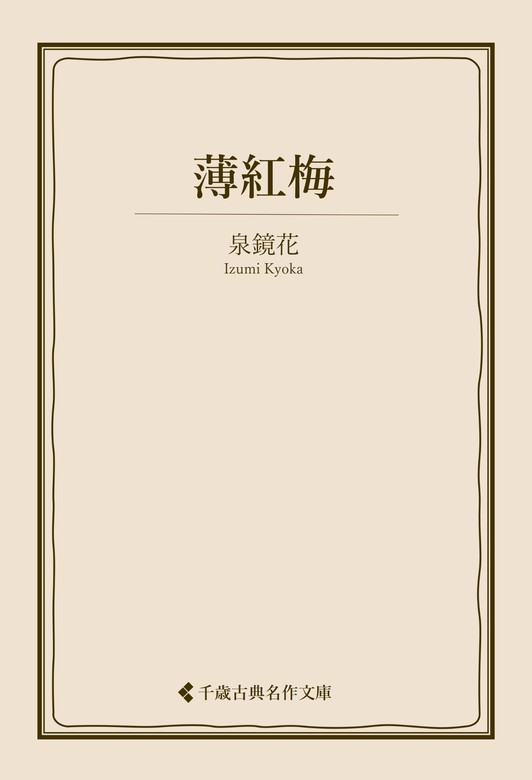
 bookwalker.jp
but without finding them playing go.
bookwalker.jp
but without finding them playing go.
As paper book:
薄紅梅 (中公文庫 い 58-1) Paperback Bunko – February 1, 1993
by 泉 鏡花 (Author)
Not sure about the go scene here - it still has to arrive.
The text is available as ebook:
薄紅梅
近代日本の怪奇文学、浪漫主義、幻想文学の先駆的存在であり、その日本的情緒あふれる文章は、中島敦をして「日本語を解しながら、鏡花の作品を読まないのは、折角の日本人たる特権を抛棄しているようなものだ」と言わしめた泉鏡花。名作『薄紅梅』を収録。
bookwalker.jp
As paper book:
薄紅梅 (中公文庫 い 58-1) Paperback Bunko – February 1, 1993
by 泉 鏡花 (Author)
Not sure about the go scene here - it still has to arrive.


