


- 14 Mar 2002
- 21,050
- 18,903
Visitors to the temple have only a one-hour window to view Ōkyo's Kenpon Bokuga Tansai Hangonko no Zu (絹本墨画淡彩反魂香之図), an ink painting with subtle colour on silk that portrays a ghostly figure emerging from incense smoke. Since the previous year, the event has also featured ghost-themed works by local artists, adding a contemporary layer to the long-standing tradition.
Ōkyo's painting measures 99.3 centimetres in height and 27 centimetres in width. It was donated to the temple in 1784 by Morioka Shuzen Motonori (盛岡主膳元徳, 1735–1785), chief retainer of the Hirosaki Domain. Morioka had commissioned the work as a form of remembrance after the loss of his wife and concubines, intending it as a tribute to the women who had played important roles in his life.
The ghost depicted in the painting appears mournful, yet her expression is serene, marked by a gentle and refined beauty. According to Sutō Kōshō, the temple's current chief priest, it is unclear exactly when the painting began to be shown to the public, but the tradition likely started some 60 to 70 years ago under the leadership of the chief priest two generations before him.
A city-led investigation in 2021 officially verified that the ghost painting is indeed an original work by Maruyama Ōkyo. The piece is displayed each year on May 18 of the lunar calendar , and this year it fell on June 13.
The additional pieces that join Ōkyo's are part of a new project born last year, marking the 240th anniversary of the painting's donation.
More on Ōkyo here:
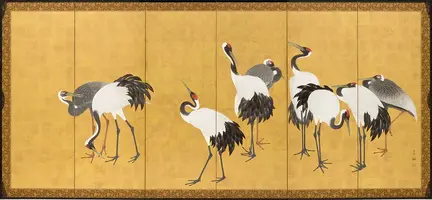
Art Maruyama Ōkyo (1733-1795)
Maruyama Ōkyo (円山応挙, 1733-1795), born Maruyama Masataka (円山政常) and also known as Maruyama Mondo (円山文度), was an Edo-era painter and the founder of the Maruyama school (円山派). He is celebrated for blending traditional Japanese aesthetics with empirical realism, creating a style that was both...
- JREF
- Category: Culture & Society


