Mount Fuji sees latest snowcap in 130 years

thomas

Unswerving cyclist
Admin
Joined
14 Mar 2002
Messages
21,050
Reaction score
18,903
Mount Fuji received its first snowfall of the season on 7 November, marking the latest first snowfall in 130 years. The Kofu Local Meteorological Office officially confirmed the snowfall at 6:15 AM. At around 7 AM, the temperature at the 3,776-meter summit dropped to -8.4 degrees Celsius. This delayed snowfall can be attributed to unusually warm temperatures in October, the highest on record. Meteorological experts suggest that climate change may contribute to this delayed seasonal event.
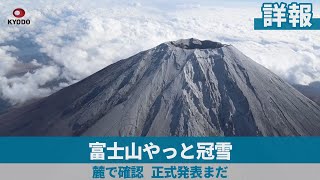


Snow was observed from some locations on 6 November, but clouds blocked the view from the meteorological office in the capital of Yamanashi Prefecture. The previous record for the most-delayed snowfall was 26 October, between 1955 and 2016. Record-keeping began in 1894. On average, the mountain's first snowcap falls on 2 October. Last year, snow was first observed on 5 October.


Fuji, a city in Shizuoka Prefecture at the foot of Mt. Fuji, has lost over a month of winter days per year in the past decade due to global warming, a recent study by a U.S.-based climate research organization showed.

Fuji added 35 winter days above 0 C annually on average between 2014 and 2023, the most among 901 northern hemisphere cities analyzed, according to a December report by Climate Central. The findings come as Mt. Fuji received its first snowcap of the season on Nov. 7 this year, the latest date since records began in 1894. Over half of 57 Japanese cities analyzed saw climate change add at least two weeks' worth of winter days above freezing each year, including Nagaoka in Niigata Prefecture and Kyoto, which saw an additional 23 days and 21 days, respectively.

The report highlights the significant impact of climate change on winter seasons, with warmer temperatures leading to various negative consequences.

The report found that 44% of the 901 cities analyzed, from all corners of the globe, experienced a week or more of lost winter days due to rising temperatures. This global trend interferes in seasonal patterns and has detrimental effects throughout the year. Warmer winters can lead to water shortages due to reduced snowpack and increase the risk of disease outbreaks by expanding the habitat of mosquitoes, ticks, and other pests. Europe has warmed twice as fast as the global average since the 1980s and is particularly affected, with 19 countries experiencing over two additional weeks of above-freezing winter days.

 
It even has infrared mode at night. Nice. Most web cams like this are useless at night.
1735750518975.webp
 
火火火火火火火火火火火火火火
火炎炎炎炎炎炎炎炎炎炎炎炎火
火炎焱焱焱焱焱焱焱焱焱焱炎火
火炎焱燚燚燚燚燚燚燚燚焱炎火
火炎焱燚 this 燚焱炎火
火炎焱燚 is 燚焱炎火
火炎焱燚 fine 燚焱炎火
火炎焱燚 🐶 燚焱炎火
火炎焱燚燚燚燚燚燚燚燚焱炎火
火炎焱焱焱焱焱焱焱焱焱焱炎火
火炎炎炎炎炎炎炎炎炎炎炎炎火
火火火火火火火火火火火火火火
 
Back
Top Bottom