- 14 Mar 2002
- 21,054
- 18,910
- Thread starter
- #26
Hmm. The police marking their own homework there!
... just being rude without discriminatory intent.

Follow along with the video below to see how to install our site as a web app on your home screen.
Note: This feature may not be available in some browsers.
Hmm. The police marking their own homework there!


Maybe they are rude to everyone? Then its not discrimination, its just a rude person. ;P... just being rude without discriminatory intent.
Such residents described cases that were acts of discrimination, such "They were brutal and rude the whole time, and I was suddenly forced to strip off my pants and expose my lower area." According to another respondent, police said they approach people they "think are suspicious" but never reveal the basis for their suspicions. The individual said, "I can't think of a reason other than my appearance that would make them suspicious." Another person, born and raised in Japan, said the police yelled, "You foreigners go back to your countries; foreigners don't deserve human rights! Go home! Take your family and go home!"
"Can you really not speak Japanese?" "You're the one who kicked him anyway, right?" A police officer allegedly hurled such accusations toward a 3-year-old girl playing at a park in Tokyo in June 2021. A Muslim woman and her young daughter were verbally attacked by a man nearby, who claimed that the girl kicked his son. The man also called out "gaijin," a term often used pejoratively to refer to foreigners, and "Show your residence card" toward the mother wearing a hijab. Six police officers arrived on the scene afterwards, and according to the statements of another man who happened to be there, one of the officers hurled abusive words toward the mother and child. After answering questions for around two hours at the park, the mother and child were taken to a police station, where they were kept for another long period of questioning. It has also emerged that the police provided the man behind the verbal attack with the woman's personal information, including her phone number and address. The woman has filed a lawsuit demanding a total of 4.4 million yen ($32,000) in damages over the discrimination and mistreatment by police.

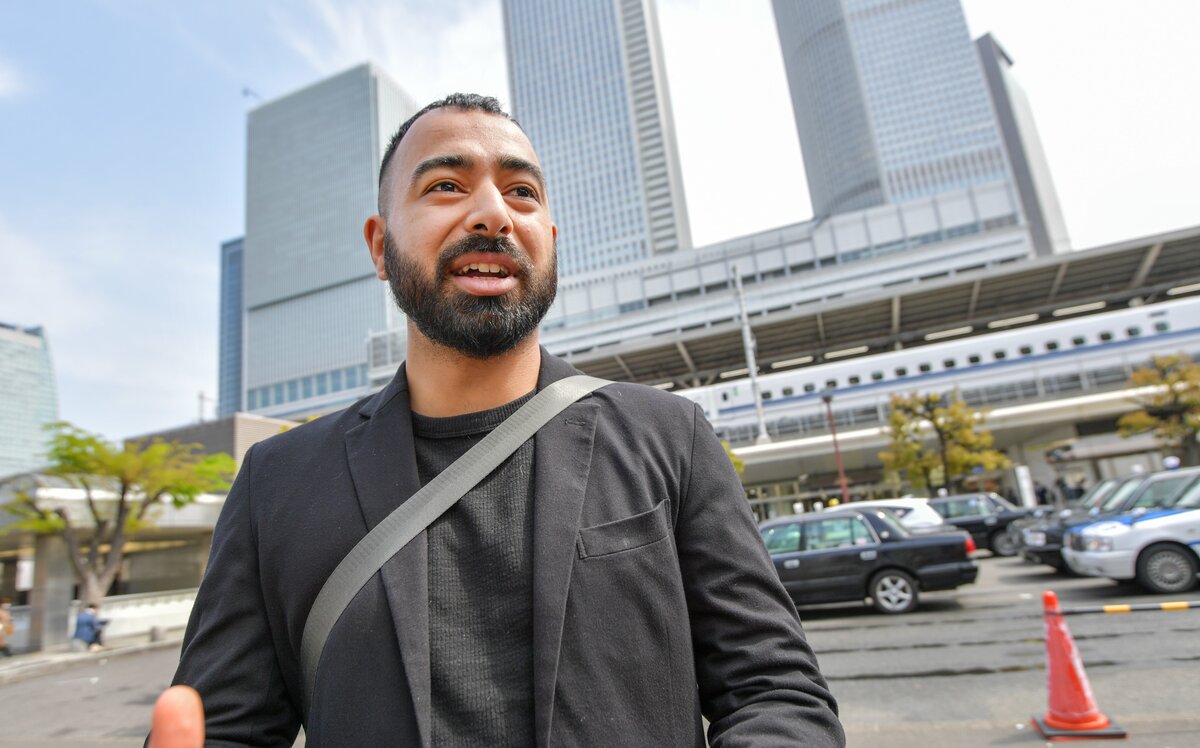
Mr Zain, who is a Pakistan-born Japanese citizen, has lived in Japan for two decades, went to school there and is fluent in Japanese. The 26-year-old told a press conference on Monday that he has often been stopped, questioned and searched by police.
Another one of the plaintiffs, Matthew, who is of Indian descent and a permanent resident in Japan, claimed that he has been questioned by the police at least 70 times since he arrived in Japan in 2002. He said he now avoids going out, Japanese newspaper The Manichi reported. "I never knew what social withdrawal was until recently... I feel like every time I finish work, I'm hiding in my house," he said. Reports said he declined to provide his last name for fear of harassment.
Maurice, an African-American who is a permanent resident in Japan, told the newspaper he has also been questioned by "regular Japanese people", including some who have asked if he is overstaying his visa.

 www.bbc.com

 asia.nikkei.com
Each of the three plaintiffs — one naturalized citizen and two longtime residents — said they had been stopped for questioning multiple times a year. One of them, a Pacific Islander living in Japan for more than two decades, estimated that he'd been questioned 70 to 100 times by the police. Motoki Taniguchi, a lawyer representing the plaintiffs, said that perceptions in Japan had been slow to catch up to the reality that the country was already living. "Many Japanese are still in the illusion that we are such a homogenous country, that we shouldn't take immigrants because they will break society," he said. His clients' experiences conflict with what Japan's National Police Agency said it found in 2021 after Mr. Omotegawa's video caused enough of a stir that the United States Embassy in Tokyo issued an alert warning Americans of racial profiling. The year before, the police said, there had been just six cases of racial profiling in a country with about three million foreign residents. Police officials defended their officers, saying they had acted without any "discriminatory intent" — even in the six cases — and that officers are trained to question people only with reasonable suspicion. It declined to comment on the lawsuit and said it did not have more recent statistics on profiling.

The case, which could prove a landmark for Japan, has drawn widespread support and attention in a nation reputed for friendly "community policing" and a relatively low crime rate. It also highlights how a culture that prides itself on its insularity is grappling with the recent influx of people from abroad. The number of non-citizens living in Japan reached a record high recently, with more than 3.2 million people. The lawsuit demands 3 million JPY (about USD20,000) in punitive damages per plaintiff as compensation for "unconstitutional and illegal" treatment, plus 300,000 JPY (about USD2,000) per plaintiff in attorneys' fees.
 apnews.com
He continued that during the crackdown month, officers were given forms to record the personal details -- resident card number, birthday, country of origin, "everything" -- of each foreigner they stopped to question. These forms were then submitted to not just the local policing division, but also the criminal investigation and public security divisions. "After the month-long crackdown, I saw that there had been more visa overstayers caught, and I thought we'd had a positive effect," Yamada said. "But later, I came to think that orders really emphasizing that we had to 'crack down on foreigners' -- in other words judging people by their appearance alone -- were a human rights violation." According to Yamada, there was no focus on questioning particular ethnicities when he was a patrol officer, but he did encounter deep biases against residents with darker skin. "Officers around me including my immediate superior often said things like, 'People with Black roots, Southeast Asians and so on study ways to kill people. So use your service revolver if you have to! You have no idea what they're going to do.'" Similarly, it was said within the force that officers "'have to be careful patrolling'" in an area with many Korean residents "'because there's no telling what they'll do.'" Yamada added that officers tossed around these comments casually during work and on break, and often referred to foreigners broadly as "aitsura" and "yatsura" -- derogatory words roughly translatable as "those people."

A recent survey carried out by lawyers in the suit backs the plaintiffs' view that the stopping and questioning of those with foreign appearances often lacks the existence of "sufficient probable cause" to suspect the person has committed or is about to commit a crime -- the requirements set out under the Police Duties Execution Act. The survey, released in February 2025, found that over 71% of foreign nationals in Japan had been questioned by police on the streets in the past five years, a rate approximately 5.6 times higher than that of Japanese nationals. The questionnaire, the first of its kind to compare police questioning of foreign nationals and Japanese, drew answers from 521 Japanese and 422 foreigners who had lived in Japan for five years or more, excluding those from the Northeast Asian region, apparently due to their similar appearances to Japanese.