


- 14 Mar 2002
- 21,050
- 18,904
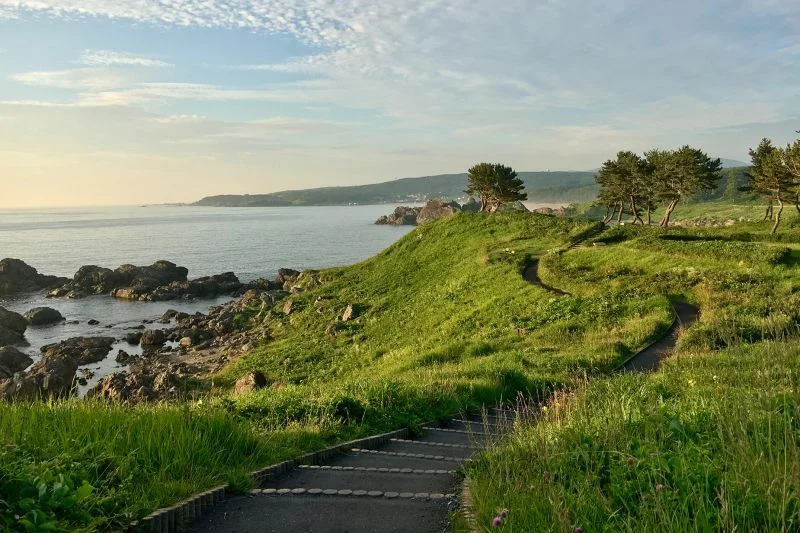
Michinoku Coastal Trail, a hiking trail along the northeastern coast of Japan, has been attracting attention from international adventurers. This has sparked optimism for a potential surge in tourism to the region, which is still recuperating from the 2011 earthquake and tsunami. Stretching over 1,025 kilometres and covering four prefectures along the Sanriku coast facing the Pacific Ocean, the trail was fully opened in 2019. It has been highly praised by foreign visitors who have traversed either parts or the entirety of the path.
The Michinoku Coastal Trail (MCT) extends from Hachinohe in Aomori Prefecture in the north to Soma in Fukushima Prefecture in the south, encompassing Iwate and Miyagi prefectures in its path. Many coastal regions within these prefectures were severely affected by the magnitude-9.0 earthquake on March 11, nearly 13 years ago. The trail, hosted by 29 cities, towns, and villages, was initiated by the Environment Ministry as a part of the post-disaster reconstruction efforts and is presently maintained through a collaboration of public and private sectors and civic groups.
The MCT route features numerous picturesque locations, cultural landmarks, traditional ryokan inns with private hot tubs, and hotels with communal onsen hot springs. Hikers of the trail highly recommend the exceptional food offered at small eateries in the quaint towns along the route. However, the trail also serves as a poignant reminder of the disaster, with imposing coastal seawalls, small memorials, and abandoned buildings that underscore the ongoing revitalization work, which is hoped to be bolstered by the increase in tourism.

 mainichi.jp
Source:
The Michinoku Coastal Trail (MCT) extends from Hachinohe in Aomori Prefecture in the north to Soma in Fukushima Prefecture in the south, encompassing Iwate and Miyagi prefectures in its path. Many coastal regions within these prefectures were severely affected by the magnitude-9.0 earthquake on March 11, nearly 13 years ago. The trail, hosted by 29 cities, towns, and villages, was initiated by the Environment Ministry as a part of the post-disaster reconstruction efforts and is presently maintained through a collaboration of public and private sectors and civic groups.
The MCT route features numerous picturesque locations, cultural landmarks, traditional ryokan inns with private hot tubs, and hotels with communal onsen hot springs. Hikers of the trail highly recommend the exceptional food offered at small eateries in the quaint towns along the route. However, the trail also serves as a poignant reminder of the disaster, with imposing coastal seawalls, small memorials, and abandoned buildings that underscore the ongoing revitalization work, which is hoped to be bolstered by the increase in tourism.
Some people aim to walk the entire route, which usually takes around 50 days, while others use public transport and walk only a section, or stick to day hikes. A total of 10 maps of the MCT are available for hikers. People involved in the MCT project acknowledge a need to expand marketing efforts to woo more visitors, especially from overseas. A recent survey by the Japan National Tourism Organization showed that luring foreign visitors to the Tohoku region is still a difficult proposition. Among the four prefectures in which the MCT crosses, Miyagi was the most popular in 2019 with foreign visitors with 1 percent traveling there. Aomori, Iwate, and Fukushima came in at just 0.7 percent, 0.4 percent and 0.3 percent, respectively. As a comparison, the same year around 40 percent of foreign tourists visited each of Japan's largest metropolises, Tokyo and Osaka. The COVID-19 pandemic, which led to lengthy shutdowns everywhere, did not help matters for Tohoku.
1,000-km nature trek helping northeast Japan hit its stride once again - The Mainichi
NEW YORK (Kyodo) -- A coastline-hugging hiking trail in northeastern Japan has been gaining acclaim with overseas adventurers, raising hopes it will b
There are two Michinoku Coastal Trail heads – the one in the north starts in Hachinohe City, in Aomori prefecture. The other is Soma City, in Fukushima prefecture in the south. Walking the entire trail takes your average hiker between 40-50 days – a period too lengthy for many to manage. Thankfully, the trail has many access points so there are opportunities to enjoy shorter hikes, while guided tours are also an option. Walk Japan, which has been organizing hikes for over three decades, offers nine-day fully-guided treks in the Spring and Fall – the best times of year to visit – that allow travelers to have a multi-day trail experience. Walk Japan CEO Paul Christie says all of their tours have been in demand since Japan emerged from the pandemic, but interest in their Michinoku Coastal Trail tour has been exceptional.
Source:


