Started Learning 5 days ago

wizcoder

後輩
Joined
4 Jul 2014
Messages
108
Reaction score
4
Hi everyone,

I started to learn japanese 5 days ago and I also purchased a book of learning japanese

A thing to add is that I came to learning japanese a year ago but I didn't know anything about hiragana and katana so I only messed with Romaji and I know loads of romaji but nothing of H and K but now I'm learning those and only using those. My Pronunciation is pretty good since I was listening the whole time and practicing with native jap speakers.

"GENKI I: An Integrated Course in Elementary Japanese [With CDROM] "
GENKI I: An Integrated Course in Elementary Japanese [With CDROM] (Japanese Edition) (English and Japanese Edition): Eri Banno, Yoko Ikeda, Yutaka Ohno: 9784789014403: Amazon.com: Books

I haven't really started the lessons because I was suppose to learn Hiragana first. So the last 5 days I learned in row based on this website
TextFugu | 6: How To Study Hiragana

It's basically just tells you to use anki, write down characters and MEMORIZE!

I just wanted to share my experience, after writing them all down loads of times, I think I used over 30 pieces of paper and now I think I finally recognize them all.
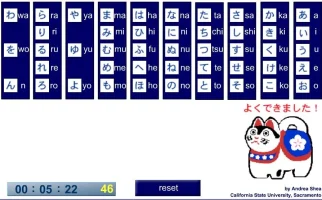
jidg5c.webp
Got a better time:
mlja8p.webp

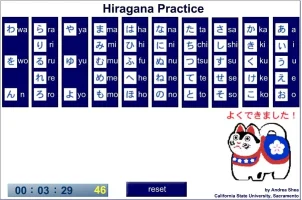
Literally just discovered this site above and first time got 5 minutes, next 2

I could have learnt them much faster and probably within 2 days but throughout those days I also spend time designing websites and programming so yea it dragged to five since I learned only 1 column a day.

My question is now, am I ready to start learning and reading the book lesson by lesson? or is there something else I need to learn before I can do anything?

Thanks
 

Attachments

  • i22ivb.webp
    i22ivb.webp
    54.3 KB · Views: 218
If you can recognize the hiragana and katakana alphabet chart already, then its time to begin your journey into the forest of japanese grammar and vocabulary.

You will notice however that kanji will be dropped slowly but surely into your lessons, take this chance to memorize them and learn their stroke orders, Genki seems to be a nice textbook though I've never used it at all.

I recommend learning kanji along with the grammar studies as well, for if you wish to develop independence to read papers, books, documents you're going to need a fairly high ammount of them memorized 常用漢字[about 2136 characters] .
 
If you can recognize the hiragana and katakana alphabet chart already, then its time to begin your journey into the forest of japanese grammar and vocabulary.

You will notice however that kanji will be dropped slowly but surely into your lessons, take this chance to memorize them and learn their stroke orders, Genki seems to be a nice textbook though I've never used it at all.

I recommend learning kanji along with the grammar studies as well, for if you wish to develop independence to read papers, books, documents you're going to need a fairly high ammount of them memorized ツ湘ュ窶廃ナ?ツソナスナ。[about 2136 characters] .

Yep guess I will get started now then! thanks for the reply, although 2136 characters that is insane amount of memorizing to do sheesh.

Looks like I have a lot of work to do.
 
Yep guess I will get started now then! thanks for the reply, although 2136 characters that is insane amount of memorizing to do sheesh.

Looks like I have a lot of work to do.
edit: far more useful advice below
 
Last edited:
Each generation of Japanese learners loves to shock the following generation of new learners by telling them they'll have to learn over 2,000 kanji before they can read anything. This is a load of pure horsesh1t which has led to the current ridiculous spectacle of people attempting to memorize 2,000+ kanji before they even begin to learn the language. And by knock-on effect perhaps to the now near universal mistaken assumption by new learners that "learning kanji" = "learning Japanese".

You don't need to know 2,136 kanji in order to read books or anything else, and even if a person did manage to "learn" that many beforehand they still would be largely in the dark about what they're looking at because they don't know the grammar, vocabulary, or social contexts that affect language use.

Thanks to the current ridiculous notions about kanji and the ease with which computers have enabled their input and lookup, everybody is in a mad rush to learn kanji and neglects to bother actually learning the language and we end up with absurd scenarios like the one recently where a poster is asking for an explanation of the fine points of using what for a beginner is an utterly useless word like 就職 when he has yet to learn such stunningly basic things as the meaning of の and も (essentially: 's and "also").

OP, just get kanji anxiety out of your mind and let your textbook walk you through the learning process. A firm foundation in grammar and vocabulary will make up for kanji knowledge shortcomings far far far more than a broad but shallow familiarity with kanji will make up for shortcomings in grammar and vocabulary.
 
Each generation of Japanese learners loves to shock the following generation of new learners by telling them they'll have to learn over 2,000 kanji before they can read anything. This is a load of pure horsesh1t which has led to the current ridiculous spectacle of people attempting to memorize 2,000+ kanji before they even begin to learn the language. And by knock-on effect perhaps to the now near universal mistaken assumption by new learners that "learning kanji" = "learning Japanese".

You don't need to know 2,136 kanji in order to read books or anything else, and even if a person did manage to "learn" that many beforehand they still would be largely in the dark about what they're looking at because they don't know the grammar, vocabulary, or social contexts that affect language use.

Thanks to the current ridiculous notions about kanji and the ease with which computers have enabled their input and lookup, everybody is in a mad rush to learn kanji and neglects to bother actually learning the language and we end up with absurd scenarios like the one recently where a poster is asking for an explanation of the fine points of using what for a beginner is an utterly useless word like 就職 when he has yet to learn such stunningly basic things as the meaning of の and も (essentially: 's and "also").

OP, just get kanji anxiety out of your mind and let your textbook walk you through the learning process. A firm foundation in grammar and vocabulary will make up for kanji knowledge shortcomings far far far more than a broad but shallow familiarity with kanji will make up for shortcomings in grammar and vocabulary.

It's a good thing you mentioned this long paragraph cause after what [MENTION=59900]Kraise[/MENTION] said I was actually feeling nauseous about having to learn so much and I kinda felt like I shouldn't continue since that number is huge and it would seem like a load of stress but I was at ease once I saw everything you said and i'm continueing since I made it this far by memorizing and learning the hiragana and katana chart. I'll see where I get once I finish my genki book
 
It's a good thing you mentioned this long paragraph cause after what [MENTION=59900]Kraise[/MENTION] said I was actually feeling nauseous about having to learn so much and I kinda felt like I shouldn't continue since that number is huge and it would seem like a load of stress but I was at ease once I saw everything you said and i'm continueing since I made it this far by memorizing and learning the hiragana and katana chart. I'll see where I get once I finish my genki book

You do end up having to know a whole bunch of stuff, but it isn't necessary that you know it all at once.

All aspects of learning Japanese are like pushing a car that has run out of gas. It takes quite a bit of hard pushing at first but once you get it rolling it doesn't take as much effort to keep it rolling.

I still haven't learned all of the 2,136 or however many it is of the Joyo Kanji. And since I have read my way through large stacks of Japanese books without any terrible inconvenience caused by not knowing then all, I feel quite confident in stating you don't need all of them to get through most stuff. I often wonder how many Japanese books the people who scare new learners with that bogus fact have read themselves, but I suspect the answer is "zero". I also suspect that lots of learners don't bother trying to read because they have believed that nonsense themselves. I'm firmly convinced many others use it as an excuse.
 
I'd say you could've started in the book without knowing anything, OP. It's good that you are learning Hiragana and Katakana beforehand; I also used TextFugu, and I used RealKana to memorize them. Of course, when I finally memorized it all, I didn't learn how to write it, but then I've read it so many times and practiced writing on my own that I can now in a decent way, although I'm not sure if I'm even writing it in the correct order. I'm pretty sure I am, though, except for 窶堋? and 窶堋ィ.

I'd say follow what Mike said; don't worry about the Kanji, who the hell spams that constantly? Learn the Kanji, but don't forget about the grammar. I learn both the grammar and Kanji alongside, but I know a bit more Kanji and words because I use Anki a lot, so now I'm having trouble making sentences or comprehending stuff with words that I know because the grammar is still a bit unfamillar to me. Learn it slowly and in a good manner, so that it gets entrenched in your head until you remember it like a native. Learn all parts gradually, don't try to rush in one section because that does nothing.

*EDIT* My theory is that you can completely throw off any kind of vocabulary except essential ones, and learn solely the grammar of a language; that, in my opinion, does not make you know the language but instead gives you the perfect "frame" to learn the language. I believe that grammar is like the frame of a language's actual words; it ties everything together, and if you master the grammar, unknown words do not seem daunting to you.

That's why, I believe, English natives aren't scared by new words. They know the grammar, so they see a sentence they fully understand except for one word, instead of a sentence with a giant scary monster in the middle; they comprehend the frame, and the only thing they worry about is one tiny part that they don't understand.

Knowing words without grammar becomes scary. I've experienced it myself; I get scared more by the Hiragana alongside the Kanji than the Kanji itself, because the Hiragana is some conjugation I don't know. Grammar is important; so don't forget that too.
 
Although you obviously do not need to learn 2000+ kanji before you can read anything, you WILL eventually need to learn many hundreds, probably at least 1000, before you can read even simple books without stopping five times every sentence to go through the painfully slow process of looking them up. In the Harry Potter book that I have just finished, 1774 different kanji are used. But that is obviously quite a way away for you if you are just starting.

I learnt all the Joyo kanji over maybe a year. This approach may not be for everyone, but for me it has been invaluable. Unfortunately, some of the Joyo kanji are useless, while some useful and fairly common kanji are not on the list. This is annoying.
 
A number isn't really of much use in defining how difficult a book is - how many of those had furigana? How many would you have actually needed to "know" to read through? For example, if a word is defined in the text, you don't need to know it before you start - that's how I was able to read The Hobbit as a kid without knowing what a hobbit was before I opened the book.

The style and genre of the book makes a much larger difference. For the same "number of kanji" content, I would have an easier time with something set modern-day than with something set historically, with a non-fiction book about cooking than a non-fiction book about economic theory, with a boiler-plate romantic comedy than with an experimental novel by a writer who eschews verbs.

The joyo list is not a great target for a learner. People just like it because it makes an obvious target - a single number, you can count how much of it you've done - whereas grammar is much more nebulous. But you don't need to know the joyo, and by the time most people are actually reading Japanese they've stopped trying to count something like "how many kanji I know".
 
why are we still argue about number of Kanji etc.

OP, if you want to learn Japanese to native level, you'll need at least 2000 kanjis, end of story. You can study now or later, but you will have to learn it.

Why do we need so many threads dedicated to this argument over and over again on jref over the years. It's always the same topic.

Bottom line is you will need 2000+ kanji to to achieve native level or at least to get a good mark in JLPN N1. But chances are, you will drop out of your Japanese journey before you even finish 100 kanjis like 99% of the noob who make a thread and never come back.
 
But you don't need to know the joyo
You don't need to know exactly those 2000-and-whatever characters and only those characters. However, to read at any kind of level of proficiency, you do need to know a large percentage of them.
 
I'd say you could've started in the book without knowing anything, OP. It's good that you are learning Hiragana and Katakana beforehand; I also used TextFugu, and I used RealKana to memorize them. Of course, when I finally memorized it all, I didn't learn how to write it, but then I've read it so many times and practiced writing on my own that I can now in a decent way, although I'm not sure if I'm even writing it in the correct order. I'm pretty sure I am, though, except for あ and お.

I'd say follow what Mike said; don't worry about the Kanji, who the hell spams that constantly? Learn the Kanji, but don't forget about the grammar. I learn both the grammar and Kanji alongside, but I know a bit more Kanji and words because I use Anki a lot, so now I'm having trouble making sentences or comprehending stuff with words that I know because the grammar is still a bit unfamillar to me. Learn it slowly and in a good manner, so that it gets entrenched in your head until you remember it like a native. Learn all parts gradually, don't try to rush in one section because that does nothing.

*EDIT* My theory is that you can completely throw off any kind of vocabulary except essential ones, and learn solely the grammar of a language; that, in my opinion, does not make you know the language but instead gives you the perfect "frame" to learn the language. I believe that grammar is like the frame of a language's actual words; it ties everything together, and if you master the grammar, unknown words do not seem daunting to you.

That's why, I believe, English natives aren't scared by new words. They know the grammar, so they see a sentence they fully understand except for one word, instead of a sentence with a giant scary monster in the middle; they comprehend the frame, and the only thing they worry about is one tiny part that they don't understand.

Knowing words without grammar becomes scary. I've experienced it myself; I get scared more by the Hiragana alongside the Kanji than the Kanji itself, because the Hiragana is some conjugation I don't know. Grammar is important; so don't forget that too.

English native speakers don't know sh1t about grammar, ask any white Aussie about past tense, past particle, past continuous etc, they don't know sh1t.

Their grammar knowledge is if a sentence sounds "correct", but if you ask them why or any technical grammar knowledge, they don't know anything.
 
However, to read at any kind of level of proficiency, you do need to know a large percentage of them.
Bottom line is you will need 2000+ kanji to to achieve native level or at least to get a good mark in JLPN N1

Don't know how many I know, still haven't studied all the joyo, passed N1 (with a reasonable margin).
Do you need to study kanji? Of course. But telling someone who has been studying five days that you need to learn $some large number is not helpful. Nobody goes around saying "you have to learn 2000 grammars", only because it's not as easy to quantify grammar points.
 
But telling someone who has been studying five days that you need to learn $some large number is not helpful.
You eventually will need to learn some large number if you want to become proficient at reading. No one is saying that you need to learn them all by next week, or even next year. It makes sense to start learning them early on, at a pace appropriate to your progress in learning the many other aspects of the language. I believe that this is the sensible strategy for serious students.
 
Don't know how many I know, still haven't studied all the joyo, passed N1 (with a reasonable margin).
Do you need to study kanji? Of course. But telling someone who has been studying five days that you need to learn $some large number is not helpful. Nobody goes around saying "you have to learn 2000 grammars", only because it's not as easy to quantify grammar points.

Grammar is quantifiable, just look at the JLPT syllabus.
 
But chances are, you will drop out of your Japanese journey before you even finish 100 kanjis like 99% of the noob who make a thread and never come back.

I don't think so.

I agree with Financial war.
Actually, it doesn't matter which path you choose to learn, you just need to study regularly and take care of 'burnout'.
It's the only main thing that can force you to quit. Rest will be fine ^_^
 
[MENTION=63210]wizcoder[/MENTION] stand your ground and focus on studies, try not to think about it as a matter of difficulty level (bonus
: difficulty level in japanese is 窶堙遺?堙ア窶堋「窶堙? but as a matter of hours spent doing things, just like Mike taught me in one of my threads, you will speak, listen and read a lot, and by doing this you will improve gradually. Use this websites: Denshi Jisho - Online Japanese dictionary and ツ坂?佛津ェツ・窶ーpヒ彗ツ・ヒ彗窶ーpツ・窶氾槐津ェツ・窶吮??ツ坂?佛津ェナスツォツ鞘?佛椎クツ催オ - gooナスツォツ鞘?麓/url] (A little more advanced) as dictionaries, the first one will even teach you how to read and write the kanji.

And do not feel intimidated, if there is some kind of goal you have, like watching movies or reading books/manga start doing this, try to bring the reason you want to learn japanese to your reality, to your studies, Nekojita has posted a few good pearls in my threads too:

[url=http://www.j-comi.jp/]Jニ坦ニ蓄
and ツ人窶ケC窶堙個催ャ窶「i窶堋ェ窶突??愿コツ更ツ新ツ!窶督ウ窶板ソ窶堙姑湛ニ誰ニ陳債ーニ停?ケナ耽WEB窶毒ク窶ーテヲ - comico for 4 panel comics(not really 4 panel but thats ok) and this one 窶慊ョ窶ーテヲニ男ニ停?ヲツーニ湛ヒ廣窶伉アツ催?青カ | NetTV-News on the Web a website that collates videos from japanese channels and automatically forwards you to the next videos, you can pick something anime/dorama related in the search bar and leave it in the background, thats a nice way of getting used to the spoken japanese.
 
[MENTION=59900]Kraise[/MENTION] [MENTION=62688]abhishek[/MENTION] [MENTION=21878]FinancialWar[/MENTION] ,

I'm not going to give up on this so easily, there has to be a giant obstacle blocking my way in order to literally just quit. I haven't quit anything I enjoyed doing before. Only reason I said I was having a thought was because someone straight up said you have to learn 2000+ as if I had a time limit on doing so before being able to read or achieve anything and few days ago I realized that was of course false.

It's funny when I started learning japanese I was confused by a lot of stuff. Example would be the japanese 'Alphabet' which it's literally Hiragana and Katana. I thought it was just random letters and words / shapes put together but then I looked at it in a bigger picture and realized it's almost exactly like our alphabet.. A shape for a word, a letter / word and different ways of pronouncing the words/letters. When I learned loads of romaji a long time ago I thought that was the main goal in learning japanese but I discovered H & K and I was so amazed to know that the shapes = romaji letters ( O.O ). After that I noticed everything was connected and I was at ease with the understanding.

I'm a few days into the Genki series I book and it feels good to know how to read all the Hiragana , Katakana, Dakuten and combination words and actually know what the words mean cause as I mentioned I studied pronunciation and Romaji for months so I know a lot of words but just not the characters but I will soon :).

TL;DR: I became a programmer in about 7 different languages and i've been doing that for what 5, 6 years now? I still haven't quit that and I never will. I was able to grasp the concept about things taking a long time to understand and be fluent in. I believe that since I am able to consider myself a 'expert' at programming I can also become a great speaker in japanese if I continue to put the same effort into it and it will come with time.

My inspirations are Korean Dramas, Japanese Dramas, Animes, Jap games and "Loving Japanese & Asian culture". I've been studying jap everyday since I started and I'm going to continue like this for however long and I will let you guys know how I progress. I promise that I will not quit.

Thanks
 
Back
Top Bottom