あげる vs ~てあげる

Fociis

後輩
Joined
18 Nov 2006
Messages
14
Reaction score
0
Can someone please explain to me when ~てあげる should be used. I learned that ~てあげる is used when "some action" is done with good intentions". But then aren't most actions done with good intentions? If this is true then あげる would be quite limited in its use.

Also, my textbook failed to go into details regarding the difference between さしあげる and ~てさしあげる so can someone please fill me in. I'm clueless. Assuming that what is written in the first paragraph is transferable to this case then I would think that whenever "some action" is done for a superior that good intentions are always involved, no?
 
I'll keep it simple.

That て is the final letter of a verb in the gerund form. Therefore for that pattern, you need a verb.

For just あげる, it'S the giving of a thing, whether tangible or not.

さしあげる is nothing more than a polite way to say あげる.

Does this help at all?
 
Then why would you use verb~てあげる when you can just as well use the verb itself without the additional suffix? Is ~てあげる common in every day Japanese?
 
It's kind of the same difference as saying "I made a cake for you" instead of simply "I made a cake"

EDIT: Quite common!
 
Thanks a bunch Mikawa Ossan. You don't know how helpful you've been. My textbook is rather austere on its explanations.
 
No problem! Good luck with your studies!
 
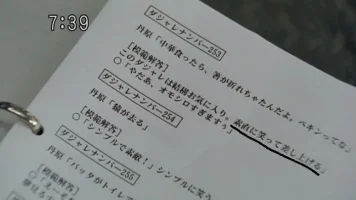
since we are on the subject of さしあげる, i have a question. what does the underlined sentence translates to? and if possible, can anyone translate the entire paragraph(ダジャレナンバー253)? thanks.
 

Attachments

  • jappic.webp
    jappic.webp
    22.4 KB · Views: 110
since we are on the subject of さしあげる, i have a question. what does the underlined sentence translates to? and if possible, can anyone translate the entire paragraph(ダジャレナンバー253)? thanks.
The underlined part could be (The subject) laughs obediently, or out of obligation and regard for the other party. Although here it looks more like laughs honestly and frankly.


Sorry I don't have time for the entire paragraph now !
:sorry:
 
since we are on the subject of さしあげる, i have a question. what does the underlined sentence translates to? and if possible, can anyone translate the entire paragraph(ダジャレナンバー253)? thanks.

Tanbara: When I was eating Chinese, my chopsticks broke making "Peking" noise.
I rather like this pun. I would like to genuinely laugh at it.
Model Answer: Oooh, it's soooo funny!

It's not a good translation, as ペキン part is difficult to translate.
When something light and thin like chopsticks breaks, the noise it makes is ペキッ or パキッ. Thus ペキン (= 北京/Peking/Beijing) is a pun for ペキッ.

Though ~て差し上げる itself is a very formal and polite, using it in context like this normally adds the connotation as if one is
- doing so to though he/she does not see the necessity or good reason to do so
- being overly polite with contempt
- being arrogant and patronizing

I'm not sure how much irony the writer meant, but one thing I can say is that it is possible to be very rude by being extremely polite.
:oops:
 
Back
Top Bottom