Tourism Suica and Pasmo transit cards still in short supply

thomas

Unswerving cyclist
Admin
Joined
14 Mar 2002
Messages
21,053
Reaction score
18,905
A persistent shortage of transit cards has disrupted travel plans for many foreign visitors to Japan. Essential for navigating the country's complex railway system, contactless IC cards like Suica and Pasmo have been unavailable for purchase since the summer of 2023. The scarcity, attributed to the global semiconductor chip crisis, has left tourists struggling with unfamiliar fare structures and time-consuming ticket purchases. These challenges have significantly impacted the overall travel experience for those visiting Japan.

Mai Niizoe, a senior researcher at Sompo Institute Plus, stated that IC transit cards provide access to a vast and efficient railway network. However, she also pointed out the challenges those without cards faced, including the fare system's complexity and decreased convenience.
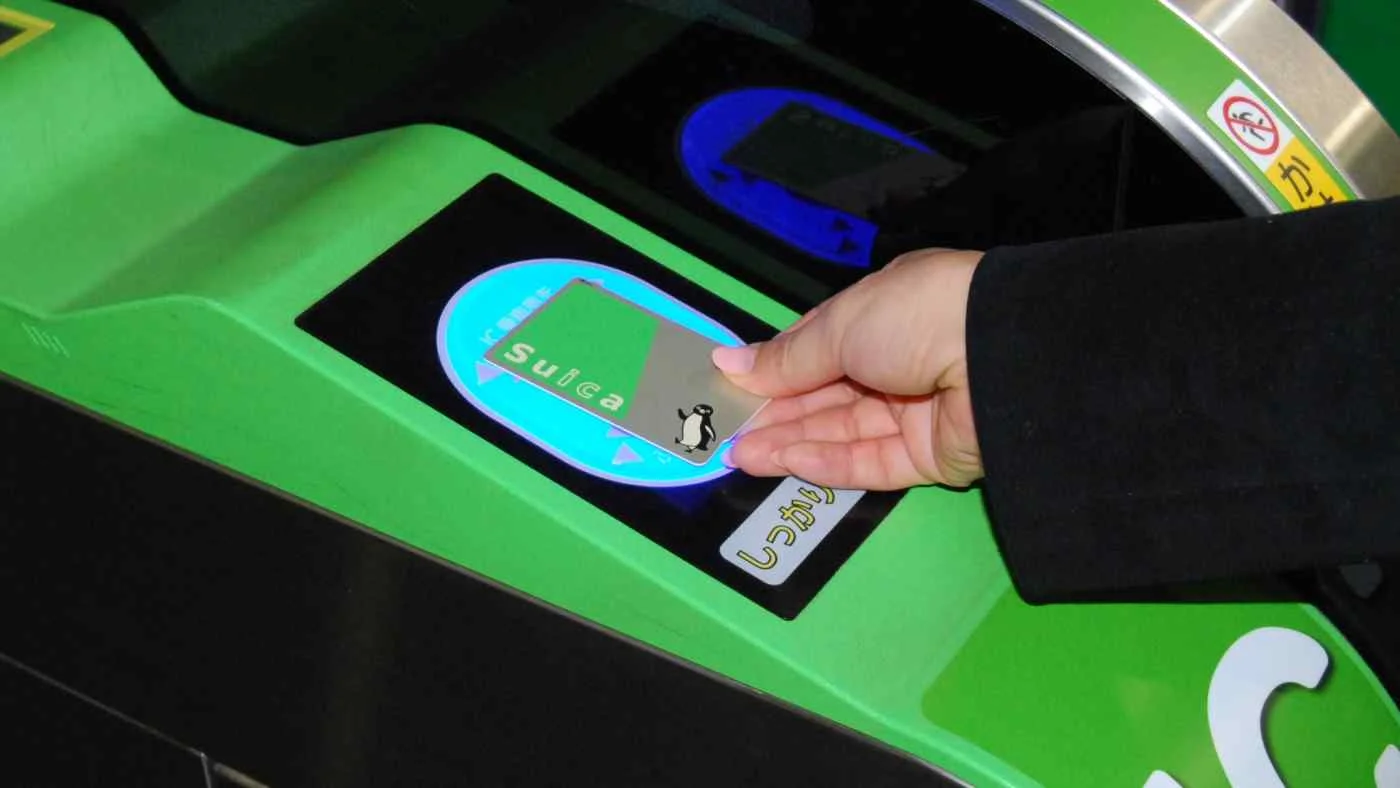

Suica and Pasmo transit cards still in short supply

Photo credit: JR East


JR East issues Suica cards that can be used for 28 days. Intended for foreign visitors, they can be purchased only at limited locations, such as Haneda Airport and Narita International Airport serving Tokyo. Visitors who miss out on buying one at the airport will have no choice but to buy paper tickets for the duration of their trips. "We apologize for the inconvenience caused by the inability to purchase cards due to a lack of stock," JR East has said. Although the shortage is ostensibly due to lack of chip supply, the average lead time for analog semiconductors for communications purposes, which had ballooned to about 30 to 50 weeks in the January-March 2023 period, shrunk to 17 to 34 weeks in the April-June quarter this year, according to U.S. semiconductor trading company Sourcengine. Sourcengine said supply has stabilized, and prices are on a downward trend. Another chip trading company said, "Even if we limit it to short-range wireless communication chips, supply has returned to normal."


The limited availability of new Suica and Pasmo cards is primarily due to the exclusive use of FeliCa technology in Japan. Renowned for its rapid data reading capabilities, FeliCa enables swift passage through busy train stations. However, the higher cost of FeliCa compared to technologies used elsewhere has deterred foreign chipmakers from entering the market, contributing to the ongoing shortage.

Paywall alert:
 
The reliance on FiliCa also means that people visiting from other countries are not likely to be able to use their cell phones with a virtual Suica or Pasmo card as there are few phones outside of Japan that support that standard.
 
The reliance on FiliCa also means that people visiting from other countries are not likely to be able to use their cell phones with a virtual Suica or Pasmo card as there are few phones outside of Japan that support that standard.
Unless they have iPhones since they support NFC-F standard globally.
 
In October, it was reported that several Japanese transit operators were planning to ditch IC cards.


Kumamoto has officially become the first Japanese city to stop supporting the country's national IC cards (Suica, PASMO, etc.) on transit.


To replace the national IC card system, other forms of cashless payment such as by credit cards and QR codes are being brought in. The cost of payment processing machines for these systems and other expenses are reportedly lower than the IC card system, reducing overall expenses to 670 million yen (about $4.49 million).

 
[Suica national seclusion] When I compare "a stop, getting off time" with a bus in Kumamoto before and after the settlement abolition of the voice national pro-traffic IC of "the inconvenience"

"Suica" With the national pro-traffic IC was not able to pay.
A route bus in Kumamoto. I investigated service and the influence on user in a town.

Payment with the national traffic system IC was abolished by the reason of severe business condition and the update expense of the settlement apparatus being high from November 16 and it was "an IC card of Kumamon" or, over a route bus in the prefecture, was able to pay it only in cash.

Will you have effect by this change? On weekdays before and after the change, I compared the getting off time per person with the stoppage time of the bus.

[investigation]
At first many users got off a bus smoothly when I measured stoppage time targeting at 20 buses in front of the department store of the Kumamoto-shi center on November 8 before the change.

As for "the stoppage time per one, it followed a reporter per person called about 3.6 seconds for about 24 seconds" ※November 18 when it was first weekdays after 133 getting off number of people and change. I measured stoppage time targeting at 20 buses in the same way. Then it is ...

"It followed a reporter per person called about 5.4 seconds for about 34 seconds per one" ※126 getting off number of people

Stoppage time doubled about 1.5 at about 1.4 times, getting off time per person when I compared it before a change.
<< findings >> ※20 average
[stoppage time] It is before a change: About 24 seconds → After the change: It is before a [getting off time] change for about 34 seconds (about 1.4 times): About 3.6 seconds → After the change: It is cash payment to have been outstanding as the factor for about 5.4 seconds (about 1.5 times). The case that an exchange took time was seen.

A user as "it is possible while seeing the state of the driver when a signal becomes the red (an exchange), "used Suica, but an Indonesian user thinking that after all the cash is inconvenient" is not usable now. I think that it is slightly inconvenient"

Not only payment takes time, but also some says, "it became inconvenient" and cannot deny the drop of the convenience.

If the stoppage time of the bus becomes long, it can lead to the factor of the new traffic jam and disorder of diagram. The way of the sustainable public transport is called into question some other time.

The future of a "Suica national seclusion" bus and the streetcar.

A route bus and the Kumamoto Railway Corporation in Kumamoto introduce the credit card settlement in substitution for national pro-traffic IC including "Suica" in March of next year (2025).

On the other hand, I have already introduced the credit card settlement by the Kumamoto streetcar (streetcar), and the national pro-traffic IC is not going to be usable from April, 2026.
 
There are three other potential issues that need to be considered as well.
1) Will this result in a higher risk or rather another place where you would need to watch out for credit card skimmers (they have NFC versions now...)?
2) How will this affect tourists? Some foreign credit cards do not always work well in Japan terminals. We have experienced this, it is a difference in the security protocols used for verification behind the scenes. Things like "Verified by VISA" and such.
3) If the foreign CC doesn't work then you have people who are less familiar with the physical money trying to count out the correct amounts to the fare machines, which will take additional time as well.

With the IC cards that you can charge with cash you don't need to worry about those, or at least not the second issue. It is hard to believe that the processing fees for the IC cards could be higher than the credit cards as well, it was surprising to see that.

I also find it surprising that the IC cards are still suffering from supply chain issues. I know I didn't have any troubles getting ICOCA cards over the last few years.
 
It is my impression,
「因小失大(いんしょうしつだい)nshi ~youshitsudai」

It is four characters phrase meaning that I am too much particular about small profit and cause a big loss
 
There are three other potential issues that need to be considered as well.
1) Will this result in a higher risk or rather another place where you would need to watch out for credit card skimmers (they have NFC versions now...)?
2) How will this affect tourists? Some foreign credit cards do not always work well in Japan terminals. We have experienced this, it is a difference in the security protocols used for verification behind the scenes. Things like "Verified by VISA" and such.
3) If the foreign CC doesn't work then you have people who are less familiar with the physical money trying to count out the correct amounts to the fare machines, which will take additional time as well.

With the IC cards that you can charge with cash you don't need to worry about those, or at least not the second issue. It is hard to believe that the processing fees for the IC cards could be higher than the credit cards as well, it was surprising to see that.

I also find it surprising that the IC cards are still suffering from supply chain issues. I know I didn't have any troubles getting ICOCA cards over the last few years.
It sounds like the main issue is not with the transaction fees but with the capital investments necessary to upgrade the equipment. I thought the magnetic reader systems were even more expensive. But I guess they might feel that the magnetic readers are not optional. Hopefully they can at least have their ticket machines accept the IC cards even if the entrance gates don't.
 
@ #7 - would we say in English 'penny wise and pound foolish'?

Re. Suica card. Can they not be loaded onto Google Wallet on an Android? Is it still only iPhone compatible?
 
Thank you for the reply. Can I assume you mean Android version 9 and above, not only v.9? I'm on 13.
 
Disclaimer: I have only ever used iPhones. However, Google says "9 or higher," so you should be safe. :)
 
Welcome to the forum, @J-popsy!

It seems to work as long as you're on Android 9:

I'm not so sure about that. Notice the (Japan Only) in that heading.
It may be tied to Japanese market devices and or service. I would not count on it working without testing first.
 
You are right. Says Gemini:

No, the Suica app does not work on Android phones sold outside of Japan. The Mobile Suica app for Android is only available on phones sold in Japan.

However, you can use a Suica card on an iPhone or Apple Watch in Japan:
  • iPhone: Use an iPhone 8 or later, or an iPhone 7 or 7 Plus purchased in Japan
  • Apple Watch: Use an Apple Watch Series 3 or later
  • Wallet app: Add your Suica card to the Wallet app
  • Apple Pay: Use Apple Pay to ride transit and make purchases in stores
You can also add a Suica card to Apple Wallet by:
  1. Tapping Transit Card
  2. Choosing the card you want to add
  3. Tapping Continue
  4. Choosing an amount to put on the card and tapping Add
  5. Following the steps on the screen to confirm your purchase

Foreign tourists can also get a special version of Suica called Welcome Suica. These cards are valid for four weeks, don't have a deposit fee, and can't be refunded. You can get a physical Welcome Suica card at a JR Ticket counter at any airport.
 
You need an Android phone equipped with NFC-C in order for Suica to work which most international models do not have.
Also even if you have such an equipped phone you need to be able to access the Japanese Google Play Store to get the app.
 
Back
Top Bottom