News Shibuya and Shinjuku to ban public drinking

thomas

Unswerving cyclist
Admin
Joined
14 Mar 2002
Messages
21,053
Reaction score
18,906
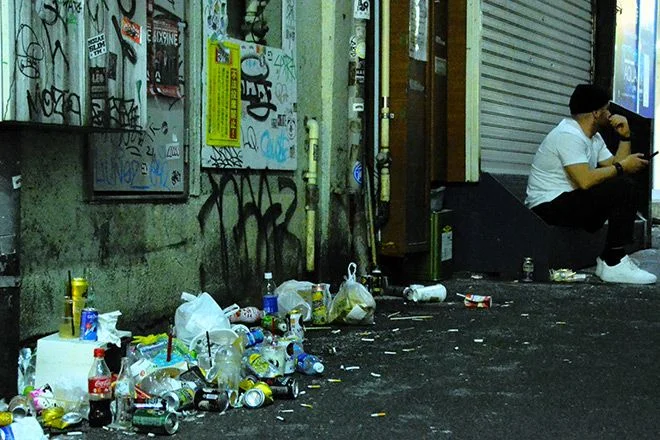
Tokyo's Shibuya Ward intends to extend its ban on street drinking throughout the year, while Shinjuku Ward is implementing measures to address large crowds of Halloween revellers. Only Shibuya has an ordinance prohibiting alcohol consumption on the streets, but it is limited to Halloween and New Year's Eve. However, officials have observed that alcohol-related littering and traffic obstruction occur year-round. Consequently, they plan to revise the ordinance during the current ward assembly session to establish a year-round ban on public drinking. The proposal is anticipated to be approved on 17 June and implemented on 1 October.


Yuck, it's hard to believe this is Japan. 😅
ac6389a12fe3429dc68249af75ea8888.webp

Photo credit: Miyano Takuya via Asahi


The revised ordinance will not impose penalties on violators, but officials believe it will give the ward more power to directly ask people to refrain from drinking on the streets. The ward enforced the ordinance in 2019 after Halloween street parties around JR Shibuya Station became far too large to control. Since September 2023, a security company commissioned by the ward has conducted daily patrols. It found the number of cases of street drinking in March and April was rising. The daily average of street drinking cases on Fridays, Saturdays and days before holidays increased by about 1.5 times. Around 70 percent of the cases involved foreign visitors, according to the ward. The revised ordinance will prohibit street drinking from 6 p.m. until 5 a.m., and its target areas include Miyashita Park, the ward office neighborhood, and Maruyamacho, where nightclubs are concentrated.


How does it give them any more power if they can't impose penalties?
 
Nikkei on the Shibuya drinking ban that will take effect on 1 October. Due to the growing number of tourists, the frequency of street drinking, disruptive behaviour and littering have been increasing. Shibuya has contracted a security company that deploys up to 13 people to monitor the streets and ensure people behave appropriately. The patrols operate between 8 p.m. and 5 a.m. Some of them are foreign nationals who speak English or Spanish.

In 2019, Shibuya drew up an ordinance that banned public drinking in certain areas during Halloween and year-end holiday periods. This June, the ward revised the ordinance to ban nighttime street drinking year-round. Such drinking of alcohol will be prohibited between 6 p.m. and 5 a.m. at all public spaces. The ordinance will apply to an area of roughly 1 square kilometre, a bigger scope than prior to the revision. Such an ordinance covering a large area is the first of its kind for a Japanese city. However, there are no punitive measures for breaking the ordinance. Shibuya estimates it will pay 122 million yen ($846,000) in annual patrol fees once the ordinance takes effect. This is on par with what the ward spends to help people in need get back on their feet.

These patrols even keep count of the number of loiterers:

Shibuya estimates the number of street drinkers based on observations made by its patrols. In June, an average of 134 foreign nationals were seen drinking on the streets on Fridays, Saturdays, and the days before public holidays. This represents a significant increase of 170% compared to the approximately 50 people observed a year ago. Among Japanese nationals, an average of 34 individuals were seen drinking on the same days in June, a 24% increase from the previous year.


Paywall alert:
 
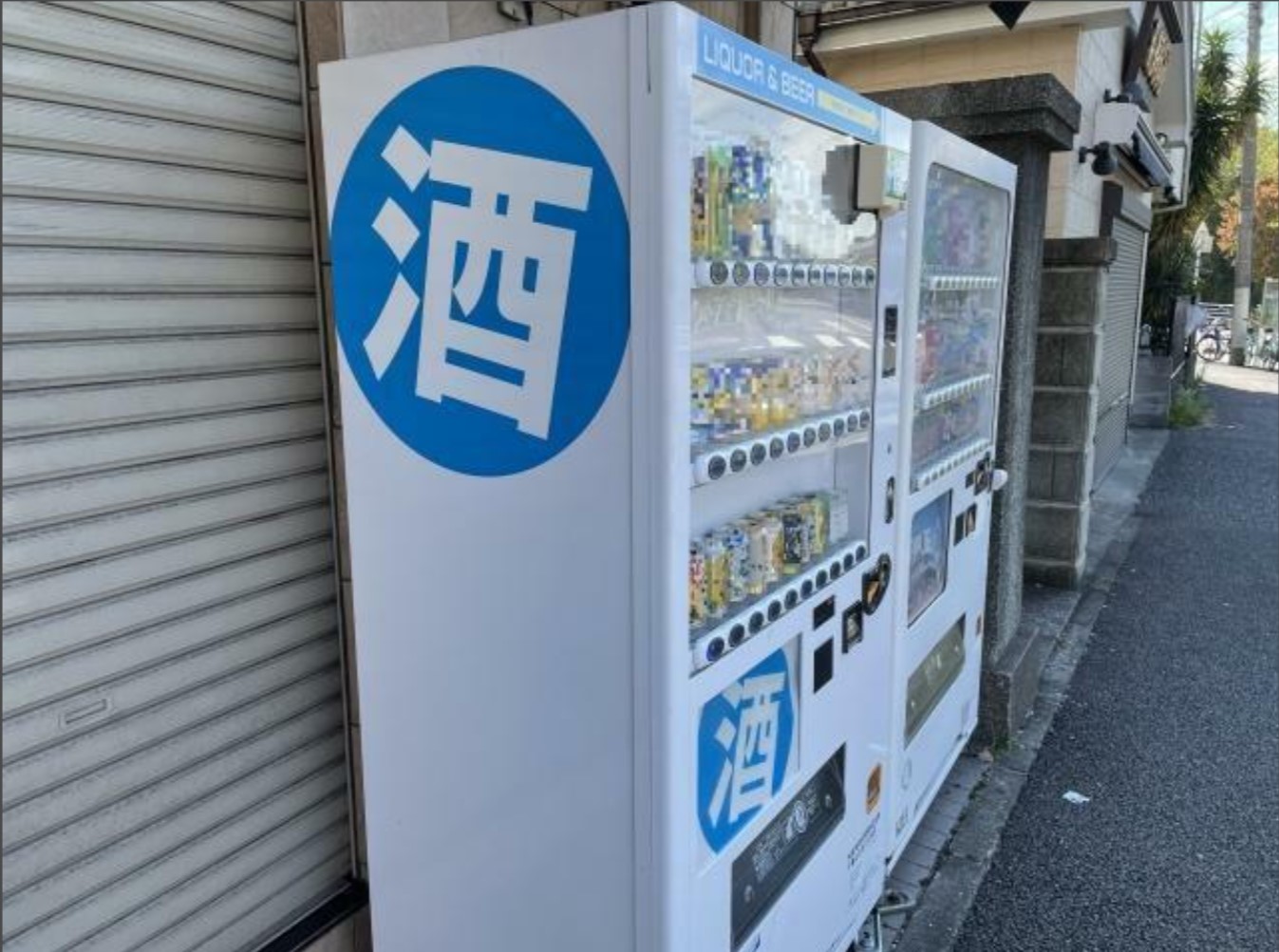
Public drinking outlawed in Japan? Next you'll tell me that they've banned the beer vending machines!

They're serious and even contemplate confiscating alcoholic beverages!

But it remains to be seen whether the stricter regulations will be effective. Shibuya is prepared to confiscate alcohol during its patrols, but if revelers enter a building even temporarily the regulations cannot be enforced.

Unless you enter a building, such as a combini, to procure more booze. :LOL:
 
I spent about 3 months in Japan over the last year and didn't notice them in Kyushu . People busting out bottles of shochu at a bbq and I saw vendors sell alcohol at stands at a local matsuri but didn't notice the vending machines. Didn't even think about it until mdchachi's post.
 
Shibuya Ward has taken a significant step to address ongoing littering and noise problems by implementing a year-round nighttime ban on public alcohol consumption. This measure expands upon a previous ban that was limited to specific periods, such as Halloween and New Year's. Starting from 6 p.m. to 5 a.m. daily, the ban will now apply to areas surrounding both JR and Keio Shibuya stations. This broader restriction aims to curb the negative impact of excessive alcohol consumption on the ward's public spaces.


In June, the Shinjuku Ward assembly, adjacent to Shibuya, passed an ordinance banning alcohol consumption in and around the Kabukicho entertainment and red light district for 12 hours starting at 5 p.m. on 31 October. Its ward office cited an influx in visitors during Halloween and more littering in the area after Shibuya introduced its ban.


Hm, still no word on how they plan to enforce this.
 
Food newspaper

Abolition advancing liquor vending machine 180,000 → I decrease sharply to 10,000 from the 90s.

According to the count of the National Tax Agency, the setting number of the alcoholic beverages vending machine as of April 1, this year is 11,468 in the whole country. It turned out that it decreased to about 6% of the end of March, 96 (185,800) with statistics.

Anyone can purchase liquor regardless of age and health condition with the vending machine. I push forward an approach of the independence abolition about alcoholic beverages vending machine to still remain in cooperation with National Tax Agency to carry out appropriate sales management thoroughly from a point of view preventing prevention of drinking and alcohol health disorder younger than 20 years in the All Japan Liquor Merchants Association.


Liquor vending machine production company Zenith
Why did the vending machines of the liquor decrease?

It is aging of liquor shop in a main reason why the vending machines of the liquor decreased. This is because it came to rarely trade in the liquor vending machine of the new stand which is invested in even if a liquor vending machine is broken for a reason that it is not revealed whether you can continue doing business for another several years. And business closing rushes of liquor shop occur at the same time, and a liquor vending machine decreases. However, as for liquor shop performing a local watch turn-like role, the number of the uniformity comes to liquor shop which a local resident trades in for arrival, the purchase rate with the liquor vending machine highly without cease. The which is continued saying "the liquor vending machine does it since a fixed customer purchases it with a liquor vending machine!" is a lot.

The liquor vending machine introduction at the accommodations including the hotel in a tendency to increase!
The liquor vending machine for the staying users including the hotel is available for setting introduction under conditions of the setting in the hall. As for the liquor vending machine, as for the authorization of the National Tax Agency, there are none for introduction basically. The general alcoholic beverages retail business license is unnecessary like liquor shops, and the sales figures of alcoholic beverages to report to the tax office once a year are the report submission-free entirely. Naturally those documents do not arrive, too. This was sometimes asked about whether the liquor vending machine setting in the hotel was good for the tax office being an inquiry beforehand, and it was said that it was not good. I may hear this. An opinion and the judgment are inconsistent by the prefecture and a local tax office. There is rarely liquor tax person in charge talked about as a vague abstract opinion, but, as for the authorization on the tax office side, there are none for the liquor vending machine setting in the accommodations including the hotel at all as I told you some time ago. There is an image including wrong recognition and rule charge account, but is introducible in peace.
 
I'm sure they will walk around handing out paper warning citations that have no penalty.
Shibuya-ku prohibits a night street drink through the year. They perform the patrol by night.
(October 2, 2024)

Shibuya-ku prohibited road drinking around Shibuya Station in the regulations during Halloween and the year-end and New Year period.
However, the road drinking by a youth and the foreigner became common, and the ward revised the regulations because troubles including dispersion and the noise of the garbage occurred successively and decided to prohibit the drinking on the night street through the year.
It is until 5:00 on the next morning from 6:00 p.m. in prohibition time.
A guard patrols in target time and instructs it.
But it means that there are not the penal regulations such as fines.
[TV Asahi news]

Most of Japanese youths drinking in Shibuya on the road in the night are provincials.
It is people who gathered out of curiosity on seeing TV and SNS.
When I get dead drunken and perform an annoying act, I will stay at the police cell of Shibuya.

Law (1961 law No. 103) about the prevention of the act to trouble the drunkenness connections public to liquor
When it is admitted that there is an enough considerable reason if I believe it when I need emergency relief for the person in light of the behavior of the person of 当該酩 めい 酊 てい, degree of the drunkenness and a surrounding when I am doing the behavior that is coarse or violent in the road, the park, the station, the performance ground, the restaurant or other public places or the train, the train, the autobus, the ship, the public vehicle (as follows "or says a vehicle.") of plane and others, as for the police officer, a person from 酩 めい 酊 てい must protect this in the suitable place though an aid station, the police station protect it first of all.
 
In addition to the Halloween drinking ban, Shibuya Ward will install barriers in front of Shibuya Station to block the iconic Hachiko dog statue. The Shibuya Ward office announced Thursday that the Hachiko statue will be out of sight from 6 a.m. on 30 October to 5 a.m. on 1 November. During this period, a steel frame will be set up around the statue, hidden with screens. Shibuya plans also to beef up the presence of security guards around the area. It also announced it will install temporary fences around the plaza where the statue is located from 7 p.m. on 30 October to prevent people from lingering there. If the area becomes crowded, traffic restrictions such as establishing one-way streets may be implemented.


Those who wish to engage in Halloween folly should try out Ikebukuro this year:

However, not all municipalities plan to regulate or restrict Halloween events. Toshima Ward, which includes the bustling Ikebukuro district, will hold the Ikebukuro Halloween Cosplay Festival in Sunshine City and other locations from Oct. 25 to 27. A total of 140,000 people visited the event last year. According to Toshima Ward officials, the municipal government will deploy the same security staff as for regular events and it will not take special countermeasures on Halloween, since there were no unusual problems on that day last year. "There haven't been any issues with the streets becoming dirty or other disturbances around Halloween before," said Miyuki Takagiwa, mayor of Toshima Ward, at a news conference in September. "We don't want to introduce regulations unless things become a problem." However, the mayor said she will see whether the strengthened regulations in Shinjuku and other wards will affect events closer to home. "I will observe how things will go in Ikebukuro this year," Takagiwa said.

 
Although I can see both sides of the safety/fun argument, there's something worryingly obsessive about Shibuya ward office in its attempts to prevent people gathering for Halloween.
 
They're not going to prevent people from going there but, by golly, they will keep them from getting crushed by a stampede. I was there on Halloween night last year and there were still thousands of people there. The main difference was that the police were treating it like a massive exercise in crowd management, establishing one way corridors and telling people to move along on their bullhorns.. Even the scramble crossing was made to be crossed in only certain directions. And, of course, poor Hachiko was walled off.
 
It was saddening to watch the tight controls in Shibuya and Shinjuku on the news. I know it's about "safety", not "control," but the measures appeared overprotective.

Shibuya Halloween 2024

Photo credit: Kyodo

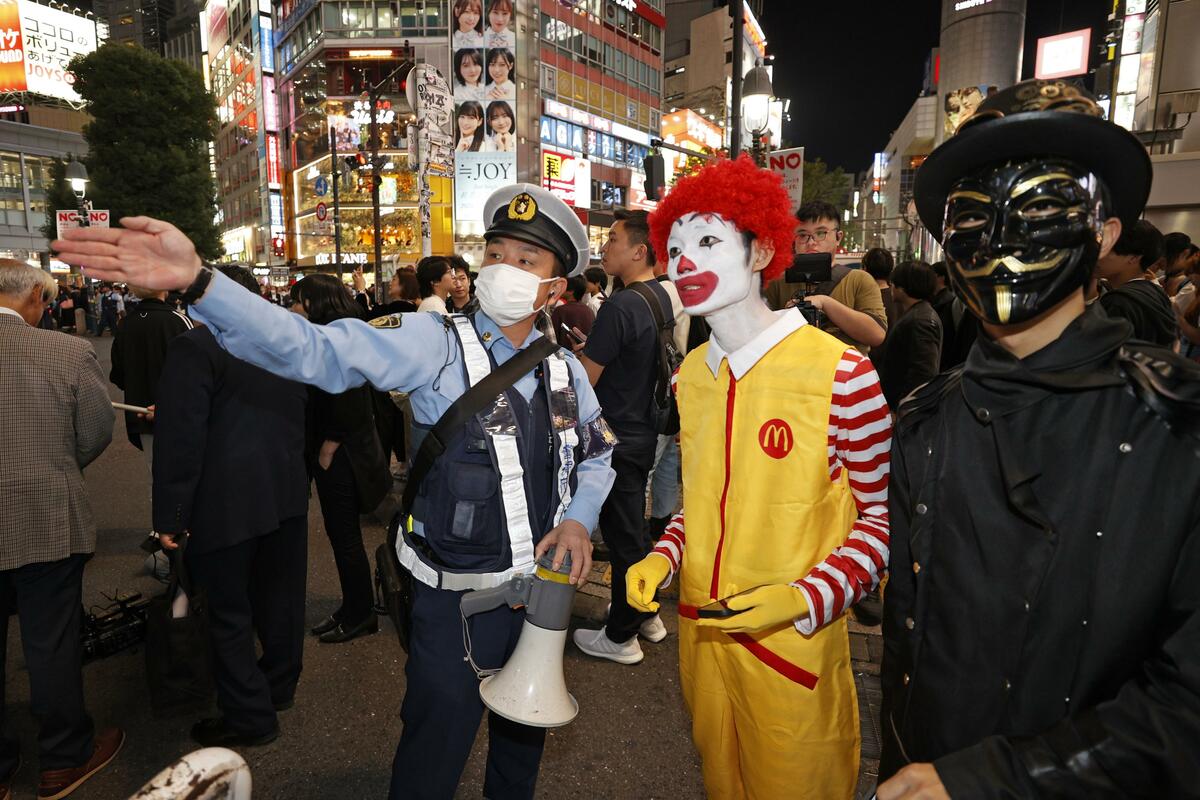
Whistles shrilled, and LED batons motioned pedestrians to keep moving in Tokyo's buzzing Shibuya and Shinjuku districts on Thursday amid a crackdown by local authorities to prevent overcrowding for Halloween. Celebrations in Shibuya were markedly toned down, and few were seen wearing costumes, with police guiding people away from the area and a newly implemented year-round alcohol ban in full effect. In recent years, the occasion has gained notoriety for its unruliness in one of Tokyo's most popular tourist spots. The alcohol consumption ban is effective daily from 6 p.m. to 5 a.m. in areas surrounding JR and Keio Shibuya stations, including the district's iconic crossing. The famous Hachiko dog statue, a popular meeting place, has also been hidden behind a barrier until Friday morning. Shibuya Ward authorities have been on alert following the lifting of COVID-19 restrictions and in the wake of a deadly crowd crush in Seoul's Itaewon entertainment district in South Korea in 2022.


It seems a bit perverse to sell alcohol in vending machines if it is illegal to consume it in the street. Japanese people might know about the law but tourists normally wouldn't. So imagine some unsuspecting tourist in Shinjuku or shibuya on a hot summer day buying a beer from the vending machine and drinking it by himself next to the vending machine, then being arrested by the passing policeman for doing something illegal. It's like:

Policeman : "Hey, you you can't drink alcohol in the street!"
Tourist : "But why sell it in the street then?"
Policeman: "It's Japan here, we don't have to do things that make sense!"
Tourist: "But how could I know that? I've just arrived in the country."
Policeman: "Everybody's supposed to know the law. That's the law. Now follow me to the station."
 
By the way, I was in Japan for 6 weeks last winter and, even though I don't drink beer, I clearly remember seeing many vending machines selling beer. I especially remember it well in Nagasaki, where the Kirin vending machines all over the city sold beer with the face of Thomas Blake Glover, a British industrialist who helped establish the Japan Brewery Company, which later became the Kirin Brewery Company. It drew my attention as these special beer cans are not found in other Japanese cities.
 
It seems a bit perverse to sell alcohol in vending machines if it is illegal to consume it in the street. Japanese people might know about the law but tourists normally wouldn't. So imagine some unsuspecting tourist in Shinjuku or shibuya on a hot summer day buying a beer from the vending machine and drinking it by himself next to the vending machine, then being arrested by the passing policeman for doing something illegal. It's like:

Policeman : "Hey, you you can't drink alcohol in the street!"
Tourist : "But why sell it in the street then?"
Policeman: "It's Japan here, we don't have to do things that make sense!"
Tourist: "But how could I know that? I've just arrived in the country."
Policeman: "Everybody's supposed to know the law. That's the law. Now follow me to the station."

You can legally drink on the streets between 5 a.m. and 6 p.m. So, vending machines do have their relevance.
 
Perhaps I'm not looking hard enough but I really don't see beer vending machines in Shinjuku or Shibuya. And I do keep my eye out for vending machines to see if anything new or interesting is in them.
 
You can legally drink on the streets between 5 a.m. and 6 p.m. So, vending machines do have their relevance.
Ok, but who drinks alcohol in the morning? That leaves the afternoon but people are unlikely to buy drinks at vending machine at lunch time or just after having had lunch. So that leaves only a few hours of legality for tourists.

And working people are also unlikely to drink alcohol during working hours, when it's legal. It's not just vending machines. Someone can't go to a combini after work (after 6 pm), grab a drink and quickly drink it when exiting the shop to relax a bit after a hard day.

Japan doesn't have a pub culture like in the UK, where workers just go to have a beer after work. Japanese workers do go out to drink but at izakayas, which are primarily restaurants. So I suppose the effect of the new ban on drinking outside will be that more people will go to bars and "pubs" for a quick drink after work.

Or people are just going to start drinking their beer or sake inside the combini just after having purchased it. That's what I would do in that situation, if I drank alcohol (and I never drink on my own, only socially).
 
Ok, but who drinks alcohol in the morning? That leaves the afternoon but people are unlikely to buy drinks at vending machine at lunch time or just after having had lunch. So that leaves only a few hours of legality for tourists.

And working people are also unlikely to drink alcohol during working hours, when it's legal. It's not just vending machines. Someone can't go to a combini after work (after 6 pm), grab a drink and quickly drink it when exiting the shop to relax a bit after a hard day.

Japan doesn't have a pub culture like in the UK, where workers just go to have a beer after work. Japanese workers do go out to drink but at izakayas, which are primarily restaurants. So I suppose the effect of the new ban on drinking outside will be that more people will go to bars and "pubs" for a quick drink after work.

Or people are just going to start drinking their beer or sake inside the combini just after having purchased it. That's what I would do in that situation, if I drank alcohol (and I never drink on my own, only socially).
The person who the person buying liquor early in the morning finishes late-night duties, and comes home buys it. The factory worker that duty terminated in 3 changes early in the morning drank liquor in the factory zone. For "stand drink" early-morning in the old days in the liquor shop in front of ironworks of Kitakyusyu seemed to do business.

Drinking is prohibited in the eat-in section of the convenience store. I think that a staff warns that I drink. I have not looked at the person who drank at an eat-in corner.
When I drink at the parking lot in front of the convenience store, I am reported to the police to become the business interference.

British pub in Japan.
You may be different from the home U.K., but please go.

The Japanese culture that is similar to pub culture a "立ち飲み(Tachinomi)" "角打ち(Kakuuchi)" "一杯飲み屋(ippai nomiya)"


There seems to be shop "Hideyoshi store" of the US navy purveyance for the government near the U.S. base of wide Yokosuka.
 
The person who the person buying liquor early in the morning finishes late-night duties, and comes home buys it. The factory worker that duty terminated in 3 changes early in the morning drank liquor in the factory zone. For "stand drink" early-morning in the old days in the liquor shop in front of ironworks of Kitakyusyu seemed to do business.

I don't think there are many factory workers in Shinjuku and Shibuya.

Drinking is prohibited in the eat-in section of the convenience store. I think that a staff warns that I drink. I have not looked at the person who drank at an eat-in corner.
When I drink at the parking lot in front of the convenience store, I am reported to the police to become the business interference.

Great, more places where it's prohibited to drink!
 
Back
Top Bottom